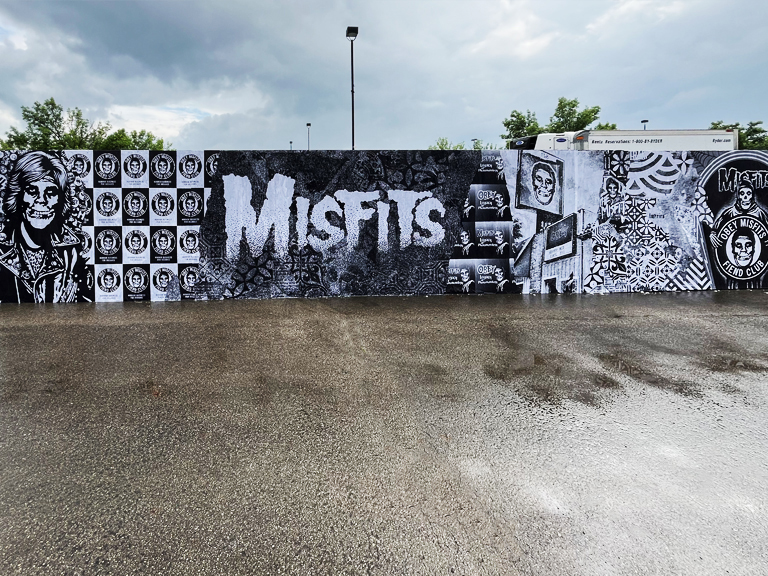
A mural in the wrong location is not just a wasted budget. It is a mural that nobody sees, in a neighborhood that does not align with your audience, on a surface that started deteriorating before the paint dried. Mural location scouting is the work that happens before any creative direction is finalized, any artists are engaged, or any permits are applied for. Get it right and everything downstream improves. Skip it and you are spending significant money hoping you got lucky.
At American Guerrilla Marketing, based in Industry City, Brooklyn, NY, we scout mural locations across every market where we execute campaigns. Our process has been refined across hundreds of installations in cities ranging from New York and Los Angeles to secondary markets where mural culture is less established but the right location still exists. Call (646) 776-2770 to talk through your target market and campaign objectives.
This guide covers every element of how we think about and execute mural location scouting, from defining the geographic brief to surface assessment to property owner negotiations to permit navigation.
Defining the Geographic Brief Before Scouting Begins
Scouting without a geographic brief is wandering. A geographic brief answers three questions before the scout goes into the field: where is the target audience concentrated, which neighborhoods align with the brand’s desired cultural positioning, and what visibility characteristics (foot traffic, vehicle traffic, or both) does the campaign prioritize?
A brand targeting young urban professionals in Brooklyn has a different geographic brief than a brand targeting the same demographic in Chicago’s River North or Austin’s East Side. The neighborhoods may share demographic profiles but have completely different street networks, building scales, and visual cultures. The scout needs the specific target geography, not a general instruction to “find something in Brooklyn.”
Foot Traffic vs. Vehicle Traffic Priority
Murals designed for pedestrian visibility are different from murals designed for vehicle visibility. Pedestrian murals can carry more detail, finer typography, and complex imagery because the viewer has time to engage. They work on side streets and building faces set back from traffic flow. Vehicle-priority murals need simpler, bolder compositions that read at 35 mph from 100 feet away. They belong on arterial streets, highway-adjacent walls, and surfaces where vehicle traffic is the dominant audience.
Most urban brand mural campaigns are pedestrian-primary because the target locations are in neighborhoods where foot traffic is the dominant dynamic. But knowing which audience you are designing for shapes both the location selection and the design brief.
What We Look for in a Candidate Surface
The surface is the canvas. Not all walls are suitable, and a wall that looks acceptable in a drive-by assessment may fail on closer inspection. Our surface checklist covers five categories: structural condition, existing paint or coating condition, substrate porosity, dimensions, and orientation.
Structural Condition
Active cracks in the substrate, evidence of water intrusion, or signs of structural movement are disqualifying. A mural installed on a wall with active cracking will show that cracking through the painted surface within months, regardless of how well the application was executed. Water intrusion causes paint to lift, blister, and peel from the substrate. We do not proceed with a location that shows these conditions without a structural remediation plan that is funded and committed before the campaign begins.
Existing Paint or Coating Condition
Flaking, peeling, or heavily chalked existing paint must be removed before a new mural application. Painting over compromised existing paint is a guaranteed failure mode: the new paint will only be as adherent as the substrate underneath it. Surface preparation to remove failing existing coatings is additional cost that needs to be factored into the location assessment. Some locations that look good visually are actually expensive preparation projects before the real work begins.
Substrate Porosity
Brick and concrete substrates require different primers and painting approaches than wood or metal. Some substrates are too porous for direct application and require a sealer coat before primer. Some are too glossy (polished concrete, for example) for paint adhesion without mechanical abrasion or chemical etching. We assess substrate type during the scout and factor preparation requirements into the location ranking.
Dimensions and Sightlines
The wall needs to be large enough for the campaign’s design ambitions and visible from the most trafficked vantage point without obstruction. Trees, parked vehicles, utility poles, and adjacent signage can obscure significant portions of a wall that looks clear on a map or satellite view. Scouting has to be done on foot, at the times of day when the target audience is present, to assess what the wall actually looks like in conditions of use.
Reading the Neighborhood: Cultural Fit and Community Reception
A mural in a neighborhood that does not receive it well creates reputation problems that outlast the campaign. Murals in communities with strong local art cultures are evaluated by residents who have high standards and vocal opinions. A brand mural that looks like it was parachuted in from a corporate art department without any engagement with the local visual culture will be noticed and criticized.
Our scouts assess the existing visual culture of the target block during every location walk. Is this a neighborhood with an established mural culture? Who has painted here before? What aesthetic conventions dominate? Is there evidence of community investment in the visual environment? The answers shape the creative brief as much as the location recommendation.
We also assess the history of the candidate wall. A wall that has hosted successful murals before has demonstrated that it is a good environment for the format. A wall that has never hosted a mural, or that had a mural painted over quickly, is a data point that requires understanding before committing.
Property Owner Research and Outreach
Identifying who owns the wall is not always as simple as looking up the building’s ownership record. Commercial buildings may be owned by one entity and leased by another. The tenant may need to provide permission, but the landlord may also need to approve exterior modifications. In mixed-use buildings, multiple parties may have standing to object. We research ownership structure before making outreach to ensure we are talking to the right decision-makers from the first contact.
Making the Ask
We approach property owners directly and professionally. The conversation covers what the campaign is, who the brand is, what the mural will look like (concept images help significantly here), how long it will remain, what preparation and restoration commitments we are making, and what if any compensation we are offering. Some property owners are receptive to a free mural or the association with a brand campaign. Others want rental compensation. We assess the right approach based on the specific owner profile and the importance of the location.
Property owners who have hosted murals before are the easiest conversations. They understand the process, the timeline, and the outcome. Property owners who have never hosted anything need more context and more patient explanation. We never pressure a reluctant owner into a yes that will turn into a problem mid-campaign.
The Location Agreement
Every approved location is documented in a written agreement that covers the design approval process, the installation timeline, the duration of the installation, the restoration commitment (what the wall looks like after the campaign ends), and any restrictions on content or subsequent use of the wall during the campaign period. This document protects both the client and the property owner and prevents misunderstandings that derail campaigns.
Permit Navigation
The permitting landscape for mural advertising varies dramatically by city and, within cities, by neighborhood. New York City, Los Angeles, Chicago, and most major markets have specific processes for commercial mural permits that are distinct from non-commercial art permits. In some cities, a mural that includes brand content requires an outdoor advertising permit in addition to a mural or sign permit.
We research permit requirements for every market before the scout and build the permitting timeline into the campaign schedule. In cities where permits take 4-6 weeks to process, that time needs to be in the plan before creative production begins. In cities where commercial content on building exteriors is heavily regulated or restricted (certain historic districts in particular), the scout has to pre-screen for locations that are permissible rather than wasting time on beautiful walls that will never receive a permit.
Ranking and Selecting Final Locations
After the scout identifies candidate locations, we build a ranked list based on the assessment criteria. The ranking factors include visibility quality (estimated daily impressions from foot and vehicle traffic), surface condition and preparation requirements, owner receptivity and negotiation status, permit complexity, and creative fit with the campaign design direction.
We present clients with a candidate location brief that includes photographs from multiple angles at different times of day, the GPS coordinates, the surface assessment notes, the ownership status, and our recommendation on whether to proceed. Clients review and approve the final location set before we move into permitting and design finalization.
This documented process means that location decisions are made on evidence, not on gut feel or convenience. A wall that scores lower on visibility but has a property owner already committed and a permit pre-approved may be the right choice given schedule constraints. The ranking framework makes those trade-offs explicit.
Connecting Location Scouting to the Broader Campaign
Mural locations do not exist in isolation. A mural location that also serves as an anchor for a brand ambassador activation on installation day creates an event. The same location connected to a wheatpaste poster program in the surrounding blocks creates a visual neighborhood presence that extends beyond the single wall. And a mobile LED billboard routing past the mural creates a multi-format impression that compounds the mural’s reach.
We scout mural locations with the broader campaign in mind. A wall that is also suitable for an activation platform, where a team can work in front of it and engage passing foot traffic, is worth more than a wall that is visually strong but physically inaccessible for ground-level activity. The best mural locations in a multi-format campaign function as hub assets that anchor other tactical elements.
Our guerrilla marketing services team integrates location scouting across all formats in a campaign. The mural scout, the wheatpaste surface scout, and the foot traffic analysis for ambassador placement all happen in the same neighborhoods with the same strategic lens.
Frequently Asked Questions
What makes a good mural advertising location?
A good mural advertising location combines high visibility from foot and vehicle traffic, a surface in acceptable condition for painting or vinyl application, property owner willingness, proximity to the target audience, and a viewing angle that allows the mural to be seen clearly from the most trafficked vantage point.
How do you find mural wall locations for brand campaigns?
Location scouting starts with a geographic brief defining the target neighborhood and audience. Scouts then walk the area on foot, photographing candidate surfaces and logging GPS coordinates. Property owner research identifies who to contact for permission. Candidate locations are then ranked by visibility, surface condition, and owner receptivity.
How do you approach a property owner about a mural?
The most effective approach is direct and professional: visit in person during business hours, identify yourself and the brand campaign, explain the scope and timeline of the installation, and present the design concept. Property owners who have hosted murals before are significantly easier to negotiate with than those who have not.
What surface conditions disqualify a wall from being a mural location?
Surfaces with significant water damage, active efflorescence, structural cracks, flaking or peeling existing paint, or surfaces that are too porous or too glossy for paint adhesion are typically not suitable for mural advertising. A surface assessment before committing to a location prevents mid-campaign failures.
Do mural advertising locations require permits?
Most cities require a sign permit or mural permit for commercially-sponsored murals on building exteriors. The specific requirements vary by jurisdiction. In cities with active outdoor advertising regulations, commercial content in a mural may require a separate advertising permit beyond the standard mural permit.
How long does location scouting take for a mural campaign?
Scouting a single market to identify and qualify 3-5 final mural locations typically takes 1-2 weeks from initial walk to property owner agreements in hand. Multi-market programs require proportionally more time. Permitting after location confirmation adds another 2-6 weeks depending on the jurisdiction.