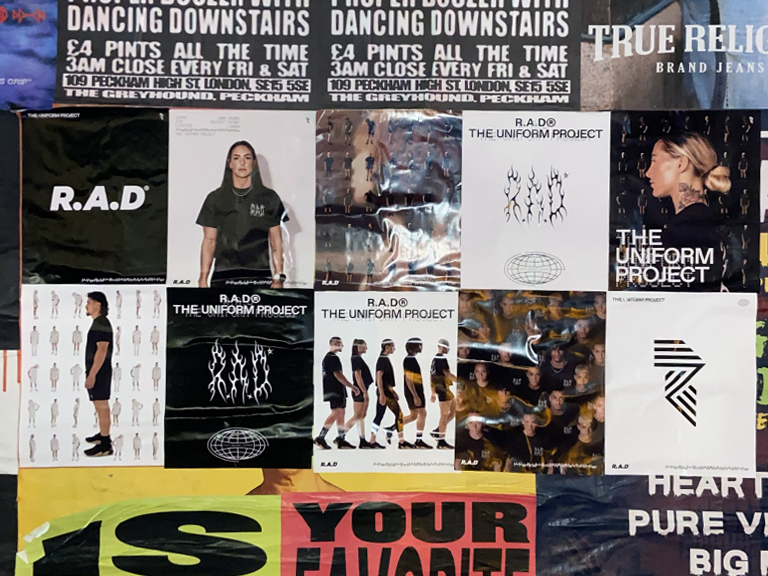
Wheatpasting in Brixton London: A Poster Campaign Guide starts with matching the right streets, surfaces, audience, and campaign timing. Brixton is not a neighborhood that rewards superficial engagement. It has a cultural identity built over generations — Black British community history, a music scene that produced David Bowie and gave the UK grime and UK garage some of their earliest commercial stages, a market culture that has survived gentrification pressure without fully capitulating to it. When brands come to Brixton with a wheatpaste campaign, the neighborhood notices. The question is whether what it notices is something it respects.
That specificity is both the opportunity and the challenge of Brixton as a campaign zone. The foot traffic is real — Atlantic Road from Brixton tube station south toward Coldharbour Lane is one of the busiest pedestrian corridors in south London. Brixton Village market draws visitors from across the city and beyond. The O2 Academy Brixton, one of London’s most beloved mid-sized music venues, brings 5,000-person-capacity crowds to the neighborhood regularly. The audiences are there.
But Brixton is not a neighborhood where a brand can treat the wall as a neutral advertising surface. The community has a long history of public visual expression — political posters, community announcements, music promotion that has been happening on these walls for decades. A campaign that understands that history and comes in with something genuine earns its place. One that comes in with bland corporate imagery and ignores the context will be noticed for the wrong reasons.
Brixton’s Foot Traffic Zones
Atlantic Road and Brixton Station
Brixton tube and rail station is one of the busiest transit hubs in south London, with Victoria line access and National Rail services making it a significant interchange point. The section of Atlantic Road immediately south of the station — running toward Electric Avenue — generates the highest concentration of pedestrian flow in the neighborhood. Market stalls, food shops, music stores, and small retailers line both sides. Wheatpaste placements in this corridor reach a broad cross-section of Brixton’s population rather than any one demographic slice.
Coldharbour Lane
Coldharbour Lane running west from the market toward Loughborough Junction has become one of south London’s most important independent food and drink streets, with bars, restaurants, and cafes that draw a younger demographic, particularly on weekends. The Ritzy cinema at the Brixton end of Coldharbour Lane — a community cinema institution since 1911 — is a specific venue-adjacent postering opportunity for entertainment campaigns. Placements within a few hundred meters of the Ritzy reach an audience that actively seeks out cultural experiences.
Brixton Village and Market Row
The covered market arcades of Brixton Village and Market Row draw visitors from across London who come specifically for the food, the independent traders, and the atmosphere. These are not passive shoppers moving between chain stores — they’re people making deliberate choices to spend time in Brixton because they want to be in a specific kind of place. Campaigns posted near the market entrances on Electric Avenue and on the external walls of the market building reach an audience that is already self-selecting for cultural engagement.
The O2 Academy Brixton has a capacity of 4,921 and hosts approximately 200+ events per year, making it one of London’s highest-throughput music venues. On event nights, foot traffic in the surrounding neighborhood — Stockwell Road, Brixton Road, Atlantic Road — spikes significantly from around 6pm through midnight.
Stockwell Road and the Academy Zone
The streets around the O2 Academy Brixton — Stockwell Road, Brixton Road itself, the surrounding residential streets between the tube and the venue — carry significant event-night traffic. For music campaigns promoting artists performing at the Academy, or for any music-adjacent campaign trying to reach the Brixton music audience, postering this zone in the days before a major show creates a specific kind of context that amplifies the campaign’s message.
The Brixton Demographic in Detail
Brixton sits within the London Borough of Lambeth and represents one of the most ethnically diverse urban neighborhoods in Western Europe. The Black British community — with roots in Caribbean immigration that began in the late 1940s and continued through subsequent generations — remains a core part of Brixton’s identity even after two decades of significant demographic change driven by rising property values.
The current Brixton population layers that established community with incoming young professionals, artists, and the service industry workers who support the neighborhood’s restaurant and bar economy. The result is a neighborhood where a 60-year-old Jamaican-British grandmother and a 28-year-old graphic designer from Bristol both live within a few streets of each other and both walk the same stretch of Atlantic Road.
Campaigns that work in Brixton are ones that have something genuine to say to a broad demographic rather than targeting the most recently arrived residents to the exclusion of the community that built the neighborhood’s identity. This is not a demographic segmentation note — it’s an observation about what resonates on these streets versus what gets ignored or, worse, generates a hostile response.
“Brixton has a cultural immune system. Campaigns that feel like they’re extracting credibility from the neighborhood without putting anything back don’t last long in the conversation. The ones that show genuine knowledge of what the neighborhood is get picked up and amplified by the community itself.”
What Works and What Doesn’t in Brixton
Categories That Land
Music campaigns — particularly for grime, Afrobeats, UK garage, soul, jazz, and genres with roots in Black British culture — have a natural home in Brixton. A poster for an Afrobeats artist performing at the Academy, or an album release from a south London artist, is going up in its own neighborhood. The campaign feels like it belongs there because it does.
Film campaigns with Black British themes, social realist narratives, or connections to south London culture perform well here. The Ritzy cinema’s programming has long supported Black British film and African and Caribbean cinema, which means the neighborhood has a built-in audience for that content that other London zones might not have to the same degree.
Food and drink brands with genuine local ties — products stocked at Brixton Village traders, restaurants and bars operating in the neighborhood, brands with south London provenance — earn real engagement from wheatpaste placement here. The community supports what feels like its own.
Categories That Struggle
Generic fashion campaigns without a specific Brixton or south London angle will generate impressions but won’t activate the community amplification that makes Brixton placement particularly valuable. Fintech brands, mass-market retail, and corporate brand campaigns without a specific narrative connection to the neighborhood will be physically present but culturally invisible.
Practical Surface Access in Brixton
Brixton’s surface market is different from Shoreditch in important ways. The art ecosystem in East London has created a more formalized approved surface network. In Brixton, surface access is more varied — some walls are long-established informal postering zones that operators know and have tacit access to, while others are formally managed. The distinction matters for campaign longevity and compliance.
Working with a south London operator who has genuine Brixton relationships is essential. An operator who’s primarily East London-focused may not know the specific surface market well enough to make good placement decisions. The difference in campaign quality between a local operator and a non-local one in Brixton is meaningful.
Combining Brixton With Peckham and Stockwell
Brixton rarely runs as a standalone zone in well-planned south London campaigns. Peckham — a fifteen-minute bus ride east along Coldharbour Lane — has a similar demographic profile and complementary cultural scene. Stockwell to the north connects Brixton to Vauxhall, which is an increasingly active cultural zone near the South Bank. A south London campaign that covers Brixton, Peckham, and Stockwell is reaching approximately the same demographic across the three zones and builds frequency across the south London network rather than concentrating all impressions in one place.
What Makes Brixton a Different Kind of Poster Market
Brixton-related searches usually signal that the brand is trying to reach a specific South London audience, not just book another high-traffic area. Competitor results around Brixton advertising lean on local character, repeated commuter journeys, and culture-led visibility. That suggests the best content angle is not “Brixton gets foot traffic.” It is “Brixton reaches people in a very particular context and mood.”
Searchers evaluating Brixton typically want help with audience match. Music, nightlife, food, arts, and challenger consumer brands often fit naturally here, but only when the creative feels direct and street-ready. The common subtopics that make this keyword useful include where pedestrian flow is strongest, what time of week matters most, how Brixton differs from Camden or Shoreditch, and why campaign density should stay tight around a few meaningful corridors rather than spread thinly across South London.
The ranking opportunity is to frame Brixton as a strategic choice, not a trendy add-on. A strong page should talk about neighborhood fit, cultural context, repeat exposure, and realistic placement logic. When people search this keyword, they are often trying to answer one question: will Brixton help us reach the audience we actually care about, and if so, how should we shape the campaign so it feels credible on the street?
Frequently Asked Questions
Surface-by-Surface Breakdown in Brixton
Brixton’s surface geography is different from East London. Where Shoreditch has a cluster of formally approved street art walls, Brixton’s best paste locations are distributed along its main commercial arteries and around the market complex. The neighborhood has gone through significant demographic change over the past decade, but the core foot traffic corridors remain consistent: Coldharbour Lane, Atlantic Road, Brixton Road (the main A23 corridor), and the streets feeding into Brixton Market.
Coldharbour Lane
Running east from Brixton station toward Loughborough Junction, Coldharbour Lane has a string of walls on both sides of the street that have historically been used for music and entertainment campaigns. The lane hosts some of Brixton’s best-known live music venues — the Windmill, the Prince of Wales — which means foot traffic from Thursday evening through Saturday night skews heavily toward music fans aged 20-40. We’ve placed album release campaigns here for artists across hip-hop, grime, electronic, and indie genres.
Atlantic Road and Market Row
The covered market area around Market Row and Granville Arcade (now Brixton Village) draws shoppers and diners from across south London. The walls immediately surrounding the market complex are some of the most heavily photographed surfaces in Brixton — social media users sharing market content organically amplify poster visibility. A placement here doesn’t just get seen in person; it gets seen in the background of hundreds of food and lifestyle photos posted to Instagram and TikTok each week.
Brixton station (Victoria line) handles approximately 18 million passenger journeys per year. The A23 Brixton Road surface immediately north of the station entrance is one of the most visible hoarding locations in south London.
Effra Road and Tulse Hill Junction
Less used than the market corridor, but Effra Road heading south toward Tulse Hill has longer uninterrupted wall sections that work well for multi-sheet large-format campaigns. If a campaign needs a wall that can hold a 2-meter by 3-meter single image, this is where we look in Brixton.
Foot Traffic Patterns in Brixton
Brixton’s foot traffic peaks at different times than East London. The Victoria line stop makes it a key transit hub for south Londoners commuting into the centre. Morning commute peak (8am-9:30am) is significant. But the neighborhood’s real visual energy is evenings and weekends — Brixton operates as a destination, not just a pass-through, in a way that distinguishes it from transit-heavy zones like London Bridge or Waterloo.
Saturday afternoon is Brixton’s highest-traffic window. The market draws shoppers, the restaurants fill early, and the foot traffic on Coldharbour Lane and Atlantic Road between noon and 6pm is as high as anywhere in south London. Sunday is quieter but the brunch crowd around Brixton Village keeps midday foot traffic steady.
How AGM Approaches Brixton Campaigns
We’ve run wheatpaste campaigns in Brixton for music clients specifically targeting the south London urban music scene, for film releases targeting Black British audiences, and for brands entering the UK market that wanted to signal cultural authenticity rather than mainstream positioning. Brixton works for all three of those purposes — but the approach is different for each.
For music campaigns, we prioritize the Coldharbour Lane corridor and the walls around the Brixton Academy (O2 Academy Brixton) on Stockwell Road. Concert-goers arriving for shows at the 5,000-capacity venue walk past these locations consistently. We’ve placed on the night of a show specifically so that the audience sees the poster on their way in.
For brand campaigns targeting cultural credibility, we work with local artists where possible to create artwork that fits Brixton’s visual context. A generic brand poster dropped into Brixton reads as outsider. A campaign that engages with the neighborhood’s aesthetic vocabulary reads as present — and that’s a meaningful difference for brands trying to build genuine connection rather than just exposure.
From what we’ve seen in the field in Brixton, campaigns that respect the neighborhood’s visual culture outperform generic brand drops by a wide margin. The audience here is sophisticated about advertising and they notice when a brand has done its homework.
Paste Mix and Surface Notes for Brixton
Brixton’s walls include a mix of Victorian brick, painted brick, and modern hoarding panels around the constant construction in the Brixton town centre area. The older brick on Coldharbour Lane’s Victorian commercial buildings is porous and holds paste extremely well — posters last longer here than in some East London locations with smoother surfaces. The newer hoarding panels around the ongoing regeneration projects near Brixton station use smooth composite materials that require a slightly thinner paste to achieve good adhesion.
Our operators carry both formulations on Brixton runs: a thicker mix for the older brick surfaces and a thinner mix for the newer panels. It takes maybe 20 minutes of additional prep, but it’s the difference between a campaign that holds for six weeks and one that starts peeling after a week of rain.
Design Principles for Brixton Wheatpaste Campaigns
Brixton has one of the most visually literate street audiences in London. The neighborhood’s deep roots in music, art, and political activism have produced a community that reads advertising with a critical eye. Campaigns that look generic, corporate, or out of context with the neighborhood’s visual vocabulary don’t just underperform — they generate active skepticism among the very audience they’re trying to reach.
The design principles that have worked best in Brixton campaigns we’ve run: high-contrast primary colors with deliberate typographic choices, imagery that connects to the neighborhood’s Black British and Caribbean cultural heritage where the campaign content supports it, and a physical confidence in scale — A0 or larger, because Brixton’s visual culture runs large. Small, careful posters read as timid in this context.
For entertainment campaigns, the strongest performers in Brixton have been music-related — specifically campaigns for artists or events with genuine Brixton or south London connections. A poster for a north London act playing the O2 Academy Brixton still works because the venue’s cultural authority is absolute, but the creative needs to acknowledge that Brixton is the setting, not just a location.
Working With Local Artists
We’ve facilitated partnerships between campaign clients and Brixton-based visual artists who create campaign-specific artwork for wheatpaste placements in the neighborhood. This approach turns a standard advertising placement into a genuine cultural collaboration and signals to the Brixton community that the brand is investing in the neighborhood rather than extracting from it. For brands with a genuine connection to south London music or arts culture, this model delivers organic community engagement that a generic campaign cannot replicate.
AGM’s crews have worked Brixton consistently across music releases, film campaigns, and brand activations. The neighborhood responds to authenticity with unusual clarity. You either belong on these walls or you don’t, and the audience knows the difference before the paste has dried.
Is Brixton a good neighborhood for wheatpaste campaigns?
Yes, with the right campaign. Brixton has a diverse, culturally engaged demographic and strong foot traffic along Atlantic Road, Coldharbour Lane, and the Brixton Village market area. It’s particularly effective for music, entertainment, food and drink, and brands with genuine connection to south London culture. Campaigns without authentic ties to the neighborhood’s identity typically generate impressions but not community engagement.
What demographic does wheatpasting in Brixton reach?
Brixton’s demographic is genuinely mixed — Black British communities with Caribbean heritage, young professionals, artists, hospitality workers, and long-term south London residents across age groups. It’s one of the most ethnically diverse neighborhoods in London with one of the strongest and most specific local cultural identities. This is a feature, not a limitation — the right campaign reaches exactly the audience that the neighborhood represents.
Where are the best wheatpasting spots in Brixton?
Atlantic Road from Brixton Station down toward Coldharbour Lane, the streets around Brixton Village market, Electric Avenue, and the streets near the O2 Academy Brixton on Stockwell Road are the highest-traffic zones. The Ritzy cinema area on Coldharbour Lane is particularly good for entertainment campaigns. The railway arch walls on Brixton Road are large-format opportunities for campaigns that need big visual presence.
What types of campaigns work best in Brixton?
Music releases — particularly grime, Afrobeats, UK garage, soul, and jazz — perform well here. Film releases with Black British themes or south London connections, food and drink brands with local ties, independent retailers, and events at the O2 Academy Brixton all benefit from Brixton wheatpaste campaigns. Community-facing campaigns with genuine neighborhood connections get the strongest amplification.
How do I coordinate a Brixton wheatpaste campaign?
American Guerrilla Marketing works with south London operators who have surface relationships in Brixton, Peckham, Stockwell, and Clapham. Contact us at [email protected] or (646) 776-2770 for a quote that covers the Brixton-specific surface list, posting schedule, and GPS documentation report.