Brand ambassador programs are the one marketing format that converts an impression into a conversation. When trained representatives interact directly with target audiences in commercial environments where they’re most accessible, the resulting brand connection is qualitatively different from anything a poster, billboard, or digital ad can achieve.
Guerrilla marketing uses unconventional, low-cost tactics deployed in public spaces to generate outsized brand impact. American Guerrilla Marketing designs and executes street-level campaigns, wheat posting, stencils, brand ambassadors, projections, and LED trucks, that create genuine consumer encounters and earned media coverage for brands of all sizes.
What makes guerrilla marketing worth understanding in depth is the gap between campaigns that generate impressions and campaigns that generate results. The best campaigns are built around audience movement patterns, not just surface availability, they place messages where the right people walk, dwell, and return repeatedly, which drives the frequency that builds real brand memory. The format also benefits from organic amplification: quality street-level work in high-visibility environments gets photographed and shared, multiplying the original media investment without additional spend.
This article covers the tactical and strategic fundamentals of guerrilla marketing, how campaigns are structured, what execution looks like in practice, how to evaluate format options against objectives and budget, and what distinguishes campaigns that move the needle from campaigns that just spend money. Whether you’re planning a first activation or optimizing an existing street-level program, the information below gives you a grounded framework for making smart decisions and getting measurable outcomes.
Toronto as a Guerrilla Marketing Market
Toronto’s scale, density, and cultural diversity make it both a demanding and an exceptionally rewarding guerrilla marketing environment. The city’s pedestrian-oriented neighborhoods, where residents walk, transit, and actively inhabit their street environment rather than experiencing the city exclusively from behind a car windshield, create close-contact audience exposure that suburban advertising environments cannot replicate. The same commuter who drives past a billboard at highway speed walks past a wheat paste poster on Queen Street at a pace that allows reading, processing, and remembering.
Toronto’s demographic diversity is not just a social characteristic, it’s a marketing asset. The city’s extraordinary mix of cultural communities creates the possibility of genuine multicultural brand presence through campaigns designed with specific community knowledge. A brand that shows up authentically in Chinatown, in the Portuguese community of Dufferin and Dundas, in the South Asian community of the Peel Region corridor, or in the Caribbean community of Eglinton West reaches those audiences with a signal of cultural intelligence that mass advertising can never deliver.
The city’s arts and music culture is another defining guerrilla marketing characteristic. Toronto’s music scene, one of the most active in North America, generates constant live event audiences in the neighborhoods that cluster around major venues and music institutions. The city’s visual arts community, centered in Kensington Market, the Distillery District, and the gallery corridors of Queen West, creates environments where creative, visually distinctive brand presence is noticed and appreciated rather than tuned out. In Toronto’s arts and culture neighborhoods, a brilliant guerrilla campaign is welcomed as part of the urban conversation, not tolerated as an intrusion.
The scale of Toronto’s transit system adds another dimension to the guerrilla marketing environment. The Toronto Transit Commission carries approximately 1.7 million daily boardings, concentrated passengers who move through the city’s neighborhoods on foot to and from transit stops, creating sustained pedestrian exposure in the street-level zones surrounding every major transit corridor. Street-level campaigns positioned near high-traffic TTC stations and bus stops achieve audience concentration that takes advantage of the daily transit rhythm rather than competing with it.
Queen Street West and Ossington: The Creative Corridor
Queen Street West from University Avenue to Dufferin, and the Ossington Avenue spine connecting Queen to Dundas, is Toronto’s original creative and counterculture commercial corridor, and despite decades of gentrification pressure, it remains the city’s most significant neighborhood for brands targeting young, creative, and culturally engaged audiences. The clothing boutiques, record shops, galleries, bars, and studios that define Queen West’s commercial character attract the early-adopter, taste-making consumers that brands across music, fashion, technology, food and beverage, and lifestyle categories pay premium CPMs to reach through digital channels, and who are concentrated in a single walkable corridor where street-level advertising has outstanding visibility.
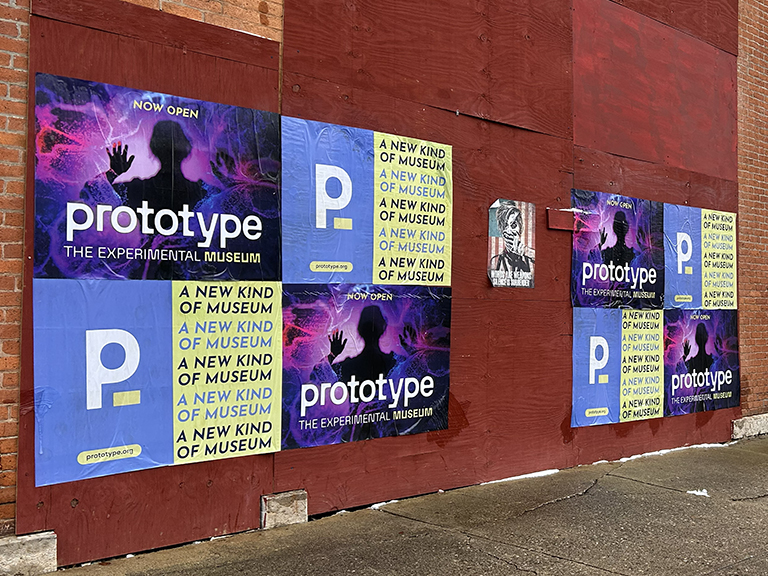
Wheat paste poster campaigns on Queen West have a long history as a brand communication channel precisely because the format aligns with the neighborhood’s visual culture. The walls, windows, and construction hoardings of Queen West have always been covered in posters, concert announcements, art events, brand campaigns, and a well-executed wheat paste campaign in this context reads as genuine participation in the neighborhood’s creative conversation rather than corporate intrusion. That cultural alignment is what makes street-level advertising in Queen West more effective per impression than higher-cost mass formats reaching the same demographic from outside the neighborhood.
Ossington Avenue adds a bar-and-restaurant density that makes evening and weekend activations particularly productive. The concentration of acclaimed restaurants and cocktail bars between Dundas and Queen generates consistent high-traffic pedestrian movement on weekend evenings, an audience that is socially active, discovery-oriented, and receptive to brand encounters that fit the neighborhood’s creative and culinary character.
Kensington Market: Counterculture and Community
Kensington Market’s few blocks of Augusta Avenue, Kensington Avenue, and the surrounding side streets contain more concentrated creative energy, cultural diversity, and community character than almost any similarly sized area in North America. The Market’s mix of vintage clothing, independent food vendors, international grocers, cafes, and community organizations creates a pedestrian environment of extraordinary density and engagement, and a neighborhood audience that responds with particular intensity to campaigns that demonstrate genuine respect for the Market’s community values.
Guerrilla marketing in Kensington Market requires authentic creative strategy and genuine respect for the community’s relationship with brand presence. Campaigns that feel corporate, inauthentic, or extractive are noticed and rejected with the same sharpness that authentic, creative, community-aligned campaigns are noticed and embraced. The reward for getting it right is outstanding: Kensington Market’s tight-knit community generates word-of-mouth and social documentation at rates that dramatically amplify the reach of any well-executed street activation.
Pedestrian Sunday activations in Kensington, when Augusta and Kensington Avenues are closed to traffic and the Market becomes a full pedestrian zone, create the highest-density guerrilla marketing moments available in the neighborhood. The concentrated foot traffic, festive atmosphere, and community engagement of Pedestrian Sundays make them ideal deployment windows for brand ambassador programs and interactive activations that benefit from high audience density and relaxed, discovery-oriented audience behavior.
The Distillery District: Premium Brand Experiences
The Distillery District’s Victorian industrial architecture, cobblestone streets, and concentration of galleries, specialty restaurants, and artisan boutiques create Toronto’s most distinctive premium brand activation environment. The District’s carefully managed aesthetic, maintaining visual coherence while accommodating art installations, seasonal markets, and commercial events, attracts a consistently affluent, culturally engaged audience that responds strongly to premium brand experiences delivered in a distinctive physical context.
The Distillery’s Christmas Market, one of the largest holiday markets in Canada, draws hundreds of thousands of visitors to the District’s cobblestone streets in November and December, creating one of Toronto’s highest-concentration consumer audience moments of the year. Brand activations adjacent to or integrated with the Christmas Market reach an audience of holiday-oriented, high-spending consumers in a festive atmosphere that is uniquely conducive to brand discovery and product trial.
Throughout the rest of the year, the Distillery’s gallery openings, summer programming, and the weekend market atmosphere make it a consistent destination for the Toronto audience segment, professional, culturally oriented, with significant disposable income, that premium brands across lifestyle, food and beverage, technology, and fashion categories target with their highest-CPM digital campaigns. Guerrilla marketing in the Distillery reaches that audience in a physical context that dramatically outperforms digital in terms of brand quality association and experiential impact.
King West and the Entertainment District
King Street West from Spadina to Bathurst, Toronto’s dense corridor of restaurants, nightclubs, condo towers, and entertainment venues, concentrates the young professional and hospitality-oriented audience that has made this stretch of King one of the most recognized entertainment corridors in Canada. The evening and weekend density is outstanding: tens of thousands of people moving through King West’s restaurant and bar scene on a single Friday night, in a compact corridor where street-level advertising achieves the kind of repeated close-contact exposure that drives the brand recall entertainment and hospitality brands need.
The Entertainment District, centered on King and John Streets around the major concert venues and TIFF Bell Lightbox, adds the event-adjacent audience moments that make guerrilla campaigns particularly efficient: pre-show and post-show pedestrian density, the media-rich environment of major entertainment events, and the social documentation behavior of audiences who are already in sharing mode from their entertainment experience.
Yorkville and Bloor Street: Luxury and Upscale Audiences
Yorkville and the Bloor-Yorkville district represent Toronto’s luxury retail and upscale lifestyle core, a neighborhood of designer boutiques, high-end restaurants, and gallery spaces that attract the city’s highest-income consumers in the densest concentration available in the Canadian urban market. Brands in luxury, premium lifestyle, beauty, fashion, and high-end hospitality categories find Yorkville’s street environment uniquely aligned with their consumer targeting needs.
Guerrilla marketing in Yorkville requires a specific creative approach that respects the neighborhood’s aesthetic standards, campaigns must match the premium visual quality of the environment they occupy rather than creating visual dissonance with the branded retail environment that surrounds them. The formats that succeed here emphasize quality of production, precision of placement, and genuine brand sophistication rather than the disruptive energy that works in more counterculture neighborhoods.
Bloor Street’s Mink Mile, the concentration of luxury brand flagships between Bay and Avenue Road, draws a consistent premium consumer audience seven days a week, concentrated in a linear corridor where walking-pace pedestrian exposure creates sustained close-contact brand visibility for street-level campaigns positioned along the route.
University of Toronto and Campus Zone
The University of Toronto’s St. George campus, surrounded by Bloor Street to the north, College Street to the south, Spadina Avenue to the west, and Bay Street to the east, concentrates one of the largest student populations in Canada, approximately 97,000 students enrolled across all three campuses, in a dense urban zone where foot traffic is consistent, high-volume, and composed primarily of the 18–25 demographic that brands across technology, entertainment, food and beverage, fashion, and financial services target with their youth marketing investments.
Campus-adjacent guerrilla campaigns, wheat paste poster runs along College and Bloor, sidewalk activations near major campus entrances, and brand ambassador programs at student-oriented events and gathering points, reach this demographic with cost efficiencies that digital advertising in the 18–25 segment, one of the most competitive and expensive in the market, cannot match. The student audience’s social connectivity and influence as early adopters amplifies campus guerrilla campaign reach through organic social documentation and peer-to-peer sharing.
The West End: Parkdale, Roncesvalles, and Junction
Toronto’s west-end neighborhoods, Parkdale, Roncesvalles Village, Dufferin Grove, and the Junction, represent distinct and rapidly evolving market opportunities for brands targeting the creative, community-oriented, independent-minded consumer segments that are reshaping these neighborhoods as gentrification brings new commercial investment alongside established working-class and immigrant communities.
Roncesvalles Avenue’s Polish heritage community, vibrant cafe culture, and family-oriented street life create a distinct brand environment that rewards campaigns demonstrating genuine community sensitivity and cultural knowledge. The Junction’s independent restaurants, bars, and artisan businesses create a neighborhood commercial energy that aligns with brands in food, beverage, lifestyle, and creative categories. Parkdale’s complex mix of long-term residents, recent immigrants, and creative newcomers creates both challenge and opportunity for street-level campaigns that require precise calibration of message and placement.
East Toronto: Leslieville, Riverdale, and Danforth
East Toronto’s Leslieville, Riverdale, and the Danforth corridor represent the city’s established family and professional neighborhoods, communities where settled residents with children, homes, and strong local loyalty create a distinct guerrilla marketing context from the transient energy of downtown corridors. Campaigns in these neighborhoods are noticed with particular intensity because the advertising environment is less saturated than downtown, making effective street-level presence more distinctive and more memorable.
Guerrilla Marketing Formats for Toronto
Toronto’s diversity of neighborhood character requires format diversity in its guerrilla marketing campaigns. No single format dominates across all of the city’s zones, the right tactics for Queen West are different from the right tactics for Yorkville, which differ again from the right tactics for the University district or Kensington Market. AGM selects and sequences formats based on the specific neighborhood context, the target audience profile, and the campaign objective.
Wheat Paste Poster Campaigns
Wheat paste poster campaigns are Toronto’s most established street advertising format, a channel with decades of use across the city’s arts, music, and retail corridors that has shaped the visual culture of neighborhoods like Queen West, Kensington, and the Entertainment District. AGM’s Toronto wheat paste programs deploy large-format poster installations across the city’s highest-value pedestrian corridors, building sustained brand visibility over multi-week campaign windows that create the repeat exposure necessary for genuine brand recall.
Toronto’s poster culture is sophisticated, audiences in the city’s arts neighborhoods are practiced at reading and evaluating the posters that line their streets, which means creative quality matters more in Toronto than in markets with less developed visual culture. AGM’s creative approach for Toronto wheat paste campaigns prioritizes visual distinctiveness, neighborhood alignment, and message clarity that rewards the close-contact viewing time that Toronto’s pedestrian audiences provide.
Sidewalk and Stencil Activations
Sidewalk stencil and decal campaigns bring brand messages to the ground-level environment where Toronto’s walking audiences encounter them directly in their path of movement. Deployed near major transit stations, outside event venues, at market entrances, and along the walking routes connecting Toronto’s neighborhood commercial zones, sidewalk activations create brand encounters at the most intimate scale available in outdoor advertising.
The temporary, organic character of chalk-based sidewalk stencils aligns particularly well with Toronto’s street culture in neighborhoods like Kensington Market, where permanent installation would feel intrusive but a chalk stencil reads as playful street art rather than commercial advertising. This perceptual distinction is what makes sidewalk formats effective in community-sensitive environments where harder advertising formats meet resistance.
Brand Ambassador Programs
Brand ambassador programs in Toronto use the city’s extraordinary cultural diversity as a strategic asset. AGM staffs Toronto ambassador programs with representatives who reflect the specific community context of each deployment zone, Spanish-speaking ambassadors in the Latin community corridors, Portuguese-speaking representatives in Roncesvalles, French-speaking ambassadors for Francophone-serving brands, and representatives from Toronto’s Afro-Caribbean, South Asian, East Asian, and other communities for brands targeting those demographic segments.
This cultural matching isn’t merely symbolic, it’s strategically essential in a city where consumers across Toronto’s diverse communities respond with particular sensitivity to the authenticity or inauthenticity of brand outreach. An ambassador who looks like the community they’re engaging, who speaks the language and understands the cultural context, creates a fundamentally different brand interaction than a culturally generic representative deployed without community knowledge.
LED Mobile Billboard Trucks
LED mobile billboard trucks bring broadcast-scale visual impact to Toronto’s streets, operating across the city’s major commercial corridors, King Street, Queen Street, Bloor Street, Yonge Street, Spadina Avenue, with the flexibility to concentrate on specific event moments, neighborhood activations, or high-traffic periods that static outdoor advertising cannot optimize around. Toronto’s major events, TIFF, Pride, Caribana/Carnival, the Toronto International Film Festival, and the constant flow of concerts and cultural events at the city’s major venues, create deployment windows of outstanding audience density where LED trucks achieve outsized reach relative to their operating cost.
Guerrilla Projections
Guerrilla projection campaigns deploy high-lumen projectors to display brand creative on Toronto’s architectural surfaces after dark, a format that takes on particular power in a city with iconic architecture that becomes a projection canvas at night. The Distillery District’s Victorian industrial facades, the dramatic walls of downtown Toronto’s corporate towers, and the blank surfaces of older commercial buildings in Queen West and Kensington all create projection opportunities that generate the genuine stopping power and social documentation that makes guerrilla projections one of the highest-earned-media formats in AGM’s toolkit.
Campaign Strategy and Market Considerations
Toronto’s scale and diversity require campaign strategies built from neighborhood-level intelligence rather than city-wide generalizations. Every AGM Toronto campaign begins with a precise audience-to-neighborhood mapping process: identifying which Toronto neighborhoods and corridors concentrate the highest densities of the target consumer profile, and designing the campaign placement geography around those concentrations rather than attempting blanket city-wide coverage.
The competitive advertising environment in Toronto’s most-trafficked neighborhoods means that creative quality is a prerequisite for visibility rather than an advantage. In Queen West, Kensington, and the Entertainment District, the visual environment is rich and highly competitive, campaigns that are not visually distinctive will not be noticed, regardless of placement quality. AGM’s creative development for Toronto campaigns is calibrated to the specific visual culture of each target neighborhood, with creative that earns its place in each environment rather than simply occupying it.
Toronto’s seasonal advertising rhythm shapes optimal deployment windows. The late spring and summer months, May through September, are when the city’s outdoor lifestyle culture is at its most active, when street markets and festivals concentrate audiences in public spaces, and when the combination of long daylight hours and warm weather keeps Toronto’s pedestrian neighborhoods at their highest foot traffic. Winter campaigns require format and placement adjustments that account for reduced outdoor dwell time, but Toronto’s transit-dependent population maintains strong street-level audience density even through the colder months.
Measuring Campaign Results in Toronto
Measurement for Toronto guerrilla marketing campaigns uses the same multi-signal approach that AGM applies across all markets, calibrated to Toronto’s specific market scale and audience behaviors. QR code integration on poster campaigns creates direct attribution pathways connecting street-level placements to digital engagement. Ambassador interaction counting provides concrete reach data from deployed activations. Geographic analysis of website and social traffic from Toronto-specific IP ranges and postal codes documents campaign impact at the market level.
Toronto’s scale offers a specific measurement advantage: the city’s population is large enough that statistically meaningful attribution data can be gathered from relatively small QR scan and promo code redemption samples, providing clearer performance signals than similar campaigns in smaller markets where small absolute numbers reduce statistical significance.
AGM provides complete post-campaign documentation for all Toronto deployments, including geo-tagged field photography confirming installation quality and location accuracy, ambassador interaction counts, poster installation records, and estimated audience reach based on neighborhood foot traffic data. This documentation is delivered within 48 hours of campaign completion and supports both campaign review and budget planning for future Toronto activations.
Frequently Asked Questions
Why is Toronto a strong market for guerrilla marketing?
Toronto is Canada’s largest city with over 2.9 million residents in the city proper and 6.7 million in the GTA. The city’s extraordinary cultural diversity, dense pedestrian neighborhoods, active arts and music scene, and year-round event programming create ideal conditions for street-level campaigns. Toronto’s consumers are sophisticated and media-savvy, they respond to creative, authentic brand encounters that conventional advertising cannot deliver. The city’s transit-dependent lifestyle creates sustained pedestrian exposure in the street zones where guerrilla campaigns operate.
What are the best neighborhoods for guerrilla marketing in Toronto?
Toronto’s strongest guerrilla marketing neighborhoods include Queen Street West and Ossington for creative and youth-oriented brands, Kensington Market for arts and counterculture brands, the Distillery District for premium lifestyle and experience brands, King West and the Entertainment District for nightlife and hospitality, Yorkville and Bloor Street for luxury and upscale audiences, and the University of Toronto area for the 18–25 demographic. Each neighborhood requires format and creative calibration specific to its visual culture and audience profile.
How much does guerrilla marketing cost in Toronto?
Toronto guerrilla marketing campaigns range from $3,500 for a focused single-format activation to $30,000+ for complete multi-neighborhood programs. Wheat paste runs on major corridors, sidewalk stencil activations, multi-day brand ambassador deployments, and LED truck programs each have distinct cost structures based on coverage area, duration, staffing requirements, and production complexity. AGM provides detailed proposals with transparent cost breakdowns for every campaign type and scale.
Does AGM operate in Toronto, Ontario?
Yes. American Guerrilla Marketing executes campaigns across Toronto and the Greater Toronto Area, including the city’s core neighborhoods and surrounding markets like Mississauga, Brampton, Oakville, Burlington, and Hamilton. Our Canadian field teams manage wheat paste poster campaigns, sidewalk activations, brand ambassador programs, LED truck deployments, and guerrilla projection campaigns throughout Ontario. Campaign planning, creative, production, execution, and post-campaign documentation are managed as a single integrated service.