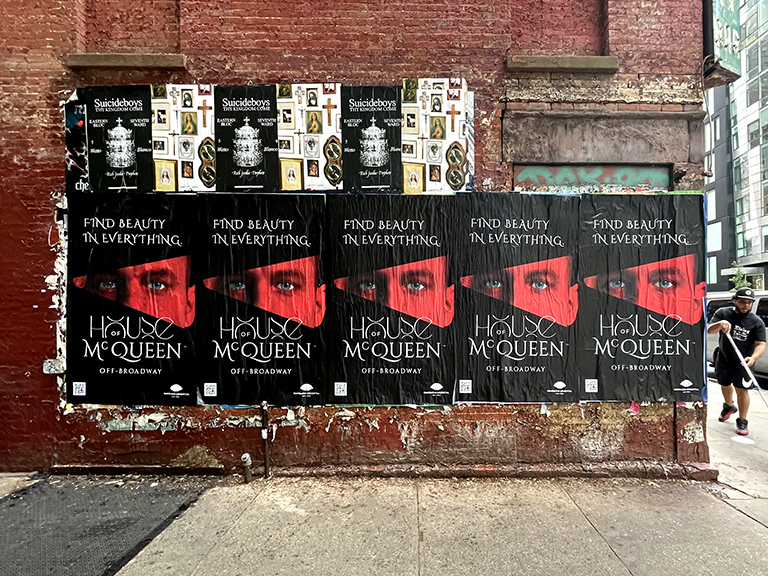
West End theater is one of the most competitive entertainment markets in the world. With hundreds of productions competing for audiences in a relatively contained geographic area, the battle for audience attention happens not just at the box office but across every visible surface in the neighborhoods where theatergoers live, commute, and socialize. Flyposting is how productions that understand their city use the physical environment to build the kind of ambient awareness that drives ticket sales.
Our team at American Guerrilla Marketing supports entertainment advertising campaigns across major markets, including London’s West End. The wheat paste poster campaigns we execute for theatrical productions combine neighborhood-level precision with the large-format visual impact that theater creative demands. A great theatrical poster deserves a great wall, and finding those walls in the right neighborhoods is the foundational work that determines whether a campaign creates the street presence a production needs.
This guide covers the neighborhoods, formats, timing strategies, and execution standards for flyposting campaigns supporting West End theater productions, with specific focus on how to build street presence that reaches the theater-going audience in the city where they spend their time outside the theater.
Why Street-Level Presence Matters for West End Productions
West End theater audiences are not passive consumers waiting to be told what to see. They are actively engaged cultural participants who make theater choices based on a complex mix of word of mouth, critical reviews, prior brand associations with production companies and performers, and the accumulated awareness that comes from living in a city where the production is visibly present.
Flyposting contributes to that last category: ambient awareness built through repeated physical exposure. A person who walks past a production’s poster four times in a week on their commute and neighborhood routes is a person who has that production in their active awareness when they make their next theater booking decision. The poster does not need to persuade them in isolation. It needs to be present enough to ensure the production is in their consideration set.
The Complementarity With Digital and Transit Advertising
Flyposting for West End productions does not compete with digital advertising or transit advertising. It complements them. A production with a strong tube card presence creates awareness among commuters. A strong digital campaign reinforces awareness online. A flyposting campaign in the neighborhoods where the target audience lives and socializes catches them in a third context, on foot in their own streets, creating the multi-channel impression frequency that drives theater booking decisions from consideration to action.
The Target Neighborhoods for West End Theater Flyposting
Effective flyposting for West End productions starts with neighborhood selection calibrated to the specific audience the production is targeting. Different productions draw different audiences, and those audiences have different geographic concentrations in London.
Soho and Covent Garden: The Core Theater District
Soho and Covent Garden are the geographic heart of the West End theater market. High foot traffic from pre- and post-theater visitors, dense restaurant and bar environments that attract theater-going demographics, and strong tourist presence in a culturally engaged visitor profile make these neighborhoods primary targets for any West End production flyposting campaign. The competitive clutter is highest here, but so is the concentration of theatergoers making active booking decisions.
Waterloo and Southwark: The South Bank Arts Community
The South Bank neighborhood, centered on the Waterloo and Southwark areas, houses London’s most concentrated arts community: the National Theatre, the Tate Modern, the Globe, the BFI, and dozens of smaller venues and arts organizations. The pedestrian population here skews strongly toward regular arts attendees. Flyposting on the high-foot-traffic streets of Waterloo and Borough Market reaches an audience that is predisposed to theater attendance and actively engaged with London’s cultural offering.
Shoreditch: The Contemporary Culture Audience
For productions targeting younger, more contemporary audiences, Shoreditch and the East London creative cluster provide access to the demographic that attends contemporary theater, fringe work, and non-traditional theatrical productions. This audience tends to be less engaged with traditional West End fare but highly receptive to bold, innovative productions that connect with the visual and cultural language of the creative industries that dominate East London’s professional demographic.
Camden: The Alternative and Subculture Audience
Camden reaches the music and subculture audience that overlaps meaningfully with theater attendance for productions with popular culture connections, musical content, or alternative artistic positioning. A production based on a major music artist’s catalogue, a production with punk or alternative cultural associations, or a musical theater piece with strong popular culture resonance will find a receptive audience in the Camden corridor.
Poster Format Strategy for West End Flyposting
Theatrical poster design operates within an established visual vocabulary that flyposting campaigns should preserve and amplify rather than undermine. The format decisions for a West End flyposting campaign should be driven by the creative brief and the specific wall surfaces available in target neighborhoods.
Standard Single-Sheet Formats
The A0 format (approximately 33 x 47 inches) is the standard single-sheet theatrical poster size for flyposting campaigns. It is large enough to command attention at street level while fitting the majority of available wall surfaces in London’s high-traffic posting corridors. A well-designed A0 theatrical poster with strong imagery, clear typography, and prominent venue and booking information delivers the complete messaging brief in a single surface unit.
Multi-Sheet Large-Format Executions
For productions with significant marketing budgets or premium wall locations that support larger formats, multi-sheet executions combining 4 or 8 individual sheets create a poster surface 2 to 4 times the size of a standard A0 unit. These large-format executions command significantly more attention and are appropriate for the highest-visibility locations in a campaign, particularly walls with large unobstructed surfaces in dense pedestrian corridors. Large-format executions are also more photographable and generate more organic social media sharing than standard single-sheet formats.
Campaign Wave Strategy
Effective West End flyposting campaigns typically operate in two or three waves aligned with the production’s promotional calendar. The first wave, two to four weeks before opening, establishes the production’s street presence and drives awareness during the active ticket purchase decision window. A second wave after opening can incorporate review quotes and audience reactions, converting awareness into intent by adding social proof to the visual presence already established on the streets.
Timing and Duration
Flyposting for theater is most effective when it runs in alignment with the production’s promotional calendar rather than as a standalone activation. The two-to-four-week pre-opening window is the highest-value period for flyposting investment, as it coincides with the period when potential audience members are most actively making booking decisions.
Standard wheat paste poster duration in London neighborhoods is two to four weeks under normal conditions. Summer campaigns face slightly faster turnover due to competitive posting activity. A campaign timed to run through opening night and the first two weeks of the run captures the critical early-performance window when word of mouth is beginning to build and review coverage is creating urgency among potential ticket buyers.
Documentation and Client Reporting for Theatrical Campaigns
Production teams and their marketing agencies require documentation that demonstrates the campaign ran as planned and provides a visual record suitable for sharing with production stakeholders and press. GPS-tagged photo documentation of every placement, organized by neighborhood and formatted as a clear campaign report, provides this record and creates a visual asset that production teams can use in press materials, social media, and stakeholder reporting.
Frequently Asked Questions
How does flyposting support West End theater promotion?
Flyposting for West End theater creates street-level visibility in London neighborhoods where the production’s target audience lives, works, and socializes. Poster campaigns around Soho, Covent Garden, Waterloo, and the South Bank reinforce awareness at street level, complementing transit advertising and digital campaigns.
Which London neighborhoods are most effective for West End theater flyposting?
The most effective neighborhoods are Soho and Covent Garden for tourism and cultural audiences, Waterloo and Southwark for the South Bank arts community, Shoreditch for younger creative professionals, and Camden for alternative and subculture audiences.
When should flyposting for a West End production begin?
Flyposting campaigns typically begin two to four weeks before opening night, timed to build awareness during the critical period when ticket purchase decisions are most active. A second wave after opening, incorporating review quotes, can sustain awareness through the run.
What poster formats work best for West End theater campaigns?
Standard theater poster formats for flyposting include A0 single sheets for general placement and multi-sheet 4-panel or 8-panel formats for larger wall surfaces in high-visibility locations. Large-format executions in prominent locations near the West End district drive both awareness and direct response to box office.
How does flyposting differ for limited-run vs. long-running West End productions?
Limited-run productions concentrate flyposting investment in the weeks surrounding the run. Long-running productions may run periodic flyposting campaigns to maintain market awareness during extended runs, particularly around cast changes, award announcements, or milestone performances.
What does a West End theater flyposting campaign cost?
A professional flyposting campaign for a West End production covering three to four London neighborhoods typically ranges from GBP 3,000 to GBP 8,000 including print production, installation, and documentation. Campaigns requiring additional neighborhoods or large-format premium placements scale above this range.
How does social media amplification factor into West End theater flyposting campaigns?
Theater poster installations, particularly large-format executions in visually striking locations, generate organic social media content from passersby who photograph and share them. This organic amplification extends the campaign’s reach beyond its immediate physical footprint. Productions should design flyposting creative with photography in mind: bold imagery, clear text, and visually distinctive compositions that reward being photographed and shared.