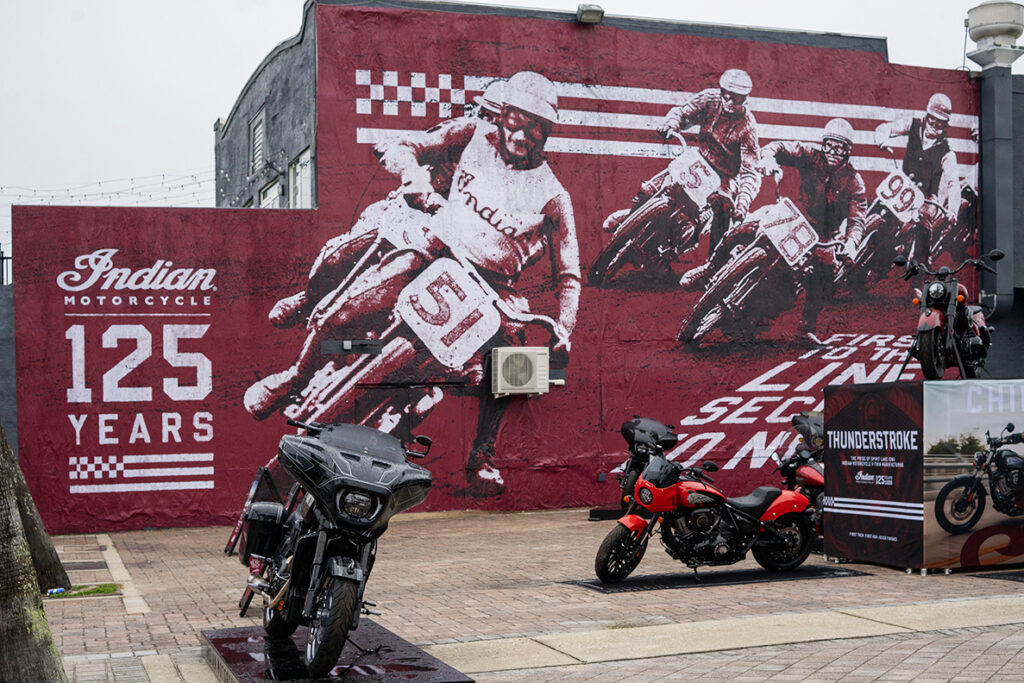
Poster size in outdoor advertising is a creative and strategic decision, not just a logistics variable. The standard single-sheet format does an enormous amount of work in street-level campaigns. But there are specific situations where the standard format is not the right tool, where the wall, the campaign objective, or the creative requires something larger to achieve the intended effect. Understanding when to scale up to large format flyposting and what changes when you do is the foundation of making that format decision well.
Our team at American Guerrilla Marketing executes wheat paste poster campaigns across a full range of formats, from standard single-sheet placements to multi-panel large format executions covering entire building walls. The format decision happens early in the campaign planning process and affects every downstream element: surface selection, print production, installation approach, crew requirements, and budget. Getting it right at the beginning is far more efficient than discovering the format is wrong after print production is complete.
This guide covers what large format flyposting is, when it is the right choice, how it changes campaign planning and execution, and what brands should expect when they move from standard to large format campaigns.
What Large Format Flyposting Means in Practice
Large format flyposting uses multi-panel poster assemblies to create poster installations larger than any single printing sheet. The image is designed as a unified whole, then divided into individual panels that are printed separately and assembled on the wall during installation, with each panel aligned precisely to create a seamless final image.
Common large format configurations in professional flyposting campaigns include 4-sheet formats (combining four standard-size sheets to create an image approximately 4 feet wide by 6 feet tall), 8-sheet formats (approximately 6 by 9 feet), and custom configurations that fill the full usable surface of a large wall. The largest urban wall installations can span tens of feet in either dimension, using hundreds of individual sheet panels assembled by experienced installation teams.
The Visual Impact Difference
The impact difference between standard and large format poster placements is not linear with scale. A poster that is four times the area of a standard sheet is not simply four times as visible. It is qualitatively different in the attention response it generates. A large format poster creates a scale presence that standard formats cannot match: it fills the visual field at viewing distance, commands peripheral vision for pedestrians who have not yet turned to look directly at it, and creates a visual anchor that structures how viewers engage with the entire block face it occupies.
When to Scale Up to Large Format
Large format flyposting is not always the right choice. The decision to scale up should be driven by specific campaign conditions that justify the additional investment and logistical complexity.
When the Creative Demands Scale
Some creative concepts are conceptually dependent on scale. A campaign built around a full-figure portrait, a panoramic landscape, or an immersive visual environment that requires spatial context to communicate its intended message cannot work at standard single-sheet scale. For this creative, the format decision is not optional: the campaign either runs at the scale the creative requires or it does not deliver the intended brand experience.
When the Campaign Needs to Dominate a High-Competition Corridor
In highly competitive outdoor advertising environments where standard format posters are abundant, large format placements create visual scale differentiation that standard placements cannot achieve. A 4-sheet or 8-sheet installation in a corridor where every other posting is a single standard sheet is immediately the most visible element in that environment. It draws the eye that standard format clutter does not capture.
When Social Media Amplification Is a Campaign Objective
Large format poster installations generate significantly more social media documentation than standard format placements. Passersby photograph large installations because the scale makes them interesting, photograph-worthy, and shareable in a way that standard posters rarely are. If organic social media amplification is a meaningful campaign objective, large format placements at one or two high-visibility locations can generate social content that extends the campaign’s reach far beyond its physical footprint.
When a Specific Premium Location Supports the Format
Some locations are inherently suited to large format executions: a building end wall in a dense neighborhood, a cleared construction hoarding panel in a high-traffic corridor, a warehouse wall in a creative district that provides 30 or 40 feet of continuous blank surface. When a premium location of this type exists in the target market, the campaign brief should consider whether large format is appropriate for that specific location, even if the overall campaign uses standard format at other sites.
How Large Format Affects Print Production
Large format flyposting changes the print production process in ways that require specific preparation at the creative and file preparation stages. Understanding these requirements before the campaign brief is finalized prevents the production errors that can delay a campaign or produce unusable materials.
File Preparation for Multi-Panel Printing
A large format poster file must be prepared at the full intended display size, at sufficient resolution for large-scale printing, and with panel division lines, registration marks, and bleed allowances that allow the printer to produce individual panels that align correctly during installation. A file designed at display size and submitted without panel preparation will produce prints that cannot be assembled correctly. Most professional print vendors who specialize in outdoor advertising can provide panel preparation guidance or handle the file preparation as part of their service.
Resolution Requirements
Poster images designed for single-sheet standard format printing at 300 DPI do not scale up to large format without significant quality loss. Large format posters are printed at lower resolution, typically 50 to 100 DPI at full size, which is adequate for viewing at the distances typical of street-level outdoor advertising. Creative files should be provided at the native dimensions of the final format at the appropriate large-format print resolution, not scaled up from a smaller original.
Print Cost Scaling
Print costs for large format campaigns scale directly with the total surface area of the poster. A 4-sheet format uses four times the paper of a single-sheet format. An 8-sheet format uses eight times. For campaigns with limited print budgets, the large format investment per location must be balanced against the number of locations the campaign can achieve within that budget. A campaign with a $3,000 print budget that can produce 100 standard format posters might produce only 12 to 15 large format 4-sheet sets with the same budget.
How Large Format Affects Installation
Large format installations require more crew time, more crew members, and more precise technique than standard format placements. The multi-panel assembly process requires experienced installers who can align panels accurately, manage paste application on large surfaces, and deal with the physical challenges of working at the heights and reach distances that large format surfaces often require.
Our team at American Guerrilla Marketing treats large format installations as specialist operations that require specific crew experience and on-site supervision. The installation quality of a large format poster is visually unforgiving: misaligned panels, visible seams, or uneven paste coverage are immediately apparent at the scale of a large format installation in ways that the same errors at standard format are not.
Frequently Asked Questions
What is large format flyposting?
Large format flyposting refers to poster campaigns using oversized multi-panel wheat paste sheets assembled on a wall to create a single cohesive image larger than any single-sheet format. Common configurations include 4-sheet (approximately 4×6 feet), 8-sheet (approximately 6×9 feet), and larger custom configurations.
When does large format flyposting make more sense than standard format?
Large format makes the most sense when the campaign needs unmissable visual impact, when the creative benefits from scale that smaller formats cannot deliver, when the campaign needs to dominate a competitive environment, or when social media documentation from passersby is a campaign objective.
How does large format flyposting affect print production?
Large format requires multi-panel print production with panel registration marks and bleed allowances for seam alignment during installation. Files must be prepared at the full intended display size at appropriate resolution (typically 50-100 DPI at full size), not scaled up from smaller originals.
What surfaces support large format flyposting?
Large format flyposting requires unobstructed wall surfaces with adequate continuous dimensions matching the planned format. Construction hoarding panels, large building end walls, and clear building faces in warehouse or industrial districts are common large format posting surfaces. Surface identification for large format campaigns requires specific dimensional assessment.
How much more does large format flyposting cost compared to standard format?
Large format typically costs 2 to 4 times more than comparable standard format on a per-location basis due to higher print production costs, more installation time and crew, and more limited surface availability. The trade-off is significantly higher per-location visual impact and better organic documentation potential.
Can large format flyposting be combined with standard format in the same campaign?
Yes. This hybrid approach is common. Large format placements at two or three premium locations create high-impact anchors. Standard format placements fill out geographic coverage with more locations at lower per-location cost. The combination delivers both high-impact anchors and broad market coverage within a single campaign budget.
What creative direction works best for large format flyposting?
Large format flyposting works best with bold, high-contrast creative that reads clearly at viewing distance and rewards close inspection. Strong typography must be legible at full viewing distance while also holding up to up-close scrutiny from pedestrians who walk past. Imagery should be designed specifically for the full format dimensions, not adapted from a smaller creative that was not conceived with large-scale display in mind.