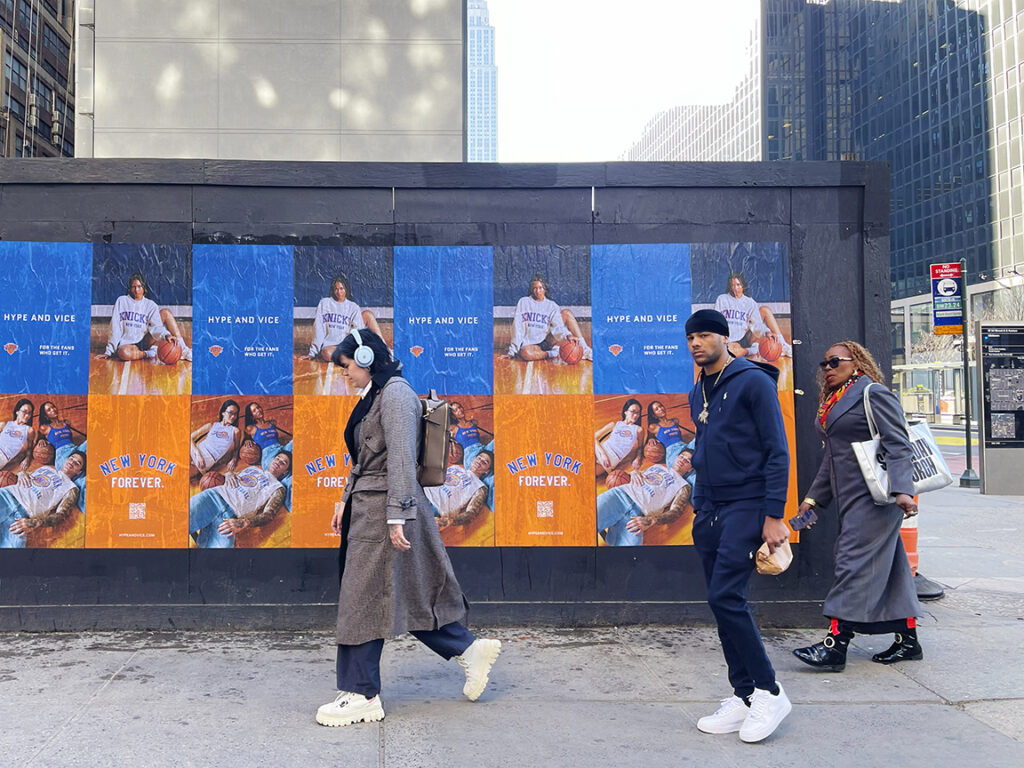
Flyposting is one of the oldest continuous advertising practices in urban history. Long before digital displays, transit advertising, or social media, the act of placing a printed notice on a public wall to communicate a message to passersby was the foundational technology of mass public communication. Today, it has evolved into a precision-executed, GPS-documented, professionally managed advertising medium used by global brands and independent artists alike.
Understanding flyposting means understanding both what it is and what it has become. The basic act, placing a promotional poster on a wall for public visibility, is as old as the printing press. The professional version practiced by operators like our team at American Guerrilla Marketing is something considerably more structured: scouted locations, permitted surfaces, documented installation, and photo reporting that proves every placement ran where it was supposed to run.
This guide covers the definition, history, legal context, and current practice of flyposting for brands and campaign managers who want to understand the medium and how to use it effectively in contemporary advertising campaigns.
Flyposting: A Working Definition
Flyposting refers to the placement of promotional posters on outdoor surfaces, typically in urban environments, for the purpose of public visibility. The term originates in the UK, where “bill posting” and “fly posting” describe the historic practice of posting printed bills on buildings. In the United States, the equivalent practice is most commonly called wheat paste advertising, wheatpasting, or street posters, though the terms overlap significantly in practical use.
In contemporary professional usage, flyposting encompasses both the traditional wheat paste paper poster format and modern variations using vinyl materials, fabric banners, and removable adhesive substrates. The unifying characteristic of flyposting across all these formats is direct surface placement in the urban environment, at eye level, in locations where pedestrian traffic ensures consistent exposure.
Authorized vs. Unauthorized Flyposting
The most important distinction in modern flyposting practice is between authorized and unauthorized placement. Authorized flyposting occurs on surfaces where the property owner has explicitly granted permission for poster placement, either through a formal written agreement or through participation in a managed flyposting location network. Unauthorized flyposting, placing posters without property owner consent, is a different practice entirely, one that carries legal risk for both the operator and the brand.
Professional advertising operators exclusively use authorized placement frameworks. The wheatpaste poster campaigns our team executes are built on documented property owner relationships, not opportunistic unauthorized posting. The distinction matters enormously for brands with legal compliance requirements, and it is the defining difference between a professional advertising service and an informal guerrilla approach.
The History of Flyposting as an Advertising Medium
The practice of placing printed notices on public walls predates modern advertising infrastructure by centuries. In ancient Rome, painted and carved announcements on building walls served the communication function that printed posters would later formalize. The development of the printing press in the 15th century enabled the production of identical multiple copies, and urban environments quickly became covered with printed notices, proclamations, and commercial bills.
The 18th and 19th Century Bill Posting Trade
By the 18th century in London and other major European cities, bill posting had become a formal trade. Bill stickers were recognized commercial operators who contracted with property owners for surface access and offered brands a mechanism to distribute printed advertising across a city’s walls systematically. The practice was chaotic by modern standards but represented the first recognizable professional outdoor advertising infrastructure.
The 19th century entertainment industry accelerated flyposting’s development. Theater companies, music halls, and circus promoters were among the most active users of bill posting as a commercial advertising medium. The competitive posting of entertainment bills became so intense that rival promoters’ bills were often posted directly over each other’s, creating the “over-posting” dynamic that remains a feature of the competitive outdoor advertising market today.
20th Century Evolution
The 20th century brought formalized outdoor advertising structures, including the standardized billboard, transit advertising, and regulated permit-based outdoor media markets. But flyposting persisted and evolved alongside these structured formats, maintaining its relevance as a medium that could operate in locations and at price points that formalized outdoor advertising could not reach.
In the music industry, flyposting became the primary promotional tool for concert and club event promotion from the 1960s onward. The visual culture of rock and punk music was defined in part by the aesthetic of wheat paste concert posters layered on city walls. That association between flyposting and music culture persists in the marketing strategies of contemporary music labels and streaming platforms.
How Modern Brands Use Flyposting Campaigns
Contemporary brand flyposting has evolved dramatically from the informal posting practices of its history. Modern campaigns are professionally planned, permitted, executed, and documented with a precision that was simply not possible before GPS technology, digital photography, and professional campaign management services made systematic accountability standard.
Music and Entertainment Releases
Music label and streaming platform flyposting campaigns remain among the most active in the market. Album releases, tour announcements, film premieres, and streaming content launches use flyposting in key music markets, including New York, Los Angeles, Chicago, Nashville, and Austin, to create street-level presence that drives awareness among the culturally engaged, high-foot-traffic audiences who inhabit those markets. The format works because the audience it targets moves through the physical urban environment where the campaign lives.
Fashion and Streetwear
Fashion brands, particularly in the streetwear and contemporary clothing categories, use flyposting as both an advertising medium and a brand credibility signal. The association between flyposting and street culture gives fashion campaigns that use the format an authenticity that traditional out-of-home advertising cannot replicate. A campaign for a streetwear brand running in Williamsburg, Brooklyn or the Mission District in San Francisco reaches its target audience in their natural environment with a visual format that fits the neighborhood’s existing visual language.
Consumer Goods Product Launches
Consumer goods brands use flyposting for product launches in target urban markets as part of integrated campaign approaches that combine street-level presence with digital and traditional media. The physical presence of the campaign in the streets of a target city creates a sense of market activation that digital-only campaigns cannot produce. Consumers who see a product on a street poster in their neighborhood are getting a qualitatively different brand signal than one delivered through a digital banner ad.
Film and Television Promotion
Film studios and streaming platforms use flyposting as part of theatrical and streaming release campaigns, particularly for films targeting young urban audiences who respond to street-level culture marketing. A large-format poster campaign in high-traffic film-going neighborhoods drives awareness and creates social amplification when audiences photograph and share the installations.
What Professional Flyposting Campaigns Include
A professional flyposting campaign includes far more than the posters themselves. The full campaign scope covers location scouting and brief development, property owner access confirmation, poster production and print quality management, installation crew coordination, GPS-tagged photo documentation of every placement, and a full photo report delivered to the client within 24 to 48 hours of campaign completion.
Documentation and Proof of Performance
The GPS-tagged documentation that a professional flyposting campaign produces is its primary accountability mechanism and its most important client-facing deliverable. Every placement generates a photo with GPS coordinates and timestamp, organized by neighborhood and installation sequence, and assembled into a report that allows the client to verify exactly where and when each poster ran. Our team delivers this level of documentation as standard practice, not as an optional add-on.
Scale and Coverage Options
Professional flyposting campaigns can range from a targeted single-neighborhood activation covering 10 to 20 locations to a market saturation campaign in a major city covering 100 or more locations across multiple neighborhoods. Multi-city campaigns can coordinate simultaneous activations in five, ten, or more cities with consistent documentation standards and unified reporting. The guerrilla marketing capabilities that make multi-city coordination possible are the result of years of operator network development across the markets we serve.
Frequently Asked Questions
What is flyposting?
Flyposting is the practice of placing promotional posters on walls, buildings, and other outdoor surfaces in urban environments. Professionally executed flyposting campaigns use wheat paste adhesive to install paper posters on permitted surfaces, creating high-visibility street-level advertising in high-traffic neighborhoods.
Is flyposting legal?
Flyposting legality depends on the specific circumstances of each placement. Posting on surfaces with property owner permission is legal in most jurisdictions. Unauthorized posting on surfaces without permission violates local ordinances in most US and UK cities. Professional advertising operators obtain documented permission for placements and work within the legal framework applicable to each market.
What is the difference between flyposting and wheatpasting?
Flyposting is a broad term for the practice of placing promotional posters on outdoor surfaces. Wheatpasting is the specific technique of installing paper posters using wheat paste adhesive. Most professional flyposting campaigns use wheat paste as the installation method, making the terms functionally equivalent in many contexts. Flyposting is more commonly used in the UK; wheatpasting is more common in the US.
How long has flyposting been used for advertising?
Flyposting has been used for commercial and political promotion since at least the 18th century, with documented examples of bill posting on buildings in London and other European cities dating to the 1700s. It became a widespread commercial advertising medium in the 19th century, used primarily for entertainment promotions.
What brands use flyposting campaigns today?
Flyposting campaigns are used by music labels for album and tour promotion, streaming platforms for content launches, film studios for theatrical releases, fashion and streetwear brands for seasonal campaigns, consumer goods brands for product launches, and political campaigns for awareness in dense urban markets.
What does a professional flyposting campaign cost?
Professional flyposting campaign costs range from $2,500 to $15,000 or more depending on campaign scale, number of cities, poster format and print run, duration, and documentation requirements. Single-city campaigns targeting one or two neighborhoods typically start in the $2,500-5,000 range.
How is flyposting different from traditional billboard advertising?
Flyposting operates at street level in high-foot-traffic pedestrian environments, while traditional billboard advertising operates at heights designed for vehicular audience visibility. Flyposting reaches pedestrians up close and personally, in the streets they live and work in. It is typically more cost-effective per impression than traditional billboards in comparable urban markets and delivers a different audience quality: people on foot who are genuinely embedded in the neighborhood environment where the campaign runs.