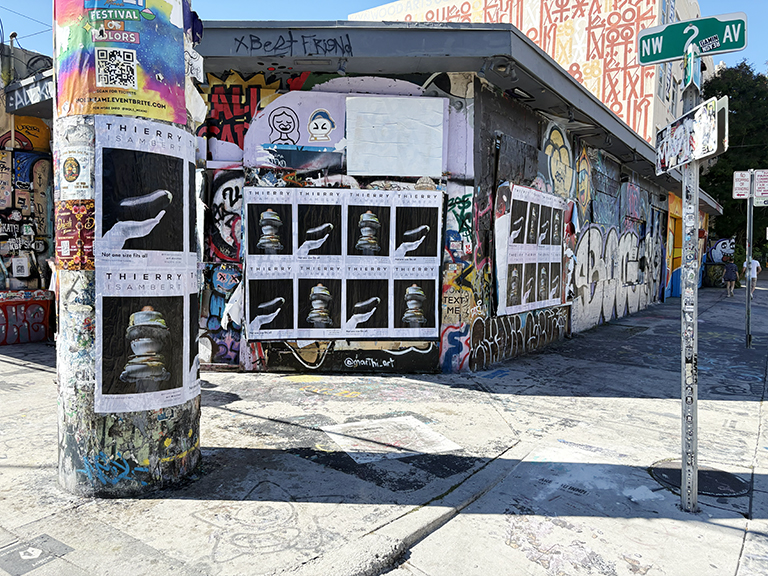
The comparison that matters for brand budgets evaluating street-level advertising isn’t cost-per-click, it’s cost-per-memory. Physical advertising in high-traffic locations builds the kind of brand recall that converts awareness into preference and preference into purchase intent. Those downstream conversion outcomes are what make the ROI case for guerrilla marketing compelling at budget levels where digital reach produces diminishing returns.
Guerrilla marketing uses unconventional, low-cost tactics deployed in public spaces to generate outsized brand impact. American Guerrilla Marketing designs and executes street-level campaigns, wheat posting, stencils, brand ambassadors, projections, and LED trucks, that create genuine consumer encounters and earned media coverage for brands of all sizes.
What makes guerrilla marketing worth understanding in depth is the gap between campaigns that generate impressions and campaigns that generate results. The best campaigns are built around audience movement patterns, not just surface availability, they place messages where the right people walk, dwell, and return repeatedly, which drives the frequency that builds real brand memory. The format also benefits from organic amplification: quality street-level work in high-visibility environments gets photographed and shared, multiplying the original media investment without additional spend.
This article covers the tactical and strategic fundamentals of guerrilla marketing, how campaigns are structured, what execution looks like in practice, how to evaluate format options against objectives and budget, and what distinguishes campaigns that move the needle from campaigns that just spend money. Whether you’re planning a first activation or optimizing an existing street-level program, the information below gives you a grounded framework for making smart decisions and getting measurable outcomes.
Why Sherbrooke Calls for Guerrilla Tactics
Sherbrooke brings together history, thriving academia, and a close-knit urban energy that creates the perfect conditions for guerrilla marketing campaigns to flourish. Anchored by the Université de Sherbrooke and Bishop’s University, this city radiates a youthful drive that marketers would be wise to use. The concentrated population of 170,000 residents, with students representing nearly a quarter of that total, creates an unusually dense target market where activation campaigns can achieve disproportionate reach compared to larger metropolitan areas.
The city’s population is packed with students, young professionals, and culture-seekers, people who are natively skeptical of traditional advertising yet hungry for experiences that feel made specifically for them. This demographic doesn’t respond to bland billboards and generic online ads; they crave authenticity, spontaneity, and campaigns that acknowledge their intelligence while entertaining their sensibilities. Guerrilla marketing captures curiosity, invites participation, and transforms daily routines into moments worth sharing across social platforms, creating organic amplification that paid media simply cannot replicate.
Sherbrooke’s unique urban layout only magnifies this potential. The compact downtown core concentrates pedestrian traffic into predictable patterns, making strategic placement far more effective than in sprawling suburban markets. Unlike Montreal’s overwhelming scale or Quebec City’s tourist-dominated zones, Sherbrooke offers manageable geography where brands can achieve near-total market penetration with properly executed street-level campaigns. The city’s bilingual character adds complexity but also opportunity, campaigns that successfully work through both francophone and anglophone audiences demonstrate cultural sophistication that resonates deeply with locals who value authentic community engagement over corporate messaging.
Downtown perpetually teems with foot traffic, especially along Rue Wellington and Rue King Ouest, where retail corridors blend smoothly with dining, entertainment, and service businesses. The Lennoxville district, thick with student housing, buzzes late into the night with exactly the kind of after-hours energy that makes experiential marketing memorable. Bars and clubs fill up fast when events spill out of the Palais des Sports Léopold-Drolet or when Bishop’s Gaiters games draw crowds from across the region. These hotspots form the backbone of bold, unconventional campaigns that interrupt patterns and create conversation.
Pinpointing Sherbrooke’s Top Guerrilla Marketing Zones
The most impact always starts with location intelligence. In Sherbrooke, certain neighborhoods and hubs practically beg to be canvassed with creative guerrilla tactics that match the character and traffic patterns of each distinct zone.
Off-campus housing zones represent perhaps the single most concentrated opportunity for youth-oriented brands. Lennoxville stands out, with its houses and low-rise apartments crammed with students from both Bishop’s University and Université de Sherbrooke. The streets surrounding College Street and Queen Street see constant foot traffic as students move between residences, campus facilities, and commercial corridors. Posting eye-catching wheatpaste advertising campaigns or hosting pop-up demonstrations beside student apartment clusters can ignite word-of-mouth instantly, with messages spreading through social networks before campaigns even conclude.
Stadium vicinity zones surrounding the Palais des Sports and Stade Amédée-Roy invite high-traffic guerrilla marketing opportunities, especially around game days and special events. These facilities host everything from Sherbrooke Phoenix QMJHL hockey games to concerts, trade shows, and community gatherings that draw thousands of attendees in concentrated time windows. The pre-event and post-event periods create captive audiences moving predictably through surrounding streets, ideal conditions for street team activations, branded experiences, and product sampling that captures audiences when they’re already in entertainment mode and receptive to brand engagement.
Restaurants and nightlife districts cluster heavily along Rue King Ouest and the broader downtown entertainment zone, where establishments compete intensely for the student dollar and young professional demographic. Thursday through Saturday evenings transform these corridors into bustling social scenes where guerrilla tactics like sidewalk signage, brand ambassador teams, and strategic venue partnerships can redirect foot traffic and influence venue selection in real-time. The bar-hopping culture means patrons are actively mobile throughout evenings, creating multiple touchpoint opportunities within single outings.
The Marché de la Gare and surrounding streets capture diverse demographics beyond the student focus, including families, professionals, and tourists exploring Sherbrooke’s culinary and artisan offerings. Weekend markets create outstanding opportunities for product sampling campaigns and experiential activations that benefit from the relaxed, exploratory mindset shoppers bring to these environments. The mixed-age demographic allows brands to test messages across segments simultaneously while building community presence that extends beyond narrow targeting.
Universities as Guerrilla Marketing Epicenters
University campuses function as self-contained cities within Sherbrooke, each with distinct cultures, traffic patterns, and opportunities for guerrilla marketing penetration. Université de Sherbrooke enrolls approximately 32,000 students across its health, engineering, business, and liberal arts programs, creating a massive concentrated market with predictable daily movement between lecture halls, residences, libraries, and campus amenities. The campus sprawls across multiple sectors with interconnected pathways that funnel student traffic through choke points ideal for strategic campaign placement.
Campus-adjacent commercial zones benefit tremendously from their proximity to university facilities. Businesses along Boulevard de l’Université and surrounding streets capture students before and after classes, during lunch breaks, and throughout study sessions that extend into evenings. Guerrilla campaigns positioned along these corridors benefit from repeated exposure as students pass the same routes multiple times daily, building familiarity and recall through frequency rather than just single-impression impact. Coffee shops, quick-service restaurants, print centers, and convenience stores in these zones represent natural partnership opportunities for co-marketing guerrilla activations.
Bishop’s University presents a distinctly different profile despite its geographic proximity in Lennoxville. With approximately 3,000 students, Bishop’s cultivates a tight-knit, predominantly anglophone community with strong campus culture and school spirit. The smaller scale means campus-wide message penetration requires fewer touchpoints, but demands higher quality execution since missteps become equally visible. The historic campus architecture and walkable layout create intimate settings where experiential activations feel like community events rather than commercial intrusions, provided brands approach with appropriate cultural sensitivity and authentic engagement rather than hard-selling tactics.
Residence halls and student housing complexes represent captive audiences with high message receptivity during specific dayparts. Early evening hours as students return from classes, late evenings during study breaks, and weekend afternoons offer optimal windows for engaging students in their living environments. Wheatpaste campaigns on nearby utility boxes, lamp posts, and approved surfaces create unavoidable visibility, while product sampling activations at residence entrances capture students precisely when they’re transitioning between academic and personal time, psychologically more open to discovery and trial.
Bar and Restaurant Guerrilla Strategies
Sherbrooke’s bar and restaurant scene thrives on constant innovation, with establishments perpetually competing for share of the student entertainment budget and the disposable income of young professionals. Traditional advertising channels deliver diminishing returns in this sector, while guerrilla tactics that create buzz, urgency, and social proof drive measurable traffic and revenue impacts.
Grand opening campaigns benefit enormously from strategic guerrilla saturation in the weeks leading up to launch. Wheatpaste poster campaigns building anticipation across high-traffic pedestrian zones create awareness and curiosity that paid social media alone cannot achieve. The physical presence of posters throughout neighborhoods where target customers live and socialize signals permanence and legitimacy that digital-only campaigns lack. Pairing poster saturation with street team activations distributing VIP passes, opening night tickets, or exclusive promotional codes creates multiple touchpoints that move audiences from awareness through consideration to commitment.
Weekly event promotion requires sustained visibility without the budget-draining costs of continuous paid advertising. Sidewalk decal campaigns positioned along routes between campus zones and nightlife districts create directional guidance that influences venue selection as groups move through entertainment areas. Decals positioned outside competing venues or at key decision points, intersections, transit stops, popular gathering spots, intercept audiences precisely when they’re determining where to spend their evening. The non-intrusive nature of sidewalk decals means they guide without overtly selling, creating subconscious influence that feels like discovery rather than advertising.
Seasonal campaigns aligned with academic calendars create timely relevance that amplifies message resonance. Back-to-school campaigns in late August and early September capture incoming students forming new habits and discovering neighborhood establishments. Exam period campaigns offering study-friendly environments or stress-relief promotions demonstrate understanding of student lifecycles. End-of-semester celebrations and graduation events represent high-spending occasions where tactical guerrilla campaigns can capture significant revenue during compressed timeframes. Sports bars benefit from game-day guerrilla activations timed to major hockey games, playoff series, or special sporting events that drive predictable traffic surges.
Partnership amplification uses complementary businesses to extend guerrilla campaign reach. Restaurants can partner with campus bookstores, student unions, or popular retailers to cross-promote through coordinated wheatpaste campaigns that create unified messaging across multiple touchpoints. Street teams distributing dining vouchers or happy hour invitations outside partner locations introduce restaurants to pre-qualified audiences already engaged in related consumption behaviors. Co-branded experiential activations at festivals, markets, or community events position restaurants within lifestyle contexts that build brand affinity beyond transactional relationships.
Wheatpaste Advertising in Sherbrooke
Wheatpaste advertising represents one of the most cost-effective and high-impact guerrilla tactics available in Sherbrooke’s dense urban environment. The technique involves applying posters to approved surfaces using wheat-based adhesive, creating bold visual presence that commands attention in ways digital advertising cannot replicate. The tangible, physical nature of wheatpaste campaigns cuts through the endless scroll of online content, forcing cognitive engagement from pedestrians who encounter messaging during daily routines.
Strategic placement determines campaign effectiveness more than any other factor. High-traffic pedestrian corridors along Rue Wellington, Rue King Ouest, and Boulevard de l’Université offer maximum exposure to target demographics moving through commercial and campus zones. Construction barriers surrounding development projects provide large-format placement opportunities that dominate visual fields and create unavoidable brand presence. Utility boxes, approved kiosks, and designated posting surfaces near transit stops capture audiences during wait times when attention naturally scans surroundings seeking stimulation or information.
Design considerations for Sherbrooke campaigns must account for bilingual requirements and cultural context. Effective posters feature bold typography readable from distance, high-contrast color schemes that pop against urban backgrounds, and minimal copy that communicates core messages in seconds rather than requiring sustained reading. Images that tell stories visually transcend language barriers while ensuring message comprehension across francophone and anglophone audiences. QR codes linking to campaign landing pages or social media profiles bridge physical and digital channels, allowing interested audiences to immediately deepen engagement beyond initial poster exposure.
Regulatory compliance protects campaigns from premature removal while maintaining community relationships essential for ongoing marketing presence. Sherbrooke municipal bylaws regulate outdoor advertising with specific provisions for temporary postings, requiring property owner permission for private surfaces and permits for designated public posting areas. Working with experienced agencies like American Guerrilla Marketing ensures full legal compliance while maximizing creative impact, working through the complex intersection of advertising regulations, property rights, and municipal codes that govern street-level campaigns.
Campaign rotation maintains freshness and prevents audience habituation that diminishes impact over extended runs. Refreshing creative every two to three weeks sustains novelty and signals active brand presence rather than stale, forgotten messaging. Sequential creative executions can tell evolving brand stories, build anticipation for upcoming events, or highlight rotating product offerings that give audiences reasons to continually re-engage. The relatively low cost of wheatpaste production compared to traditional media enables aggressive testing of creative variations, with real-world performance data informing optimization faster than digital A/B testing cycles.
Street Team Activations
Street team activations bring guerrilla marketing to life through direct human interaction, transforming passive message exposure into active brand experiences that create memorable connections. In Sherbrooke’s community-oriented culture, personal engagement carries outstanding weight, with authentic interactions generating word-of-mouth amplification that extends campaign reach far beyond initial contact points.
Team composition significantly impacts campaign effectiveness and cultural reception. Bilingual team members fluent in both French and English work through Sherbrooke’s linguistic space naturally, engaging audiences in their preferred language without awkward code-switching or communication barriers. Recruiting team members from local universities creates authenticity and peer credibility, as students engage fellow students as equals rather than obvious corporate representatives. Demographic matching, age, style, cultural fluency, ensures teams blend smoothly into target environments rather than standing out as outsiders intruding on community spaces.
Activation formats range from simple promotional distribution to complex experiential installations. Branded material distribution along high-traffic corridors creates broad awareness through flyers, coupons, branded merchandise, or product samples that give audiences tangible brand touchpoints they carry into subsequent activities. Interactive demonstrations showcasing products or services in real-world contexts allow audiences to experience benefits firsthand rather than relying on marketing claims. Pop-up installations transforming public spaces into branded environments create shareable moments that generate organic social media content as participants photograph and post experiences to their networks.
Event amplification uses existing gatherings to maximize audience concentration and engagement receptivity. Positioning street teams outside concerts, sporting events, festivals, or campus activities captures audiences already in entertainment mode and psychologically open to brand engagement. Pre-event positioning builds anticipation and awareness, while post-event activations capture audiences riding positive emotional momentum from enjoyable experiences. Sports game activations outside Palais des Sports Léopold-Drolet connect brands with passionate fans in heightened emotional states that enhance memory encoding and brand association formation.
Technology integration extends street team impact beyond face-to-face interactions. Teams equipped with tablets capturing email addresses or social media follows convert momentary interactions into ongoing relationships enabling sustained marketing communication. Social media contests or challenges encouraging participants to post content using campaign hashtags multiply reach as participants’ networks encounter branded messages through trusted peer sharing rather than corporate channels. Real-time campaign dashboards tracking activation metrics allow on-the-fly optimization, shifting team deployment toward higher-performing locations or adjusting messaging based on audience feedback patterns.
Sidewalk Decal Campaigns
Sidewalk decal campaigns represent creative guerrilla tactics that transform pedestrian infrastructure into strategic marketing real estate. These weather-resistant vinyl graphics applied to sidewalks, plazas, and pedestrian zones create impossible-to-miss brand presence along routes target audiences traverse daily, building familiarity through repeated exposure without the visual fatigue that accompanies more aggressive advertising formats.
Placement strategy determines campaign success in Sherbrooke’s walkable urban core. Decals positioned along routes connecting campus facilities to off-campus housing guide students past advertised businesses during daily commutes between academic and residential zones. Placement outside competing venues or at key decision intersections influences venue selection as groups work through entertainment districts deciding where to spend evenings. Transit stops, crosswalks, and other natural waiting points capture attention during idle moments when pedestrians scan surroundings seeking visual stimulation, creating ideal conditions for message absorption.
Creative execution must balance visibility with subtlety to avoid perception as visual pollution that damages brand reputation. Directional messaging guiding pedestrians toward venues or events provides value while promoting brands, positioning marketing as helpful information rather than intrusive selling. Artistic or entertaining designs that beautify urban spaces generate positive brand associations as pedestrians appreciate aesthetic contributions to public environments. Interactive elements like hopscotch patterns, trivia questions, or social media prompts transform decals from passive messaging into participatory experiences that create memorable brand interactions.
Regulatory navigation requires understanding Sherbrooke municipal codes governing temporary sidewalk installations. Public sidewalks typically require permits from the Service de l’aménagement et de l’urbanisme, with approval timelines ranging from several days to weeks depending on placement locations and campaign scope. Private property sidewalks adjacent to businesses require property owner permission but avoid municipal approval processes, enabling faster deployment. Professional installation ensures proper adhesion and positioning that withstands pedestrian traffic and weather exposure throughout campaign runs, while professional removal prevents surface damage and maintains community relationships essential for ongoing marketing presence.
Performance measurement tracks decal campaign impact through multiple metrics. Foot traffic counts at advertised locations before, during, and after campaigns quantify direct traffic influence. Unique promotional codes or QR codes on decals enable attribution tracking, connecting sidewalk exposure to conversions and sales. Social media monitoring identifies organic content creation as pedestrians photograph and share novel or entertaining decal installations. Surveys asking customers how they discovered businesses reveal sidewalk advertising’s role in awareness and consideration pathways that lead to patronage.
Timing Your Sherbrooke Campaign
Strategic timing amplifies guerrilla marketing effectiveness by aligning campaigns with periods of maximum audience receptivity, predictable behavior patterns, and seasonal opportunities unique to Sherbrooke’s academic-driven calendar. Understanding the city’s annual rhythms enables precise campaign deployment that captures attention when audiences are most open to messaging and primed for action.
Academic calendar alignment creates natural campaign windows corresponding to student lifecycle stages. Late August and early September bring incoming students discovering neighborhood businesses and forming consumption habits that persist throughout academic years. Campaigns targeting new students during orientation periods establish brand presence before competitors, creating first-mover advantages in awareness and trial. Mid-semester periods offer opportunities to capture established students seeking variety or alternatives to familiar choices. End-of-semester campaigns align with celebratory spending during exam completion and holiday breaks, capturing improved budgets and social gathering frequency.
Seasonal considerations account for Sherbrooke’s harsh winters and glorious summers that dramatically impact pedestrian traffic patterns and outdoor activity viability. Summer months see reduced student populations as many return home, but increased tourism and local festival activity that brings different demographic opportunities. Fall campaigns benefit from comfortable weather encouraging outdoor activities and pedestrian traffic, with autumn colors creating beautiful backdrop contexts for visual campaigns. Winter campaigns require indoor focus or strategic placement in climate-controlled connector tunnels and skyways that students traverse between buildings avoiding exterior cold. Spring emergence brings renewed outdoor activity and psychological optimism that enhances message receptivity and engagement willingness.
Event-based timing uses predictable gatherings that concentrate target audiences in known locations during specific timeframes. The Festival des Traditions du Monde, Sherbrooke’s major multicultural celebration, draws massive crowds creating outstanding guerrilla marketing opportunities for brands aligned with diversity, culture, or international themes. Concert series, sports championships, and community events listed on municipal calendars enable advance planning of street team deployments, wheatpaste saturation, and experiential activations that capture event-goers before, during, and after gatherings. Sporting events featuring the Sherbrooke Phoenix or Bishop’s Gaiters create predictable traffic surges around stadium zones that tactical campaigns can exploit.
Day-of-week and time-of-day optimization matches campaign deployment to audience availability and receptivity patterns. Thursday through Saturday evenings represent peak social activity periods when students and young professionals actively engage entertainment options, making these windows ideal for nightlife-focused guerrilla tactics. Weekday lunch hours capture downtown professionals and students between classes, creating opportunities for quick-service restaurants and convenience offerings. Late-night weekend hours target after-bar crowds seeking food options, with street teams positioned outside closing venues redirecting patrons to late-night establishments through timely engagement and compelling offers.
Bilingual Considerations
Sherbrooke’s bilingual character demands sophisticated cultural and linguistic navigation that can make or break guerrilla marketing campaigns. While approximately 95% of residents identify French as their primary language, the significant anglophone presence at Bishop’s University and among certain professional demographics creates complex linguistic landscapes requiring nuanced approaches beyond simple translation.
Language-first design prioritizes French messaging while ensuring anglophone accessibility through carefully structured bilingual execution. French-dominant designs with English secondary placement respect Quebec’s linguistic legislation while serving anglophone audiences. Visual storytelling that transcends language barriers through imagery, symbols, and universal design languages ensures message comprehension regardless of viewer linguistic preference. Color coding, iconography, and spatial organization can differentiate language versions while maintaining unified brand identity across bilingual materials.
Cultural localization extends beyond literal translation to authentic cultural resonance. Quebec French differs from European French in vocabulary, expressions, and cultural references that impact message perception and effectiveness. Using Quebec-specific terminology, cultural touchpoints, and humor styles demonstrates genuine cultural understanding rather than superficial translation that feels foreign despite technical accuracy. References to local landmarks, regional traditions, and community-specific experiences create insider credibility that signals authentic community engagement rather than external corporate messaging imposed on local markets.
Street team language capabilities determine activation success in direct audience interactions. Bilingual team members who code-switch naturally between French and English create smooth engagements that make audiences feel understood and valued in their linguistic identity. Monolingual French teams suffice for predominantly francophone neighborhoods but limit effectiveness in mixed linguistic environments or anglophone-concentrated zones near Bishop’s University. Team briefings should address both linguistic execution and cultural sensitivity, ensuring representatives understand not just what to say but how cultural context shapes appropriate interaction styles.
Testing protocols validate bilingual effectiveness before full campaign deployment. Focus groups including both francophone and anglophone participants identify translation errors, cultural missteps, or design elements that resonate differently across linguistic communities. Street testing in diverse Sherbrooke neighborhoods reveals real-world reception and engagement patterns that controlled research environments might miss. Monitoring social media conversations in both languages provides ongoing feedback during active campaigns, enabling rapid adjustments if messaging generates unintended interpretations or cultural friction.
Measuring Campaign Success
Complete performance measurement transforms guerrilla marketing from creative experimentation into data-driven strategy, enabling continuous optimization and demonstrable ROI that justifies ongoing investment. Sherbrooke campaigns benefit from trackable metrics spanning awareness, engagement, and conversion that connect street-level activations to business outcomes.
Awareness metrics quantify campaign reach and message penetration across target audiences. Foot traffic counts in campaign deployment zones establish baseline exposure estimates, with pedestrian flow data indicating how many individuals encountered messaging during campaign runs. Social media impressions and reach measurements track digital amplification as physical campaigns generate online conversation, shares, and user-generated content. Brand awareness surveys administered before and after campaigns measure aided and unaided recall, establishing whether guerrilla tactics successfully implanted brand knowledge in target demographic consciousness.
Engagement metrics assess audience interaction quality and message resonance beyond passive exposure. Street team interaction counts document face-to-face conversations, material distribution volumes, and demonstration participation rates that indicate receptivity levels. Social media engagement rates including likes, comments, shares, and user-generated content creation reveal emotional resonance and motivation to spread brand messages through personal networks. QR code scans and campaign-specific URL visits bridge physical and digital channels, tracking how many audience members sufficiently engaged to take explicit action extending initial encounters.
Conversion tracking connects guerrilla campaigns to revenue generation and customer acquisition. Unique promotional codes distributed during street activations or printed on wheatpaste posters enable precise attribution when redeemed, quantifying how many exposures convert to transactions. Point-of-sale inquiries asking new customers how they discovered businesses reveal guerrilla marketing’s role in customer acquisition pathways. Website analytics showing traffic spikes, geographic concentration, and conversion patterns during campaign periods establish causal connections between street-level activations and digital outcomes. Customer lifetime value analysis determines whether guerrilla-acquired customers demonstrate retention, repeat purchase, and advocacy behaviors that justify acquisition costs.
Comparative analysis benchmarks guerrilla campaign performance against alternative marketing channels competing for budget allocation. Cost-per-thousand-impressions calculations comparing guerrilla tactics to digital advertising, traditional media, and other channels reveal relative efficiency in awareness generation. Cost-per-acquisition comparisons establish whether guerrilla-driven customers cost more or less to acquire than those from paid search, social advertising, or traditional channels. Share-of-voice measurements assess guerrilla marketing’s contribution to overall brand presence within Sherbrooke markets, indicating whether street-level campaigns meaningfully shift competitive positioning or remain marginal awareness drivers.
Frequently Asked Questions
What is guerrilla marketing?
Guerrilla marketing uses unconventional, often low-cost tactics in public environments to generate disproportionate brand impact. The approach prioritizes surprise, authenticity, and direct audience engagement over paid media reach. Tactics include wheat paste posting, sidewalk stencils, brand ambassador activations, projection advertising, LED trucks, and pop-up experiences.
How much does a guerrilla marketing campaign cost?
Guerrilla marketing campaigns scale widely by market, tactics, and duration. Small-market activations using a single tactic can start in the mid-hundreds to low thousands. Full multi-tactic campaigns in major metros run higher. American Guerrilla Marketing builds custom programs with transparent pricing based on specific objectives, markets, and timelines.
What industries use guerrilla marketing most effectively?
Entertainment, fashion, food and beverage, technology, nonprofit, and political campaigns are frequent users of guerrilla marketing tactics. The format works for any brand seeking authentic audience connection in physical environments, particularly effective for reaching consumers who actively avoid traditional advertising.
Is guerrilla marketing legal?
Legality depends on the specific tactics and locations used. Wheat paste posting, stencils, and street team work operate in a range from fully permitted to technically unpermitted depending on surfaces and municipalities. American Guerrilla Marketing operates within a compliance framework that balances campaign coverage with appropriate risk management for each client.