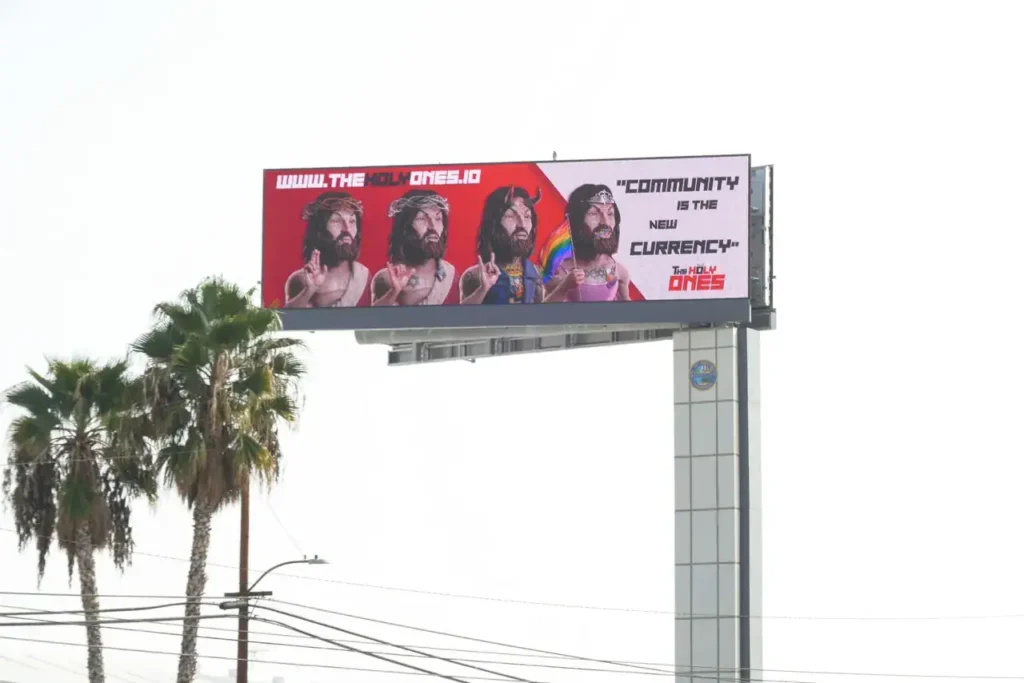
Charleston, South Carolina is one of the most advertising-restricted cities in the Southeast, strict sign ordinances, historic preservation overlay zones, and tight controls on new billboard construction have kept outdoor advertising inventory deliberately limited across the city’s most commercially active areas. The historic peninsula south of Calhoun Street has essentially no billboard presence. King Street, one of the highest-performing retail corridors in South Carolina, has no conventional billboard inventory. Meeting Street, Broad Street, and the entire Battery area are preserved under design review rules that prohibit traditional outdoor advertising. This scarcity is actually a marketing opportunity, it makes the inventory that does exist genuinely valuable, and it makes alternative guerrilla formats like projection advertising, street poster advertising, mobile LED trucks, and street-level activations some of the most competitively advantaged tactics available in any Southeast market. We’ve executed campaigns in Charleston across multiple advertising formats and this guide covers everything you need to plan effectively in this specific market.
Understanding Charleston’s Unique Outdoor Advertising Environment
The character that makes Charleston one of America’s most visited cities, the preserved antebellum architecture, the cobblestone streets, the meticulously maintained historic district, is also the reason its commercial advertising environment is unlike most comparably sized cities. The city’s Board of Architectural Review (BAR) administers the Old and Historic District and the Old City District, which together cover the entire downtown peninsula. The BAR reviews and approves exterior changes to buildings and streetscapes within these districts, and standard billboard structures simply don’t get approved within them.
Beyond the historic district regulations, Charleston County and the City of Charleston have adopted sign ordinances that are generally more restrictive than South Carolina’s baseline state regulations. The result is a market where billboard advertising concentrates almost entirely outside the peninsula, on the approach corridors and suburban commercial zones that don’t carry the same historic preservation restrictions.
The primary operators in the Charleston outdoor advertising market are Adams Outdoor Advertising (which holds the most significant inventory in the Charleston metro through an exclusive arrangement on I-26 and other key corridors), Clear Channel Outdoor, and several smaller regional operators managing specific arterial and suburban inventory. Understanding which operator controls which inventory is the first practical step in planning a Charleston outdoor campaign.
Charleston Billboard Advertising Costs in 2026
| Format / Location |
Monthly Rate (2026) |
Notes |
| Standard static bulletin, suburban arterial (US-17, Dorchester Rd) |
$1,500–$3,500 |
Standard suburban commercial corridors |
| I-26 corridor, standard position |
$2,500–$6,000 |
Primary inbound approach from Summerville/Goose Creek |
| I-26, premium gateway inbound position |
$4,500–$10,000 |
Highest-demand positions near the Ashley Phosphate/Dorchester interchanges |
| I-526 (Mark Clark Expressway) |
$2,000–$6,500 |
North Charleston and Airport corridor |
| US-17 North / Ravenel Bridge approach |
$2,500–$7,000 |
Mount Pleasant suburban approach |
| Savannah Highway (US-17 South) |
$1,800–$4,500 |
West Ashley commercial corridor |
| Digital bulletin, standard North Charleston position |
$2,000–$5,500 |
Rivers Ave, Ashley Phosphate area |
| Digital bulletin, premium corridor |
$3,500–$8,000 |
I-26 / I-526 premium digital inventory |
| Mobile LED billboard truck (per day) |
$250 to $300 per hour, 8-hour minimum |
Charleston market rate; includes route planning and documentation |
| Static vinyl mobile billboard (per day) |
$700–$1,400 |
Lower cost alternative for sustained market presence |
| Vinyl production (14×48 bulletin) |
$800–$1,800 |
Separate from media cost; required for all static placements |
All rates are 2026 market estimates based on current placement activity. Contact AGM at americanguerrillamarketing.com/contact for current inventory availability and negotiated rates.
Charleston’s Key Advertising Corridors: Where the Inventory Lives
Interstate 26: The Primary Market Gateway
I-26 is Charleston’s most important outdoor advertising corridor. The interstate runs from the Summerville and Goose Creek suburban communities in the northwest through North Charleston and toward the peninsula, carrying the primary commuter flow between the rapidly growing inland residential areas and the downtown employment center. The daily traffic on I-26 between the Ashley Phosphate Road interchange (Exit 213) and the downtown connection represents some of the highest sustained volumes in the Charleston metro.
The gateway positions on I-26, particularly the boards visible to westbound morning traffic on the approach from the North Charleston airport corridor and to eastbound traffic returning to the suburbs in the afternoon, are the most premium fixed billboard positions in the Charleston market. Adams Outdoor controls the majority of I-26 inventory and holds consistent demand from regional and national advertisers, meaning that specific high-value positions book out weeks or months in advance. Brands planning campaigns around specific seasonal windows (Charleston Restaurant Week, the SEWE, Spoleto, or the tourist summer peak) should book 8–10 weeks in advance for I-26 positions.
US-17 North: The Mount Pleasant / East Cooper Corridor
US-17 North through Mount Pleasant is the primary approach corridor for the East Cooper communities, Mount Pleasant (population 100,000+), Isle of Palms, Sullivan’s Island, and the resort communities of Kiawah and Seabrook Island accessible via US-17 further south. The Mount Pleasant-to-downtown approach via US-17 and the Ravenel Bridge carries one of the highest-income daily commuter profiles in the Charleston metro.
Mount Pleasant has become one of the fastest-growing communities in South Carolina and has consistently high household income. Brands targeting the affluent suburban professional demographic, financial services, luxury automotive, healthcare, high-end retail, and home services, should prioritize US-17 North inventory over the broader market average, as the demographic quality of the audience in this specific corridor is significantly above the market mean.
The Arthur Ravenel Jr. Bridge itself is a visual landmark with massive daily traffic flow, but commercial advertising is not permitted on the bridge structure itself or on the directly adjacent waterfront areas, consistent with the city’s waterfront preservation standards. The last billboard positions on US-17 before the bridge are the most premium positions on this corridor.
Savannah Highway (US-17 South) and the James Island / West Ashley Corridor
West Ashley, the largest suburban zone within the city of Charleston proper, commutes into downtown primarily via Savannah Highway (James Island Connector and US-17 South). The Sam Rittenberg Boulevard and Glenn McConnell Parkway intersections with Savannah Highway are the highest-traffic points in the West Ashley commercial corridor. This zone reaches a middle-income suburban population, teachers, healthcare workers, small business owners, military families, that differs significantly in demographic profile from the Mount Pleasant East Cooper corridor.
The James Island Connector itself carries significant daily commuter volume from the James Island residential community to the peninsula, but like the Ravenel Bridge, it has limited billboard inventory on the connector structure itself. The approaches on the James Island side (Folly Road / Folly Beach Road corridor near the intersection with Camp Road) and on the peninsula side (Lockwood Drive approaching the downtown Medical District) offer the best available positions for reaching James Island commuters.
North Charleston Commercial Corridors
Rivers Avenue, Ashley Phosphate Road, and Dorchester Road in North Charleston constitute the highest-density billboard advertising zone in the metro area. These are the corridors where historic preservation restrictions don’t apply, where commercial development is denser, and where the city’s sign regulations are standard rather than restrictive. This zone reaches a working-class, middle-income, and military family demographic, the population of North Charleston is significantly diverse and includes a large proportion of active-duty military and their families from the nearby bases.
Rivers Avenue in particular carries high daily volumes from both North Charleston residents and commuters using it as an alternative to I-26, and has some of the most affordable per-impression billboard inventory in the broader Charleston market. Brands with broad demographic appeal and price-point sensitivity (retailers, fast food, banking, healthcare, and service businesses) often find North Charleston billboard inventory delivers the best CPM in the market.
Guerrilla Marketing: Reaching the Charleston Peninsula Without a Billboard
The absence of conventional billboard advertising on the Charleston peninsula creates a genuine competitive advantage for brands willing to use alternative formats. While national and regional advertisers compete for limited I-26 and US-17 inventory, brands that bring street-level guerrilla tactics to the peninsula operate in a less congested advertising environment with better access to the highly engaged urban consumer audience that lives and works there.
Street poster advertising and Poster Campaigns on the Peninsula
The Upper King Design District, the blocks of King Street from Cannon Street northward through the Cannonborough-Wagener and Radcliffeborough neighborhoods, is Charleston’s most creatively active commercial corridor. Independent restaurants, boutique retail, design studios, and the night life that characterizes the Upper King scene create sustained foot traffic from an upscale, brand-aware, social-media-active consumer. Street poster advertising on construction hoardings, approved building surfaces, and permitted posting locations in and around the Upper King corridor reaches this audience in a market environment where virtually no competing outdoor advertising exists.
We’ve executed poster campaigns in the Upper King corridor, on the Morrison Drive/Neck Area between the peninsula and North Charleston, and in the Wagener Terrace and Hampton Park neighborhoods on the western side of the peninsula. Each of these zones has a distinct demographic character, Upper King (creative professionals), Morrison Drive/Neck Area (the growing arts and industrial-to-residential conversion zone), Wagener Terrace (young professional families), that brands can select based on target audience fit.
Production and installation for a 50–100 location Charleston peninsula poster campaign requires a custom quote from AGM. We coordinate all placements to ensure compliance with city of Charleston sign ordinances and obtain property owner authorization for all private surface placements.
Projection Advertising on Historic Facades
Charleston’s historic masonry building facades are outstanding projection advertising surfaces, broad, flat, well-lit by ambient light in the evening, and highly visible from the streets in the compact peninsula geography. Evening projection on a visible building face in Marion Square, on the Convention Center Boulevard approach, or on the Waterfront Park facing East Bay Street creates dramatic brand presence in zones where no conventional advertising exists.
Projection campaigns timed around Charleston’s major festivals and events, Spoleto Festival USA (late May–June), Charleston Wine + Food Festival (March), the Southeastern Wildlife Exposition (February), and the holiday Festival of Lights season, create brand moments during the highest tourist traffic windows of the Charleston year. During Spoleto alone, hundreds of thousands of visitors from across the country concentrate on the peninsula in a compact three-week period, creating a tourism-season advertising window that outdoor campaigns outside the peninsula reach only partially.
Mobile LED Billboard Trucks
Mobile LED trucks operating in the peninsula’s streets, technically not subject to the same static advertising restrictions that apply to fixed signage, provide active brand presence in zones where fixed boards simply don’t exist. A truck running the King Street corridor, East Bay Street, Meeting Street, and the Waterfront Park area carries brand messaging through Charleston’s most visited and commercially active streets without any of the historic preservation restrictions that govern fixed signage. We’ve operated trucks in Charleston during festival periods, restaurant openings, and retail brand activations along King Street, and the market’s compactness means a single truck covers the entire commercial peninsula in a 4–6 hour operating window.
Charleston’s Tourism Market: A Specific Advertising Opportunity
Charleston hosts approximately 7 million visitors annually. The tourism industry is one of the city’s largest economic drivers and represents a distinct advertising opportunity separate from the resident consumer market. Visitors concentrate in specific geographic corridors: the historic peninsula (King Street, the Market, Church Street, Broad Street, the Battery), the Beaches (Folly Beach, Sullivan’s Island, Isle of Palms), and the resort corridors (Kiawah Island Road on Johns Island, Seabrook Island Road).
Formats that specifically reach the visitor market include hotel corridor advertising (key card advertising, lobby displays, in-room materials at the peninsula’s major hotels including the Francis Marion, the Charleston Place, the Harbourview Inn, and the newer properties along Calhoun Street), street poster advertising near the cruise terminal on North Morrison Drive (where passengers disembark for city exploration), and mobile billboard truck operations along the peninsula visitor circuit during the peak tourist season from March through November.
Combining Traditional OOH with Guerrilla Formats in Charleston
The most effective Charleston advertising strategies we’ve executed combine the reach of traditional I-26 and US-17 billboard placements with the precision of peninsula-focused guerrilla tactics. A highway billboard on I-26 builds broad metro awareness among Charleston commuters. A street poster advertising and street team activation in the Upper King and Cannonborough neighborhoods on the peninsula converts that awareness into direct engagement with the specific consumer audience that drives the category.
The two-layer approach, outdoor advertising for broad reach, guerrilla tactics for targeted neighborhood engagement, creates the brand perception of ubiquity that single-format campaigns of equivalent budget cannot achieve. When a Charleston resident sees your billboard on I-26 during their morning commute and then walks past your street poster campaign on King Street in the afternoon, the brand registers as being “everywhere” in a way that either format alone doesn’t generate.
Frequently Asked Questions
Charleston Billboards: The Unconventional Marketing Champion in the Lowcountry generates better results when placement, timing, creative, and local execution all work together in South Carolina. These questions cover the details brands usually need before launch, during rollout, and while evaluating performance.
For billboard in South Carolina, the strongest campaigns usually come from tight geographic targeting, message discipline, and enough repetition to be remembered. Market conditions, neighborhood flow, event calendars, commuter behavior, and production logistics all change how the tactic performs, so the planning details matter as much as the idea.
Are there billboards on King Street in Charleston?
No. King Street and the entire historic downtown peninsula are under historic preservation overlay regulations that effectively prohibit traditional billboard advertising. Commercial brands wanting presence on King Street must use permitted alternatives, mobile advertising that drives through the corridor, street poster advertising on approved surfaces in adjacent areas, event sponsorships at venues along King Street, or approved commercial signage within specific design guidelines.
How much do billboards cost in Charleston, SC?
Charleston billboard rates run $1,500–$10,000/month depending on corridor and position. Prime I-26 gateway positions run $4,500–$10,000/month. Standard suburban arterial boards on US-17 and in the North Charleston commercial corridors run $1,500–$4,500/month. Digital boards run $2,000–$8,000/month.
Who controls billboard inventory in Charleston?
Adams Outdoor Advertising holds the largest inventory position in the Charleston metro, with significant control over I-26 corridor inventory. Clear Channel has presence on specific corridors. Several independent and regional operators manage individual boards on commercial arterials. AGM has relationships with all major operators and can source inventory across the full market.
Can AGM run guerrilla campaigns on the Charleston peninsula?
Yes. We’ve executed street-level campaigns on the Charleston peninsula through street poster advertising, brand ambassador activations, projection advertising, and mobile billboard truck programs, all coordinated within the city’s specific regulatory environment for non-fixed advertising formats. Contact us at americanguerrillamarketing.com/contact.
What’s the best Charleston advertising strategy during Spoleto Festival?
Spoleto draws hundreds of thousands of visitors to the peninsula over three weeks. The highest-impact Spoleto-period strategy combines: mobile LED truck operations on the King Street, East Bay, and Waterfront Park circuit during evening performance hours; street team activations at Marion Square and the Cistern Yard; and projection advertising on a building face near the major performance venues (Gaillard Center on George Street, Dock Street Theatre on Church Street, College of Charleston venues).
How does AGM source Charleston billboard inventory?
We negotiate directly with Adams Outdoor and other Charleston operators through our national media buying relationships. We also coordinate guerrilla formats through our local Charleston crew network and property owner relationships built through prior campaigns in the market. Contact us at americanguerrillamarketing.com/contact for current availability.
What events drive the most outdoor advertising value in Charleston?
The highest-value advertising windows tied to Charleston’s event calendar: Spoleto Festival USA (late May–June), Charleston Wine + Food Festival (March), SEWE, Southeastern Wildlife Exposition (February), the holiday Festival of Lights at James Island County Park (November–January), and the summer tourist season (June–August) when total visitor volume peaks.
Does Charleston have digital billboards?
Yes, primarily in the North Charleston commercial corridors and on I-26 and I-526. Digital billboard inventory on the historic peninsula does not exist due to sign ordinance restrictions. The best digital billboard inventory in the market concentrates on the Rivers Avenue, Ashley Phosphate Road, and I-26/I-526 corridors in North Charleston.
What drives the price of this billboard campaign?
Location, traffic volume, unit size, lighting, term length, and production all change the final cost for billboard advertising in Charleston.
How long should a billboard stay up to be effective?
Four weeks is a common starting point because it gives the message enough repetition to register with local traffic.
Related Pages and Articles