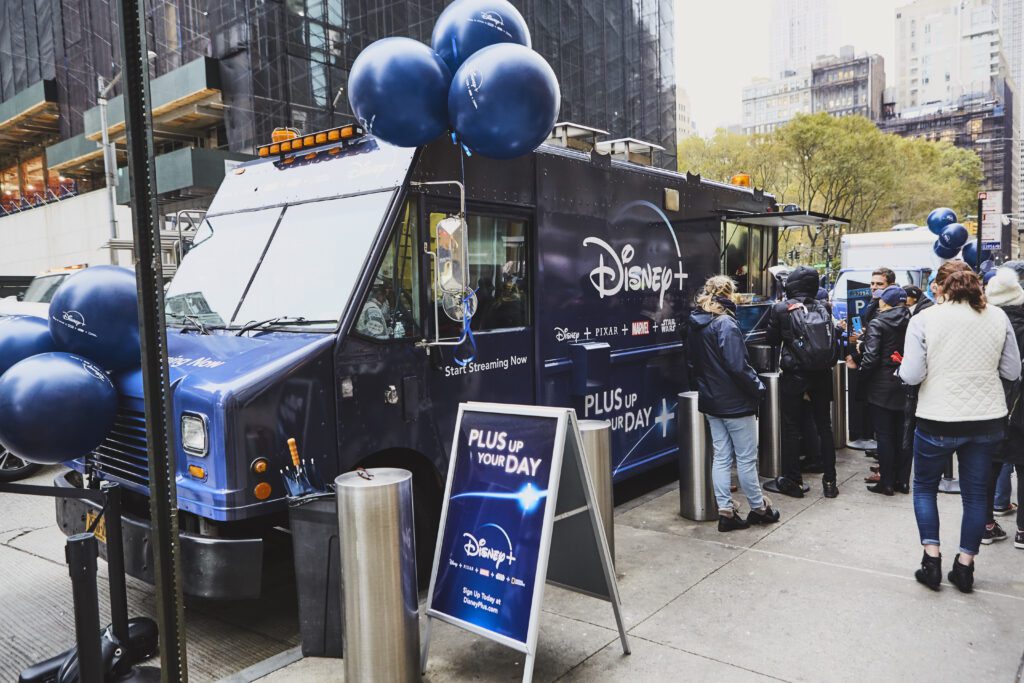
Campus experiential marketing is the most powerful category of college marketing because it creates something that no other format can: actual brand memories. When a student uses a product for the first time in a compelling context, participates in a brand-created experience, or encounters a genuinely surprising and delightful brand installation on their way to class, the resulting emotional and sensory memory encodes in a way that is qualitatively different from anything passive advertising can achieve.
At American Guerrilla Marketing, based at Industry City in Brooklyn, our team has designed and executed campus experiential marketing programs for brands that understood this difference. We create the kind of live brand moments that students talk about, photograph, and share, and that stay with them long after graduation.
This article covers what effective campus experiential marketing looks like, the tactical formats that generate the strongest student engagement, and how to design activations that are both memorable and measurable.
Why Experience Beats Advertising at College Campuses
College students are perhaps the most marketing-resistant demographic in existence. They have spent their entire conscious lives inside digital advertising systems. They tune out ads with practiced efficiency. They are skeptical of branded content. They have strong peer-recommendation preferences that formal advertising struggles to simulate.
What they are not resistant to is genuine, interesting experiences. When a brand creates something worth paying attention to, a sampling event with genuinely good product, an interactive installation that is visually arresting, a street team doing something unexpected and delightful in a campus area, students engage and share in exactly the way they refuse to engage with advertising.
Campus experiential marketing works because it does not ask students to receive a message. It invites them to participate in something. This distinction is the foundation of why experiential consistently outperforms advertising for the college demographic.
The Core Formats of Campus Experiential Marketing
Effective campus experiential marketing combines several tactical formats:
Product Sampling with Brand Narrative: Pure sampling is straightforward. What elevates it to experiential is combining the product trial with a compelling brand story, an interesting presentation environment, and a human interaction that makes the sample feel like a gift from someone who genuinely believes in what they are sharing. Our brand ambassadors are trained to make sampling interactions feel like genuine recommendations rather than promotional handoffs.
Interactive Campus Installations: Ambient installations in high-traffic campus areas, whether a striking visual piece, an interactive station that requires student participation, or a guerrilla marketing element that surprises students in their daily environment, create the kind of discovery moments that generate organic sharing and word-of-mouth. Sidewalk stencils and wheatpasted art in the campus neighborhood create visual brand moments that students encounter organically.
Pop-Up Experiences: Temporary branded pop-up activations at campus events, student organization gatherings, or public spaces in the campus neighborhood create concentrated experiential moments where students engage with the brand in a participatory, social context. Well-designed pop-ups generate significant social sharing and word-of-mouth beyond the immediate attendees.
Campus Event Integration: Integrating brand experiences into existing campus events creates ready-made audience concentration without the effort of drawing students to a standalone activation. Tailgates, concerts, student fairs, and sporting events all offer natural integration points for experiential brand moments.
Mobile Brand Vehicles: LED billboard trucks and branded vehicles moving through campus-adjacent corridors create mobile spectacle that students encounter unexpectedly in their daily movement. The novelty of a large, visually compelling vehicle in a college environment generates exactly the kind of surprised attention that experiential marketing aims to create.
Designing Shareable Campus Experiences
In the current marketing environment, an experiential activation that does not generate organic social sharing is delivering only a fraction of its potential value. College students are constant content creators. If you create an experience worth photographing, they will photograph it and share it with their entire social networks instantaneously.
Designing for shareability means building visual interest into every element of the activation. Wheatpaste art that is genuinely beautiful becomes a photography destination. Sampling events that present product in visually interesting ways get photographed and posted. Interactive installations that are visually arresting look great on Instagram and TikTok. LED trucks that carry bold, colorful creative get filmed as they drive past.
The organic social reach from a campus activation with strong visual design can equal or exceed the direct exposures from the physical presence. A particularly striking installation or event moment that goes viral within a campus social community can reach the entire student population without any paid distribution.
We design every campus experiential activation with social sharing potential as a core consideration, not an afterthought. This means thinking about what it looks like from every angle, what students will see when they hold up their phone to capture it, and what caption they will naturally write when they post it.
Timing and Calendar Strategy for Campus Experiential Marketing
The academic calendar creates distinct windows that dramatically affect the effectiveness of campus experiential marketing:
Back to School (Late August to September): The highest-value window of the year. New first-year students are establishing their first independent brand relationships. Returning students are resetting their semester routines. Campus social energy is at its annual peak. Experiential activations in this window reach students in their most brand-receptive period and compete for attention in an environment where they are actively exploring new things.
Homecoming and Fall Events Season (October): Many campuses have concentrated social events in October around homecoming, Greek life events, and fall activities. These concentrations create natural integration points for experiential activation.
New Year / Spring Semester Launch (January): Students returning from winter break reset their routines and are open to new brand encounters. This window is particularly valuable for brands that activated at Back to School and want a touchpoint reminder at semester start.
Spring (March to April): Warmer weather brings students outdoors in greater numbers and into more social configurations. Outdoor experiential marketing is particularly effective in this window. Spring events season concentrates student social activity.
Pre-finals Awareness Window: The two weeks before final exam periods are a high-traffic window for coffee shops, libraries, and campus study areas. Sampling activations targeted at the “study fuel” or “stress relief” context have natural alignment with the finals approach.
Access Strategy: On-Campus compared with. Off-Campus
Campus access policies vary widely across institutions. Some universities welcome brand partners and provide commercial access to campus facilities for approved activations. Others have restrictive commercial access policies that limit or prohibit most brand activity on campus grounds.
Our team researches campus access policies in advance and designs activations that maximize engagement within the actual access available. For campuses with open commercial access, we can design on-campus activations that meet students in their most campus-central spaces. For campuses with restricted access, we focus on the commercial and residential areas immediately surrounding campus where students live, eat, socialize, and move through daily.
The streets immediately surrounding most university campuses are often the richest zones for experiential marketing. Students spend enormous amounts of time in the coffee shops, restaurants, bars, and commercial corridors adjacent to campus. A well-targeted off-campus activation in these zones can reach the campus population as effectively as an on-campus activation without any of the access complications.
Measuring Campus Experiential Marketing Results
Experiential marketing generates multiple layers of measurable results. Direct engagement metrics include the number of students who participated in the experience, interacted with brand representatives, received samples, or collected branded materials. Social amplification metrics track organic sharing of activation elements across student social networks. Opt-in collection creates a measurable first-party data output from experiential interactions.
For ongoing campus programs, we help clients track whether campuses where experiential activations occurred show higher brand awareness or purchase rates among the student population compared to control campuses where no activation occurred. This comparison builds the business case for continued campus investment and informs school selection for future campaigns.
What is campus experiential marketing?
Campus experiential marketing creates live brand experiences for college students through events, activations, product demonstrations, sampling, and interactive installations. Unlike passive advertising, experiential marketing generates direct brand participation that creates stronger memory encoding and emotional brand association.
How does experiential marketing differ from standard campus advertising?
Standard campus advertising creates exposures. Experiential marketing creates memories. When a student participates in a brand experience, uses a product for the first time, or engages with an interactive installation, the resulting brand connection is qualitatively different from anything a digital or traditional ad can create.
What types of campus experiential marketing activations work best?
Product sampling combined with genuine brand interaction. Interactive ambient installations near campus that invite participation. Pop-up experiences at campus events or in surrounding neighborhoods. Ambassador-led demonstrations of product usage. Any format that puts the student in direct, active contact with the brand creates stronger results than passive awareness campaigns.
When is the best time of year for campus experiential marketing?
Back to School season (late August through September) is the highest-value window. New students are establishing brand habits for the first time; returning students are resetting their routines. Spring semester launch and spring campus events are the second most valuable windows. Avoiding exam periods and academic lulls is important for maximizing engagement quality.
What makes a campus experiential marketing activation shareable?
Social sharing comes from experiences that are visually interesting, genuinely fun, surprising, or emotionally resonant. Installations that are photographically compelling, interactions that are genuinely entertaining, and brand moments that feel special rather than transactional all generate organic sharing. We design activations with social amplification potential built into the core experience.
How does AGM handle campus access for experiential marketing?
We navigate campus access on a school-by-school basis. Some activations work within campus grounds through student organization partnerships. Others operate in the commercial and residential areas surrounding campus where access is open. We research each campus’s specific access policies and design activations that maximize engagement within those parameters.
Can experiential marketing at college campuses generate social media content?
Absolutely. Campus experiential marketing is one of the best generators of organic social content available in brand marketing. Students are among the most active social media users, they document their experiences constantly, and a genuinely memorable brand activation on campus will be shared across Instagram, TikTok, and Snapchat by dozens to hundreds of students simultaneously.
Campaign Architect – American Guerrilla Marketing
Frequently Asked Questions
What is campus experiential marketing?
Campus experiential marketing creates live brand experiences for college students through events, activations, product demonstrations, sampling, and interactive installations. Unlike passive advertising, experiential marketing generates direct brand participation that creates stronger memory encoding and emotional brand association.
How does experiential marketing differ from standard campus advertising?
Standard campus advertising creates exposures. Experiential marketing creates memories. When a student participates in a brand experience, uses a product for the first time, or engages with an interactive installation, the resulting brand connection is qualitatively different from anything a digital or traditional ad can create.
What types of campus experiential marketing activations work best?
Product sampling combined with genuine brand interaction. Interactive ambient installations near campus that invite participation. Pop-up experiences at campus events or in surrounding neighborhoods. Ambassador-led demonstrations of product usage. Any format that puts the student in direct, active contact with the brand creates stronger results than passive awareness campaigns.
When is the best time of year for campus experiential marketing?
Back to School season (late August through September) is the highest-value window. New students are establishing brand habits for the first time; returning students are resetting their routines. Spring semester launch and spring campus events are the second most valuable windows. Avoiding exam periods and academic lulls is important for maximizing engagement quality.
What makes a campus experiential marketing activation shareable?
Social sharing comes from experiences that are visually interesting, genuinely fun, surprising, or emotionally resonant. Installations that are photographically compelling, interactions that are genuinely entertaining, and brand moments that feel special rather than transactional all generate organic sharing. We design activations with social amplification potential built into the core experience.
How does AGM handle campus access for experiential marketing?
We navigate campus access on a school-by-school basis. Some activations work within campus grounds through student organization partnerships. Others operate in the commercial and residential areas surrounding campus where access is open. We research each campus’s specific access policies and design activations that maximize engagement within those parameters.
Can experiential marketing at college campuses generate social media content?
Absolutely. Campus experiential marketing is one of the best generators of organic social content available in brand marketing. Students are among the most active social media users, they document their experiences constantly, and a genuinely memorable brand activation on campus will be shared across Instagram, TikTok, and Snapchat by dozens to hundreds of students simultaneously.
How early should a brand start planning?
For most campaigns, the smart move is to start planning at least two to four weeks before the launch window so production, routing, staffing, and reporting are all lined up.
What makes one market perform better than another?
Market fit depends on audience density, neighborhood behavior, route efficiency, and whether the creative belongs in that setting. The busiest city is not always the best city.
Can AGM bundle this with other services?
Yes. AGM often combines this work with supporting formats so the campaign has stronger repetition and cleaner reporting across the whole run.
How does AGM quote pages like this?
We quote from official rate cards where they apply, then scope the remaining production, staffing, and routing details to the actual job.