Organizing a movement in Delaware is different from organizing in New York or Los Angeles. The state is compact — roughly 100 miles end to end — but the population centers of Wilmington, Dover, and Newark each carry distinct community cultures, traffic patterns, and public space dynamics. What unifies them is the same challenge every protest organizer faces: how do you cut through noise, build genuine awareness, and mobilize people to show up, sign up, or speak up?
Digital tools help, but they have real limits. Algorithms suppress certain content. Organic reach has collapsed on most platforms. And screens, no matter how targeted, rarely create the same physical presence as materials people walk past, touch, and photograph. The streets of Delaware are one of your most powerful communication channels — if you know how to use them.
American Guerrilla Marketing has worked with advocacy groups, community organizations, and cause-driven campaigns across the Mid-Atlantic and beyond. Our team plans, scouts, and executes street-level campaigns with the precision of a media buy and the credibility of a grassroots effort. Here’s how we approach protest marketing in Delaware — and how you can amplify your cause without burning out your volunteers or your budget.
Understanding Delaware’s Geography for Street-Level Campaigns
Delaware’s geography works in your favor if you plan strategically. The state’s three counties — New Castle, Kent, and Sussex — have very different densities and audience profiles. New Castle County, anchored by Wilmington, is where the largest concentration of residents, commuters, and public foot traffic live. Kent County (Dover) is the state capital and home to a significant government workforce. Sussex County skews rural with beach town density in the summer months.
For most protest organizing campaigns, Wilmington is the starting point. Market Street, the Riverfront, and transit corridors near the Wilmington train station see consistent weekday foot traffic. The Eastside, Southbridge, and Ninth Ward neighborhoods are community hubs with high engagement potential for grassroots messaging. Newark, home to the University of Delaware, offers a concentrated student audience that is historically responsive to social cause content.
Our team scouts each location before we deploy. We look at pedestrian counts, sight lines, surface conditions, and permitting requirements. A well-placed poster in a high-foot-traffic corridor can generate thousands of impressions a day. A poorly placed one in a low-traffic area is wasted material and budget.
Print Campaigns: The Backbone of Street-Level Protest Marketing
Print remains the most credible format for cause-based street marketing. Posters, flyers, and signs convey permanence. They exist in physical space in a way that a social media post never can. And in a state like Delaware, where community identity runs deep and neighbors still talk to each other, a well-designed print piece in the right location carries real cultural weight.
Effective protest print campaigns share a few characteristics. First, the visual hierarchy must be clear: the cause or action item should be immediately legible at a distance of 10-15 feet. Second, the call to action must be specific — a date, a location, a website, a phone number. “Join us” without context gets ignored. “March with us Saturday at 11am at Rodney Square” creates action. Third, the print quality matters for perceived credibility. Organizers sometimes cut corners here, which undercuts the legitimacy of otherwise strong messaging.
Our wheatpasting and poster campaigns service handles everything from large-format printing to street-level deployment. We work with designs our clients provide or connect them with design resources. Every placement is documented with GPS-stamped photography.
Wheatpasting: Maximum Visibility, Minimum Footprint
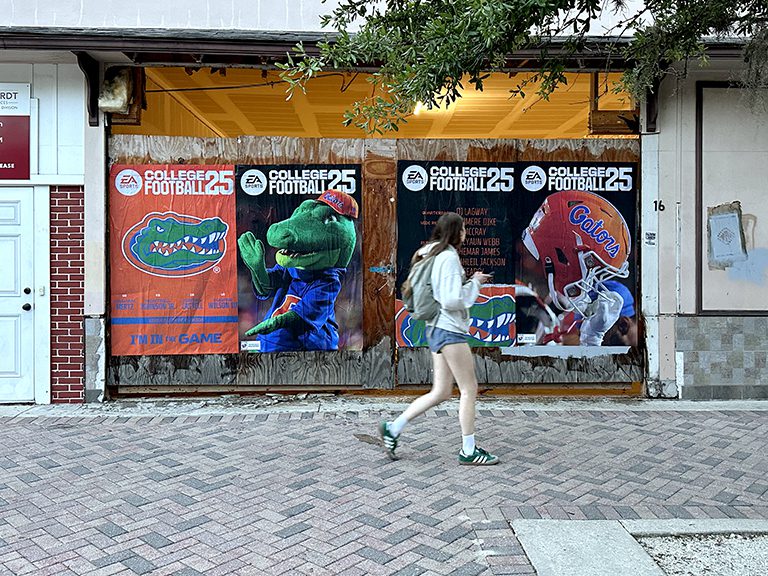
Wheatpasting is one of the oldest and most effective forms of street-level communication. A wheatpasted poster, properly applied, can survive weeks of weather, foot traffic, and urban wear. The format has credibility rooted in decades of political and cultural communication — movements from labor rights to civil rights have used it, and today’s audiences recognize it as a signal of authentic grassroots energy.
In Delaware, wheatpasting is most effective in Wilmington’s dense commercial and residential corridors. Legal posting boards, approved surfaces on commercial buildings, and construction site hoardings are all viable locations — each requiring proper authorization. Our team identifies legal placement surfaces, secures necessary permissions, and handles the paste-up with professional crews who work quickly and cleanly.
For protest organizers in Delaware, the value of wheatpasting isn’t just impressions — it’s staying power. A well-placed wheatpasted poster keeps your message in the environment for days and weeks, continuing to work while you focus on organizing, outreach, and event logistics.
Sidewalk Stencils: Ground-Level Messaging That Stops People
Sidewalk stenciling creates a distinct visual break in the urban environment. People look down at their phones, at pavement, at their feet — and a clean, well-executed stencil message catches attention precisely because it’s unexpected. For protest campaigns, sidewalk stencils can mark routes, point people toward gathering locations, reinforce key messages, or create visual fields of repeated imagery that build momentum in a neighborhood.
Our sidewalk stencil campaigns use biodegradable chalk-based materials that satisfy most municipal requirements for temporary public space use. We research local regulations before deployment and work within them. In Wilmington, Dover, and Newark, we’ve executed stencil campaigns that generated significant media coverage and social sharing — the unexpected nature of the format creates organic amplification beyond the placement itself.
Stencils pair well with poster campaigns. When both run simultaneously, organizers create multi-surface presence: people see your message at eye level on walls and at ground level on sidewalks. That layered visibility drives higher recall and broader reach than any single-format campaign.
Flyering and Direct Handoff: Human Connection at Scale
There is no substitute for a direct human handoff. When a volunteer or brand ambassador hands someone a flyer and makes eye contact, that moment of connection carries emotional weight that no poster or stencil can replicate. For protest organizers, flyering creates opportunities to have brief conversations, answer questions, and convert passive awareness into active participation.
Our brand ambassador agency deploys trained street teams across Delaware. We work with your message, your talking points, and your materials. Teams are deployed to transit hubs, farmer’s markets, college campuses, community events, and neighborhood corridors where your target audience is most likely to be found.
High-volume flyering in Wilmington at the Riverfront Farmers Market, on The Green in Dover during state government events, or near UD’s campus in Newark can put thousands of materials directly into the hands of engaged citizens. We track distribution counts and locations, giving organizers a clear picture of coverage.
LED Billboard Trucks: Mobile Mass Reach Across Delaware
When a protest campaign needs immediate mass visibility, mobile LED billboard trucks deliver it. These are full-motion digital billboard displays mounted on vehicles that travel specified routes through high-density areas. In Delaware’s compact geography, a single truck running a four-hour route through Wilmington’s commercial core can generate tens of thousands of impressions.
Our LED billboard truck campaigns are GPS-tracked and fully documented. We create route plans based on foot traffic and commuter patterns, maximizing impressions per dollar. For protest campaigns, the visual impact of a moving, lit display with clear messaging can create social media moments as bystanders photograph and share what they see.
LED trucks are particularly effective for time-sensitive campaign moments — a day before a major action, during a press event, or on the day of a rally to amplify energy and remind people where to be.
Community Bulletin Boards and Neighborhood Posting
Delaware’s neighborhood bulletin boards — at laundromats, community centers, coffee shops, libraries, and barbershops — are an underutilized channel for protest marketing. These hyper-local placements reach residents who are already invested in their communities and receptive to locally relevant messaging.
A systematic bulletin board posting campaign requires coordination: identifying every available board in a target area, determining which require permission and which are open-access, managing the routing and execution, and returning for refreshes as older materials are covered. Our guerrilla marketing services team handles this systematically, treating it as a coverage problem to be solved rather than a volunteer task to be delegated.
When community bulletin board campaigns are combined with wheatpasting and direct flyering, organizers achieve a layered presence across multiple touchpoints in the same neighborhoods — significantly increasing the probability that target community members encounter the message multiple times through multiple channels.
Planning Your Delaware Protest Marketing Campaign
Effective protest marketing in Delaware requires planning that accounts for timing, legal requirements, budget constraints, and volunteer capacity. Here’s how we approach campaign planning with advocacy clients:
Start with geography: Define your primary target areas. Which neighborhoods, transit corridors, and community hubs are home to your core audience? Prioritize based on foot traffic and community engagement, not just proximity to your event location.
Map your timeline: Work backward from your campaign launch or event date. Allow three to four weeks for printing, location scouting, permit research (where required), and crew coordination. Rushing this process leads to missed placements and compliance issues.
Define your materials mix: A combination of large-format posters, hand-distributable flyers, and (where feasible) sidewalk stencils typically delivers the best coverage across Delaware’s varied environments. Each format serves a different function in the awareness and action funnel.
Build in documentation: Every placement should be photographed with location and timestamp data. This documentation serves multiple purposes: accountability, social content, and proof of reach for donor or coalition reporting.
Legal and Ethical Considerations for Delaware Protest Marketing
Protest marketing must be conducted within legal and ethical boundaries. Delaware municipalities have specific ordinances governing public space use, posting on surfaces, and commercial signage. What’s permitted in one city may require a permit or written authorization in another. Violating these rules creates legal exposure for organizers and can undermine the credibility of the cause.
Our team researches applicable regulations in every market before deploying. We don’t operate in gray areas when clear alternatives exist. This matters not just for compliance but for optics: a cause-based campaign that is associated with property damage or code violations hands opponents an easy counter-narrative.
We work with event organizers, advocacy groups, and nonprofits to build campaigns that are legally clean, visually compelling, and operationally sound. That combination — legal, visible, and well-executed — is what delivers real impact without the risk.
Measuring Impact: What to Track and Why
Marketing for protest organizers shouldn’t be exempt from measurement. Knowing what worked, what didn’t, and why is essential for improving future campaigns and for demonstrating effectiveness to coalition partners, donors, and media.
Key metrics for Delaware street-level campaigns include: estimated impressions by location (based on foot traffic data), material distribution counts, social media shares of campaign materials (tracked via hashtag or URL), and event attendance correlated with campaign coverage areas. Our post-campaign reports give organizers all of this data in a clear, shareable format.
Beyond the numbers, qualitative feedback matters. Were people talking about the campaign? Did media pick it up? Did neighbor-to-neighbor conversations happen because of a poster or stencil someone saw on their block? These outcomes are harder to quantify but often more significant than impression counts.
Integrating Street-Level Marketing with Digital Strategy
Street marketing and digital strategy work best in tandem. A physical campaign with a clear digital call to action — a hashtag, a short URL, a QR code — bridges the gap between the street and the screen. Someone who photographs a compelling stencil or poster and shares it online extends your campaign’s reach into networks you couldn’t have reached with physical placements alone.
For protest organizers in Delaware, we recommend integrating street campaigns with social media content calendars so that digital posts reinforce what’s on the street and vice versa. Timing matters: deploy physical materials a few days before a key digital push so there’s something visual for your audience to reference and share.
Our team can advise on QR code integration, hashtag strategy for physical materials, and timing coordination between street and digital campaign phases. The goal is a unified presence: consistent messaging, consistent visual identity, and consistent calls to action across every channel where your audience lives.
FAQ: Marketing for Protest Organizers in Delaware
What marketing tactics work best for protest organizers in Delaware?
Poster campaigns, wheatpasting, sidewalk stencils, and targeted flyering in high-foot-traffic areas like Wilmington’s Market Street and Newark near the University of Delaware are the most effective tactics for protest organizers in Delaware. Combining these formats creates multi-surface, layered visibility that drives higher recall than any single channel.
Do protest organizers in Delaware need permits for outdoor marketing?
Yes, posting materials on public property and sidewalk stenciling typically require permits or written authorization from property owners in Delaware. Requirements vary by city and surface type. Working with a professional marketing partner helps ensure legal compliance across Wilmington, Dover, and Newark.
How far in advance should Delaware protest organizers plan their print campaigns?
We recommend starting at least three to four weeks before an event or action. This allows time for design finalization, printing, location scouting, permit research, and crew coordination. Urgent campaigns can sometimes be compressed to 10-14 days for organizers with existing assets ready.
Can American Guerrilla Marketing run campaigns in multiple Delaware cities simultaneously?
Yes. Our team deploys across Wilmington, Dover, Newark, Middletown, and other Delaware markets simultaneously. We coordinate logistics, permitting, and execution across all locations and provide unified documentation and reporting for all placements.
What makes guerrilla marketing effective for social cause campaigns in Delaware?
Guerrilla marketing meets people where they already are — on sidewalks, at transit stops, in neighborhoods. For cause-based campaigns, this creates organic visibility that feels grassroots and credible, which deepens community trust compared to paid digital ads. Physical presence signals commitment in a way that digital-only campaigns cannot replicate.
How does American Guerrilla Marketing document campaign results?
We provide GPS-stamped photo documentation of every placement, including time-coded deployment logs. Post-campaign reports detail coverage area, material counts, and placement locations so organizers have a clear record of what ran and where — useful for coalition reporting, donor accountability, and future campaign planning.
Frequently Asked Questions
What is amplify your cause marketing for protest organizers in delaware?
American Guerrilla Marketing provides amplify your cause marketing for protest organizers in delaware services across 50+ U.S. markets. Every campaign is planned, scouted, executed, and GPS-documented by our field teams. We work with regional brands and Fortune 500 companies on campaigns that require real street-level execution and documented proof of performance.
How does AGM approach in delaware?
Our process starts with a market consultation to understand your goals, target audience, and budget. We then scout locations, handle any required permissions or permits, coordinate production and installation with our local crews, and provide a full GPS-tagged photo report after the campaign runs.
What markets does American Guerrilla Marketing cover for in delaware?
We operate in 50+ U.S. markets including New York, Los Angeles, Chicago, Miami, Houston, Atlanta, Seattle, Denver, Boston, and dozens of secondary markets. Contact us to confirm availability and pricing for your specific market.
How much does a in delaware campaign cost?
Campaign pricing depends on market, format, quantity, and duration. We work with budgets ranging from targeted single-market runs to national rollouts across multiple cities. Use our RFP Builder or contact us directly for a custom quote based on your specific campaign requirements.
How do I get started with in delaware through AGM?
The fastest way to get started is to submit your campaign details through our RFP Builder at americanguerrillamarketing.com, or contact us directly at [email protected] or (646) 776-2770. Our team typically responds within one business day with availability and initial pricing.