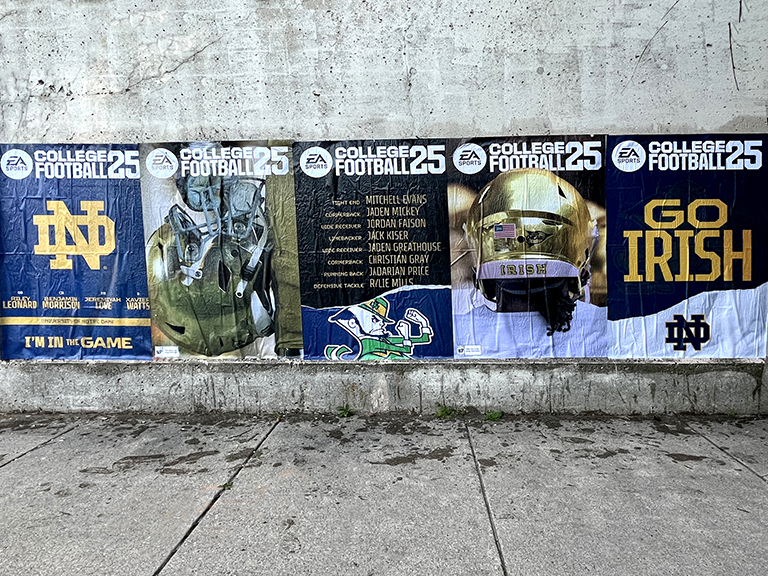
College students are one of the most valuable and hardest-to-reach audiences in marketing. They are forming brand loyalties for the first time. They have discretionary spending. They influence each other constantly. And they ignore most of the advertising aimed at them.
A campus marketing agency has to understand that reality. Flyers get ignored. Email blasts get deleted. Generic social ads get scrolled past. What works on campus is what works everywhere: real people, real moments, and genuine value delivered at the right time and place.
We are American Guerrilla Marketing. We have run campus-focused campaigns at universities across the country. We do not specialize exclusively in college marketing, but we have deep experience reaching Gen Z audiences through street-level activations, brand ambassador programs, and experiential marketing that actually resonates with students. This guide explains how campus marketing works and what separates effective campaigns from wasted spend.
College campuses are not like other markets. They are geographically concentrated. The population turns over every four years. The social networks are dense and highly interconnected. One person with influence in a dorm building or a Greek organization can reach hundreds of people faster than most paid channels can.
Campus marketing is also different because the audience is highly skeptical of brands. Gen Z grew up seeing through advertising. They do not respond to manufactured enthusiasm. They respond to genuine relevance, peer endorsement, and experiences that feel honest.
That changes how you approach the entire campaign. You cannot broadcast at this audience the way you might broadcast at older consumers. You have to earn your way into the conversation. That means showing up in a way that adds value, more than noise.
What Campus Marketing Actually Looks Like
Effective campus marketing takes multiple forms. Here is what actually moves the needle at the college level.
Brand Ambassador Programs
Peer-to-peer is the most powerful channel on campus. When a student recommends something to their friends, classmates, and roommates, it carries more weight than any ad. Brand ambassador programs identify the right students on campus, give them genuine product experience, and empower them to share it organically.
We run brand ambassador programs differently than most agencies. We do not hire someone to hand out flyers. We identify students who actually fit the brand, train them properly, give them real tools, and measure their actual reach and influence. The result is a campaign that feels like word of mouth because it essentially is.
Campus Sampling and Street-Level Activation
Product sampling on campus is one of the highest-ROI tactics available for CPG brands targeting students. The right location matters enormously. Outside the main library at 10am on a Thursday is very different from outside the gym at 7pm. We scout every campus to find the moments and locations where students are most open and most present.
Event-Based Marketing
College students cluster around events. Move-in weekend, orientation, homecoming, finals week, spring fling. These are more than calendar dates. They are emotional high points where students are in a heightened state of openness. A brand that shows up at the right moment with the right offer becomes part of the college experience.
Dorm Room and Housing Outreach
For certain brands, reaching students in their living spaces is the right move. This is particularly effective for food and beverage, personal care, tech accessories, and delivery service brands. We develop programs that get products into student hands in residential settings.
Where Campus Agencies Typically Fall Short
Many campus marketing agencies fall into predictable traps. Understanding these helps you evaluate any agency you consider working with.
Common Mistake
What It Looks Like
What Works Instead
Treating all campuses as identical
Same campaign deployed at every school
Market-specific planning based on campus culture and demographics
Chasing follower counts over real influence
Hiring “micro-influencers” with inflated numbers
Identifying ambassadors with genuine peer trust, regardless of follower count
One-time activation thinking
Single tabling event and nothing else
Sustained presence over weeks or a full semester
Ignoring the off-campus network
Only activating on campus property
Also reaching students at the bars, coffee shops, and neighborhoods around campus
No measurement
Campaign ends with no data
Tracking ambassador reach, samples distributed, social content generated, and brand recall
The Off-Campus Opportunity
One of the most underused spaces in campus marketing is the neighborhood that surrounds the campus. College students do not live exclusively on university property. They live in apartments on the streets around it. They spend time in the coffee shops, bookstores, music venues, and parks near campus.
Reaching students off-campus often works better than on-campus activations because the environment is more relaxed. Students are not rushing to class. They are not surrounded by the constant stimulation of campus life. A well-placed brand experience in a coffee shop near NYU in Greenwich Village, or on Telegraph Avenue near UC Berkeley, or on North Halsted near Northwestern’s Chicago campus, can generate genuine engagement that feels more personal than an on-campus event.
The best campus marketing reaches students everywhere they spend time, more than on university property. The neighborhood surrounding a campus is often the most effective place to build authentic brand relationships with college students.
Campuses We Have Activated Near
We have run campaigns targeting students at and around major universities including:
New York University (Greenwich Village, Washington Square Park area)
Columbia University (Morningside Heights, 116th Street corridor)
University of Southern California (University Park, figuring area)
UCLA (Westwood, Brentwood, Santa Monica)
University of Chicago (Hyde Park, Kenwood)
Boston University and Northeastern (Kenmore Square, Fenway)
University of Texas at Austin (the Drag, Guadalupe Street)
University of Miami (Coral Gables, South Beach)
Measuring Campus Campaign Success
Great campus marketing is measurable. Here is what we track.
Samples distributed and redemptions. For sampling campaigns, we track every unit distributed and, where possible, redemptions at retail or online.
Ambassador reach and content performance. For brand ambassador programs, we track the organic social content each ambassador generates and the engagement those posts receive from peers on campus.
Event attendance and foot traffic. For activation events, we count attendees and document the event with photography and video.
Brand recall surveys. For larger campaigns, we survey a sample of students before and after the campaign to measure changes in brand awareness and consideration.
How AGM Approaches Campus Marketing
We start every campus campaign with one question: where is this student and what are they thinking about at this specific moment? That question drives every decision from concept to execution.
We also treat every campus as its own distinct market. The student culture at NYU is different from the culture at the University of Texas. The off-campus geography is different. The student influencer networks are different. What works at one campus does not automatically work at another.
Our brand ambassadors are selected specifically for each campus. We do not maintain a generic pool of student workers. We identify students who actually fit the brand, who have genuine social standing in their campus community, and who will represent the brand in an authentic way.
College students are the fastest-adopting, most socially connected consumer segment. Winning them early means winning them for decades. The brands that get campus marketing right build a generation of loyal customers. The brands that do it wrong get ignored immediately and permanently.
Industries That Benefit Most from Campus Marketing
Campus marketing works especially well for:
Food and beverage: New product launches, energy drinks, healthy snacks, campus dining brands
Technology and apps: Student-targeted software, streaming services, financial apps
Apparel and footwear: Streetwear, athletic brands, fashion labels targeting young adults
Health and wellness: Supplements, fitness, mental health services, personal care
Entertainment: Movie releases, music, gaming, streaming services
The Gen Z Mindset and Why It Matters for Campus Marketing
Gen Z is the first generation that grew up entirely inside social media. They process brand communications differently than any previous generation. They have highly developed filters for authenticity. They can identify a manufactured moment from a mile away. They reward genuine effort and punish obvious pandering.
This has deep implications for campus marketing strategy. Gen Z does not want to be sold to. They want to be part of something. The best campus campaigns create experiences or communities that students actually want to join, more than ads they happen to see.
They are also deeply influenced by their peer networks in ways that older generations were not. When something spreads among Gen Z on campus, it spreads fast and through trust networks. When something feels fake, it gets called out just as fast. The peer network cuts both ways.
Understanding this means rethinking the entire approach to campus marketing. The goal is not to broadcast to students. The goal is to earn a place in their world by being genuinely useful, entertaining, or culturally relevant.
Campus Marketing Across Different Types of Schools
Not all college markets are the same. The approach at a large state university with 40,000 students is very different from the approach at a small liberal arts school with 2,000 students. Urban commuter schools have completely different social dynamics than residential schools in college towns.
Large state universities. These schools have enormous populations and dense social structures organized around Greek life, athletics, student organizations, and residential communities. The key to success here is identifying the social hubs within the larger campus. Reaching the right ten people in the right organization is worth more than reaching a thousand random students.
Small liberal arts schools. These schools are tight-knit. Everyone knows everyone. A brand that earns the endorsement of a respected student reaches the whole community almost instantly. They are also more resistant to anything that feels corporate or inauthentic. The approach needs to be more nuanced and genuine.
Urban commuter schools. Students at urban commuter schools do not live in campus housing. They are scattered across the city. They commute by train, bus, and bicycle. Reaching them requires thinking about where they spend time throughout the city, more than on campus property.
Technical and professional schools. Schools with a strong technical or professional focus have student bodies that respond to different values. Efficiency, quality, and progress are more resonant than the social currency appeals that work at larger residential schools.
Timing Your Campus Campaign for Maximum Impact
Campus life has a rhythm. Understanding that rhythm lets you time your campaigns for maximum receptivity.
Move-in weekend (late August). Students are in a high-stimulation, new-beginning mindset. They are forming first exposures of their college life. Brands that show up during move-in create an association with the beginning of a new chapter. This is prime territory.
First two weeks of fall semester. Students are settling in, exploring their options, and forming habits. New routines are being running. This window is critical for any brand that wants to become part of daily student life.
Homecoming. School spirit is at its annual peak. Brands that fit the celebratory energy of homecoming week benefit from the heightened emotional state of the entire campus community.
Finals week. Students are stressed and looking for relief and comfort. Brands that offer relevant products, whether coffee, snacks, stress relief, or entertainment, find genuinely receptive audiences during finals periods. The key is showing up in a way that helps rather than adds to the noise.
Spring semester launch (mid-January). A second move-in window for students returning from break and new students starting in the spring. Almost as valuable as fall move-in for establishing brand presence.
What to Ask Any Campus Marketing Agency Before Hiring Them
Before committing to any campus marketing partner, ask these specific questions. The answers will quickly reveal how much real experience they have and whether their approach will actually work.
Ask them to describe a specific campus campaign they ran and what the results were in actual numbers. Not exposures estimates. Actual results. Samples distributed, ambassador reach, content engagement, sales lift if they have it.
Ask how they select brand ambassadors. What is the criteria? How do they train them? How do they track what ambassadors actually do? A vague answer here is a red flag.
Ask how they handle different campus cultures. What works at USC may not work at Michigan. Does the agency understand that difference and plan for it?
Ask about their reporting process. What will you actually know at the end of the campaign? What data will they deliver and in what format?
These questions separate agencies with real campus expertise from those offering generic services with a college spin.
Building Community, more than Awareness
The best campus marketing does more than build awareness. It builds community. There is a meaningful difference between a student who knows your brand exists and a student who feels genuine affiliation with it. The second student is worth ten of the first when it comes to peer influence, repeat engagement, and long-term loyalty.
Community-building on campus requires consistency over time. A one-day activation creates awareness. A semester-long brand ambassador program with recurring touchpoints at culturally relevant moments builds real affiliation. Students who have seen your brand three, five, eight times at moments that mattered to them carry a different relationship with that brand than students who saw it once at a tabling event.
The campus communities that matter most for building this kind of depth are the organized ones. Greek chapters, club sports teams, academic clubs, and student organizations have defined memberships, communication channels, and shared identities. A brand that earns a genuine foothold in one of these communities has access to its social network in a way that general campus advertising cannot replicate.
We design campus campaigns with community-building as the long-term goal, more than awareness as the short-term metric. That orientation changes what we build. It means fewer one-off activations and more sustained programs that grow in depth of relationship over a full semester or academic year. The brands that commit to this approach get results that justify the investment in ways that one-day events rarely can.
Written by Livy Phillips, American Guerrilla Marketing. Livy covers campus marketing, brand ambassador programs, and college-market experiential campaigns.
Frequently Asked Questions
What is a campus marketing agency?
A campus marketing agency specializes in reaching college students through peer-to-peer programs, on-campus and near-campus activations, sampling programs, and brand ambassador networks. The goal is to build brand awareness and trial within the college market through methods that actually resonate with Gen Z audiences.
What is the most effective type of campus marketing?
Brand ambassador programs powered by genuine peer influence are typically the most effective format. Students trust their peers more than any advertising channel. When a real student on campus recommends a product or experience to their social circle, the conversion rates are dramatically higher than any paid media equivalent.
How many campuses should I activate at once?
That depends on your goals and budget. For a regional launch, targeting three to five campuses in a single market makes sense. For a national campaign, you might target 20 to 50 campuses depending on the distribution of your target audience and retail footprint. We help clients think through the market selection logic.
Do campus marketing campaigns require going on university property?
Not necessarily. Some of the most effective campus-adjacent marketing happens off campus, in the neighborhoods, cafes, bars, and gathering spots around the university. Off-campus locations can be easier to access and often reach students in a more relaxed and receptive mindset.
How long should a campus campaign run?
A one-time tabling event is almost always insufficient. We recommend sustained presence over at least four to six weeks for a meaningful campaign. Semester-length programs deliver the highest return because they create ongoing brand familiarity rather than a single fleeting impression.
What is the best time of year to run a campus marketing campaign?
Back-to-school (August and September) and spring semester launch (January and February) are the highest-value windows. Students are forming new habits and are especially open to new brands during these transitions. Move-in weekend is one of the single most valuable campus marketing moments of the year.
How do you select brand ambassadors for campus programs?
We look for students with genuine social standing in their campus community, authentic alignment with the brand, and the motivation to represent it honestly. Follower count on social media is less important than real peer influence and trust. We interview candidates and make selections based on fit and enthusiasm.