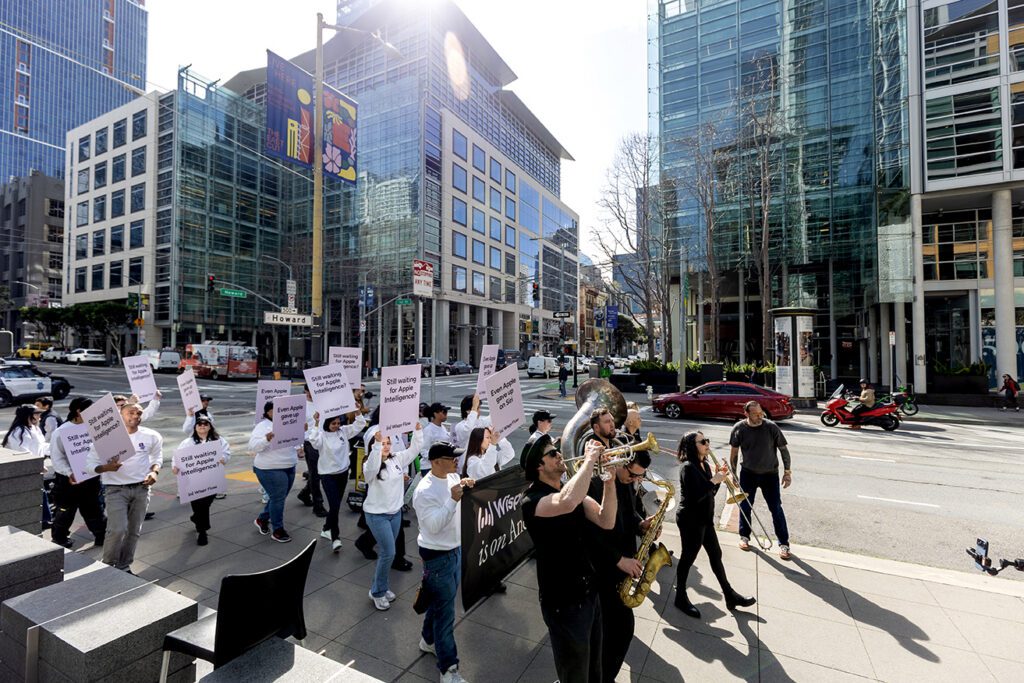
Flash mobs started as pure art. A group of strangers would appear somewhere public, do something unexpected, then vanish. No brand. No message. Just collective surprise.
That original form still exists. But brands quickly realized the format had serious marketing power. When done right, a flash mob generates more earned media and organic social content than most paid campaigns produce in a month. The best flash mobs stop people cold. They film it. They share it. The moment becomes the message.
We are American Guerrilla Marketing. We have planned and executed brand-focused flash mob campaigns in New York, Chicago, Los Angeles, and other cities. This guide breaks down what makes a flash mob effective, which formats work best for brands, and what separates a great execution from a forgettable one.
Not every flash mob succeeds. Most fail quietly. Nobody films it. Nobody shares it. The participants go home and the location goes back to normal. The brand spent money and got nothing.
What separates the best flash mobs from the forgettable ones is a combination of four things.
Surprise that feels genuine. The crowd has to not know it is coming. If bystanders smell a rehearsed brand event from the start, the magic evaporates. The best flash mobs feel like they are happening spontaneously, even when every detail was planned weeks in advance.
An inherently shareable moment. The experience has to be photogenic and short enough to capture on a phone. People film what surprises them. If the flash mob is visually striking and the key moment happens quickly, you get the footage you need.
A real crowd location. The best flash mobs happen where people already are. Grand Central Terminal. The corner of Michigan Avenue and Wacker Drive in Chicago. Pike Place Market in Seattle. Faneuil Hall in Boston. You do not create the crowd. You find it.
A clean connection to the brand. The brand message has to be embedded in the concept, not slapped on afterward. If the flash mob has nothing to do with what the brand stands for, it is just entertainment someone else can claim.
Famous Flash Mob Formats That Work for Brands
Over the years, a few formats have proven especially effective for brand campaigns.
Musical Performance Flash Mobs
A live musical performance that appears out of nowhere is one of the most reliably shareable formats. It stops people. It generates emotion. And it looks spectacular on video. T-Mobile’s flash mob at London’s Liverpool Street Station in 2009 became a global case study in earned media. Hundreds of performers, a massive crowd, and a video that racked up millions of views.
Dance Flash Mobs
Dance flash mobs work because movement is visually compelling and universal. They do not require any language to be understood. They are also highly flexible in terms of the number of performers, the music, and the setting. A well-executed dance flash mob in a shopping center or public plaza can draw a crowd of hundreds in minutes.
Freeze Flash Mobs
The freeze format, where everyone in a busy space suddenly stops moving at the same moment, is a powerful contrast effect. Improv Everywhere popularized it in New York City’s Grand Central Terminal. For a brand, the unfreeze moment can be the message delivery point. When everyone starts moving again, the reveal happens.
Product-Integrated Flash Mobs
These are the most brand-specific format. The performance builds to a moment where the product is central to what is happening. A beverage brand that has performers suddenly sampling the product after a dance routine. A car brand that has a flash mob culminate in a reveal. The product is the payoff.
Where to Execute Flash Mob Campaigns
Location is everything. Here are the kinds of spaces that work best.
Location Type
Why It Works
Best For
Transit hubs (train stations, airports)
Dense, transient crowds always present
Mass reach, national brands
Shopping centers and malls
Captive audience in a buying mindset
Retail brands, CPG, entertainment
Public plazas and parks
Open space allows crowd to form around performance
Lifestyle brands, beverage, fashion
College campuses
Highly social audience that shares content immediately
Youth-focused brands, CPG, apps
Sporting events and concerts
Pre-warmed, energized crowd already in celebration mode
Sports brands, entertainment, beverage
Busy street corners
High pedestrian traffic, urban energy
Urban brands, street culture, music
How Brands Measure Flash Mob ROI
Flash mobs are not measured like banner ads. You are not counting clicks. You are measuring attention, earned media, and brand conversations. Here are the metrics that matter.
Video views. Every well-executed flash mob produces video content. Whether it is filmed by bystanders or by a production crew you embed in the crowd, the footage becomes a campaign asset. Views on that content are a primary metric.
Social shares and mentions. How many people posted about it? How many mentioned the brand? Social listening tools track this in real time during and after the activation.
Earned media coverage. Great flash mobs get covered by local news, entertainment blogs, and sometimes national outlets. That coverage carries a reach far beyond what you can buy directly.
Physical crowd size. How many people actually witnessed it? We count crowd estimates as a baseline measure of reach in the physical space.
Brand sentiment shifts. For larger campaigns, pre and post surveys can show whether the flash mob changed how people feel about the brand. This is harder to measure but the most valuable signal of all.
The best flash mob videos generate 5x to 50x more organic reach than the brand’s paid content for the same period. The earned reach compounds long after the activation is over, as people discover and re-share the video.
Planning a Brand Flash Mob: What Goes Into It
A flash mob looks spontaneous. It is not. A successful brand flash mob takes weeks of planning and involves many moving pieces. Here is what the process looks like when we plan one.
Week 1 to 2: Concept and location scouting. We develop the creative concept tied to the brand’s goals. We scout locations for foot traffic, acoustics if applicable, sight lines for filming, and logistical feasibility. We commit to a location and a date.
Week 3 to 4: Talent casting and choreography. We cast performers, whether dancers, musicians, actors, or a combination. We develop choreography or performance scripts. We begin rehearsals at a private location away from the activation site.
Week 5: Technical setup and production planning. We plan the camera positions, sound setup if needed, brand integration moments, and any signage or brand elements that appear at the reveal. We brief all participants on the plan and contingencies.
Activation day. Performers arrive separately and blend into the crowd as regular pedestrians. At a coordinated signal, the flash mob begins. The production crew films from pre-planned positions. Brand ambassadors engage the crowd and distribute materials after the performance. We capture all footage and document the event.
Post-activation. We edit and package the video content for the brand’s social channels and press outreach. We compile metrics and deliver a full campaign report.
What Flash Mobs Cannot Do
Flash mobs are powerful. But they are not the right tool for every marketing goal. Here is where they fall short.
They do not drive direct response. You cannot track sales conversions from a flash mob the way you track them from an email campaign. They are awareness and sentiment tools, not direct response tools.
They do not work for complex messages. A flash mob can deliver one clear emotional beat. It cannot explain product features. It cannot walk someone through a decision process. If your message requires detail, a flash mob is the wrong format.
They are not guaranteed to go viral. Virality depends on dozens of factors outside your control, including timing, the current news cycle, and random amplification by the right person with the right audience. Great execution improves the odds. It does not guarantee the outcome.
A flash mob is a brand awareness tool. Use it when you want to generate conversation, create shareable content, and give a real crowd a moment they will remember. Use other channels when you need direct response or product explanation.
How AGM Approaches Flash Mob Marketing
We have run brand-oriented flash mob campaigns since the format emerged as a marketing tool. Our approach is built around one principle: the crowd comes first. We never plan an activation around what is easiest to execute. We plan it around what will genuinely surprise and delight the people who happen to be there.
That means we spend serious time on location selection. We visit locations at the time of day and day of week we plan to activate. We count foot traffic. We observe the crowd. We understand what the space feels like before we plan what we are going to do in it.
Our creative team then designs an experience that fits the space, the crowd, and the brand. We do not repurpose the same concept for every client. Every campaign is built from scratch.
We also handle all the practical logistics that most agencies pass off to third-party production companies. Casting, choreography, rehearsal space, equipment, crew, and post-production are all managed in-house. That keeps quality high and communication tight.
Cities Where We Run Flash Mob Campaigns
We execute flash mob campaigns in major markets nationwide, including:
New York City: Midtown, Grand Central, Union Square, Times Square, Brooklyn
Chicago: Millennium Park, Michigan Avenue, Wicker Park, the Loop
Los Angeles: Venice Beach, Downtown LA, Hollywood, Fairfax
Miami: Wynwood, South Beach, Brickell, Little Havana
Austin: 6th Street, South Congress, Rainey Street, UT campus
Boston: Faneuil Hall, Newbury Street, Back Bay, Cambridge
Washington D.C.: The National Mall, Dupont Circle, Georgetown
San Francisco: Union Square, the Embarcadero, Mission District
Examples of Brand Flash Mobs That Generated Real Results
Looking at what has worked for other brands helps set realistic expectations and spark creative thinking.
T-Mobile at Liverpool Street Station. This is the gold standard for brand flash mobs. T-Mobile filled London’s Liverpool Street Station with hundreds of dancers and filmed the reaction of hundreds of commuters. The video generated tens of millions of views. T-Mobile turned the concept into a campaign series. It is still studied in marketing schools more than a decade later.
Oprah and the Black Eyed Peas in Chicago. For Oprah’s 24th season premiere, the Black Eyed Peas performed a surprise set on Michigan Avenue outside the Oprah Winfrey Show studios. Thousands of people in the crowd participated in a choreographed routine. The video spread globally within hours and dominated entertainment coverage for days.
Whole Foods Market surprise performances. Whole Foods has used flash mob-style performances in its stores to generate in-location buzz and social sharing. Musicians performing in the cereal aisle or produce section create content that feels authentic and brand-aligned. Shoppers share it because it is genuinely surprising and delightful.
Fitness and athletic brands. Multiple athletic brands have used flash mobs to turn a mundane urban moment into a sports celebration. Runners appearing from everywhere on a busy street, or a group workout spontaneously erupting outside a transit hub, fits the brand identity while creating an inherently shareable spectacle.
The Anatomy of a Great Flash Mob Video
The video matters as much as the event itself. The physical crowd at the activation might number in the hundreds. The video might reach millions. Here is what we focus on when producing flash mob video content.
The before shot. Establishing the ordinary environment before the performance begins is critical. The contrast between normal and surprising is what creates the emotional impact. We spend time on the opening seconds so viewers understand exactly how unexpected this moment is.
Crowd reaction shots. The faces of bystanders who did not know this was coming are the most valuable footage we capture. A person’s jaw dropping, a child pointing in disbelief, someone spontaneously starting to dance because they cannot help themselves. These moments are the soul of the video.
The performance itself. Tight editing keeps the energy high. We do not show 10 minutes of a 10-minute performance. We cut it to 2 to 3 minutes of the best moments. Attention spans are short and the goal is to maintain momentum throughout.
The brand moment. The brand reveal or integration needs to feel natural, not forced. We plan this moment carefully so it reads as the logical conclusion of the story, not a commercial interruption.
What to Tell Your Team on Flash Mob Activation Day
Activation day is where planning either holds or breaks. Here’s what every participant needs to understand before the flash mob begins.
Stay in character until the signal. The power of a flash mob depends entirely on the element of surprise. Every performer, from the ones in the crowd to the ones who will start the performance, has to behave like a regular person in that space until the precise moment they don’t. Any premature signals, eye contact, clustering, or obvious preparation destroys the illusion before it starts. We rehearse the blending as carefully as the performance itself.
Know the abort signal. Real public spaces are unpredictable. Police, weather, medical situations, or just an unusually thin crowd can require a clean cancellation. Every participant knows the abort signal and knows how to disperse naturally without drawing attention to the fact that something was planned. This never gets rehearsed less than twice before activation day.
The production crew is invisible until the performance starts. Camera operators blend into the crowd before anyone else arrives. They have their positions locked before the first performer enters the space. Once the performance begins, they’re capturing footage from pre-planned angles without directing or interfering with the live crowd reaction. The organic crowd reaction is the most valuable content you’ll capture. Anything that compromises it compromises the entire video asset.
After the performance, brand ambassadors engage the crowd while energy is still high. This is the window to distribute materials, collect contacts, and create follow-up touchpoints. The activation isn’t over when the performance ends. It’s over when the last engaged bystander has been reached.
Frequently Asked Questions
Do flash mobs still work as marketing tools?
>Yes, but the bar for what constitutes a genuinely effective flash mob is higher than it was at the format’s peak. The audience is more sophisticated, which means production quality needs to be higher, brand-performance authenticity needs to be stronger, and location selection needs to be more deliberate. Flash mobs that meet these standards continue to generate significant earned media and social
How much does a flash mob production cost?
>Production costs vary significantly with scale, performer count, location, choreography complexity, and documentation requirements. Small flash mobs with 30 to 50 performers in a single city can be produced in the tens of thousands of dollars. Large productions with hundreds of performers and high-end documentation run significantly higher. AGM can scope a budget based on specific campaign object
How long does it take to plan a flash mob?
>The minimum realistic timeline for a well-executed flash mob is six to eight weeks from confirmed concept to performance date. This covers performer recruitment and rehearsal, choreography development, location scouting and permitting, and documentation planning. Compressed timelines consistently produce lower quality across all dimensions of the production. > > >
What makes the best flash mobs so shareable?
>The most shareable flash mobs combine genuinely impressive performance quality, genuine audience surprise in a high-traffic location, professional documentation that captures compelling reaction footage, and an authentic connection between the brand and the performance format. Any one of these elements missing significantly reduces the content’s shareability. > > >
>Yes. AGM has experience with experiential and event-based marketing campaigns including flash mob productions. We coordinate the full production and documentation workflow and integrate the physical event with the digital distribution and earned media strategy. > > > >