Trade show promotion done at the show floor level is reactive: you are waiting for attendees to find you. Trade show promotion that operates in the convention district before the doors open is proactive: you are putting your name in front of every attendee in the moment when their booth visit list is still forming.
The Convention District as a Trade Show Promotion Environment
Every major trade show creates a temporary geographic concentration of qualified buyers in a small area. The official event is the formal expression of that concentration. The surrounding neighborhood, including the hotel district, the pedestrian approach corridors, the food and coffee zones along the route to the venue, and the transit areas between hotels and the convention center, is the informal expression of the same concentration.
The informal concentration is less structured and less competitive. Inside the official event, hundreds of exhibitors are competing for the same attendee attention. Outside the event, almost none of them are present. A brand that deploys in the convention district during the show reaches the same audience with dramatically less competition for their attention.
The timing advantage reinforces the competition advantage. In the convention district before the show opens each morning, attendees are in the formation phase of their day. They are deciding which booths to prioritize, which sessions to attend, and which informal meetings to arrange. A brand impression in this window influences that formation in a way that no impression made after the attendee has already entered the show floor and committed to a plan can match.
Pre-Show Trade Show Promotion: Outreach to Registered Attendees
The pre-show window, starting six to eight weeks before the show opens, is the earliest and often most productive phase of trade show promotion. Pre-show meeting outreach to registered attendees in the target buyer profile secures qualified appointments before the show floor opens, guaranteeing a set of high-value conversations regardless of what happens in the ambient convention zone.
We help clients build pre-show outreach campaigns that target registered attendees by job title, company type, and industry vertical with specific and relevant meeting invitations. The meeting invitation is not a generic “come visit our booth” message. It is a specific value proposition matched to the recipient’s professional context, with a clear reason to take the 20-minute appointment.
A full pre-show meeting calendar is the highest-ROI trade show promotion investment available. Every pre-booked meeting is a guaranteed qualified conversation that does not depend on show floor foot traffic, booth position, or ambient outdoor campaign performance.
Day-of Trade Show Promotion in the Convention District
Morning Ambassador Deployment
Hotel zone ambassador deployments during the morning departure window from conference hotels create the first live brand contacts of each show day. Our teams deploy at 7:30 AM and maintain presence through the morning peak departure, creating direct personal encounters with qualified buyers before any exhibitor on the show floor has had the chance to engage them.
Ambassador shift logs from each morning deployment capture total contacts, qualified interactions, and direct booth visit commitments. These logs are delivered to the client by end of day and compiled into the post-campaign performance report.
Outdoor Advertising Formats
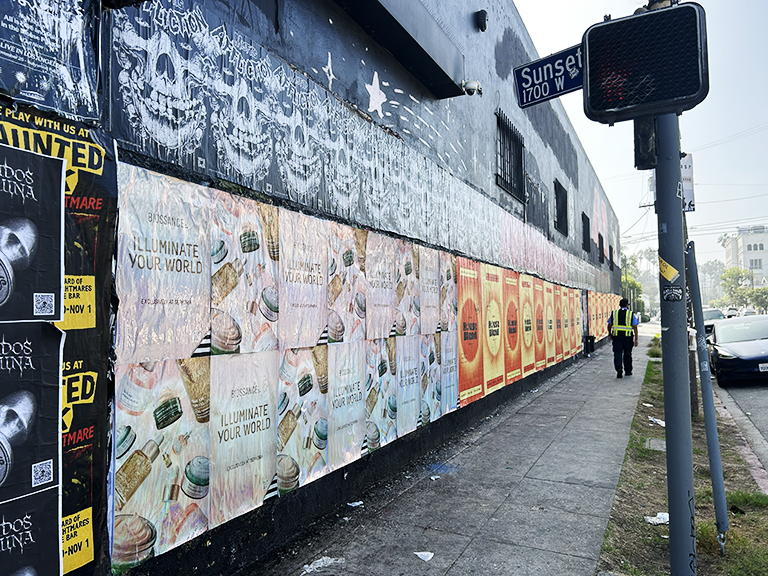
The full outdoor advertising toolkit, including LED trucks, poster campaigns, and sidewalk stencils, runs through the show hours to maintain continuous brand presence in the convention district. Each element is coordinated with the others so that the creative message, booth number, and call to action are consistent across all formats and across all show days.
We plan the day-by-day deployment schedule for each format based on the show agenda, the venue geography, and the timing of peak foot traffic windows. The schedule is built before the show opens and executed by our field teams with field supervisors on-site for each deployment day.
Evening Trade Show Promotion
Trade show promotion in the evening hours, after the official show floor closes, reaches attendees in their most social and relaxed state of the day. Evening tactics include projection advertising on convention center buildings, LED trucks on the evening pedestrian routes between venues and hotels, and ambassador presence at industry evening events.
For brands running official evening events, such as sponsored dinners, product demonstrations, or hosted parties, evening trade show promotion can create awareness of the event among the full attendee population in the convention zone, driving attendance beyond the invited guest list.
Building the Trade Show Promotion Calendar
For brands that attend multiple trade shows per year, trade show promotion planning should happen at the calendar level, not the individual show level. The annual trade show calendar for a B2B brand in most industries includes three to six major shows, each with a distinct audience, geography, and tactical environment. Planning each show in isolation produces redundant work and misses the opportunity to build compounding brand recognition across the same professional audience that attends multiple shows in the same industry circuit.
We help clients build annual trade show promotion programs that treat the full show calendar as a coordinated investment. The creative framework established for one show carries through the full calendar with show-specific adaptations. The site-approval planning and logistics knowledge built at one show informs planning for the next. The performance data from each show feeds directly into the next one’s campaign optimization.
This calendar-level approach also allows for budget optimization across shows. Some shows in a client’s calendar are clearly higher-priority than others based on audience size, competitive presence, and lead generation potential. A calendar-level program allocates outside-the-hall investment proportionally to each show’s priority, rather than applying the same budget to every show regardless of its strategic importance.
Trade Show Promotion and Pre-Show Digital Campaigns
The most effective trade show promotion programs combine physical outside-the-hall tactics with pre-show digital campaigns that reach registered attendees before they arrive. In the six to eight weeks before a major show, digital advertising targeting the registered attendee list through LinkedIn, email, and geofenced display reaches the same professional audience that the outdoor campaign will reach in person during the show.
This dual-channel approach creates the first brand exposures before the attendee even leaves for the convention city. When they arrive and encounter the physical outdoor campaign in the convention zone, the brand recognition from the pre-show digital campaign creates a sense of familiarity that makes the in-person encounter more effective than a cold first exposure would be.
We coordinate the pre-show digital campaign creative with the outdoor campaign creative so that both channels carry consistent visual identity and messaging. An attendee who has seen the LinkedIn ad, the convention zone poster, and the sidewalk stencil has three aligned brand exposures before they reach the show floor. That alignment creates a cumulative recognition effect that any single channel alone cannot produce.
Trade Show Promotion Results: What Good Looks Like
The output of a well-executed trade show promotion program is measurable at multiple levels. Impression volume in the convention zone, documented through field reports and deployment logs, gives an overall scale of the outdoor campaign’s reach. Ambassador interaction counts give a view of the direct first-contact volume. QR code scan rates from printed materials give a measure of the digital engagement generated by the physical campaign.
Booth traffic source attribution, when the client’s team tracks which visitors mention the outdoor campaign as a touchpoint, gives the most direct measurement of outside-the-hall promotion contribution to show floor results. In our experience, exhibitors with strong outside-the-hall programs consistently report that a meaningful portion of their most engaged booth visitors mention encountering the brand in the convention zone before reaching the show floor.
Post-show lead quality analysis, comparing the conversion rates of leads who mentioned the outdoor campaign to those who did not, gives the deepest view of outside-the-hall promotion ROI. This analysis consistently shows that pre-primed visitors from the outdoor campaign convert to qualified leads at higher rates than cold floor walk-bys, validating the investment in the convention zone campaign.
What Separates Effective Trade Show Promotion from Ineffective Trade Show Promotion
The difference between a trade show promotion program that produces measurably better booth outcomes and one that produces modest or undetectable impact comes down to three execution variables: message specificity, timing precision, and qualification depth.
Message specificity means the promotional message speaks directly and specifically to the professional problem that the target audience faces. Not a generic product capability statement, not a brand awareness message, but a specific claim about what the product does for the specific professional role represented in the convention audience. A specific message earns attention from a qualified buyer and is invisible to everyone else, which is the ideal outcome for a targeted convention promotion.
Timing precision means the outside-the-hall campaign is deployed at the exact moments when attendees are most accessible and most receptive: the morning arrival window, the lunch circulation period, and any post-session outdoor gathering moments when attendees are between official event programming. A campaign that deploys at random times throughout the show day reaches a fraction of the attendee population that a campaign deployed with the precision to match the show’s foot traffic patterns reaches.
Qualification depth means the ambassador program, if included, is briefed to identify high-value prospects in the first thirty seconds of a conversation rather than distributing materials to everyone regardless of fit. A campaign that generates fifty qualified interactions from five hundred total contacts is more valuable than one that generates five hundred contacts with no qualification.
We build all three of these execution variables into every trade show promotion program we design. The briefing process, the timing plan, and the creative brief all address message specificity, timing precision, and qualification depth explicitly. These are not accidental outcomes of good campaign execution; they are deliberate design decisions made before the first crew deploys.
Trade Show Promotion for Specific Industries and Show Types
We adapt the trade show promotion approach to the specific audience and context of each show type. Technology and B2B trade shows require precision messaging and professional credibility in all creative. Consumer goods trade shows allow higher-volume sampling and engagement tactics. Healthcare and pharmaceutical shows require audience awareness and communication care. Manufacturing and industrial shows reward technical specificity and operational relevance.
The tactical toolkit is consistent across show types: ambassador programs, outdoor advertising, and the physical convention zone presence. The briefings, the creative, and the qualifying criteria adapt to each show’s audience. A guerrilla marketing approach to trade show promotion is precisely targeted, not generic.
For clients attending multiple shows across different industries in the same year, we build trade show promotion programs that use consistent campaign frameworks while adapting the creative and audience targeting to each specific show. The operational efficiency of a consistent framework reduces planning time and cost for each incremental show while ensuring that each campaign is still tailored to the specific audience and environment it is entering.
Building Your Trade Show Promotion Budget
Trade show promotion budgets for outside-the-hall convention campaigns vary significantly by market, show duration, format mix, and campaign scope. As a general framework, single-format programs at a three-day show in a major convention market typically start in the range of three to eight thousand dollars for production, site-approval planning, and execution. Multi-format programs with LED trucks, wheatpasting, stencils, and ambassador teams at the same show are in a different budget range. We provide specific quotes for every campaign based on the actual market conditions, show geography, and tactical scope.
Budget allocation across formats is guided by the principle of matching investment to impression quality and audience concentration. In most trade show markets, ambassador programs in the hotel zone produce the highest quality of first contact per dollar invested. Outdoor advertising formats produce the highest total impression volume per dollar. The right balance between quality and volume depends on the client’s specific objectives: a brand building awareness among the full attendee population allocates more to outdoor formats; a brand driving qualified leads from a specific buyer profile allocates more to ambassador programs.
We help clients build trade show promotion budgets that allocate investment to the highest-return elements for their specific objectives rather than applying a standard format mix to every show. A first-time exhibitor building name recognition invests differently than an established exhibitor driving specific buyer conversations. A non-exhibiting brand driving meeting scheduling invests differently than an exhibitor driving booth traffic. These distinctions matter and they should be reflected in the budget allocation from the start.
What is trade show promotion?
Trade show promotion covers all the marketing tactics used to build brand awareness and drive booth traffic at a trade show. It includes in-show elements like booth design and demonstrations, pre-show outreach to registered attendees, and outside-the-hall campaigns in the convention district that reach the full attendee audience before and during the show.
What is outside-the-hall trade show promotion?
Outside-the-hall trade show promotion is the campaign that operates in the public pedestrian zones surrounding the convention venue: the hotel district, pedestrian approach corridors, transit zones, and outdoor areas where trade show attendees move before, during, and after the official event.
What trade show promotion tactics produce the strongest booth traffic impact?
Brand ambassador programs in the hotel zone during morning arrival, pre-show meeting scheduling with registered attendees, LED billboard trucks on convention approach routes, wheatpasted poster campaigns in the convention district, and sidewalk stencils at venue entrances all produce measurable increases in intentional booth traffic when deployed in combination.
What documentation does AGM provide for trade show promotion campaigns?
Field photos of all installations and deployments, ambassador shift logs with contact and interaction counts, LED truck route documentation with timestamped photos, estimated impression counts by format and location, and a post-campaign performance summary. This is the client’s proof of performance and the foundation for planning the next show’s campaign.
How early should trade show promotion be planned?
Six to twelve weeks before the show for most outside-the-hall campaigns. Multi-format programs in major convention markets need eight to twelve weeks for site-approval planning, staffing, and production. Pre-show meeting outreach should begin six to eight weeks before the show.
Can trade show promotion drive results for both large and small exhibitors?
Yes. Outside-the-hall trade show promotion is proportionally more valuable for smaller exhibitors because it creates brand recognition in the full attendee population regardless of booth size or floor position. A small booth with a strong outside-the-hall campaign generates more intentional traffic than a large booth that relies entirely on walk-by attention.
How do I start trade show promotion planning with AGM?
Trade Show Promotion and Long-Term Brand Building in Your Industry
A single trade show promotion campaign creates brand recognition for a week. A multi-year trade show promotion program creates brand recognition for a career. The professional audiences at major industry trade shows include a significant population of repeat attendees who come to the same show year after year. A brand that runs consistent outside-the-hall trade show promotion at the same show for three consecutive years becomes part of the convention zone environment for those repeat attendees in a way that a single-year campaign cannot.
This long-term recognition effect is different from the immediate lead generation impact of any single show’s campaign. It builds the kind of industry presence that means professionals in the field know the brand not just from their show floor encounters but from the broader convention zone experience they have had with it over multiple years. That recognition translates to warmer first encounters at every subsequent show, more receptive audiences for every new product launch, and a stronger overall position in the industry’s mental environment.
Trade Show Promotion: The Bottom Line
The convention district surrounding any major trade show is one of the most concentrated professional audience environments in any marketing calendar. For the duration of the show, thousands of qualified buyers in a specific industry are within a few blocks of each other, following predictable daily movement patterns that a well-planned outside-the-hall campaign can systematically reach.
Most exhibitors at these shows spend their entire trade show marketing budget on what happens inside the official event. The outside-the-hall environment, where the audience forms their floor visit plans and where almost no exhibitor is present, goes unaddressed. This creates a structural opportunity for every brand willing to operate in the convention zone before the show floor opens.
Every element of an effective trade show promotion program, from the pre-show outreach to the final evening event ambassador, is built around the same goal: giving qualified buyers a specific, relevant reason to engage with the brand before they are on the show floor executing a floor plan that may or may not include stopping at the booth. The brands that build this outside-the-hall infrastructure are the brands that show up to their booth meetings with a conversation already started. That is the practical outcome of trade show promotion done well, and it is the standard we build toward for every client we work with on the convention circuit.
Campaign Architect – American Guerrilla Marketing
Frequently Asked Questions
What is trade show promotion?
Trade show promotion covers all the marketing tactics used to build brand awareness and drive booth traffic at a trade show. It includes in-show elements like booth design and demonstrations, pre-show outreach to registered attendees, and outside-the-hall campaigns in the convention district that reach the full attendee audience before and during the show.
What is outside-the-hall trade show promotion?
Outside-the-hall trade show promotion is the campaign that operates in the public pedestrian zones surrounding the convention venue: the hotel district, pedestrian approach corridors, transit zones, and outdoor areas where trade show attendees move before, during, and after the official event.
What trade show promotion tactics produce the strongest booth traffic impact?
Brand ambassador programs in the hotel zone during morning arrival, pre-show meeting scheduling with registered attendees, LED billboard trucks on convention approach routes, wheatpasted poster campaigns in the convention district, and sidewalk stencils at venue entrances all produce measurable increases in intentional booth traffic when deployed in combination.
What documentation does AGM provide for trade show promotion campaigns?
Field photos of all installations and deployments, ambassador shift logs with contact and interaction counts, LED truck route documentation with timestamped photos, estimated impression counts by format and location, and a post-campaign performance summary. This is the client’s proof of performance and the foundation for planning the next show’s campaign.
How early should trade show promotion be planned?
Six to twelve weeks before the show for most outside-the-hall campaigns. Multi-format programs in major convention markets need eight to twelve weeks for site-approval planning, staffing, and production. Pre-show meeting outreach should begin six to eight weeks before the show.
Can trade show promotion drive results for both large and small exhibitors?
Yes. Outside-the-hall trade show promotion is proportionally more valuable for smaller exhibitors because it creates brand recognition in the full attendee population regardless of booth size or floor position. A small booth with a strong outside-the-hall campaign generates more intentional traffic than a large booth that relies entirely on walk-by attention.
How do I start trade show promotion planning with AGM?
Contact us at [email protected] or call (646) 776-2770. Share the show name, venue, dates, and your objectives. We will build a campaign proposal within 48 hours.