The expo floor is where the competition happens. The streets outside are where you win. Every attendee walking to the convention center, catching a shuttle from a hotel, or grabbing coffee on the way to a morning session is a potential customer moving through a physical space , and that space is where outdoor advertising does its best work. American Guerrilla Marketing specializes in expo outdoor advertising that builds brand dominance in the blocks surrounding major shows nationwide.
We are a street-level advertising agency based at Industry City in Brooklyn. Our team deploys guerrilla marketing formats across convention cities , mobile billboards, poster campaigns, sidewalk stencils, and projection advertising , timed and positioned to intercept attendees at every point in their expo experience. The goal is always the same: your brand, everywhere they turn, before they ever reach your booth.
Why Outdoor Advertising Dominates at Expos
Expos create conditions that are unusually favorable for outdoor advertising. Tens of thousands of professional buyers, decision-makers, and industry influencers concentrate into a few square blocks for two to five days. They are walking the same streets, staying in the same hotels, eating at the same restaurants, and taking the same shuttle routes. This concentration makes outdoor advertising dramatically more efficient than it is in an ordinary urban environment.
A mobile billboard circling a convention center during an expo with 40,000 attendees generates far more qualified exposures than the same truck on a random city street. A wheatpaste poster in the pedestrian corridor between the convention hotel and the main entrance reaches more of your actual target audience in one day than months of ambient poster placements in a residential neighborhood.
The concentration effect is the core argument for expo outdoor advertising. Use it.
LED Mobile Billboards: The Highest-Impact Outdoor Format
Our LED billboard trucks are the flagship format for expo outdoor advertising. A truck carrying a full LED display can run animated creative at high resolution, visible from long distances in daylight and after dark. We route trucks through the streets immediately surrounding the venue during peak attendance hours and reposition them based on where the audience is at each point in the day.
The routing strategy matters as much as the creative. During morning registration rush, the truck is at the main entrance. During the lunch break, it is on the food corridor block. In the evening, it is outside the hotels where keynote speakers and attendees are returning for the night. We track attendee patterns throughout the show and adjust routes daily to maximize relevant exposures.
For multi-day expos, we can rotate creative on the LED display to keep the message fresh. Day one messaging might focus on driving booth visits. Day two might highlight a specific product or service. Day three might create urgency around the show’s final hours. This flexibility makes LED trucks one of the most versatile outdoor formats available.
Wheatpaste Poster Campaigns in the Expo Neighborhood
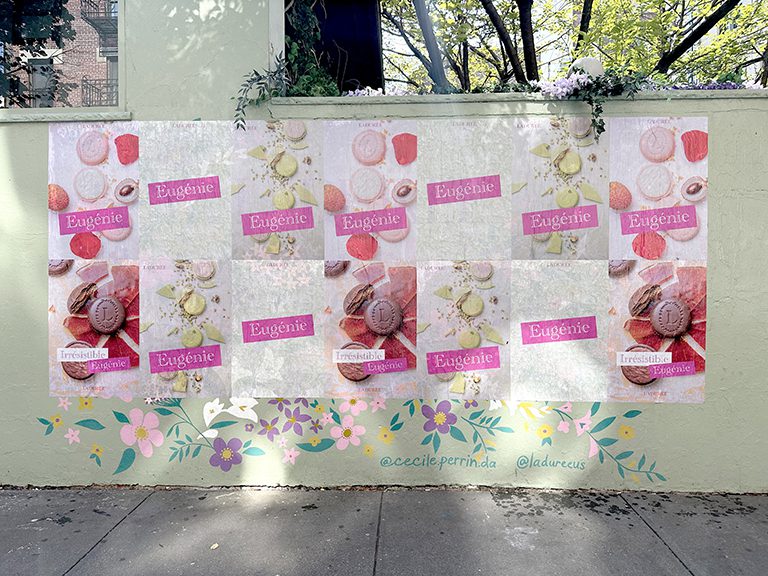
A strong wheatpaste campaign places your brand at eye level on the walls, construction barriers, and flat surfaces that pedestrians pass on the way to and from the convention center. Unlike billboards or trucks, posters are part of the urban environment , they feel like they belong, and they generate the kind of organic attention that comes with apparent cultural presence.
We scout approved posting locations in the days before each expo, identifying the highest-pedestrian surfaces within a half-mile radius of the convention center. We prioritize locations along the natural walking routes between the venue and major hotels, transit stations, and food destinations.
Poster creative for expos should be bold, specific, and include a clear call to action. We have seen brands make the mistake of running the same awareness-focused creative they use in general media. At an expo, you have an audience that is ready to engage , tell them where to find you, what you do, and why it matters to them specifically.
Sidewalk Stencils on High-Traffic Pedestrian Routes
Sidewalk stencils reach attendees at the most literal eye level possible , the pavement under their feet. Applied with chalk-based removable formulas, our stencils mark the busiest pedestrian intersections and corridors around the expo venue with brand messaging, directional arrows, and calls to action.
Stencils work particularly well in combination with booth wayfinding. At large convention centers with multiple entrances and halls, a stencil trail that leads from the main entrance to your hall creates a functional service for attendees while reinforcing your brand at every step. We position stencils at decision points , intersections where attendees choose which direction to walk , to maximize directional impact.
The format also has excellent staying power. A stencil applied at 6am is still visible at 10pm when evening attendees are walking back to their hotels. Over the course of a four-day expo, a single stencil generates thousands of exposures without any additional labor.
Projection Advertising at Night
Convention cities come alive at night during major expos. Networking events, brand dinners, cocktail receptions, and unofficial gatherings draw attendees out into the surrounding neighborhoods well after the show floor closes. Projection advertising is built for these hours.
We position high-powered projectors to display large-format brand imagery on building facades, parking structures, and hotel exteriors at key evening venues. The scale and novelty of projection advertising stops people in their tracks , it is the kind of thing people photograph and post on social media, creating earned reach that multiplies the value of the placement.
Projection works best when it is positioned at venues where attendees gather in numbers , a convention hotel bar, a restaurant that is hosting a brand event, or a public space near the convention center where people congregate before or after evening sessions. We identify these locations during our pre-show scouting and position projectors for maximum dwell time in front of the audience.
Combining Multiple Outdoor Formats for Full Coverage
The most effective expo outdoor advertising campaigns use multiple formats simultaneously. Each format has a different reach radius, a different audience state, and a different type of impression. Combining them creates a surround-sound effect that builds frequency and recall across the full expo experience.
A typical full-coverage campaign might deploy LED trucks during show hours for broad reach and mobility, wheatpaste posters for persistent ambient presence, sidewalk stencils at key pedestrian choke points, and projection advertising at evening venues. A brand ambassador team can be layered on top to convert the awareness these formats generate into direct conversations and lead capture.
We build these combinations based on your budget, the size of the expo, and the geography of the host city. Some cities have tighter site-approval planning environments than others, which affects which formats we can use and where.
site approval and Logistics Management for Expo Markets
Outdoor advertising around expos requires careful logistics planning. Convention cities during major shows have heightened enforcement of outdoor advertising site rules, and site approvals that are easy to secure in off-season become more competitive during show weeks. Our team handles site approval research and applications for every format we deploy.
We have worked in Las Vegas during major conventions, in Chicago during large healthcare and technology shows, in New York during fashion and media events, and in dozens of other cities. Each market has its own rules and relationships. Our team navigates these efficiently so the campaign is in place before the first attendee arrives.
Logistics coordination for multi-format campaigns also involves scheduling poster installation, truck routing, stencil application teams, and projection setup to happen at the right times relative to show hours and city activity. We manage all of this through a single campaign manager who stays in contact with your team throughout.
Measuring Outdoor Advertising Impact at Expos
Measuring the direct return on outdoor advertising is more specific than digital channels, but there are meaningful metrics we capture and report. Street team interaction counts track direct human-to-human contacts. QR codes on posters and truck displays allow scan tracking. Booth staff can log how many visitors mention the outdoor campaign when they arrive.
Many clients also track booth traffic by hour and cross-reference it with truck routing schedules. Consistently, the hours immediately following concentrated outdoor activity show higher booth traffic , not a perfect causal measurement, but a meaningful correlation.
We provide campaign reports after each expo that include exposures by format, interaction counts, and any scan data available. We use this information to refine the next campaign and improve efficiency over time.
How We Execute Expo Campaigns From Industry City Brooklyn
American Guerrilla Marketing plans and executes expo campaigns from our base at Industry City in Brooklyn. Our field operations team has direct experience at expos and convention centers across the United States, giving us the venue-specific knowledge that makes the difference between a campaign plan that looks good on paper and one that executes effectively in the field.
For every expo campaign, we conduct advance route planning: mapping the pedestrian corridors between hotel clusters and the expo venue, identifying the outdoor surfaces with the highest sight lines and foot traffic, confirming access and site approval parameters for each placement location. This advance work happens weeks before the expo opens, ensuring that every element of the campaign is ready to deploy the moment the show begins.
Our field teams submit documentation throughout every deployment day: timestamped logs from each position, photo confirmation of every placement, and conversation or distribution counts for ambassador and sampling programs. Post-expo reporting aggregates this documentation into a full campaign record that clients use for performance evaluation and future planning.
Planning Your Convention Campaign Timeline
Convention marketing campaigns work best when they are planned against the full timeline: 8 to 12 weeks before the show for the most complex programs, 4 to 6 weeks for ambassador-only or outdoor-only programs. The earlier the planning begins, the more options are available for every element of the campaign.
The pre-show window (6 to 8 weeks out) is when pre-show meeting outreach campaigns should launch. Personalized outreach to registered attendees using the specific conference or show context achieves significantly higher response rates than generic outreach because the timing is immediately relevant to the recipient’s known upcoming plans. We build pre-show outreach sequences for clients as part of convention marketing engagements, segmenting by target buyer persona and show registration data where available.
Production of printed materials for wheatpaste campaigns and stencil programs requires 3 to 4 weeks from design approval to installation. LED truck route planning and driver coordination requires 1 to 2 weeks. Ambassador team recruitment and briefing requires 3 to 4 weeks for shows with specific professional audience requirements. Running all of these in parallel against the show date requires a planning timeline that starts at least 6 weeks before the first deployment day.
We provide campaign timeline planning as part of the proposal process: every proposal includes a production and deployment timeline that shows exactly what happens when, what deliverables are required from the client, and what our team is responsible for executing at each stage. This timeline planning prevents the last-minute scrambles that degrade campaign quality and limit creative options.
What outdoor advertising formats work best at expos?
The most effective outdoor advertising formats at expos are LED mobile billboard trucks, wheatpaste poster campaigns, sidewalk stencils, and projection advertising. Each format serves a different purpose and reach radius, and combining them creates layered coverage across the full expo footprint.
Is outdoor advertising around expos approved?
Yes, with proper planning. Each city has different site rules for outdoor advertising. AGM researches and secures the necessary site approvals for each format and location. We only operate within approved parameters.
How do you select locations for expo outdoor advertising?
We scout the expo venue and surrounding neighborhoods to identify the highest-traffic pedestrian corridors, hotel clusters, transit hubs, and food districts. Location selection is driven by attendee movement patterns and foot traffic data.
How early should I book outdoor advertising around an expo?
We recommend 6-8 weeks lead time for most campaigns. Popular convention cities during major shows book up quickly, and site approval timelines vary by city. Earlier is always better.
Can outdoor advertising drive measurable booth traffic increases?
Yes. Brands with strong outdoor presence around expos consistently report higher booth traffic. When attendees have seen your brand multiple times before entering the hall, they actively seek you out rather than stumbling across you by accident.
What creative works best for expo outdoor advertising?
Creative that speaks directly to the expo audience performs best. Referencing the event, speaking to the professional context, and including a clear call to action , find us at Booth X, scan to schedule a demo , consistently outperforms generic brand advertising.
Do you provide creative services for outdoor advertising?
AGM works with your creative team or can connect you with design partners for outdoor-ready asset development. We provide format specifications and guidance on what creative performs best in each outdoor context.
Campaign Architect – American Guerrilla Marketing
Frequently Asked Questions
What outdoor advertising formats work best at expos?
The most effective outdoor advertising formats at expos are LED mobile billboard trucks, wheatpaste poster campaigns, sidewalk stencils, and projection advertising. Each format serves a different purpose and reach radius, and combining them creates layered coverage across the full expo footprint.
Is outdoor advertising around expos approved?
Yes, with proper planning. Each city has different site rules for outdoor advertising. AGM researches and secures the necessary site approvals for each format and location. We only operate within approved parameters.
How do you select locations for expo outdoor advertising?
We scout the expo venue and surrounding neighborhoods to identify the highest-traffic pedestrian corridors, hotel clusters, transit hubs, and food districts. Location selection is driven by attendee movement patterns and foot traffic data.
How early should I book outdoor advertising around an expo?
We recommend 6-8 weeks lead time for most campaigns. Popular convention cities during major shows book up quickly, and site approval timelines vary by city. Earlier is always better.
Can outdoor advertising drive measurable booth traffic increases?
Yes. Brands with strong outdoor presence around expos consistently report higher booth traffic. When attendees have seen your brand multiple times before entering the hall, they actively seek you out rather than stumbling across you by accident.
What creative works best for expo outdoor advertising?
Creative that speaks directly to the expo audience performs best. Referencing the event, speaking to the professional context, and including a clear call to action , find us at Booth X, scan to schedule a demo , consistently outperforms generic brand advertising.
Do you provide creative services for outdoor advertising?
AGM works with your creative team or can connect you with design partners for outdoor-ready asset development. We provide format specifications and guidance on what creative performs best in each outdoor context.
How early should a brand start planning?
For most campaigns, the smart move is to start planning at least two to four weeks before the launch window so production, routing, staffing, and reporting are all lined up.
What makes one market perform better than another?
Market fit depends on audience density, neighborhood behavior, route efficiency, and whether the creative belongs in that setting. The busiest city is not always the best city.
Can AGM bundle this with other services?
Yes. AGM often combines this work with supporting formats so the campaign has stronger repetition and cleaner reporting across the whole run.
How does AGM quote pages like this?
We quote from official rate cards where they apply, then scope the remaining production, staffing, and routing details to the actual job.