American Guerrilla Marketing
Nationwide serivce
Media planning, media buying, billboard advertising, & guerrilla marketing

American Guerrilla Marketing places bus advertising on the Areawide Community Transportation System (ACTS) serving Montgomery and central Alabama communities. We reach the riders that fixed-route transit misses.
Montgomery’s transit landscape is served by more than one system, and the Areawide Community Transportation System fills a specific and underserved gap in the region’s mobility network. While the Montgomery Area Transit System handles the city’s fixed-route commuter corridors, ACTS operates the community transportation services that connect the suburban and rural communities surrounding Montgomery to the medical facilities, social services, workforce programs, and community institutions that anchor daily life for residents in Autauga, Elmore, Lowndes, and Montgomery counties. The riders on ACTS vehicles are not anonymous commuters. They are the elderly residents of rural Elmore County getting to dialysis appointments at Baptist Medical Center, the low-income families in Lowndes County accessing healthcare at the Montgomery county health department, and the workforce program participants connecting to job training sites from communities that have no other transit service.
Advertising on ACTS vehicles is a direct channel to one of the most underreached audiences in the central Alabama market. National digital advertising campaigns miss ACTS riders almost entirely: the demographic skews older, lower-income, and rural in ways that programmatic targeting consistently fails to reach with precision. Community transportation vehicles, by contrast, are a physical advertising environment that reaches these riders where they are, during trips that are purposeful and often medically or economically significant, creating a context where relevant advertising messages, particularly those in healthcare, social services, financial assistance, and consumer goods, are received with attentiveness that the general market advertising environment rarely delivers.
AGM has spent 10-plus years placing transit advertising campaigns across community and paratransit systems nationwide. We understand the specific character of community transportation advertising: the smaller vehicle inventory, the more geographically dispersed route network, and the particular value of reaching a demographic that standard media buys routinely overlook. ACTS is a smaller inventory system than MAX or MATS, but the audience it delivers is one that no other single advertising format in the Montgomery region reaches with comparable precision.
AGM reaches the community transportation audience that standard media misses. Contact us about interior bus and vehicle advertising on the Areawide Community Transportation System serving central Alabama.
Community transportation systems like ACTS serve a rider base that is disproportionately high-value for certain advertiser categories precisely because the standard media environment does not reach them well. The elderly ridership that makes up a significant portion of ACTS trips is a demographic with strong consumer spending in healthcare, pharmacy, insurance, and personal care categories. These are not digitally native consumers who will encounter a brand through Instagram targeting or YouTube pre-roll. They are physical environment media consumers who notice the signs on the vehicles they ride, the posters in the waiting areas where they sit, and the materials distributed through the community organizations that connect them to ACTS service.
The healthcare and social services riders on ACTS, particularly those traveling to medical appointments at Baptist Medical Center, the Montgomery County Health Department facilities, and the dialysis centers and specialty clinics that serve the region’s older and lower-income communities, are making trips where healthcare-relevant information is top of mind. An advertisement for a healthcare system, a pharmacy brand, a Medicare supplement insurance product, or a home health services provider that appears on an ACTS vehicle during a trip to or from a medical appointment reaches a reader who is already thinking about their health, their coverage, and their care options. That contextual relevance is worth multiples of the impressions in media environments where the consumer is not already engaged with the relevant category.
ACTS’s geographic reach into Autauga, Elmore, and Lowndes counties extends the advertising footprint into communities that are not served by any other public transit advertising in the state. Brands and agencies that want to reach central Alabama’s rural and suburban communities, outside of Montgomery city proper, have very limited advertising options. ACTS vehicles in these communities are rare media presences that stand out in a low-clutter environment rather than competing with dozens of other out-of-home placements at every intersection.
A significant portion of ACTS trips connect riders from surrounding communities to the medical facilities concentrated in central Montgomery, particularly Baptist Medical Center South and East, the Montgomery County Public Health Department on Perry Street, and the network of specialty clinics and dialysis centers that serve patients from Autauga, Elmore, and Lowndes counties who need regular access to medical services. ACTS vehicles running these medical trip corridors carry a rider base that is almost entirely focused on healthcare-related activities during the trip.
Interior advertising on ACTS vehicles serving medical trip corridors reaches an audience that is predisposed to notice and engage with healthcare-relevant messaging. Pharmacy brands, supplemental insurance products, medical equipment and supply companies, home health service providers, and community health systems all have direct relevance to ACTS medical riders. The dwell time on ACTS vehicles, which often operate on longer suburban and rural routes compared to fixed-route city buses, is substantial: many ACTS riders spend 30 to 90 minutes in the vehicle, giving interior advertising far more sustained exposure per trip than the typical 20 to 30 minute urban fixed-route ride.
Best advertiser categories for medical corridor ACTS placement: Medicare and Medicaid supplement insurance, pharmacy brands, home health and caregiving services, medical equipment and mobility aids, healthcare system patient acquisition, and social services organizations connecting ACTS riders to available community assistance programs.
ACTS serves the suburban communities of Millbrook in Elmore County, Prattville in Autauga County, and Wetumpka in Elmore County, connecting these growing suburban populations to Montgomery’s employment, healthcare, and services corridors. These are communities with substantial residential growth over the past two decades as Montgomery’s suburban expansion pushed northeast into Elmore County and northwest into Autauga County. The residents using ACTS for connections from these communities into Montgomery are often transit-dependent individuals within otherwise car-oriented suburban environments: older residents who no longer drive, individuals with disabilities, and lower-income households in the suburban fringe without vehicle access.
The Millbrook, Prattville, and Wetumpka rider demographic, while transit-dependent, reflects the broader economic characteristics of their communities: working-class to lower-middle-income, with strong brand loyalty in everyday consumer categories and genuine awareness of the local advertising environment. In communities where out-of-home advertising inventory is sparse, an ACTS vehicle with interior advertising is one of the few media presences riders encounter during their transit trip. That scarcity creates attention that urban bus advertising has to work harder to generate because there are no competing visual media in the rider’s immediate environment.
Best advertiser categories: regional grocery and pharmacy chains with suburban Montgomery locations, credit unions and community banking brands serving the Elmore and Autauga county markets, healthcare providers serving the suburban Montgomery corridor, and utility and financial assistance programs targeting working-class households in the suburban communities ACTS serves.
ACTS extends service into Lowndes County, one of Alabama’s most rural and economically challenged counties, connecting residents there to Montgomery’s services and employment. Lowndes County has a predominantly African American population with high rates of poverty and limited access to private vehicle transportation. The residents who use ACTS service from Lowndes County into Montgomery are among the most transit-dependent in the state, and they encounter advertising on ACTS vehicles in a context where out-of-home media is extraordinarily scarce in their daily environments.
Advertising on ACTS vehicles reaching Lowndes County riders is a direct channel to a community that is systematically underrepresented in most advertising campaigns. For healthcare organizations serving Lowndes County, workforce development programs, community financial institutions, and social service organizations that want to reach this community with genuinely relevant information, ACTS vehicle advertising is one of the few physical media channels that actually reaches these households. The context and specificity of ACTS’s community transportation network makes it a uniquely valuable platform for mission-driven and community-service advertisers who need to reach rural central Alabama.
Best advertiser categories: community health programs and healthcare enrollment, food bank and nutrition assistance programs, workforce training and job placement services, community banking and financial literacy programs, and social services organizations with service areas covering Lowndes and Montgomery counties.
A substantial portion of ACTS ridership consists of elderly and disabled individuals traveling to adult day programs, senior centers, physical therapy appointments, and social services locations throughout the Montgomery metro area. These trips are often regular and scheduled, meaning the same individuals ride ACTS to the same destinations on the same days each week, creating the kind of repeat exposure to interior advertising that the best frequency-driven campaigns are built to achieve.
Senior-focused advertising categories perform particularly well in this context: Medicare and supplemental insurance plans during enrollment periods, pharmacy brands with delivery or easy-access services, home health and personal care services, senior housing and assisted living communities, and consumer brands that serve the older adult demographic’s daily needs. The attentiveness of ACTS senior riders to the advertising environment on their vehicles is above average because transit is a meaningful social experience for many older adult riders, not just a transportation transaction, and the vehicle interior is an environment they are fully present in rather than distractedly passing through.
Best advertiser categories: Medicare Advantage and supplement insurance, pharmacy home delivery services, senior housing and assisted living communities, home health and personal care agencies, adult day program operators, and consumer brands with specific relevance to the 65-plus demographic in central Alabama.
What it is: A complete exterior wrap on an ACTS vehicle, creating a moving brand presence across the suburban and rural central Alabama communities the system serves.
Best for: Organizations and brands that want high-visibility presence in communities where out-of-home advertising is sparse. An ACTS wrap in Millbrook, Prattville, or Wetumpka is a distinctive visual presence in a low-clutter environment.
Why buy it: In the suburban and rural communities ACTS serves, a wrapped vehicle is a memorable presence precisely because large-format advertising is rare. For healthcare systems launching a new Elmore County facility, a social services organization enrolling residents in assistance programs, or a community bank expanding into the suburban Montgomery corridor, an ACTS full wrap creates awareness in communities where standard outdoor advertising is limited or nonexistent. Contact AGM for ACTS wrap availability and pricing.
What it is: Card-format interior placements distributed throughout ACTS vehicles, positioned at eye level for seated riders during the full duration of their trip.
Best for: Information-dense messaging, enrollment campaigns, service announcements, and any advertiser whose audience is best reached with specific details rather than visual impact alone.
Why buy it: ACTS interior cards are the primary format for community organizations, healthcare providers, social service agencies, and regional businesses that need to deliver specific information to riders who have time to read it. On ACTS routes where trips run 45 to 90 minutes, an interior card placement is not a glance impression. It is a sustained reading opportunity for a rider with nothing else competing for their attention. For enrollment campaigns in healthcare, financial services, or community programs, the ACTS interior card environment consistently produces above-average engagement compared to standard urban fixed-route placements.
What it is: A large-format interior poster mounted along the upper interior walls of ACTS vehicles where vehicle size permits.
Best for: Brand awareness and high-visual-impact messages on the larger ACTS vehicles operating on the longer suburban and rural routes.
Why buy it: On ACTS vehicles with standard bus dimensions, the king poster commands the full interior wall and is seen by every rider for the duration of their trip. For brand campaigns targeting the central Alabama community transportation audience, the king format delivers the visual presence that registers in memory across repeated rides. Contact AGM for specific vehicle inventory and format availability within the ACTS fleet.
What it is: Cards mounted on seat backs at reading distance for the rider in the row behind.
Best for: Detailed service information, enrollment instructions, QR codes, and any messaging that requires more than a poster-distance glance to communicate effectively.
Why buy it: On ACTS’s longer rural routes, the seat-back format is one of the most effective available because riders are seated for extended periods without the distractions of urban commuting. A senior rider traveling to a dialysis appointment is in their seat for the full trip with little else to look at except the seat-back ahead of them. That uninterrupted reading environment is rare in any advertising medium and valuable for messaging that needs actual engagement to work.
What it is: A horizontal card above the front of the vehicle, seen by riders when boarding at every stop on the ACTS route.
Best for: Simple, high-recall messages, phone numbers, QR codes, and short announcements that benefit from repeated boarding-moment impressions at every stop along ACTS routes.
Why buy it: ACTS vehicles often have fewer stops per route than urban fixed-route buses, but the dwell time at each stop is longer and the boarding moment more deliberate for riders who may be boarding with mobility aids or assistance. The headliner position during this extended boarding moment creates a high-attention impression that repeats at each stop with greater distinctness than the rapid-boarding urban transit environment provides.
What it is: An exterior rear-panel advertisement on ACTS vehicles, visible to vehicle traffic following behind on central Alabama’s suburban and rural roads.
Best for: Campaigns targeting the vehicle-traveling public on the suburban and rural routes ACTS operates, including US-82, US-231, and the county roads connecting outlying communities to Montgomery.
Why buy it: In rural and suburban central Alabama, vehicles traveling behind an ACTS bus on a two-lane county road may follow the same vehicle for several minutes rather than the 30-second signal cycle typical of urban intersection exposure. The extended following-vehicle dwell time on suburban and rural ACTS routes creates tail display impressions that last longer than any urban tail display environment. For brands that want vehicle-audience reach in central Alabama’s non-metro communities, the ACTS tail display generates that exposure in a low-clutter environment with no competing outdoor media.
What it is: Cards mounted in the overhead panel above the windows, visible to riders who look up during the trip.
Best for: Secondary placements supplementing interior cards or posters, or standalone placements on ACTS vehicles where the overhead position is consistently visible to the full seated ridership.
Why buy it: ACTS riders, many of whom are older adults or individuals traveling to medical appointments, tend to be more alert and aware of their immediate environment during trips than the urban commuter scrolling through a phone. The overhead position catches the attention of riders during natural looking-up moments, particularly at stops when riders are orienting themselves to know when to exit. For messaging that benefits from frequent reinforcement across the trip duration, overhead cards on ACTS routes reach an audience that actually notices their interior surroundings.
What it is: Perforated vinyl on ACTS vehicle windows, visible as a full graphic from outside while maintaining visibility for riders inside.
Best for: Exterior presence in the suburban and rural communities ACTS serves, where the vehicle exterior is a primary out-of-home advertising surface in an otherwise low-clutter outdoor environment.
Why buy it: In Millbrook, Wetumpka, or the Lowndes County communities ACTS serves, a window-vinyl-covered ACTS vehicle is a visible advertising presence in a community with few other out-of-home options. The exterior graphic is seen by pedestrians, other drivers, and residents as the vehicle moves through neighborhoods. In communities where billboard and transit shelter advertising is sparse or nonexistent, the window vinyl on an ACTS vehicle serves as a genuine out-of-home presence where none otherwise exists.
ACTS’s service model, which includes both scheduled route service and demand-responsive pick-up, means the system’s shelter infrastructure is concentrated at the primary origin and destination points used by the highest-ridership trips: medical facility drop-off zones, senior center entrance areas, and the community organization waiting spaces that serve as informal ACTS hubs in the suburban and rural communities the system covers.
ACTS’s highest-ridership trip destinations are medical facilities, and the waiting areas, covered drop-off zones, and entrance environments at Baptist Medical Center, the Montgomery County Health Department, and the various specialty clinic locations that ACTS serves regularly represent concentrated advertising positions for healthcare-relevant brands. A shelter or poster placement at an ACTS medical facility drop-off zone reaches a rider who is specifically making a health-related trip, arriving at or departing from a medical appointment in a state of heightened health awareness.
For healthcare system branding, pharmacy benefits messaging, health insurance enrollment, and any campaign targeting patients who are actively managing a health condition, the medical facility drop-off environment through ACTS is one of the most contextually precise advertising positions in central Alabama. The audience self-selects for healthcare relevance by using ACTS for medical transportation, and the advertising environment at their destination reinforces messages that already match their current frame of mind.
In the suburban communities ACTS serves in Elmore and Autauga counties, the transfer points and waiting locations where riders board for their trips to Montgomery function as informal community gathering points. The wait for ACTS pickups in these communities, which may be 15 to 30 minutes for scheduled demand-responsive service, creates a dwell time that exceeds typical urban transit shelter waits significantly. Materials and signage at these boarding locations have extended reading time compared to urban shelter placements where service may arrive every 10 to 15 minutes.
Advertising in these suburban ACTS boarding environments reaches a community audience in a low-media environment. For brands targeting the Millbrook, Prattville, and Wetumpka communities, a physical presence at the ACTS pick-up points is one of the few out-of-home advertising positions in those communities with consistent daily audience traffic. Community organizations, healthcare providers, and local businesses serving these suburbs benefit from placement that is literally the only advertising presence at a location with regular community foot traffic.
Senior centers and adult day programs throughout the Montgomery metro area are regular ACTS pick-up and drop-off destinations. The waiting areas at these facilities accumulate ACTS rider audience during both arrival and departure windows, with extended dwell time for seniors who arrive early or wait for their return trip. Advertising placements at senior center and adult day program ACTS waiting areas reach a specifically defined 65-plus demographic in a context where healthcare, personal care, insurance, and senior-service brands have immediate relevance.
The senior audience at these ACTS pick-up and drop-off points is one of the most consistently brand-aware and advertising-attentive demographics in any market. Older adults who use community transportation are typically not distracted by smartphones during their wait and are genuinely engaged with the physical environment around them, including posted advertising materials. For brands targeting the senior demographic in central Alabama, ACTS facility advertising at senior program waiting areas is a direct, high-attention channel to that audience segment.
What it is: A full-panel advertising display at a primary ACTS stop or waiting location, positioned for maximum visibility to arriving riders and facility visitors.
Best for: Healthcare system branding, insurance enrollment, and community service announcements at the medical and senior program facilities that anchor ACTS’s highest-ridership trip destinations.
Why buy it: At $3,850 for a four-week cycle, a premium display at a key ACTS medical or senior facility waiting area delivers sustained impressions to a precisely defined audience segment throughout the campaign period. The contextual relevance of healthcare and senior-service advertising at medical and senior center ACTS waiting areas makes this format particularly efficient for advertisers in those categories, who are reaching an audience that is already predisposed to engage with their category’s messaging.
What it is: A mid-size panel at an ACTS stop or waiting area, smaller than the premium display but positioned for rider and visitor visibility at key ACTS locations.
Best for: Local community organizations, county-level healthcare and social service programs, and small businesses serving the suburban Montgomery communities ACTS connects to the city.
Why buy it: At $850 for a four-week cycle, the junior poster is accessible to the community organizations and local businesses that serve the same populations ACTS serves. A Prattville-area dental office, an Elmore County credit union, a home health agency serving the ACTS ridership demographic, or a food pantry running a donation drive can place a junior poster at a key ACTS location for four weeks at a price point that reflects local community organization budgets rather than national advertising rates.
What it is: A bench advertisement at an ACTS stop location, visible to riders waiting and to the vehicle and pedestrian traffic adjacent to the stop.
Best for: Sustained local presence at specific ACTS stop locations, particularly at senior centers and medical facilities where riders wait for scheduled ACTS pickups with extended dwell times.
Why buy it: At $700 for a four-week cycle, the transit bench at an ACTS senior center or medical facility stop delivers four weeks of consistent presence to an audience with above-average advertising attentiveness and above-average relevance for healthcare and senior service categories. The bench is in place day after day at the same location, accumulating impressions from the same regular ACTS riders who use that pickup point week after week.
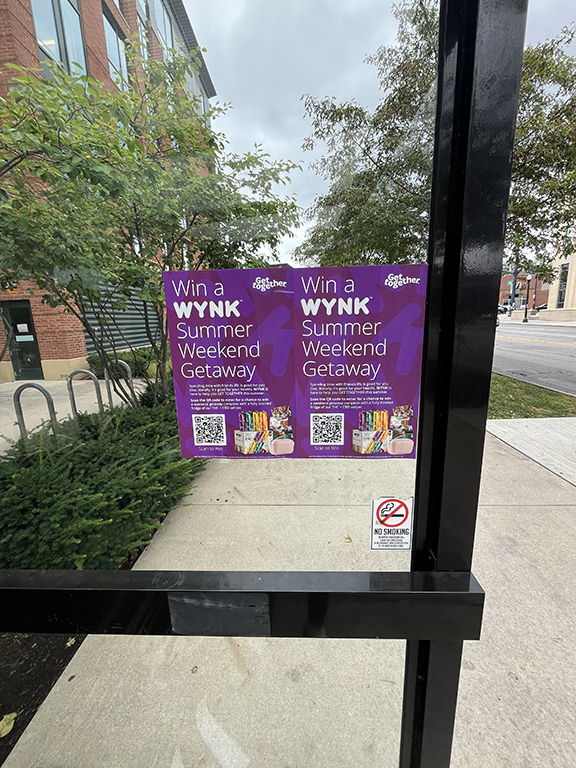
The communities ACTS serves in Montgomery, Autauga, Elmore, and Lowndes counties offer specific opportunities for guerrilla marketing layered alongside ACTS transit placements. In these communities where out-of-home advertising inventory is limited, AGM’s guerrilla formats achieve an outsized impact because they are rare rather than routine in the local environment.
Snipe advertising at the key intersections and community gathering points in Millbrook, Wetumpka, and Prattville, particularly near the ACTS pick-up locations and the commercial corridors these communities share with transit users, creates street-level presence in low-clutter suburban environments. A snipe at the Millbrook Town Center ACTS stop or near the Prattville community health center creates a repeated touchpoint for ACTS riders and non-riders alike in a community where outdoor advertising is sparse.
Take-one flyer materials at the community organizations, senior centers, and medical waiting rooms that ACTS riders frequent extend campaign messaging into the non-transit time these community members spend in their regular gathering spaces. A flyer at the adult day program where ACTS regularly drops riders reinforces the same brand or service message those riders saw on the vehicle that morning.
The most consistent ACTS advertisers are healthcare systems, insurance companies targeting the Medicare and Medicaid demographic, community health organizations running enrollment campaigns, and social services agencies that need to reach transit-dependent rural and suburban central Alabama residents. State of Alabama agencies running public health campaigns, SNAP and WIC enrollment programs, and utility assistance information campaigns use ACTS as a channel to hard-to-reach rural and low-income communities. Community development financial institutions and credit unions serving the Montgomery metro area’s underbanked population use ACTS advertising to reach potential members in the suburban and rural communities where bank branch access is limited. Senior housing and home health companies use ACTS advertising specifically to reach the 65-plus ridership during enrollment periods for Medicare Advantage and supplemental plans.
ACTS primarily serves Montgomery County and the adjacent counties of Autauga, Elmore, and Lowndes in central Alabama. Service extends into the communities of Millbrook and Wetumpka in Elmore County, Prattville in Autauga County, and into Lowndes County communities including the Hayneville area. The system also provides connections within Montgomery city to medical facilities, senior centers, and social services destinations. AGM can provide current service area maps and route information when planning a campaign targeting specific communities within the ACTS coverage area.
ACTS and MATS serve distinct audiences and operating models. MATS fixed-route riders are primarily urban commuters on predictable daily schedules traveling between residential and employment destinations within Montgomery. ACTS riders are primarily elderly, disabled, or transit-dependent individuals in suburban and rural communities making purposeful trips to medical facilities, social services, and senior programs. The advertising environment on ACTS vehicles is characterized by longer trip durations, higher contextual relevance for healthcare and social service categories, and lower overall media saturation in the communities served. The two systems are complementary for advertisers who want to reach both Montgomery’s urban commuter base and the surrounding community transportation audience.
Both local organizations and national brands can advertise on ACTS. National brands in healthcare, insurance, pharmacy, and consumer goods categories that target older adults or rural demographics have strong strategic reasons to use ACTS advertising to reach the central Alabama community they cannot efficiently target through standard digital or broadcast channels. Local and regional advertisers benefit from ACTS’s community-level presence in specific geographic areas. AGM advises both local and national clients on how ACTS fits within a broader central Alabama media strategy.
Healthcare systems, insurance companies, community health organizations, social service agencies, and regional financial institutions are the most consistent ACTS advertisers in the central Alabama market. These advertisers choose ACTS because the system’s ridership demographic matches their target audience more precisely than mass-market channels, and the cost per targeted impression on ACTS is substantially lower than equivalent reach through digital or broadcast media in the region.
AGM’s approach to community transportation advertising placement follows the same direct execution model we apply to all transit campaigns: we work with the transit authority directly, handle creative production and adaptation to vehicle specifications, coordinate installation on the appropriate vehicles, and provide photographic documentation throughout the campaign. For ACTS, we advise on the specific vehicle types and trip patterns that best match each advertiser’s geographic and demographic target within the system’s service area.
Yes, and this combination is often the most effective approach for advertisers targeting the full Montgomery metro demographic spectrum. A MATS campaign reaches the urban commuter base in Montgomery city, while an ACTS campaign adds the suburban and rural community transportation audience in the surrounding counties. Combined, the two systems cover the full range of Montgomery’s transit-riding population: working adults on MATS and the elderly, disabled, and rural community transportation riders on ACTS. AGM can structure a combined MATS-ACTS media plan and manage both placements through a single client engagement.
Contact AGM for information about advertising positions at the ACTS facility and operations hub in Montgomery. Primary ACTS pick-up and destination locations including medical facility waiting areas and senior center environments are typically the strongest placement positions in the system, but facility-based signage and waiting area materials can supplement vehicle interior advertising for a fully integrated campaign approach. AGM assesses all available ACTS advertising inventory positions when developing campaign media plans.
AGM provides photographic installation documentation for all ACTS advertising placements, including photos of interior card or poster installations, exterior vehicle placements, and facility-based materials where applicable. For clients who need impression estimates, AGM pulls available ACTS ridership data by route and service type and applies appropriate estimation methods to calculate campaign reach across the posting period. Post-campaign reporting includes all documentation photographs and a summary of placements, routes, and estimated audience reach.
ACTS operates a combination of scheduled fixed-route service and demand-responsive trip services, which means some trips are scheduled at consistent times and routes while others vary based on rider requests. For advertising purposes, the scheduled routes and the vehicle fleet itself maintain consistent interior advertising regardless of trip patterns. Interior cards and posters remain in place on vehicles throughout the campaign period whether the vehicle is on a scheduled route or a demand-responsive trip. The audience varies by trip type, but the advertising is consistently present on all ACTS vehicles for the duration of the campaign posting period.
ACTS focuses on the community transportation needs of elderly, disabled, and transit-dependent individuals in the Montgomery metro area and surrounding counties, and its service area includes communities adjacent to Maxwell-Gunter AFB where qualifying riders may access ACTS for medical and social service trips. For campaigns specifically targeting the military and veteran community in the Montgomery area, AGM can advise on whether ACTS placements are appropriate alongside other Montgomery area transit and guerrilla marketing formats that reach that demographic more directly.