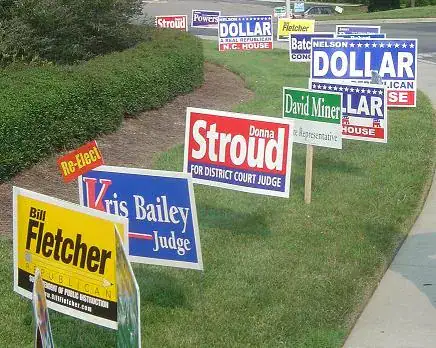
There’s a reason lawn yard signs have been a staple of local marketing for decades, and it has nothing to do with nostalgia. In neighborhoods where your target consumers live, drive, and walk every day, a yard sign creates something that digital advertising cannot: persistent, physical brand presence in the exact locations where those consumers already spend their time. Every drive past a sign is another impression, at no additional cost, over the entire duration of the deployment.
The new age in local marketing doesn’t mean abandoning formats that work. It means understanding where traditional tactics like yard signs perform better than digital alternatives, and deploying them strategically as part of a broader campaign architecture. For businesses with defined geographic service areas, local events, and neighborhood-level consumer acquisition goals, yard sign campaigns remain one of the most cost-efficient marketing tools available.
This guide breaks down exactly how to build a yard sign campaign that delivers real local visibility, from design principles to placement strategy to measuring performance against business outcomes.
Why Yard Signs Work in the Digital Age
The argument that physical advertising is obsolete consistently runs into the same problem: the data doesn’t support it. Physical advertising formats, including outdoor signage, generate brand recall at rates that outperform digital impressions for several well-documented reasons.
First, physical ads can’t be blocked. Ad blockers affect 40% or more of internet users in some demographics. Email filters send promotional content to junk folders. Social feeds are algorithmically unpredictable. A yard sign on the corner of a high-traffic residential street is visible to every vehicle and pedestrian who passes it, without exception, for every day it’s deployed.
Second, repeated exposure on familiar routes builds powerful recognition. Consumers who commute past the same neighborhood corner every day develop strong association between a brand name and a geographic context through simple repetition. When that consumer needs the service or product the sign represents, the brand they’ve seen dozens of times in their own neighborhood comes to mind first.
Third, yard signs in residential areas carry an implicit endorsement signal. A homeowner who has permitted a sign on their property is, by that act, signaling that the brand is at least known and trusted enough to occupy their front yard. Neighbors notice this, even subconsciously. The effect is subtle but meaningful in communities where social proof drives purchase decisions for local services.
Which Businesses Benefit Most from Yard Sign Campaigns
Yard signs deliver maximum value for businesses where geography and proximity drive purchase decisions. The strongest use cases include:
Home Service Companies
Plumbers, electricians, HVAC contractors, landscapers, painters, and cleaning services are among the highest-ROI users of yard sign marketing. When one homeowner in a neighborhood uses a home service provider, neighbors who might need similar services in the next few months are primed to call the same company. A yard sign at the job site, posted during active work and left up after completion with homeowner permission, delivers this social proof automatically.
Real Estate
Real estate is perhaps the original yard sign industry. For-sale and for-rent signs drive both immediate responses from interested buyers and sustained brand impressions for the agent’s name and brokerage among the broader neighborhood population. Agents who maintain consistent sign presence in target neighborhoods build geographic brand ownership that sustains their local market position over time.
Local Retail and Restaurants
New openings, seasonal promotions, and grand events benefit from yard sign placement in surrounding residential areas to drive foot traffic from nearby neighborhoods. For local restaurants in suburban areas, placing signs on key commuter routes between target neighborhoods and the restaurant location puts the brand in front of the right consumers at the right moment in their daily routines.
Fitness Studios and Personal Services
Gyms, yoga studios, martial arts schools, and personal service businesses with a neighborhood draw use yard signs to establish local presence and drive trial memberships. Placement near residential areas within a two to three mile radius of the studio, timed to new member promotions or seasonal enrollment periods, drives measurable enrollment spikes.
Event Promotion
Concerts, festivals, community events, and charity fundraisers use yard signs for time-bounded visibility campaigns in the neighborhoods surrounding the event venue. Neighborhood sign saturation in the two to three weeks before an event consistently drives ticket sales from local consumers who might otherwise miss digital promotion of the event.
Designing Yard Signs That Get Noticed
A yard sign is read in a fraction of a second by someone in a moving vehicle or walking at pace. Design choices that might work for a print brochure or a website are completely ineffective at this scale and viewing speed. Here’s how to design signs that actually work:
Maximize Contrast
High contrast between background and text is the single most important design element for outdoor signage. White or yellow text on a dark background, or dark text on a high-visibility background, performs far better in variable outdoor lighting conditions than low-contrast designs. Test your sign design under bright sunlight and overcast conditions before finalizing.
Limit to One Message
A passing driver has approximately one to two seconds to read your sign. That limits effective communication to one message: a business name, a single service, or a single offer. Trying to communicate more than that results in a sign where the viewer reads nothing clearly and retains nothing. One message, made unmistakably clear, beats five messages in small type every time.
Make Phone Numbers and URLs Readable at Distance
If your call to action requires reading a phone number or URL, that information must be large enough to read from the distance at which your sign will actually be seen. Test this in the field with a test sign before deploying at scale. Unreadable contact information is a complete waste of the sign’s conversion potential.
Brand Consistency Across the Campaign
When deploying multiple signs across a neighborhood, visual consistency across all signs compounds recognition. The same color scheme, font treatment, and logo placement across every sign turns individual impressions into a coordinated brand presence. Inconsistent designs across a sign campaign dramatically reduces the recognition benefit of geographic saturation.
Placement Strategy: Where Yard Signs Deliver Maximum Value
Placement is where most yard sign campaigns either succeed or fail. Random or opportunistic placement generates random results. Strategic placement based on consumer movement patterns and neighborhood geography delivers dramatically better outcomes:
Key Traffic Intersections
Intersections where vehicles stop create dwell time that doesn’t exist on open road stretches. A sign at a residential intersection where your target consumers stop for 30 to 60 seconds multiple times per week generates significantly more impressions and recall than a sign on a 40 mph road where viewing time is under two seconds.
Commuter Routes
Identify the routes your target consumers use daily. For most residential businesses, this means the streets connecting neighborhoods to major arterials, transit stops, schools, and commercial areas. Placement along these routes creates repeated exposure for the most behaviorally consistent segment of your target audience.
Near Job Sites and Service Locations
For home service companies, placing signs at active job sites reaches neighbors who are already in the mental context of observing your work. These neighbors are among the highest-probability future customers you can target. A sign that says “Your neighbors hired us. You can too.” next to a visible job site creates immediate social proof and direct call to action.
Visibility from Target Venue Approaches
For event, retail, and restaurant campaigns, map the routes that consumers take from target neighborhoods to your location and place signs along those corridors. You’re essentially creating a directional advertising system that builds brand awareness on the way to the destination and drives recall on subsequent passes.
Integrating Yard Signs with Broader Guerrilla Marketing
Yard signs function best as one layer in a multi-tactic local marketing campaign. Our team regularly integrates sign placement with complementary tactics for compound neighborhood impact:
Combining yard signs with flyer distribution in the same neighborhood creates both ambient presence and direct consumer contact. The signs build recognition over days and weeks; the flyers trigger immediate action from the most interested consumers. Together they work faster than either tactic in isolation.
Pairing sign campaigns with sidewalk stencils near high-pedestrian zones like commercial corridors, parks, and transit stops adds a ground-level visibility layer that reinforces the sign messaging consumers encounter on the same routes. Wheatpasting campaigns in adjacent commercial areas extend the brand footprint beyond purely residential zones.
For service companies running active work in neighborhoods, combining job-site signs with brand ambassador door-to-door outreach in surrounding blocks converts the passive brand impression of the sign into an active sales conversation.
Measuring Yard Sign Campaign Performance
Accountability requires measurement, and yard signs can absolutely be measured if you build the right tracking mechanisms into the campaign from the start:
Unique Tracking Numbers
A dedicated phone number on your yard signs that routes to your main line while tracking inbound call volume gives you a direct count of leads generated by the sign campaign. Compare call volume during the campaign against baseline to calculate incremental leads generated.
Unique Landing Page URLs
A short, memorable URL specific to the sign campaign, which redirects to your main website while logging visits, lets you track web traffic attributable to the sign campaign. Keep the URL simple enough to be remembered and typed, not just scanned with a QR code that requires a stopped vehicle to access.
Geographic Sales Analysis
After campaign completion, analyze new customer addresses or inquiry zip codes against the deployment geography. If a meaningful percentage of new customers during and after the campaign period come from the neighborhoods where signs were deployed, you have direct evidence of geographic conversion from the campaign.
Consumer Source Attribution
Train your team to ask new customers how they heard about you. Simple source attribution questioning captures a significant percentage of referrals from physical signage that wouldn’t otherwise be tied to the campaign in your data.
Frequently Asked Questions About Lawn Yard Signs in Local Marketing
Why are lawn yard signs still effective for local marketing?
Yard signs create repeated brand impressions on residential routes where consumers live and commute daily. Unlike digital ads that disappear after one scroll, a yard sign creates ongoing visibility in the same location, generating multiple brand exposures per consumer over days or weeks without additional cost per impression.
What types of businesses benefit most from yard sign campaigns?
Home service companies, real estate agents, local retail, restaurants, fitness studios, contractors, landscapers, and event promoters all see strong returns from strategically placed yard sign campaigns in their service areas. Any business with a defined geographic customer acquisition zone benefits from the repeated neighborhood visibility yard signs provide.
What should a yard sign include?
An effective yard sign should include the business name or brand, a single clear message or offer, a phone number or website, and a simple visual that’s readable at a distance. Minimal text and high contrast are essential because signs are typically read by people in moving vehicles with only seconds of viewing time available.
Are there restrictions on placing yard signs?
Yes. Most municipalities have regulations governing yard sign placement in public rights-of-way, near roads, and in certain zones. Signs on private property with owner permission are generally permitted. Always research local ordinances before deploying a yard sign campaign to avoid fines and forced removal that waste your investment.
How many yard signs do I need for an effective local campaign?
Volume depends on the geographic footprint you’re targeting. A localized neighborhood campaign might use 50 to 100 signs. A broader suburban territory campaign might deploy 300 to 500 or more. Concentration in key traffic corridors and residential intersections matters more than total sign count for driving recall and response.
How do I measure the ROI of a yard sign campaign?
Use a unique phone number or URL on yard signs to track inbound contacts generated by the campaign. Compare call volume, website traffic from the target zip codes, and new customer acquisition before, during, and after the sign deployment period. Source attribution questioning from your team also captures significant leads that wouldn’t otherwise be attributed to the campaign.
Can yard signs be combined with other local marketing tactics?
Absolutely. Yard signs pair well with door hanger distribution, flyer campaigns, brand ambassadors, and sidewalk stencils for layered local market saturation. Consistent branding across all formats compounds recognition and drives stronger recall than any single tactic alone. Our team designs integrated neighborhood campaigns that combine multiple tactics for maximum local impact.
Frequently Asked Questions
What is lawn yard signs the new age in local marketing?
American Guerrilla Marketing provides lawn yard signs the new age in local marketing services across 50+ U.S. markets. Every campaign is planned, scouted, executed, and GPS-documented by our field teams. We work with regional brands and Fortune 500 companies on campaigns that require real street-level execution and documented proof of performance.
How does AGM approach local marketing?
Our process starts with a market consultation to understand your goals, target audience, and budget. We then scout locations, handle any required permissions or permits, coordinate production and installation with our local crews, and provide a full GPS-tagged photo report after the campaign runs.
What markets does American Guerrilla Marketing cover for local marketing?
We operate in 50+ U.S. markets including New York, Los Angeles, Chicago, Miami, Houston, Atlanta, Seattle, Denver, Boston, and dozens of secondary markets. Contact us to confirm availability and pricing for your specific market.
How much does a local marketing campaign cost?
Campaign pricing depends on market, format, quantity, and duration. We work with budgets ranging from targeted single-market runs to national rollouts across multiple cities. Use our RFP Builder or contact us directly for a custom quote based on your specific campaign requirements.
How do I get started with local marketing through AGM?
The fastest way to get started is to submit your campaign details through our RFP Builder at americanguerrillamarketing.com, or contact us directly at [email protected] or (646) 776-2770. Our team typically responds within one business day with availability and initial pricing.