Milwaukee is one of the Midwest’s most underestimated advertising markets, and that underestimation is exactly what makes it valuable. The city’s 577,000 residents, 1.5 million in the metro area, occupy a compact, high-density urban geography where traditional billboards and street-level campaigns both perform above national averages on cost-per-qualified-impression. The city’s strong neighborhood identity, passionate local consumer culture, and an event calendar anchored by the world’s largest music festival create conditions where a well-planned outdoor campaign achieves genuine cultural penetration at costs that Chicago, Minneapolis, and Detroit cannot match. This guide covers every outdoor format available in Milwaukee, the specific locations that perform, and what we have learned running campaigns across this market.
Milwaukee Billboard Market Overview
Milwaukee’s outdoor market is served by Lamar, Clear Channel, and several independent operators across the metropolitan area. The city’s geographic layout, the Lake Michigan shoreline to the east, the freeway network routing traffic on I-94, I-43, I-894, and US-41, creates concentrated traffic corridors that make billboard placements unusually efficient in terms of reach-per-dollar compared to sprawling sunbelt cities of comparable population. The compact nature of the metro means fewer boards are needed to achieve meaningful saturation than in geographically dispersed markets.
The I-94 corridor is Milwaukee’s highest-volume outdoor advertising zone, carrying both the city’s cross-town commuter traffic and the Chicago-to-Milwaukee regional flow that represents one of the country’s heaviest inter-city transportation corridors. Boards on I-94 through the central city reach a documented 100,000+ vehicles daily on the busiest faces, traffic counts verified by the Wisconsin DOT and cross-referenced against Geopath measurement. For brands with both Chicago and Milwaukee objectives, this corridor serves as a natural bridge for integrated regional campaigns.
Milwaukee Billboard Costs: Current Market Pricing
Traditional Static Bulletins: $1,200 – $3,500 per 4-week period
Standard vinyl bulletin boards in Milwaukee range from $1,200 to $3,500 per four-week period depending on corridor, traffic count, and operator. Freeway placements on I-94 through the central city and I-43 near the Marquette Interchange command the higher end of this range. The Marquette Interchange, where I-94, I-43, and I-894 converge, is one of the busiest interchanges in Wisconsin, making boards in its surrounding zone visible to virtually every commuter using the metro freeway network. If you need one placement that reaches the broadest cross-section of Milwaukee, boards adjacent to the Marquette Interchange are the starting point.
Secondary arterials, North Avenue, Fond du Lac Avenue, National Avenue, and Oklahoma Avenue, provide lower-cost options at $1,200 to $2,000 per four-week period for campaigns targeting specific residential neighborhoods and commercial districts. Production costs for static bulletins, vinyl print, lamination, installation, and removal, add $500 to $1,200 on top of media cost if you are not supplying print-ready artwork.
Digital Billboards: $600 – $2,000 per 4-week period on rotation
Digital inventory in Milwaukee has expanded along the I-43 North Shore corridor, downtown, and near Mitchell International Airport. Digital placements run on a rotation basis, your creative runs at a set frequency within a share-of-voice pool. On a standard rotation, digital placements range from $600 to $2,000 per four-week period. The practical advantage beyond pricing: creative can be updated remotely without reprinting vinyl, enabling time-sensitive messaging, daypart targeting, and multiple creative rotations within the same campaign flight.
We book digital boards for Milwaukee clients when campaign creative needs to vary by time of day or when rapid creative changes are likely, event promotion campaigns where messaging shifts as the event date approaches, for example, or retail campaigns that need to reflect real-time inventory availability. The flexibility premium over static vinyl is worth paying when campaign logistics actually require it.
Poster Panels (30-Sheet): $350 – $800 per 4-week period
Poster panels on Milwaukee’s secondary arterials, Oklahoma Avenue, Kinnickinnic Avenue through Bay View, Greenfield Avenue in the south side, and North 27th Street through the Sherman Park area, provide neighborhood-level reach at the most accessible entry point in the Milwaukee outdoor market. For brands targeting specific Milwaukee communities, the Latino corridor along National Avenue and South 16th Street, the Bay View arts and independent retail district, or the Riverwest neighborhood, poster panels deliver geographic precision that freeway bulletins cannot achieve at any price.
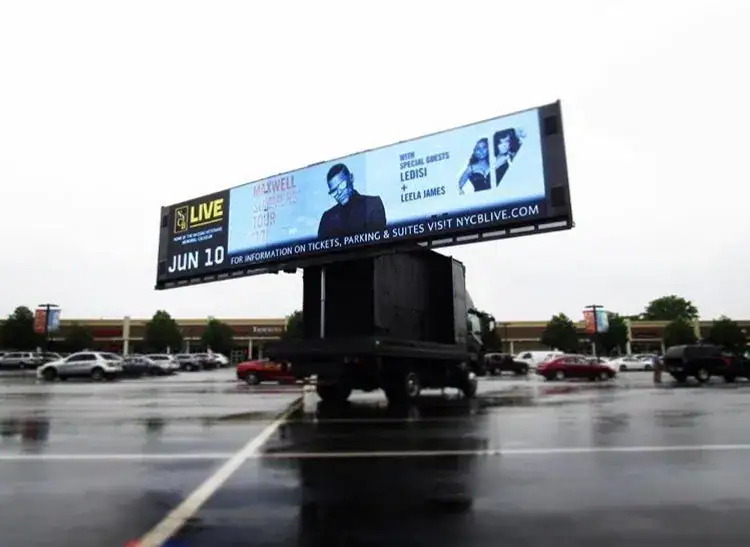
Mobile LED Truck Billboards: $250-$300 per hour with an 8-hour minimum
Mobile LED truck campaigns in Milwaukee are particularly effective around Fiserv Forum events, the 17,000-seat arena hosts Milwaukee Bucks NBA games, major concerts, and family shows that generate predictable audience concentrations in the surrounding street grid on event nights. The approach corridors from downtown hotels, the Intermodal Station on St. Paul Avenue, and the Old World Third Street restaurant and bar district all concentrate foot traffic in the two hours before tip-off or curtain.
We have deployed LED trucks on the North 6th Street and West Juneau Avenue corridors near Fiserv Forum on game nights, reaching the pre-game crowd walking from downtown parking and hotels. A 3-hour pre-game deployment reaches an estimated 15,000 to 25,000 vehicle and pedestrian impressions, better than most digital buys at comparable cost, with the contextual advantage of reaching an audience already in an entertainment mindset.
Best Milwaukee Billboard Locations by District
I-94 Through Downtown and the Stadium District
The stretch of I-94 through Milwaukee’s central city, from the 35th Street exit to the Lake freeway interchange, is the highest-traffic outdoor advertising corridor in the market. The stadium district adjacency, American Family Field (Milwaukee Brewers) generates 2.5 million+ annual fans who travel this corridor, adds seasonal audience concentration from April through September. Brands with sports marketing objectives, food and beverage, automotive, and consumer goods categories all compete for I-94 inventory during baseball season.
I-43 North Shore Corridor
I-43 running north from Milwaukee toward Glendale, Mequon, and Port Washington carries traffic from the North Shore suburbs, the highest-income residential corridor in the Milwaukee metro. This is where the market’s above-median-income professional and executive demographic concentrates for its daily commute. Boards on the I-43 North Shore corridor reach Milwaukee’s premium consumer demographic, the right starting point for luxury, financial services, healthcare, and premium consumer brands targeting Wisconsin’s affluent suburban household.
Historic Third Ward (Milwaukee Street and Broadway)
The Historic Third Ward, Milwaukee’s arts, fashion, and restaurant district along Milwaukee Street, Broadway, and the RiverWalk, is the city’s most walkable commercial corridor. The Third Ward’s demographic skews 25 to 44, arts-engaged, higher-income, and trend-influential within the Milwaukee market. Street Poster Advertising, sidewalk stencils, and mobile billboard campaigns in the Third Ward punch significantly above their impression count because the audience here sets cultural trends citywide. A brand with genuine Third Ward presence is perceived as part of Milwaukee’s cultural conversation in a way that a freeway bulletin alone cannot achieve.
In campaigns we have run for entertainment, fashion, and food-and-beverage brands in the Third Ward, concentrated posting programs on the permitted wall surfaces along Milwaukee Street, Market Street, and the Milwaukee RiverWalk have consistently generated more QR scans, more social sharing, and more measurable downstream action per dollar than comparable budget deployed in traditional freeway billboard formats. The Third Ward audience is engaged in a way that freeway audiences are not.
Brady Street (Milwaukee’s Bohemian Mile)
Brady Street, from Humboldt Avenue to the Milwaukee River, is the city’s most culturally active pedestrian corridor. Independent restaurants, music venues, vintage shops, art galleries, and community organizations make this the city’s most authentically walkable neighborhood. The Brady Street demographic skews 22 to 45, arts-forward, and community-oriented. Street-level advertising on and around Brady Street performs with high engagement because the audience is composed of people who actively seek out neighborhood culture and respond to creative that demonstrates genuine craft and community awareness.
We have run posting campaigns on Brady Street for music label releases, restaurant openings, and event promotions where the target audience is specifically the Brady Street resident and visitor population. In each case, the street-level format outperformed equivalent digital spend targeting the same geographic demographic because the physical presence in the neighborhood communicates authentic community engagement that a digital impression does not.
Walker’s Point (South 2nd Street Arts District)
Walker’s Point, Milwaukee’s newest arts and entertainment district along South 2nd Street between National and Becher, has become the city’s most rapidly evolving commercial neighborhood. The restaurant and bar cluster along South 2nd Street attracts a young, diverse, culturally engaged crowd Thursday through Sunday. Construction hoardings from ongoing neighborhood development provide posting surfaces. The Walker’s Point audience is early-adopter and influential within Milwaukee’s creative community, reaching them first on a brand launch or format introduction carries outsized cultural value relative to the cost.
Summerfest and Milwaukee’s Event Calendar
Summerfest, staged at Henry Maier Festival Park on the Lake Michigan lakefront from late June through early July, is the world’s largest music festival by attendance, drawing 800,000+ total attendees across its 11-day run. The pedestrian approach routes from downtown, the Water Street bar corridor, the Historic Third Ward, and the lakefront transit connections from the Intermodal Station all carry outstanding foot traffic density during Summerfest.
Street Poster Advertising, sidewalk stencils, and mobile LED truck campaigns in the Summerfest approach zones during the festival run deliver impression density that competes with permanent outdoor campaigns at a fraction of the cost. A concentrated posting program on the East Wells Street and East Kilbourn Avenue corridors between downtown and the lakefront, executed in the week before Summerfest opens, reaches 500,000+ pedestrians over the festival’s run as they walk the approach each day. This is the highest single-window outdoor advertising opportunity in the Wisconsin market.
Milwaukee’s extended summer event calendar extends the opportunity across multiple weekends. Polish Fest, German Fest, Italian Fest, Irish Fest, Indian Summer Festival, and dozens of neighborhood block parties from June through September create weekly event-adjacent audience concentrations throughout the summer. For brands with summer campaigns, Milwaukee’s event calendar is the most efficient media buy in the Wisconsin market.
Milwaukee’s Distinct Neighborhood Markets
Riverwest: Milwaukee’s most bohemian neighborhood, centered on North Humboldt Boulevard and Center Street. Heavily populated by artists, musicians, and creative professionals. Street-level campaigns targeting this audience require creative that demonstrates genuine cultural intelligence, campaigns that look like advertising fail here while campaigns that look like community communication succeed.
Bay View: A rapidly gentrifying south-side neighborhood along Kinnickinnic Avenue, popular with young professionals and families priced out of the Third Ward. The KK Avenue commercial strip is an active pedestrian zone with growing foot traffic and a receptive audience for independent brands, restaurants, and lifestyle products. Poster panels on KK Avenue between Oklahoma and Howard perform well for brands targeting this demographic.
Sherman Park: A predominantly African American residential neighborhood on the north side, currently experiencing significant community investment and development. For brands that want to authentically engage with this community, street-level campaigns that respect neighborhood context and partner with local institutions outperform commercial outdoor formats that broadcast from outside the community.
Clarke Square and National Avenue Corridor: Milwaukee’s largest Latino community, centered on National Avenue between South 16th and South 25th Streets. Street poster campaigns with bilingual creative in this corridor reach a community that responds to genuine cultural relevance in advertising. Spanish-language creative on this corridor is not optional, it is required for the campaign to land authentically.
Guerrilla Marketing as a Billboard Complement in Milwaukee
Milwaukee’s neighborhood culture is strong enough that street-level campaigns are not just an alternative to billboards, they are often the superior format for brands that need to connect with specific communities rather than the broad metro audience. We have run campaigns in Milwaukee that outperformed traditional billboard programs on every measurable outcome (QR scans, event attendance, social sharing) at significantly lower total cost, specifically because the format matched the audience better than a freeway board would have.
The most productive Milwaukee guerrilla marketing programs combine two or three formats simultaneously: street poster advertising in the target neighborhood for awareness density, sidewalk stencils near transit stops and pedestrian chokepoints for ground-level frequency, and a mobile LED truck deployment tied to a specific event for peak-moment saturation. The layered approach costs more than any single format but produces outcomes, brand recall, social sharing, measurable response, that no single format achieves independently.
How to Negotiate Milwaukee Billboard Rates
Milwaukee’s outdoor market is not oversubscribed outside of political season and major sporting events. Real negotiating room exists, and advertisers who approach vendors with preparation and competitive quotes consistently pay below rate card. The tactics that work in Milwaukee: get competing quotes from Lamar, Clear Channel, and any independent operators before committing to any single vendor; ask directly for remnant inventory (“What positions have not placed for next period?”); and negotiate package rates for multi-board commitments. A three-board Milwaukee package from a single operator typically prices 10 to 15% below the per-unit rate on single-board negotiations.
Summerfest season, late June through early July, is the exception to Milwaukee’s generally negotiable outdoor market. Freeway inventory near the festival approaches tightens significantly, and remnant availability drops. Book Summerfest-adjacent inventory 8 to 10 weeks ahead or accept secondary-corridor placements during the festival window.
Frequently Asked Questions About Milwaukee Advertising
How much does a billboard cost in Milwaukee?
Traditional bulletin boards range from $1,200 to $3,500 per four-week period. Poster panels on secondary arterials run $350 to $800 per four-week period. Digital boards on major corridors range from $600 to $2,000 on a rotation basis. Mobile LED truck campaigns run $250-$300 per hour with an 8-hour minimum.
What are the best streets for guerrilla marketing in Milwaukee?
Brady Street, Milwaukee Street in the Third Ward, South 2nd Street in Walker’s Point, and Kinnickinnic Avenue in Bay View are the highest-performing zones for street-level campaigns. The Third Ward offers Milwaukee’s most walkable, arts-engaged audience for street poster advertising and sidewalk stencils.
Does AGM run campaigns in Milwaukee?
Yes. We run street poster advertising, sidewalk stencil, mobile LED truck, and brand activation campaigns across Milwaukee and throughout Wisconsin. Contact us at americanguerrillamarketing.com/contact for a Milwaukee-specific campaign discussion.
When is the best time for outdoor campaigns in Milwaukee?
May through September is the peak outdoor season. Summerfest week (late June through early July) is the single highest-impression-density event window in the market. The Brewers’ home game schedule (April through September) creates regular high-density audience events near American Family Field and on I-94 throughout the season.
How does Milwaukee compare to Chicago for advertising value?
Milwaukee is significantly less expensive. Outdoor units cost 40 to 60% less than comparable Chicago placements. The audience is more concentrated in a smaller geographic footprint, a campaign that achieves meaningful Milwaukee saturation requires a fraction of the placements and budget needed for comparable density in Chicago. For brands that need strong Wisconsin presence, Milwaukee-specific campaigns deliver better ROI than trying to reach the Wisconsin audience from a Chicago-centric buy.
What is the most effective Milwaukee format for a product launch?
A combination of street poster advertising in the Third Ward and Brady Street neighborhoods (for cultural credibility among the arts and creative community) plus a mobile LED truck deployment on a high-traffic event night at Fiserv Forum (for mass reach to the broader Milwaukee audience) plus digital social targeting to people in the posting zones. The layered approach produces brand recall across multiple contexts that single-format campaigns do not achieve.
Are there billboard opportunities near American Family Field?
Yes. The I-94 corridor approaching the stadium from both the east and west carries Brewers game traffic from April through September. Several bulletin positions on this stretch are specifically targeted to event-adjacent advertising. For food, beverage, and retail brands wanting to reach the 2.5 million annual Brewers fans, I-94 game-season inventory is among the highest-contextual-relevance outdoor in the market.
What is the Marquette Interchange and why does it matter for billboard advertising?
The Marquette Interchange is where I-94, I-43, and I-894 converge in central Milwaukee, one of Wisconsin’s highest-traffic infrastructure points. Billboard positions adjacent to the interchange reach commuters traveling in multiple directions simultaneously, making them among the highest single-placement reach options in the entire Milwaukee outdoor market.
Frequently Asked Questions
Milwaukee Billboards and Unconventional Marketing: The Complete Brand’s Guide generates better results when placement, timing, creative, and local execution all work together in Michigan, Wisconsin. These questions cover the details brands usually need before launch, during rollout, and while evaluating performance.
What makes Milwaukee a useful market for unconventional billboard campaigns?
Milwaukee combines strong commuter routes, event traffic, neighborhood identity, and a manageable market size, which gives brands room to test bold outdoor ideas without the cost of larger metros.
Which Milwaukee areas tend to matter most for billboard visibility?
Major freeway corridors, downtown approaches, entertainment districts, and key commuter connectors usually carry the strongest outdoor value.
Can unconventional formats outperform standard billboards in Milwaukee?
Yes, especially when the campaign needs event alignment, local buzz, or mobile flexibility. The right format depends on timing and audience movement.
What kinds of brands tend to do well with Milwaukee outdoor advertising?
Events, sports-adjacent campaigns, retail, hospitality, entertainment, and local service brands often do well when the message matches market behavior.
How should a Milwaukee campaign balance reach and local relevance?
Use broad-reach locations for citywide visibility, then support them with neighborhood-specific formats or event activations where the audience gets denser.
Is seasonality important in Milwaukee billboard planning?
Yes. Weather, sports seasons, festivals, and commuting patterns can all change how and when the audience moves through the market.
What creative works best on Milwaukee billboards?
Simple messaging with strong readability works best, especially on freeway-facing boards where drivers only have a few seconds to understand the ad.
How can a brand test unconventional outdoor ideas in Milwaukee?
Start with one strong placement, one mobile element, or one event-tied activation and measure response before expanding the budget.
What should buyers ask Milwaukee vendors before booking?
Ask about exact location, traffic pattern, visibility angle, illumination, production cost, and how the placement performs relative to nearby alternatives.
What is the biggest mistake in Milwaukee billboard strategy?
Assuming every high-traffic road serves the same audience. The strongest locations are the ones that match the campaign objective, not just the biggest traffic number.
Related Pages and Articles