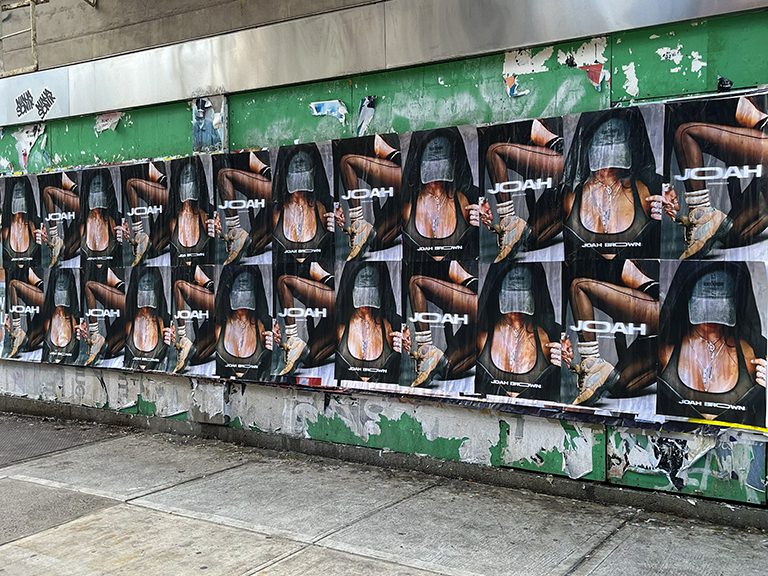
Mexico City is a poster city. You see it in the political campaigns that paper entire colonia walls in the weeks before an election. You see it in the concert promotions that cover construction barriers around the Zócalo and along Insurgentes. You see it in the film advertising for Mexican cinema releases and the arts programming for MUAC, Cineteca Nacional, and the independent gallery circuit in Roma and Condesa. Street posters are a fundamental part of how CDMX communicates with itself, which makes it an unusually receptive market for flyposting campaigns by international brands.
But running a campaign in Mexico City from outside Mexico requires understanding how the market actually works: which neighborhoods carry which audiences, how local operators structure their services, what “licensed” means in a city where the informal-to-formal spectrum of street posting is very different from London or New York, and how to manage a campaign effectively when you’re not on the ground.
This guide covers all of it — the geography, the operators, the compliance context, and the practical planning considerations for any brand or promoter considering a CDMX street poster campaign.
Understanding Mexico City’s Street Poster Culture
Pegado de carteles — literally “sticking of posters” — has been a feature of Mexican public life for generations. The tradition goes back to political organizing and labor movement communications in the early 20th century, when street posters were one of the few ways to reach mass audiences without newspaper or radio access. Political parties in Mexico still use massive street poster campaigns as a primary visibility tool, which means CDMX audiences are accustomed to seeing posters on walls in a way that urban populations in many other countries are not.
This familiarity cuts both ways. Audiences in Mexico City are genuinely accustomed to reading street posters and are not alienated by them — there’s no sense that poster advertising is intrusive or out of place. But it also means the competition for visual attention is real, and a campaign that doesn’t stand out visually against the existing poster environment won’t land effectively.
The city’s poster culture also varies significantly by neighborhood. Central areas and working-class colonias have dense, overlapping poster layers from political and commercial campaigns. The more upscale western colonias — Roma Norte, Condesa, Polanco — have a different aesthetic relationship with street advertising, with more considered placement and more visible international brand campaigns.
Key Neighborhoods for Flyposting Campaigns
Roma Norte
Roma Norte is Mexico City’s most internationally recognized creative neighborhood. The streets around Álvaro Obregón, Orizaba, and the network of smaller calles between Insurgentes and Sonora are packed with independent restaurants, concept stores, galleries, and the kind of foot traffic that brands targeting urban millennials and Gen Z want to reach. International fashion brands, streaming platforms, and music labels targeting the CDMX creative class concentrate their flyposting campaigns here.
The audience in Roma Norte skews educated, bilingual, internationally oriented, and culturally engaged. They’re familiar with brands from both the Mexican and international markets. A campaign targeting this demographic needs to match the aesthetic standards of the neighborhood — generic commercial artwork doesn’t land the same way as considered, visually strong design.
Condesa
Adjacent to Roma Norte and closely related in character, Condesa is slightly more residential and slightly more upscale. The streets around Parque México and Parque España, along Ámsterdam and Tamaulipas, see heavy foot and bicycle traffic from the neighborhood’s professional resident population. Condesa is effective for campaigns with a lifestyle, wellness, or food and beverage orientation, as well as for fashion and cultural programming that fits the neighborhood’s aesthetic.
Coyoacán
Coyoacán carries a specific cultural identity built around its history — the Frida Kahlo Museum (Casa Azul), the Leon Trotsky Museum, the Viveros park, the historic town square around the Jardín Centenario. The neighborhood attracts a mix of local residents, culturally engaged Mexico City visitors, and international tourists with a genuine arts interest. Flyposting in Coyoacán works well for cultural programming, independent music, and brands seeking association with Mexican cultural heritage and arts credibility.
Centro Histórico
The historical center of Mexico City — the Zócalo, Madero pedestrian street, Donceles, and the surrounding blocks — is the highest-traffic area in the metropolitan region and appropriate for mass-market campaigns. The audience is diverse, the foot traffic is extraordinary, and the visual competition is intense. Centro Histórico flyposting works best for campaigns that can hold their own visually in a dense posting environment.
Paseo de la Reforma Corridor
The Reforma avenue corridor — running from Chapultepec through the financial district toward the historic center — is CDMX’s most prominent commercial boulevard. Construction barriers and building hoardings along this route reach a mix of business professionals, commuters, and the tourist traffic concentrated around Chapultepec Park and the Museo Nacional de Antropología. This is appropriate for corporate brand campaigns, financial services, and premium consumer brands.
Colonia Juárez
Between Roma Norte and Centro Histórico, Colonia Juárez has emerged as a significant nightlife and arts neighborhood over the past decade. The streets around Paseo de la Reforma and the Zona Rosa, and the gallery and bar cluster on Liverpool and Hamburgo, attract a young creative audience. Flyposting in Juárez complements Roma Norte coverage for campaigns targeting the CDMX arts and nightlife scene.
Mexico City’s metropolitan population exceeds 21 million people, making it one of the largest urban areas in the world. The inner colonias — Roma, Condesa, Coyoacán, Juárez, Polanco — concentrate the demographics most relevant to international brand and cultural campaigns, with a combined walkable population in the millions.
Compliance and Regulation in CDMX
Mexico City is governed as the Ciudad de México (CDMX), with sixteen alcaldías (boroughs) each having some administrative independence, but city-wide advertising regulations are set by the central government under the Reglamento de Publicidad.
The regulatory picture in CDMX is more complex than in London or New York because the informal/formal spectrum of street posting is genuinely wider. Political campaign posting during election periods operates under different rules from commercial advertising. Some surfaces that would be considered unauthorized in London are effectively tolerated in Mexico City because of established local practice.
For international brands, the only defensible position is to work with operators who can document surface agreements with property owners. This is both legally cleaner and reputationally safer — if a brand’s campaign is pulled down for unauthorized posting in a visible location in Condesa or Roma, that enforcement action will likely become public.
Working with Mexico City Operators
The CDMX flyposting operator market ranges from sophisticated professional companies managing documented surface networks to informal operators who rely on established tolerance and informal arrangements. For an international brand campaign, the difference in documentation and accountability between these tiers is significant.
American Guerrilla Marketing works with vetted partner operators in Mexico City who maintain documented surface agreements, carry appropriate insurance, and provide GPS-tagged proof-of-posting documentation. When you book a campaign through our network, you’re not navigating the local operator market alone — you’re working through a relationship structure that provides accountability at every stage.
Mexico City’s street poster environment is dense and competitive. A campaign that looks strong in a London briefing document can get lost in the CDMX visual environment if the placement strategy isn’t specific. Neighborhood concentration and strong creative that holds up at street level in a high-competition posting environment are both non-negotiable.
Print Production for Mexico City Campaigns
Print production for CDMX campaigns can be handled either in Mexico or pre-produced in the US and shipped, depending on timeline and budget. Local print production in Mexico City is generally more affordable than US or UK production, and turnaround from a local supplier can be very fast for standard formats. For campaigns requiring specialized paper stock or finishing, US production with delivery to CDMX is straightforward.
Standard formats for CDMX flyposting are typically sized in metric — 70x100cm is a common single-sheet format, equivalent to a roughly 28×40 inch poster. Multi-sheet installations scale up from there. The key consideration is matching the format to the available posting surfaces in your target neighborhoods.
What International Brands Get Right (and Wrong) in CDMX
Getting it right means understanding that Roma Norte is not SoHo, and Coyoacán is not Williamsburg. The demographic overlap with familiar Western markets is real, but the cultural context is different, and campaigns that treat CDMX as simply an extension of their US or European strategy often miss the mark.
What works: strong visual design that holds up in a competitive posting environment, Spanish-language creative that reads as fluent rather than translated, and neighborhood specificity that matches campaign geography to actual audience location.
What doesn’t work: treating the entire city as a single market, using identical English-language creative without adaptation, and underestimating the visual competition from political and local commercial campaigns that already saturate certain surfaces.
The brands that do best in CDMX flyposting campaigns are those that treat the city as a sophisticated market with its own aesthetic standards — not a cheaper version of New York or London.
How Flyposting Works in CDMX’s Alcaldía System
Mexico City is divided into 16 alcaldías — political-administrative units that replaced the old delegaciones system in 2018. Each alcaldía has its own government and, in practice, its own approach to street advertising regulation, permit issuance, and enforcement. Anyone planning a flyposting campaign in CDMX needs to understand this because what’s standard practice in one alcaldía can be handled completely differently two blocks away in the next one.
Cuauhtémoc is the central alcaldía that covers Centro Histórico, Doctores, Tepito, and the western edge of Roma Norte. This is the highest-density alcaldía for flyposting in terms of both available surfaces and enforcement complexity. Property-owner agreements are the primary compliance mechanism here — working directly with building owners or landlords to secure surface rights is both more reliable and more respected than attempting to work through formal permit systems that are inconsistently applied.
Miguel Hidalgo covers Polanco, Santa Fe, and Lomas de Chapultepec — the wealthier western alcaldía where commercial real estate management is more formal and surface rights negotiation resembles London’s licensed operator model. Brands positioning for a luxury or premium audience run flyposting in Miguel Hidalgo through operators with established property-owner relationships, because ad hoc posting in this alcaldía carries higher enforcement risk than in more artisanal posting cultures.
Benito Juárez covers Colonia del Valle, Narvarte, Insurgentes Sur, and the southern extent of Roma. This is a residential alcaldía with active commercial corridors. Flyposting here is well-suited to music, film, and cultural campaigns targeting the mid-30s professional demographic that lives in Narvarte and spends time in Roma Norte.
Coyoacán, as its own alcaldía, has a distinct cultural character that shapes how flyposting works there. Francisco Sosa — the pedestrian street running through the heart of historic Coyoacán — is one of the most effective single-street locations in the city for cultural campaigns. The combination of tourist foot traffic and local cultural audience makes Francisco Sosa postings visible to a broader cross-section than almost anywhere else in CDMX.
AGM’s CDMX operator network maintains surface agreements directly with property owners across multiple alcaldías. Every location is documented with GPS-tagged proof-of-posting, which is particularly important in Mexico City where client verification of campaign execution is essential for international brand campaigns operating remotely.
Best Colonias for Flyposting by Campaign Type
Mexico City’s colonias vary sharply in their audience character, and matching campaign type to colonia is the most important targeting decision in CDMX flyposting.
Roma Norte is the city’s primary destination for music, culture, and creative brand campaigns. Álvaro Obregón — the wide tree-lined street that anchors Roma Norte — and the cross streets of Orizaba, Sonora, and Monterrey carry a young, creative, internationally-connected demographic that is the primary target for most music label releases, streaming platform campaigns, and independent film marketing. We’ve run flyposting campaigns in Roma Norte for artists releasing internationally, and the neighborhood’s audience is both culturally engaged and heavily active on social media — meaning street posters generate secondary reach through organic photography and sharing.
Condesa, adjacent to Roma Norte with its canopy-covered streets on Amsterdam and Tamaulipas, carries a slightly older professional demographic. This is a restaurant-and-nightlife colonia with strong foot traffic in the evenings. Consumer brand launches, premium food and drink campaigns, and lifestyle products perform well here because the audience has high disposable income and is visually receptive in the evening context where they’re making leisure spending decisions.
Centro Histórico operates at mass-reach scale. Eje Central and Madero — two of the highest-traffic pedestrian corridors in Latin America — carry volume that no other area in Mexico City matches. Campaigns requiring pure awareness reach rather than targeted audience alignment post in Centro Histórico for sheer impression volume. Festival promotions, major music acts, and events with broad demographic appeal use Centro Histórico posting as the mass-market complement to targeted colonia posting elsewhere.
Coyoacán is the culturally-specific choice. The historic center around the Plaza Hidalgo, Francisco Sosa, and the markets area draws arts-engaged locals, students from nearby UNAM, and cultural tourists. This is the right neighborhood for film campaigns, gallery openings, theater productions, and cultural organizations. The Coyoacán audience reads posters more carefully than high-traffic Centro audiences — there’s more dwell time on Francisco Sosa than on Madero, even though Madero has more foot traffic.
Polanco carries the luxury positioning. For brands in fashion, hospitality, premium automotive, or any category where the primary target is Mexico City’s high-income consumer, Polanco postings on Presidente Masaryk and the surrounding streets deliver an audience that can’t be reached through mass-market locations. Posting here requires established surface agreements and a credible operator — the neighborhood’s property managers are not accepting of unauthorized posting.
Mexico City Campaigns Succeed When the Neighborhood Strategy Is Specific
Searchers looking for flyposting in Mexico City are usually trying to understand the market quickly: which colonias matter, how execution differs from US or UK cities, and whether the campaign should be concentrated or broad. The strongest search results respond with district names, operator coverage language, and audience matching. That is the right shape for the query.
Mexico City is a city of distinct zones, and poster planning should respect that. Roma Norte and Condesa offer dense lifestyle and culture overlap. Centro Histórico carries scale and constant motion. Polanco can support more premium positioning. Reforma corridors can function differently from neighborhood-level runs aimed at music, art, or youth culture. A single “Mexico City” plan is usually too vague to be useful.
What buyers should ask for in a CDMX plan
- A colonia-by-colonia rationale, not just a citywide promise.
- Clarity on documentation and coordination, especially for international teams managing remotely.
- Print and install timing, since cross-border logistics can create avoidable delays.
- A clear explanation of where premium, youth, entertainment, or tourism-driven audiences overlap.
Common H2 patterns in the search results include neighborhoods, costs, legal context, and operator selection. That mix reveals blended intent: part guide, part vendor evaluation. Searchers want confidence that the city can be navigated intelligently. They are not just asking whether flyposting exists in Mexico City. They are asking how to make it efficient and credible.
The best Mexico City campaigns feel local even when the client is not. That comes from choosing the right colonias, the right poster scale, and the right execution partner. Once those are right, the city becomes one of the strongest flyposting markets for culture-led campaigns.
For international marketers, that specificity is especially valuable because Mexico City campaigns are often managed from outside the city. A page that names the relevant colonias, explains the audience logic, and clarifies what the recap process looks like removes a lot of uncertainty. It turns the campaign from a vague international idea into an executable local plan.
Frequently Asked Questions
Is flyposting common in Mexico City?
Yes. Pegado de carteles — the Mexican Spanish term for this practice — is widespread in Mexico City and has deep roots in the city’s political, cultural, and commercial life. Street posters appear across the city from political campaigns to concert promotion to film advertising. CDMX audiences are accustomed to reading street posters in a way that makes the format genuinely effective.
Which neighborhoods in Mexico City are best for flyposting campaigns?
Roma Norte and Condesa for international brands, lifestyle, fashion, and film campaigns targeting an urban professional audience. Centro Histórico for mass-market and political campaigns. Coyoacán for arts, culture, and independent music. Reforma corridor for corporate visibility and premium consumer brands.
How do I find a reliable flyposting operator in Mexico City?
Working through an established international network operator like American Guerrilla Marketing is the most reliable approach for brands without an existing Mexico City contact. Local operators vary significantly in surface quality and documentation standards. Our partner network includes vetted operators who maintain proper surface agreements and provide proof-of-posting documentation.
What are the main differences between flyposting in Mexico City vs London or New York?
CDMX has a more complex informal-to-formal spectrum of posting surfaces. The city’s political campaign culture means street poster placement is understood differently by local audiences — it’s expected and unremarkable in a way it might not be in a UK or US city. Surface documentation standards among professional operators are improving but remain less standardized than in the UK market.
What should an international brand budget for a Mexico City flyposting campaign?
A targeted campaign in two to three key neighborhoods (Roma Norte, Condesa, Coyoacán) runs roughly $2,000-$6,000 USD for 100-300 locations, including print and operator fees. City-wide campaigns covering multiple alcaldías scale higher. Contact us for a quote specific to your target neighborhoods and campaign scale.