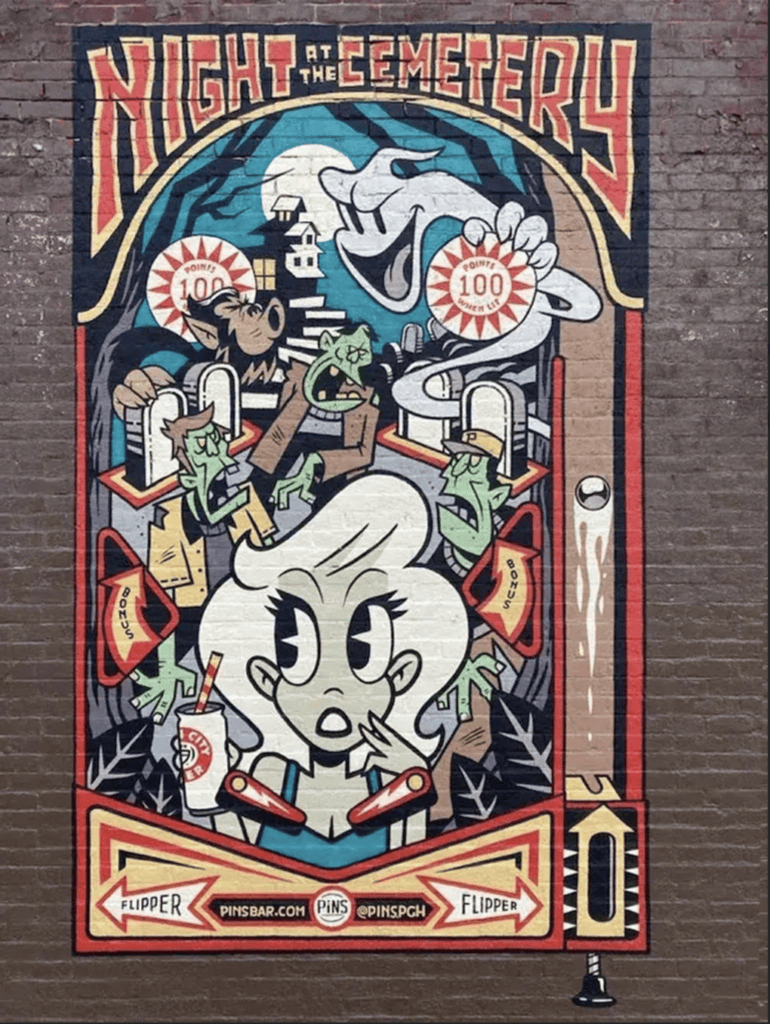
Mural advertising doesn’t have a posted rate card. There’s no industry-standard CPM you can look up, no fixed price per square foot printed in a media kit. What brands actually pay depends on a stack of variables — wall size, surface condition, city, artist caliber, permitting requirements, permanence, and whether you’re doing one wall or twenty. Understanding those variables is the first step to budgeting a mural campaign that doesn’t blow up mid-execution.
At American Guerrilla Marketing, we’ve managed mural advertising campaigns across every major US media market for over a decade. Our field team handles everything from a single neighborhood wall to multi-city programs spanning dozens of locations. This guide breaks down exactly what drives mural advertising cost in 2026 — so brands and agencies can build realistic budgets before they pick up the phone.
This guide covers cost factors and budget variables for mural advertising. For specific pricing on your campaign, request a quote directly from our team — every project is scoped individually based on market, scope, and objectives.
Why Mural Advertising Costs Vary So Widely
The honest answer: mural advertising is a fabrication project, not a media buy. You’re not purchasing access to an existing structure for a defined period the way you’d buy a billboard or a transit shelter ad. You’re commissioning the creation of a physical artwork on a wall — and everything about that process has a cost attached.
That means the price of a mural campaign moves based on real-world inputs: artist rates, material costs, permitting fees, wall access negotiations, and the complexity of the creative. A 15-foot wall in a secondary market with a simple graphic design costs meaningfully less than a 60-foot building face in New York’s Lower East Side with a photorealistic portrait and a three-day installation.
Neither of those is a “better” campaign. They’re different tools for different objectives. But understanding what drives cost on each end of the spectrum is how brands build budgets that hold up through execution.
The Six Core Factors That Drive Mural Advertising Cost
1. Wall Size and Surface Area
This is the most straightforward variable. Larger walls require more paint, more time, more artist labor, and often more equipment — scaffolding, lifts, or crew. A wall that takes two days to complete costs less than one requiring ten days on site.
But size doesn’t scale linearly. A 20-foot wall isn’t simply twice the cost of a 10-foot wall, because some fixed costs — project management, design conversion, permit applications — don’t change with size. The paint and labor do. The setup time often doesn’t.
What this means for brands: very small walls in premium locations can carry overhead costs that push their per-square-foot cost higher than you’d expect. Very large walls in accessible locations benefit from the same fixed cost spread across more surface. Bigger is often more efficient per square foot — though not always the right creative choice.
2. Surface Type and Condition
Surface condition is one of the most underestimated cost drivers in mural advertising. A freshly primed concrete wall in good condition is a best-case scenario. A brick wall with decades of weathered paint, uneven mortar, or significant texture adds labor and material cost before the creative even begins.
Surface prep work can include:
- Pressure washing and cleaning
- Patching cracks, holes, or damaged sections
- Applying primer or blocking coats
- Managing existing text, signage, or previous murals that need to be covered
A wall that looks fine from the street can require significant prep when the crew arrives on site. Our field team GPS-tags and documents wall conditions during the scouting process, which is how we catch these issues before they become change orders. Sites that haven’t been scouted firsthand often surprise brands who assumed the prep work would be minimal.
3. Artist Fees and Creative Complexity
Artists have different rates based on reputation, portfolio, speed, and market. A nationally known muralist working in a major city commands a different rate than an emerging local artist. The creative itself matters too — a typographic treatment takes less time to execute than a photorealistic portrait. A flat color geometric design scales differently than intricate hand-lettering at large format.
Brands sometimes try to cut cost by going directly to the cheapest available artist without considering the execution risk. Mural advertising at a high-traffic location is a public representation of your brand. An artist who charges half the rate but takes three times as long — or whose work quality doesn’t hold up at scale — costs more in the end.
American Guerrilla Marketing works with a vetted network of certified and licensed artists across every major media market. We match artist to project based on creative brief, wall specs, and timeline — not just who’s available and cheapest.
4. Permitting Requirements and Local Regulations
Some markets treat branded murals as outdoor advertising, which means they’re subject to signage permits, variances, or approval from local design review boards. Others have no process at all — you need property owner permission and nothing else. Most cities fall somewhere in between, with requirements that vary block by block depending on zoning.
Permit costs themselves are often modest. The time and expertise required to handle the process correctly is where the real cost sits. A permit application in one city might require architectural drawings. Another might require proof of insurance from the artist and the property owner. Some cities have signage moratoriums in historic districts that require board review. Getting this wrong can halt a campaign after the wall has been prepped and the artist is on-site.
Our operators handle permitting in every market we work in. That expertise is built into our project costs — it’s not a surprise add-on at the end of the project.
5. Location and Media Market
A wall in New York City, Los Angeles, Chicago, or Miami costs more than a wall in Tulsa or Boise. That’s true across almost every input: wall access and negotiation, artist rates, permitting complexity, and logistics. Top-tier media markets carry premium costs because the organic exposure, social media amplification potential, and brand visibility are higher.
But secondary markets aren’t just “budget New York.” They’re different campaign tools. A mural in Austin or Nashville or Columbus can be the most-photographed wall in the city. A mural in a secondary market for a regional campaign or a product launch targeting a specific audience often delivers outsized impact relative to its cost.
The question isn’t “where is it cheapest?” It’s “where does this wall do the most work for this campaign?” Those are different questions with different answers. Brands running nationwide rollouts often strategically mix primary and secondary markets to maximize geographic coverage without concentrating their entire budget in two or three cities.
6. Permanence and Campaign Duration
Temporary murals — designed to run for a campaign window of weeks or a few months — typically involve different material specs than permanent installations. Permanent murals use high-performance exterior paint with UV protection, anti-graffiti clear coats, and surface treatments designed to hold color and detail for years. They also involve more careful surface prep, since the work has to last.
Temporary campaign murals can use materials optimized for a shorter life. That doesn’t mean low quality — the creative still needs to look sharp for photography and public exposure — but the material investment differs.
A related cost consideration: removal. Some markets require murals to be removed or painted over at the end of a campaign. That work has a cost. Build it into your budget from the start.
Mural advertising programs that include proper scouting, permitting, artist matching, surface prep, installation, photography documentation, and removal are full-service campaigns — not just “someone painting a wall.” The cost reflects the full scope of what’s involved.
Cost Ranges by Project Type
We won’t publish a rate card here. Costs genuinely vary too much based on the variables above to give a number that means anything without knowing your specific market, wall, creative, and timeline. What we can do is describe how cost scales across different project types so you can calibrate your expectations.
Small-Scale Mural in a Secondary Market
A single wall — say 15 to 25 feet wide — in a secondary or tertiary media market, with a relatively clean surface and a simplified creative execution, is the most accessible entry point for brands new to mural advertising. These projects can be scoped and executed efficiently. The organic exposure potential is more contained, but for a regional launch, a brand activation, or a test of the mural format, they work well.
Cost is meaningfully lower than flagship market work. But “lower” still means a professional project — scouting, permitting, artist labor, materials, documentation. You’re not pricing like a DIY paint job.
Single-Market Flagship Wall
A high-traffic wall in New York, Los Angeles, Chicago, or another top-tier market — something 30 to 60 feet or larger, in a neighborhood known for street culture and social media activity — is a more significant investment. These walls generate organic photography, press attention, and social sharing that extends their reach far beyond the physical location.
A major streaming platform rolling out a new series, a fashion brand marking a seasonal launch, a beverage brand trying to own a neighborhood conversation — these brands use flagship walls because the ROI includes organic content generation that can run for months after installation. The cost is higher, but so is the output.
For a well-scouted wall in a premium New York neighborhood with an experienced artist and full documentation, the investment is substantial but predictable if the project is scoped correctly from the start.
Multi-City Mural Programs
Multi-city programs — 5 to 25+ locations across multiple markets — introduce both complexity and potential efficiency. Complexity because every city has different permit requirements, different artist availability, different wall inventory, and different logistics. Efficiency because program-level management can standardize the creative specs, pre-negotiate wall access in multiple markets, and manage artist coordination at scale instead of treating each location as a separate project.
The per-unit cost in a well-managed multi-city program is typically lower than running the same number of individual projects separately — but the total program budget is obviously higher. Brands running these programs are typically working with a single vendor who manages the full rollout: American Guerrilla Marketing operates nationwide and has placed murals in every major US market.
| Project Type |
Key Cost Drivers |
Typical Use Case |
| Small secondary market wall |
Artist rate, surface prep, permitting |
Regional launch, brand test, local activation |
| Single flagship market wall |
Market premium, artist reputation, wall access |
Series launch, seasonal campaign, brand presence |
| Multi-city program (5-10 walls) |
Permitting variation by city, logistics, PM overhead |
National rollout, product launch, brand awareness |
| Multi-city program (10-25+ walls) |
Program management, artist network, scale logistics |
National campaigns, agency media buys, ongoing programs |
What’s Included in a Full-Service Mural Quote
When brands get a mural quote from American Guerrilla Marketing, it covers the full scope — not just paint and labor. Understanding what’s in a professional quote helps you compare vendors who may be quoting different scopes at different prices.
A full-service mural project typically includes:
- Site scouting: On-the-ground identification of walls that match your target market, neighborhood, and creative vision. Our field team documents walls with GPS-tagged photos and condition assessments before anything is proposed.
- Wall access negotiation: Working with property owners to secure authorization for the installation, including any compensation arrangements for the building owner.
- Permitting: Researching local requirements and handling applications through certified and licensed channels. Not all projects require permits, but all projects require someone who knows whether a permit is needed and can handle it if it is.
- Artist matching and coordination: Identifying the right artist for the creative brief, wall scale, and timeline. Managing the artist relationship through design approval, installation, and final sign-off.
- Surface preparation: Cleaning, priming, and patching as needed before paint application.
- Paint and materials: All paint, clear coat, and protective treatments included in the project scope.
- Installation labor: Artist and crew time on-site, including any equipment rental (lifts, scaffolding).
- Photography and documentation: Professional photos of the completed installation, plus in-progress documentation for brand use. GPS-tagged location records for program tracking.
- Project management: A single point of contact managing the full project from brief to delivery.
Vendors who quote only artist labor or only materials are quoting an incomplete project. The overhead on the items above — scouting, permitting, coordination, documentation — is where the difference between a well-executed mural campaign and a chaotic one actually lives.
Commissioned Murals vs. Advertising Murals: A Cost Distinction
There’s a meaningful difference between a commissioned mural — where a brand pays an artist to create a mural on their own property or a designated public wall — and an advertising mural, where a brand pays to place branded imagery on a wall they don’t own, in a location chosen for traffic and audience exposure.
Commissioned murals are often part of office interiors, retail environments, or brand HQ spaces. The cost calculus is different: you’re paying for art and experience, not media placement. The artist fee is the dominant cost driver, and the “return” is environmental branding, employee experience, or customer-facing aesthetics.
Advertising murals are media placements. The wall is the medium. You’re paying for the art execution AND the placement — which means wall access negotiation is part of the cost, market selection matters for exposure, and the deliverable isn’t just the mural itself but the campaign results it generates.
Most of what brands contact American Guerrilla Marketing for falls in the advertising mural category — placed strategically in high-traffic or culturally relevant locations to generate awareness, social content, and organic press coverage. The cost model reflects that media-plus-fabrication hybrid.
How Real Brands Use Mural Advertising Budgets
Without disclosing client details, here’s how different brand types typically approach mural advertising budgets based on our firsthand experience across a decade of campaigns.
Entertainment and Streaming Platforms
A major streaming platform launching a new original series will often use mural advertising as the lead outdoor element in one or two key markets — typically New York and Los Angeles, sometimes Chicago or Miami. The mural serves as both a public media placement and a content generation asset: it gets photographed by passersby, shared on social media, and sometimes covered in entertainment press. Budget allocation tends to be concentrated in one or two high-impact walls rather than spread across many smaller ones. The visual needs to be photography-ready and culturally resonant.
Fashion and Apparel Brands
Fashion brands use murals to own a specific neighborhood energy. A campaign targeting the Soho customer looks different from one targeting Brooklyn. The wall selection is as much about neighborhood identity as it is about traffic count. Multi-city programs are common at seasonal launches, and the creative brief often involves significant collaboration between the artist and the brand’s creative team. Budget tends to be higher per wall because the aesthetic execution is central to the campaign’s value.
Beverage Companies
Beverage brands running mural campaigns often prioritize volume — more walls across more markets — rather than a small number of flagship placements. This is especially true for brands with nationwide distribution looking to build shelf presence through neighborhood-level visibility. Secondary and tertiary market walls become part of the program, and per-unit costs benefit from the program scale. Total program budgets can be significant, but the per-location investment is often more modest than a single flagship wall in New York.
Tech and App Launch Campaigns
Tech brands — apps, platforms, consumer electronics — tend to use murals as part of a broader launch activation. The mural anchors a neighborhood moment, often paired with street-level distribution, sampling, or event components. Cost is built into a launch budget alongside other guerrilla marketing elements, and the mural functions as the visual anchor that ties the activation together. Photography documentation is especially important because the mural imagery often gets repurposed in digital campaigns.
What Drives Cost Up — and What Keeps It Down
If you’re trying to budget a mural campaign efficiently, it helps to know which variables are within your control and which are fixed by the market.
Factors That Increase Cost
- Top-tier media markets (New York, LA, Chicago, Miami, San Francisco)
- Large wall surface area
- Complex creative with photorealism, fine detail, or multi-color gradients
- Poor surface condition requiring significant prep work
- Markets with strict permitting requirements or historic district overlays
- Tight timelines that require rush scheduling or premium artist rates
- Permanent installations with long-life material specs
- Remote locations requiring significant equipment logistics
Factors That Keep Cost Down
- Secondary and tertiary media markets
- Walls in good condition that require minimal prep
- Creative designed for efficient execution (bold graphics, flat color work)
- Multi-location programs that spread fixed costs
- Flexible timelines that allow for standard scheduling
- Temporary installations with appropriate material specs
- Pre-vetted wall inventory that eliminates extended scouting
The biggest cost-control lever brands have is creative design. A well-designed mural brief that’s been optimized for large-format execution — with clear specs, approved artwork, and reasonable complexity — executes faster and with fewer surprises than a brief that arrives late, changes three times, or asks the artist to hand-render photorealistic detail on a 50-foot wall in four days.
The Real ROI Calculation
Mural advertising cost only makes sense in the context of what you get for it. The traditional OOH metric — cost per thousand impressions — undersells murals because it only counts passive visual exposure, not the organic content generation, social media amplification, and press coverage that a well-placed mural generates.
A major branded mural in a high-foot-traffic neighborhood gets photographed hundreds of times a day. Those photos get posted to Instagram, TikTok, and Twitter. People tag the brand. Influencers make it a backdrop. That earned media has real value — but it doesn’t show up in a standard impressions calculation.
Brands that have tracked the full social and press impact of mural campaigns often find that the cost per engagement — when all organic content is factored in — is substantially lower than the upfront production cost suggests. A mural that costs X to produce but generates millions of organic social impressions over its life is a different value proposition than a billboard that costs a similar amount for a four-week rental.
That’s the firsthand argument our team makes to brands who ask whether mural advertising is “worth it” compared to traditional out-of-home. It usually is — but the measurement framework has to match the medium.
How to Get an Accurate Mural Advertising Quote
The fastest way to get a realistic budget number is to come prepared with:
- Target market(s): Which city or cities are you focused on? If it’s a multi-market program, how many locations?
- Target neighborhood or audience: Is this about geographic coverage, cultural relevance, or demographic targeting?
- Creative brief or concept: What’s the visual? Is this a logo lockup, a photorealistic portrait, a typographic piece? Complexity matters for artist selection and timeline.
- Timeline: When does the campaign need to be live? Rush timelines cost more.
- Duration: Is this a temporary campaign activation or a permanent installation?
- Existing wall inventory: Do you have a wall already? Or does the team need to scout and source?
With those inputs, American Guerrilla Marketing can build a detailed scope and quote. Without them, any number you get is a guess. The variables matter too much to quote without knowing the project.
Frequently Asked Questions
How much does a single mural advertisement cost?
A single mural advertisement in a secondary market on a prepared surface will cost considerably less than a flagship wall in a top-tier media market like New York or Los Angeles. Cost variables include wall size, surface condition, artist complexity, permit fees, and whether the campaign is temporary or permanent. Programs with multiple locations typically bring lower per-unit costs. Contact American Guerrilla Marketing with your specific market and scope for an accurate quote.
Is mural advertising more expensive than a traditional billboard?
Murals and billboards serve different functions and price differently. A billboard is rented for a defined period — you pay for the media placement. A mural involves fabrication, artist labor, surface prep, and sometimes permitting. For short windows, a billboard may cost less. For longer placements or campaigns where organic social content generation matters, mural advertising often delivers better long-term value per dollar spent.
Do mural advertising costs include the artist fee?
This depends entirely on the vendor. American Guerrilla Marketing structures full-service mural quotes to include site scouting, wall negotiation, permitting coordination, artist fees, surface prep, paint and materials, and documentation. Some vendors quote labor-only and expect the brand to handle permitting and wall access separately. Always confirm what’s included before comparing quotes.
What is the difference in cost between a temporary and permanent mural?
Permanent murals typically involve higher-quality exterior paint, more surface prep work, and sometimes a longer artist engagement for detail work meant to last years. Temporary murals — painted for a campaign window of weeks or months — may use slightly different materials and often don’t require the same finish quality. The cost difference varies by project, but permanent installations generally run higher than temporary activations of similar scale.
How do multi-city mural programs affect overall cost?
Multi-city programs introduce new variables — permit requirements differ by municipality, artist rates differ by market, and logistics multiply. However, brands running 5, 10, or 20+ murals across a national rollout often benefit from program-level efficiencies: consolidated project management, standardized creative specs, and pre-negotiated wall inventory. American Guerrilla Marketing manages multi-market mural programs nationwide and can structure these campaigns to control per-unit costs at scale.
Can a brand get permits for mural advertising in any city?
Permitting varies significantly by city and even by neighborhood. Some municipalities require signage permits for branded murals; others have specific ordinances around painted advertising. American Guerrilla Marketing works with certified and licensed permitting specialists in every major market, handling the regulatory side so brands don’t encounter surprises mid-campaign.
What’s the minimum budget to run a mural advertising campaign?
There is no universal minimum, but campaigns that include site sourcing, permitting, artist coordination, and documentation in a single market typically require more budget than a brand might expect if they’ve only bought traditional out-of-home media before. A single high-impact wall in a top market is a meaningful investment. Multi-location programs scale accordingly. Contact American Guerrilla Marketing for a quote specific to your market and campaign scope.