LED billboard trucks represent one of the most flexible and high-impact tools in the guerrilla marketing arsenal. Mobile, dynamic, GPS-tracked, and deployable in virtually any U.S. market, they solve the core problem of traditional outdoor advertising — the media waits for the audience — by creating mobile media that follows the audience to wherever it is most densely concentrated. But before any brand books an LED billboard truck campaign, there are dozens of questions to answer: what does it cost, what creative specs are required, what permits are needed, how do you measure the impressions, and how does a mobile LED campaign integrate with other campaign elements. This FAQ covers every question brands consistently ask before booking, with honest answers from a team that has deployed LED billboard trucks in 50+ markets.
American Guerrilla Marketing’s LED billboard truck programs operate across 50+ U.S. markets. We operate out of Industry City, Brooklyn, NY. The answers here reflect our actual operational experience across multiple market types, campaign objectives, and deployment contexts — not theoretical specifications.
Costs and Pricing
What does an LED billboard truck campaign cost?
Daily rates for LED billboard truck campaigns typically run $1,500-$4,000 per day depending on market, truck type, and deployment complexity. Premium markets (New York, Los Angeles, Chicago, Las Vegas) run $2,500-$4,000+ during high-demand windows. Standard markets run $1,200-$2,500 per day. Multi-day commitments typically yield 10-20% per-day rate reductions. Creative production for LED truck displays is additional — typically $500-$2,000 for standard motion graphics content, higher for custom video production.
Are there minimum booking requirements?
Most LED truck operators require a minimum of one full day of deployment, with most programs structured around 2-5 day minimum commitments for non-event-specific campaigns. Event-specific campaigns (a single-day event perimeter deployment) can sometimes be structured as single-day bookings at standard daily rates with shorter notice windows. Multi-week campaigns typically require advance booking of 1-3 weeks and commit to defined route patterns and daily deployment schedules.
Creative Specifications
What file format and resolution does LED truck creative need to be?
Creative specifications vary by truck model but typical requirements are: MP4 video format, resolution in the range of 1920×540 or 1920×480 pixels (confirm exact specs with your specific operator), 24-30fps frame rate, compressed file size under 200-500MB per loop depending on truck playback system, and loop duration of 10-30 seconds for most deployment contexts. The most important step: always confirm exact specifications with the specific truck operator before production begins. Resolution and aspect ratio mismatches that are not caught before production require costly re-edits or produce distorted output on the truck display.
What creative designs work best on LED trucks?
LED truck creative performs best when: it uses high-contrast, bold color combinations that read clearly in daylight conditions, features a single dominant visual element rather than complex multi-element compositions, limits copy to 5-7 words maximum per frame that can be read at 100+ foot viewing distance at walking speed, incorporates brand identity elements that are instantly recognizable without detailed attention, and uses motion that is purposeful and attention-grabbing rather than decorative. Short 10-15 second loops designed for repeated viewing rather than single-pass comprehension work better than complex narrative arcs requiring 30+ seconds of sustained attention.
Permitting and Regulations
Do LED billboard trucks need special permits?
Normal driving operations on public roads do not require special permits in most U.S. cities. Special permit situations include: stopping or parking in controlled zones during permitted events, operating with vendor or exhibitor credentials in event perimeters, navigating certain oversized vehicle restrictions in specific urban zones, and operating in cities with specific mobile advertising ordinances. Our team handles permit requirements as part of campaign planning — brands do not need to manage the permitting process independently.
Are there areas where LED trucks cannot operate?
Most U.S. cities permit LED billboard trucks on public roads with standard traffic restrictions applied. Specific restrictions may apply in: some historic preservation districts, certain private property zones (malls, campuses), specific pedestrian-only areas, and in some cases near government buildings or facilities with security perimeter requirements. Our route planning process identifies and works around these restrictions while optimizing for maximum target audience exposure within compliant operating zones.
Measurement and Tracking
How do you measure LED billboard truck impressions?
Our campaigns provide GPS-verified route documentation as the foundation of impression measurement — every deployment day produces a map of the actual routes driven with timestamps. We layer this with: traffic count data from the specific route segments driven (providing estimated vehicle and pedestrian exposure), QR code scan tracking if the creative includes a QR element, geofenced mobile attribution for campaigns with conversion tracking requirements, and brand recall lift surveys for brand awareness objective campaigns. The combination of GPS verification and traffic data provides defensible impression estimates rather than operator self-reported numbers.
Operations and Logistics
How far in advance do I need to book?
Standard campaigns in non-peak periods: 1-2 weeks advance booking is typically sufficient. Major event-adjacent campaigns (Super Bowl, playoff games, major festivals): 4-8 weeks advance to secure availability during peak demand windows. Multi-market programs: 3-4 weeks for optimal route design and operator coordination across markets. Last-minute campaigns (less than 72 hours notice) are sometimes possible in select markets but limit route and timing options.
Can LED truck campaigns run in multiple cities simultaneously?
Yes — our multi-market campaign management coordinates simultaneous deployments across multiple U.S. cities with consistent creative, unified reporting, and coordinated deployment timing. Multi-city programs are common for national brands launching products across markets simultaneously, political campaigns running in multiple states, and entertainment brands promoting releases in multiple primary markets during the launch window.
Strategy and Integration
What campaign objectives are LED trucks best suited for?
LED trucks excel for: event-perimeter advertising at specific events (sporting events, concerts, festivals), competitive conquest campaigns near competitor locations or events, product launch announcements requiring mobile, market-wide awareness, targeted route campaigns reaching specific demographic neighborhoods or commercial corridors, political campaign presence in specific geographic zones, and direct-response campaigns where QR code engagement from mobile media is a campaign objective.
How do LED trucks integrate with other guerrilla and OOH tactics?
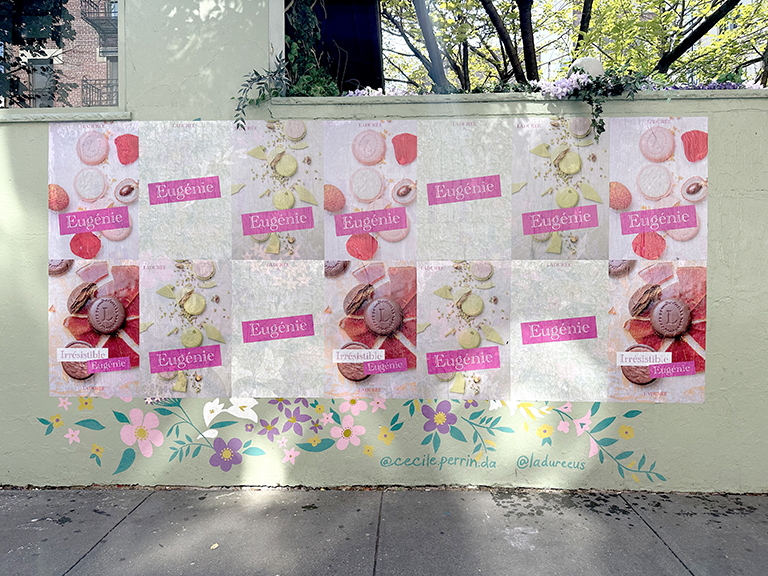
LED trucks integrate most effectively with: street posters in surrounding neighborhoods that pre-establishes brand familiarity before the truck arrives, brand ambassador programs in the zones where the truck operates that create human interaction to complement the truck’s visual impression, fixed OOH placements on primary corridors that the truck reinforces with matching creative, and experiential activations at specific locations that the truck drives audience to through directional messaging.
Frequently Asked Questions: LED Truck Billboard FAQ
How much do LED billboard trucks cost?
$1,500-$4,000 per day depending on market and truck type. Premium markets run $2,500-$4,000+. Standard markets run $1,200-$2,500. Multi-day commitments yield 10-20% per-day rate reductions. Creative production is additional at $500-$2,000 for standard motion content.
What creative specs do LED trucks require?
MP4 format, resolution around 1920×540 (confirm with specific operator), 24-30fps, under 200-500MB per loop, 10-30 second loops. Always confirm exact specifications with your specific truck operator before production — mismatches require costly re-edits.
Do LED trucks need permits?
Normal road driving doesn’t require special permits in most cities. Event perimeter zones, stopped/parked operations in controlled areas, and cities with specific mobile advertising ordinances may require permits. Our team handles permitting as part of campaign planning.
How do you measure LED truck impressions?
GPS-verified route documentation plus traffic count data provides the impression estimate foundation. QR code scan tracking, geofenced mobile attribution, and brand recall surveys add additional measurement layers for campaigns with specific conversion or awareness objectives.
In what cities can LED trucks operate?
Virtually all major and secondary U.S. markets. We operate in 50+ markets including New York, Los Angeles, Chicago, Houston, Dallas, Atlanta, Miami, Philadelphia, Boston, Seattle, Denver, Phoenix, and Las Vegas, plus secondary markets nationwide through our operator network.
How far in advance should I book?
Standard campaigns: 1-2 weeks. Major event-adjacent: 4-8 weeks. Multi-market programs: 3-4 weeks. Last-minute campaigns under 72 hours are sometimes possible in select markets but limit route and timing options.
Frequently Asked Questions
What is make your brand unmissable the ultimate led truck billboards faq?
American Guerrilla Marketing provides make your brand unmissable the ultimate led truck billboards faq services across 50+ U.S. markets. Every campaign is planned, scouted, executed, and GPS-documented by our field teams. We work with regional brands and Fortune 500 companies on campaigns that require real street-level execution and documented proof of performance.
How does AGM approach billboards faq?
Our process starts with a market consultation to understand your goals, target audience, and budget. We then scout locations, handle any required permissions or permits, coordinate production and installation with our local crews, and provide a full GPS-tagged photo report after the campaign runs.
What markets does American Guerrilla Marketing cover for billboards faq?
We operate in 50+ U.S. markets including New York, Los Angeles, Chicago, Miami, Houston, Atlanta, Seattle, Denver, Boston, and dozens of secondary markets. Contact us to confirm availability and pricing for your specific market.
How much does a billboards faq campaign cost?
Campaign pricing depends on market, format, quantity, and duration. We work with budgets ranging from targeted single-market runs to national rollouts across multiple cities. Use our RFP Builder or contact us directly for a custom quote based on your specific campaign requirements.
How do I get started with billboards faq through AGM?
The fastest way to get started is to submit your campaign details through our RFP Builder at americanguerrillamarketing.com, or contact us directly at [email protected] or (646) 776-2770. Our team typically responds within one business day with availability and initial pricing.