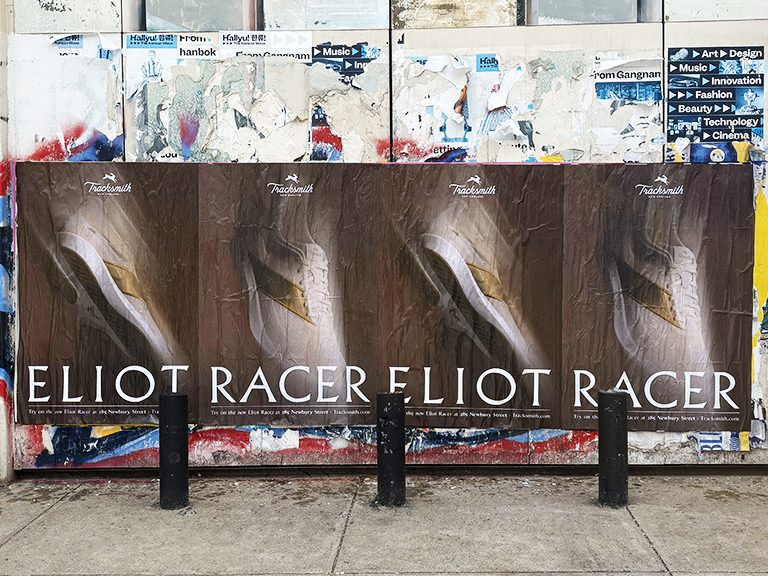
Wheatpasting in Camden London: Poster Strategy for High-Footfall Streets starts with matching the right streets, surfaces, audience, and campaign timing. Camden is the kind of neighborhood that still surprises people who only know it by reputation. The tourist-facing version — Camden Market, the Lock, the stalls selling band shirts and combat boots — exists and generates real foot traffic. But beneath that, Camden is also a genuine north London neighborhood with a working population, a history of live music that shaped British rock and punk, a canal culture, and residential streets that stretch from Mornington Crescent up through Kentish Town toward Hampstead.
For wheatpaste campaigns, Camden’s value is the foot traffic volume combined with the music and cultural heritage that gives posters here a specific kind of context. When an album campaign posts in Camden, it’s not just placing a poster — it’s participating in a street culture that has been talking about music on those walls since the 1970s. That context matters. It gives entertainment and music campaigns a hometown credibility that costs nothing extra to access.
The challenge in Camden is the tourist overlay. Camden High Street on a Saturday draws visitors who have come specifically to do Camden Market and have no other agenda. That audience is valuable for some campaigns and largely irrelevant for others. Understanding the distinction between Camden’s resident demographic and its tourist demographic — and knowing which surfaces reach which — is what separates effective campaigns from expensive wallpaper here.
Camden’s Foot Traffic market
Camden High Street from Camden Town tube station north to Camden Lock is one of the highest foot-traffic corridors in London outside the city center and Oxford Street. On summer weekends, the crowds between Mornington Crescent and the bridge over the Regent’s Canal approach 100,000 daily visitors. The narrow streets and dense market configuration concentrate that traffic in ways that make individual placements see very high impression counts.
The character of that foot traffic shifts as you move north. From the tube station to the market, it’s predominantly tourist and visitor. From the Lock north along Chalk Farm Road toward Primrose Hill, it shifts toward local — north London residents, young professionals, the creative industries community that has always lived in the area. Campaigns should consider which version of the Camden demographic they’re actually trying to reach before deciding where on the north-south corridor to concentrate placements.
Camden Market is the fourth most visited attraction in London, with approximately 100,000 visitors per week during peak season. The Electric Ballroom on Camden High Street holds 1,500 people; Koko (the former Camden Palace) holds 1,500 and has hosted everyone from Madonna to Coldplay to Amy Winehouse.
Key Surfaces and Zones
Camden High Street Hoardings
Development projects along Camden High Street regularly produce hoarding panels that operators access for postering. These placements are high-visibility — close to the tube exit and along the main pedestrian flow — but also highly competitive. Popular hoarding spots turn over quickly as multiple campaigns compete for space. Budget a refresh round for any High Street placements if the campaign runs longer than two weeks.
Chalk Farm Road
Running north from Camden Lock toward Chalk Farm tube, this stretch passes some of Camden’s best independent restaurants, the Roundhouse arts venue at the northern end, and a mix of residential and commercial properties. The Roundhouse is a significant arts venue — 3,300 capacity, consistently programming credible music and theater — and postering near it reaches an audience that’s already in an arts-engaged state of mind. Chalk Farm Road placements generally deliver longer lifespan than High Street placements due to lower poster competition.
Railway Infrastructure
Camden has significant railway infrastructure — the Overground, the Thameslink line, and various rail viaducts create substantial wall surfaces throughout the neighborhood. The walls of railway bridges and viaducts along the canal are some of Camden’s most distinctive posting opportunities. Crews who know the area have surface access to some of these. They deliver strong visual impact because they’re often visible from multiple vantage points.
Koko and Electric Ballroom Adjacent
Both Koko on Camden High Street and the Electric Ballroom a few doors down are major music venues with established postering traditions. The immediate streets around both venues — Camden High Street in both directions, Buck Street, Parkway — have been used for music campaign postering for decades. If you’re promoting an event at either venue, or a musical act with any Camden connection, these are the natural placement zones.
“Camden is one of those London neighborhoods where the street itself has a point of view about music. Post a well-designed album campaign here and the neighborhood will hold it in a way it wouldn’t in a more neutral zone.”
The Camden Demographic Split
Camden’s usefulness for campaigns depends significantly on understanding its layered demographic:
- Tourists and day visitors: International visitors, UK day-trippers, school groups — primary Camden Market users, not a primary target for most brand campaigns
- Young north London residents: 18-35 demographic living in Camden, Kentish Town, Holloway, and Archway — genuine target for music, entertainment, food, and lifestyle campaigns
- Arts and music community: Working musicians, industry professionals, venue staff, promoters — not large in number but high in influence, particularly for music campaigns
- Established residents: 35-60 demographic who’ve lived in the area for years, often homeowners, professional class — reachable through Chalk Farm Road and Primrose Hill-adjacent placements
Campaigns targeting music fans or youth culture should concentrate on High Street and market-adjacent surfaces where the younger demographic is most concentrated. Campaigns targeting slightly older, more established north Londoners do better on Chalk Farm Road and the residential streets feeding into it.
Camden as Part of a North London Campaign
Most well-planned north London campaigns treat Camden as the anchor zone rather than the only zone. The neighborhoods adjacent to Camden — Kentish Town, Holloway, Islington, Tufnell Park — extend the reach of a Camden-centered campaign into the residential north London population that defines the broader demographic. Kentish Town specifically has developed a strong independent music and arts scene, with the Forum venue and a concentration of music-industry-adjacent residents.
A campaign that posts heavily in Camden and then extends placements along Kentish Town Road, Holloway Road, and Upper Street in Islington is effectively covering the north London creative class corridor — the people who are at Camden Market on Saturday and at the Forum on a Tuesday night and who make up a genuinely influential slice of London’s cultural conversation.
Design Considerations for Camden
Camden’s visual environment is deliberately chaotic and saturated. The market, the painted shop fronts, the competing signage — it’s a high-noise visual space. Campaigns that work here tend toward the bold end of the design spectrum. Simple, high-contrast, single-message posters with strong visual anchors outperform complex, detail-heavy designs that might read well in a calmer environment.
Music campaign artwork has an advantage in Camden because the format is recognizable and respected. A well-designed album cover or tour poster in the style that music audiences already associate with legitimate promotional material carries authority here. Brand campaigns that want to tap into Camden’s music-credibility context sometimes borrow visual language from music promotion — even if they’re promoting something unrelated to music — because that register works in this specific environment.
Why Camden Searches Lean Toward Audience and Energy
Camden poster-related searches usually come from marketers chasing culture, nightlife, and music-adjacent visibility. Results tied to Camden keep highlighting crowd density, youth audiences, and the area’s long association with live music and alternative retail. So the strongest ranking angle is to explain not only where posters can go, but why Camden changes the feel of a campaign.
Searchers want practical comparisons. How does Camden perform versus Shoreditch for music? Is the audience more tourist-heavy or local? Does creative need to be louder, simpler, or more event-driven because people are moving quickly through the market and station approaches? The most useful H2 topics for this query tend to focus on audience profile, best posting corridors, launch timing around weekends and gigs, and what kinds of brands naturally belong in Camden’s visual environment.
A page that matches intent should also be honest about tradeoffs. Camden’s energy is an advantage, but it also means visual clutter and heavier competition for attention. That is why campaign density, bold typography, and short-message artwork matter so much here. People searching this term are usually deciding whether Camden belongs in the plan, and they need a grounded explanation of how to use the area well instead of just a generic neighborhood summary.
That is also why Camden often works best for campaigns with a clear event, release, or drop behind them. The neighborhood rewards urgency and recognizability. Searchers comparing zones need that nuance, because Camden is powerful when the brief fits and inefficient when it does not.
Frequently Asked Questions
Surface-by-Surface Breakdown in Camden
Camden is one of London’s most visited neighborhoods — the market complex around Camden Lock draws 10 to 15 million visitors annually, making it one of the highest-traffic tourist destinations in the UK outside of central London. For wheatpaste campaigns, that visitor volume is both an opportunity and a constraint. The surfaces closest to the market are heavily contested, but the broader Camden corridor offers consistent options for brands targeting music audiences, alternative fashion, and the young international tourist demographic.
Chalk Farm Road
Running north from Camden Town station to the Roundhouse venue on Chalk Farm Road, this stretch is the most music-focused paste corridor in London. The Roundhouse — a Grade II listed circular performance space that hosts everything from major international tours to immersive theater — generates a consistent stream of arts-engaged foot traffic. We’ve placed tour announcement campaigns for music clients on this corridor specifically because the audience walking between Camden Town station and the Roundhouse is exactly right for that content.
Camden High Street and Kentish Town Road
The A400 corridor through Camden High Street is the highest foot-traffic route in the neighborhood. Surface access here is competitive because every brand that targets Camden’s demographic is trying to get onto these walls. We maintain relationships with surface owners along this stretch specifically because demand consistently exceeds supply. Book early for this corridor — confirmed surface access with four to six weeks advance notice is standard.
Electric Ballroom Area
The Electric Ballroom on Camden High Street is one of the UK’s most historically significant live music venues. The walls surrounding it are genuine music-industry real estate. Placement here signals to a certain audience that a campaign is authentic to the scene rather than adjacent to it.
Camden Market attracts approximately 100,000 visitors every weekend. Chalk Farm Road handles significant pedestrian traffic between Camden Town underground station (which itself serves over 25 million passengers annually) and the Roundhouse venue.
Foot Traffic Patterns in Camden
Camden’s traffic patterns are heavily weighted toward the market circuit. Weekday mornings are relatively quiet compared to the evening when the restaurant strip on Camden High Street fills up. But weekends are unlike anywhere else in London — the combination of the market, the music venues, and the neighborhood’s reputation as a destination for alternative culture means Saturday and Sunday foot traffic is dramatically higher than weekdays.
The best posting window for Camden is Friday morning, so campaigns are fresh when the weekend foot traffic peaks Saturday afternoon. Posting Sunday night means you miss the weekend surge entirely — avoid it unless the brief specifically requires Monday presence.
How AGM Runs Camden Campaigns
We’ve run wheatpaste campaigns in Camden for music tours, festival announcements, album releases, and fashion brands targeting the alternative market. The neighborhood rewards campaigns that lean into its identity — street-level, independent, anti-corporate in aesthetic even if the client is a major label. The most effective Camden campaigns we’ve executed look like they belong there rather than like they were imposed.
For a music tour campaign, we’d prioritize Chalk Farm Road for the Roundhouse adjacency, Camden High Street for the mass foot traffic, and Kentish Town Road heading north for the local resident reach. That three-corridor approach covers tourists, commuters, and locals in a single campaign. We’ve placed on all three within a single overnight run, starting at 3am from the Kentish Town end and working south toward the station.
Our operators ran a tour announcement campaign in Camden last autumn — 35 locations across a two-kilometer radius. By Friday afternoon, photos of the campaign were circulating on music fan accounts on social media without any paid amplification. That kind of organic spread is what Camden’s visual culture enables when the artwork is right.
Past Campaigns in Camden: What Worked
Camden’s audience is both highly aware of advertising and genuinely receptive to campaigns that feel authentic to the neighborhood. What that means in practice: bold, direct artwork outperforms polished commercial design. A poster that looks like it was made by a person — even a very well-resourced person — outperforms a poster that looks like it was made by a committee.
We’ve found that campaigns running at A0 size (841mm x 1189mm) or larger get noticeably more organic social sharing than smaller formats. Camden has a strong self-documentation culture — visitors photograph the neighborhood constantly, and a poster that fits the frame of a casual street photo gets amplified for free. Oversized multi-sheet formats get shared disproportionately. If the budget allows for one large-format placement per neighborhood, Camden is where we’d put it.
Camden’s Seasonal Campaign Calendar
Camden operates on a seasonal rhythm that smart campaign planning accounts for. The neighborhood’s tourism-driven economy peaks hard in summer — July and August bring international visitors to the market complex at densities that rival peak Oxford Street. For brands targeting international tourists, summer is the obvious window. For brands targeting the local Camden demographic (younger, music-oriented, genuinely alternative in the non-ironic sense), the shoulder seasons — late September through November and February through April — are when the audience is most present and least diluted by tourist traffic.
Festival and Event Campaign Timing
Camden is a natural campaign environment for festival season. The Roundhouse’s program generates consistent foot traffic from a culturally engaged audience throughout the year, and the venue’s booking calendar is worth mapping against campaign timing. A campaign timed to land the week before a major Roundhouse run — a residency, a sold-out tour stop — catches the audience in an anticipatory state that amplifies receptivity to related entertainment content.
The Camden Fringe, which runs in August, brings a theater-and-arts audience to the neighborhood that overlaps with West End theater-goers but trends younger and more experimental. Campaigns for alternative theater productions or arts events that might not reach the mainstream West End audience can find a receptive demographic in Camden during the Fringe window.
What Makes Camden Campaigns Distinctive
Camden has a self-aware relationship with its own cultural identity. The neighborhood knows it’s “Camden” in a brand sense — the market, the Roundhouse, the music history — and campaigns that engage with that identity intelligently are received differently from campaigns that treat it as generic urban real estate. This isn’t about pandering or being overly on-the-nose. It’s about demonstrating awareness of the specific place and specific audience rather than deploying generic creative in a neighborhood-shaped hole.
The campaigns we’ve run in Camden that generated the most organic sharing were the ones where the creative felt like it understood the neighborhood. Not necessarily music-related, not necessarily countercultural — but visually literate, confident in scale, and placed on walls that the local community interacts with rather than walls that just happen to be in the postal code.
We’ve placed campaigns in Camden across all seasons and for clients across entertainment, fashion, and consumer brands. The consistent finding is that Camden rewards creative ambition. A genuinely strong piece of artwork placed at the right wall near the Roundhouse or the Electric Ballroom creates more social ripple than the same spend spread thin across weaker locations.
Why does Camden work well for wheatpaste campaigns?
Camden High Street and the market area generate some of the highest weekend foot traffic in London — comparable to Oxford Street on busy days. The demographic skews younger with strong representation of music fans, tourists, alternative culture enthusiasts, and arts-engaged Londoners. The neighborhood’s music heritage gives entertainment and culture-adjacent campaigns a built-in context that adds credibility to street placements.
What brands run wheatpaste campaigns in Camden?
Music labels, festival promoters, venue-adjacent campaigns for Koko and the Electric Ballroom, alternative fashion and streetwear brands, gaming companies, and entertainment brands regularly run Camden campaigns. The neighborhood’s music heritage gives any music-adjacent campaign automatic cultural context. Food and drink, youth travel, and lifestyle brands also find genuine audiences here.
Where are the best surfaces for wheatpasting in Camden?
Camden High Street hoardings near the tube exit, Chalk Farm Road between the Lock and the Roundhouse, the railway bridge walls along the canal, and the streets around Koko and the Electric Ballroom are the highest-traffic options. Chalk Farm Road generally gives longer poster lifespan than High Street due to less competition for surface space.
Does Camden work for non-music brands?
Yes. Food and drink, travel, youth fashion, entertainment, and gaming brands all find genuine audiences in Camden. The key is understanding that Camden’s core demographic is specific — younger, trend-aware, culturally engaged. Mass-market campaigns without a specific youth angle tend to get lost in Camden’s visually competitive environment.
How much does a Camden wheatpaste campaign cost?
A Camden-focused campaign covering High Street, Chalk Farm Road, and the market area with A0 format posters, installation, and GPS documentation typically runs £2,500-£5,000. Larger format campaigns extending into Kentish Town, Holloway, or Islington add to this base. Contact us at [email protected] for a specific quote based on your campaign scope.