Event advertising has a fundamental problem that fixed media cannot solve: audiences move. They approach the venue from multiple directions, concentrate in different zones at different times, flow between parking, transit hubs, tailgate areas, and entertainment districts before and after the event. Fixed billboards and static OOH placements reach the specific audiences that happen to travel the specific routes where those placements exist — missing every audience member who approaches from a different direction, parks in a different lot, or arrives via transit rather than car. LED billboard trucks solve this problem by making the advertising mobile. The media follows the audience, not the other way around.
American Guerrilla Marketing deploys LED billboard trucks at events across 50+ U.S. markets. We operate out of Industry City, Brooklyn, NY and run mobile LED campaigns at sporting events, music festivals, political rallies, trade shows, product launches, and major brand activation windows. Our truck deployments are GPS-tracked and documented — every route, every activation window, every impression zone is captured in the post-campaign report. This guide covers why LED billboard trucks are the superior event advertising format, which events benefit most, how to maximize performance, and how LED trucks integrate with broader event campaign strategies.
The Mobile Media Advantage at Events
The strategic advantage of LED billboard trucks over fixed OOH in event advertising contexts comes down to one principle: audience aggregation. Events temporarily aggregate your target audience in a specific geographic zone in a way that does not exist at any other time or place. The challenge is that this aggregated audience is not uniformly distributed in that zone — it concentrates in approach corridors before the event, around the venue perimeter during, and in departure routes and entertainment zones after. A fixed billboard can only serve the audience that travels its specific corridor. An LED truck can serve all of these audience concentrations by routing to wherever the audience is densest at each phase of the event timeline.
Event Timeline Routing Strategy
Our event LED truck deployments follow a defined timeline routing strategy: pre-event approach corridor coverage (2-3 hours before event start on the primary vehicular and pedestrian approach routes), venue perimeter coverage during peak arrival (1 hour before event start through the first hour of the event), entertainment district coverage during the event (in surrounding bars, restaurants, and nightlife areas where fans and non-ticket-holders concentrate), and post-event departure corridor coverage (the first 90 minutes after event end on primary exit routes). This routing strategy maximizes total audience exposure across the full event timeline rather than concentrating coverage on a single window or location.
Which Events Benefit Most from LED Truck Advertising
LED billboard truck event advertising delivers its highest ROI at events that combine: significant audience concentration (50,000+ attendees preferred), defined geographic convergence point (a venue or venue cluster where audiences concentrate), meaningful dwell time in approach corridors and surrounding areas (sports and music events rather than transit-passing events), and an audience whose demographic profile matches the advertiser’s target.
Major Sporting Events
NFL, NBA, MLB, NHL, and UFC events — particularly playoff and championship events — concentrate tens of thousands of fans in defined venue perimeters for predictable time windows. Super Bowl games and NBA Finals games create the densest single-event audience concentrations of any regular calendar event in U.S. sports, making them premium deployments for LED truck campaigns. Our event truck campaigns around major sporting events include careful pre-event route planning that covers all major approach corridors, real-time route adjustment based on observed fan concentration, and venue perimeter looping that creates repeated exposure to the fans circulating in the tailgate and venue approach zones.
Music Festivals
Multi-day music festivals — Lollapalooza, Coachella, SXSW, Bonnaroo, Governors Ball — create multiple-day audience concentration windows that allow for event-arc LED truck campaigns rather than single-event deployments. Festival approach routes, campsite corridors, and surrounding entertainment districts provide routing opportunities that span morning preparation through late-night entertainment across multiple event days. For brands with strong music culture positioning, festival LED truck campaigns create saturating presence within the festival geographic footprint over the full event duration.
Political Campaign Events
Political campaign rallies, convention events, and primary and general election day deployments are among the most time-sensitive and impact-concentrated LED truck applications. Political campaigns use LED trucks for counter-messaging at competitor rallies, brand presence at candidate events, and election day exposure in high-turnout geographic zones. The immediate, real-time nature of political campaign events makes LED truck flexibility particularly valuable — the ability to deploy quickly, route adaptively, and update content in real time matches the fast-moving nature of political campaign dynamics.
Creative Strategy for Event LED Truck Campaigns
Event-context LED truck creative operates under specific constraints and opportunities that distinguish it from standard OOH or static digital creative. Event audiences are moving, partially distracted by the event context, and encounter the truck at varying distances and angles. Creative that works in this environment shares specific properties.
Bold Visual Simplicity
Event LED truck creative must be visually legible at 100-200 feet in moving and distracted audience conditions. This means: high contrast color combinations, single focal point composition, minimal copy (no more than 5-7 words per frame), and brand elements that are immediately recognizable without sustained attention. Elaborate design and detailed information that works in print or digital contexts fails on a moving LED truck in the visual complexity of an event environment.
Event Context Integration
Creative that acknowledges the event context — using team colors, event themes, location-specific references, or culturally relevant event language — consistently outperforms generic brand advertising in event environments. An audience that sees a brand acknowledgment of the event they are attending is more receptive to that brand than one that encounters a generic ad with no connection to the shared context. This integration does not require event partnership or official sponsorship — acknowledging the general context (sports night, music festival, the city) achieves the relevance effect without contractual event associations.
Dynamic Content and Real-Time Responsiveness
Modern LED trucks support real-time content updates, enabling campaigns that respond to live event developments. Creative that updates based on game scores, announces event-specific promotions at specific times, or shifts messaging based on event outcomes creates fresh relevance throughout the deployment that static creative cannot achieve. Building a real-time content update plan into LED truck campaign production maximizes the dynamic creative advantage that mobile LED platforms provide.
Integrating LED Trucks with Other Event Campaign Elements
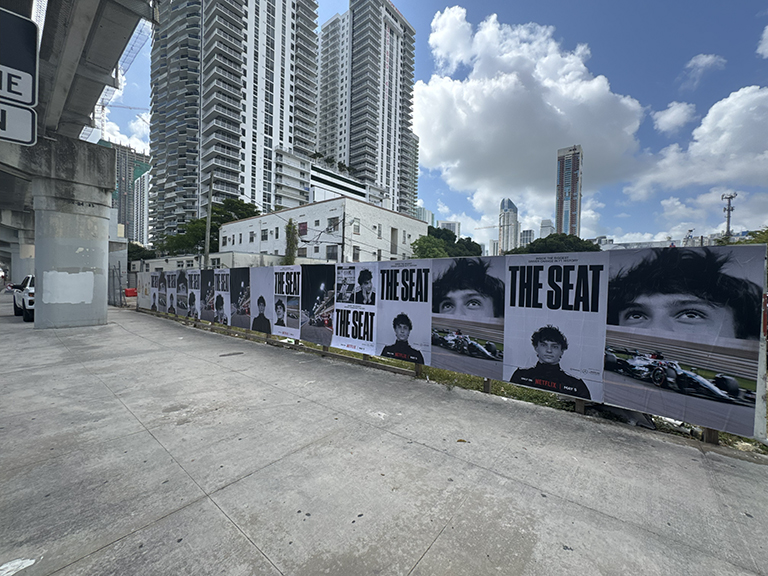
LED billboard trucks deliver their strongest event campaign results when integrated with complementary campaign elements that extend presence beyond what the truck alone can achieve. Our event campaigns typically combine the LED truck with: brand ambassador teams deployed in the event perimeter zones that the truck’s routes cover, poster campaigns in the surrounding neighborhood blocks placed 1-2 weeks before the event to build pre-event awareness, and social media campaigns geo-targeting the event audience with digital reinforcement of the truck creative. This multi-layer approach creates event campaign presence that no single tactic achieves independently — the truck creates the outdoor spectacle, the ambassadors create the human interaction, the posters create the pre-event awareness, and the digital creates the at-home and post-event reinforcement.
Frequently Asked Questions: LED Billboard Trucks at Events
Why are LED billboard trucks better than fixed OOH for event advertising?
LED trucks follow the audience rather than waiting for audiences to come to them. Event audiences approach from multiple directions and concentrate in different zones at different times. Mobile LED trucks can route to wherever audience density is highest — covering approach corridors before events, venue perimeters during, and departure routes and entertainment zones after — capturing audiences that fixed placements miss.
What events benefit most from LED billboard truck advertising?
Major sporting events, music festivals, political campaign events, trade shows and conventions, product launch events, and any large event that concentrates a defined target audience at a specific location for a defined time window. The larger the audience concentration and the more defined the geographic footprint, the greater the LED truck’s performance advantage over fixed media alternatives.
How much does LED billboard truck event advertising cost?
$1,500-$4,000 per day in standard markets; $2,500-$5,000+ in premium markets and during major event windows (Super Bowl, NBA Finals, major festival weeks). Multi-day commitments typically yield 10-20% per-day rate improvements. Creative production for LED truck displays typically runs $500-$2,000 for standard motion content.
What creative works best on LED trucks at events?
Bold, visually legible creative designed for 100-200 foot viewing distance: high contrast colors, single focal point, minimal copy (5-7 words maximum per frame), instantly recognizable brand elements, and event context integration that acknowledges the shared experience. Short-form motion loops (5-10 seconds) outperform extended video requiring sustained attention.
How do you measure LED truck event advertising effectiveness?
Traffic count data from deployed routes, QR code scan rates from truck creative, geofenced mobile attribution, social media brand mention monitoring in event geographic areas, and post-event recall surveys comparing exposed vs. unexposed audience segments. Multiple measurement approaches combined produce the most accurate ROI assessment.
Can LED trucks display real-time content updates at events?
Yes. Modern LED trucks support real-time content updates enabling responsive event messaging — switching to celebration creative when home teams score, synchronizing with halftime or intermission timing, or rotating multiple messages throughout the deployment. This dynamic capability is one of LED trucks’ key advantages over fixed static outdoor formats for event advertising.
Frequently Asked Questions
What is why led billboard trucks are the future of event advertising?
American Guerrilla Marketing provides why led billboard trucks are the future of event advertising services across 50+ U.S. markets. Every campaign is planned, scouted, executed, and GPS-documented by our field teams. We work with regional brands and Fortune 500 companies on campaigns that require real street-level execution and documented proof of performance.
How does AGM approach event advertising?
Our process starts with a market consultation to understand your goals, target audience, and budget. We then scout locations, handle any required permissions or permits, coordinate production and installation with our local crews, and provide a full GPS-tagged photo report after the campaign runs.
What markets does American Guerrilla Marketing cover for event advertising?
We operate in 50+ U.S. markets including New York, Los Angeles, Chicago, Miami, Houston, Atlanta, Seattle, Denver, Boston, and dozens of secondary markets. Contact us to confirm availability and pricing for your specific market.
How much does a event advertising campaign cost?
Campaign pricing depends on market, format, quantity, and duration. We work with budgets ranging from targeted single-market runs to national rollouts across multiple cities. Use our RFP Builder or contact us directly for a custom quote based on your specific campaign requirements.
How do I get started with event advertising through AGM?
The fastest way to get started is to submit your campaign details through our RFP Builder at americanguerrillamarketing.com, or contact us directly at [email protected] or (646) 776-2770. Our team typically responds within one business day with availability and initial pricing.