American Guerrilla Marketing
Nationwide serivce
Media planning, media buying, billboard advertising, & guerrilla marketing
Poster Sizes for Wheatpasting
Every market runs on different print standards. The format that fills a New York wall perfectly will be the wrong spec for a London printer. AGM's global poster sizes guide covers standard formats, field-tested specs, and practical production intelligence for every market we operate in.
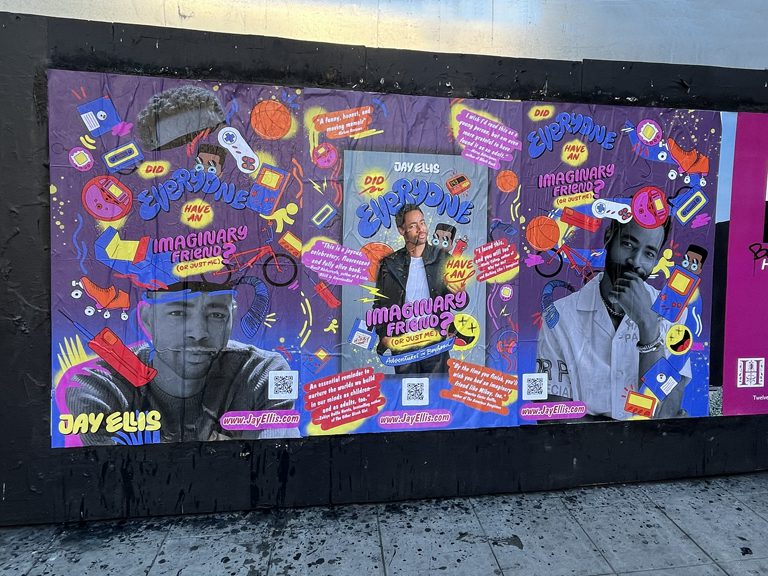
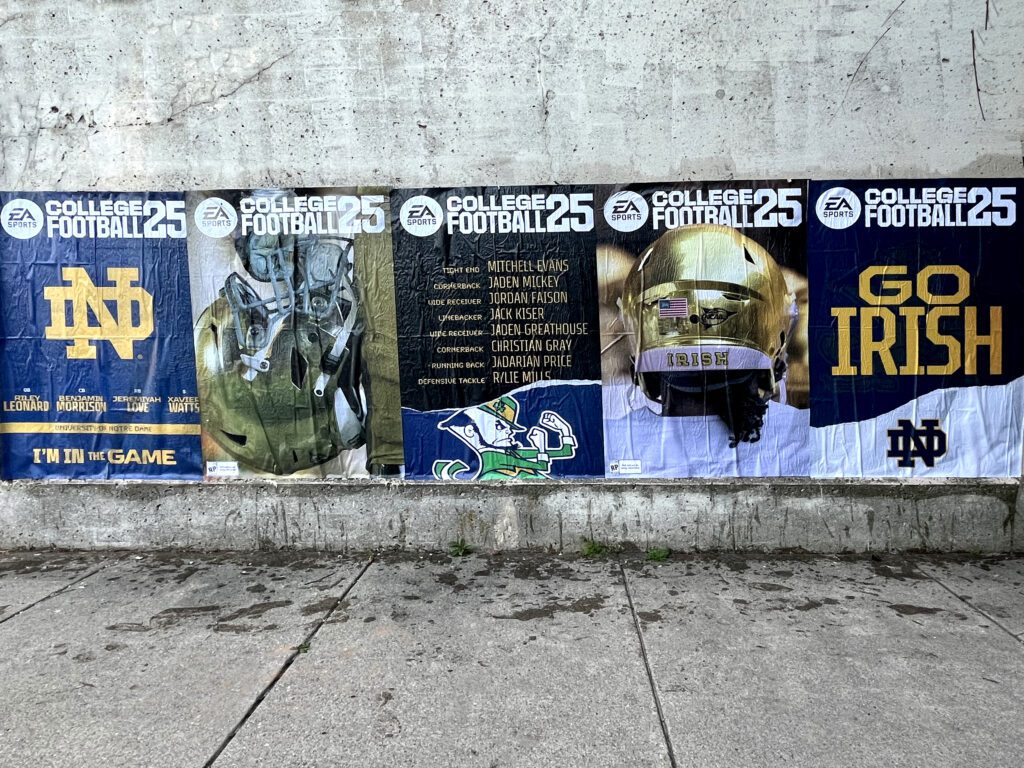
Wheatpaste poster formats are not universal. The United States runs on imperial measurements — 24×36 inches is the standard street poster format that every US print house stocks. Take that same campaign to London and you will be reformatting your files: the UK runs on ISO metric, where A1 (594×841mm) is the street standard. Cross into Mexico City and the primary premium format is 70×100cm — close to the US 27×40 movie poster but not identical. Tokyo’s print industry runs on JIS B-series standards, where B1 (728×1030mm) is measurably larger than its ISO counterpart. Brazil and France operate on ISO formats with regional large-format standards layered on top. Canada splits between imperial in most markets and metric-adjacent in Quebec.
Getting the format right before a campaign goes to print is the difference between a file that runs cleanly through a local print house and a file that gets flagged, resized, or rejected. This hub is the reference point for every format AGM works with — market by market, with field intelligence from operators who have placed campaigns on the ground in each city.
American Guerrilla Marketing field operators have placed and documented wheatpaste campaigns firsthand — on-the-ground, boots on the ground — across every market in this guide. Our certified and licensed specialists bring over 10 years of nationwide portfolio work to international campaign production. Every market in this guide reflects direct field experience, not desk research. We guarantee the accuracy of all GPS-tagged placement documentation. Contact AGM at (646) 776-2770 or [email protected] to brief a global campaign.
From New York to London to Mexico City, AGM field operators have the on-the-ground market knowledge and certified production infrastructure to run your campaign correctly in every market. One brief. One contact. Every major city.
Each guide below is a dedicated reference for the format standards used in that market -- covering every print size from density-run supplements to large-format building-face installations, with impression metrics and district-level field intelligence.
The table below maps the primary street poster formats used in each market — the formats that print houses in that city stock as standard substrates and that field operators carry as their primary campaign size. Every market has a baseline format that works on most walls and a premium format that signals a higher-investment placement.
| Market | Standard System | Baseline Format | Premium Format | Large Format | Volume Format |
|---|---|---|---|---|---|
| United States | Imperial | 24×36in (609×914mm) | 27×40in (686×1016mm) | 48×72in (1219×1829mm) | 18×24in (457×610mm) |
| London / UK | ISO metric | A1 — 594×841mm | B1 — 707×1000mm | 6-Sheet — 1200×1800mm | A3 — 297×420mm |
| Mexico City | ISO + local | A1 — 594×841mm | 70×100cm — 700×1000mm | 120×160cm — 1200×1600mm | 66×96cm — 660×960mm |
| Tokyo | JIS B-series | B2 — 515×728mm | B1 — 728×1030mm | B0 — 1030×1456mm | A3 — 297×420mm |
| Brazil | ISO + web-offset | A1 — 594×841mm | 70×100cm — 700×1000mm | 120×180cm — 1200×1800mm | 66×96cm — 660×960mm |
| France | ISO + Affichage | A1 — 594×841mm | A0 — 841×1189mm | 120×160cm — 1200×1600mm | A3 — 297×420mm |
| Canada | Mixed | 24×36in (English) / A1 (French) | 27×40in / B1 | 40×60in (4-Sheet) | 18×24in |
Every market in this guide uses one of three underlying format systems — or a combination of them. Understanding the system a market runs on tells you immediately what file specifications your printer will expect and what sizes your field operators will need to carry.
The United States is the only major wheatpaste market that runs entirely on imperial measurements. Poster sizes are specified in inches — 24×36, 18×24, 27×40, 48×72 — and every US print house stocks these as primary substrates. The 24×36 inch format is the US street poster standard and the direct inspiration for the ISO A1 format, though the two are not identical (A1 is 594×841mm, which translates to 23.4×33.1 inches). US artwork files should be built in inches, at 300ppi, CMYK, with bleed. Canada’s English-speaking markets follow US imperial standards closely, with 24×36 as the dominant street poster format.
The ISO 216 standard governs poster formats across Europe, the UK, Mexico, Brazil, Australia, and most of the world outside North America and Japan. The A-series is the primary system: A4 (210×297mm), A3 (297×420mm), A2 (420×594mm), A1 (594×841mm), A0 (841×1189mm). Each size is exactly double the area of the next size down. The B-series adds intermediate sizes: B1 (707×1000mm) sits between A1 and A0 and is the premium format in London and many European street markets. ISO artwork files should be specified in millimeters, at 300ppi, CMYK, with bleed. The proportions of ISO A-series formats are all identical (1:√2 ratio), which means an A1 design scales to A0 without distortion.
Japan uses its own B-series standard alongside the ISO A-series. JIS B-series formats are slightly larger than their ISO counterparts: JIS B1 is 728×1030mm versus ISO B1’s 707×1000mm, and JIS B2 is 515×728mm versus ISO B2’s 500×707mm. This difference — about 3% larger in each dimension — is invisible to the untrained eye at street level but creates real production problems if you send ISO B1 artwork to a Tokyo print house expecting JIS B1 output. When producing for Tokyo, confirm with the print house which B-series standard they run. The ISO A-series (A1, A0) is also widely used in Japan and avoids this confusion entirely for international campaigns.
The most common production error in multi-market campaigns is building artwork to one market’s standard and running it through another market’s print house without file adjustment. The proportions of US imperial formats and ISO metric formats are close — but not identical. Close is not good enough for production.
| If Your Artwork Is Built For | And You’re Printing In | Proportions Match? | What to Do |
|---|---|---|---|
| US 24×36in (609×914mm) | London / ISO A1 (594×841mm) | Close (2.5% difference) | Respec to 594×841mm. Slight crop on all edges. |
| US 27×40in (686×1016mm) | UK B1 (707×1000mm) | Close (different ratio) | Respec to 707×1000mm. Different proportions — redesign if image-heavy. |
| ISO A1 (594×841mm) | Mexico 70×100cm (700×1000mm) | No (different ratio) | Respec completely. 70×100cm is wider and taller — requires new layout. |
| ISO A1 (594×841mm) | Japan JIS B1 (728×1030mm) | Same ratio (1:√2), different size | Scale artwork up to 728×1030mm. No ratio change, but check resolution. |
| US 48×72in (1219×1829mm) | London 6-Sheet (1200×1800mm) | Same ratio (1:1.5), close size | Respec to 1200×1800mm. Minor crop, same proportions. |
| Any format | Any new market | Varies | Always respec to the target market’s exact millimeter or inch specification. Never assume proportions transfer. |
The rule: build to the exact specification of the market you are printing in — not the specification of the market you originated from. Format the file in the units the print house expects (inches for US/Canada, millimeters for all ISO markets). When running the same campaign across multiple markets simultaneously, build a separate production file for each market rather than adapting a single master file. The time saved by working from a single file is rarely worth the production errors it produces at scale.
Full market guides are in production for Tokyo, Brazil, France, and Canada. Below is a field preview of the key format standards in each market — enough to brief a campaign and get file specs right before the full guide is published.
Tokyo’s street poster market runs primarily on JIS B-series formats. JIS B2 (515×728mm) is the standard for music and entertainment street campaigns — roughly equivalent to the US 20×28 inch format. JIS B1 (728×1030mm) is the premium placement format, visible from distance and used by major label campaigns and retail launches. The ISO A1 (594×841mm) is also widely used in Tokyo and is recognizable to international print houses — using A1 avoids the ISO/JIS B-series confusion. For large-format building-face campaigns, JIS B0 (1030×1456mm) is the standard. Tokyo print houses work in millimeters. Artwork should be CMYK, 300ppi, built to the exact JIS specification. Bleed requirements in Tokyo are typically 3mm on all sides for standard digital print runs.
Brazil’s street poster market runs on ISO metric formats with a significant web-offset component. A1 (594×841mm) is the standard outdoor poster format across all major Brazilian cities — São Paulo, Rio de Janeiro, Belo Horizonte, Curitiba, Porto Alegre. The 66×96cm web-offset format is the volume standard for mass runs: carnival promoters, major touring acts, political campaigns, and any campaign that needs thousands of sheets at the lowest per-unit cost. The 70×100cm format is used for premium placements in São Paulo’s Vila Madalena, Pinheiros, and Higienópolis neighborhoods. For very large building-face campaigns in Brazil, 120×180cm is the standard format, typically tiled from large-format digital output. Brazil’s graficas are numerous and competitive — production turnaround is fast by international standards.
France runs on ISO metric with a strong A-series culture built through the Affichage (outdoor advertising) industry. A1 (594×841mm) and A0 (841×1189mm) are the dominant street poster formats. In Paris, A0 is the format that anchors high-visibility campaign placements on pignon walls (the large blank end-walls of Haussmann-era buildings) and authorized private facades. The 120×160cm format appears on construction hoarding and building-face campaigns. French print houses work in millimeters and expect CMYK, 300ppi files with 3-5mm bleed. The Affichage regulatory environment in France is more formalized than most international markets — campaigns on authorized private surfaces require property owner agreements, and major urban centers have municipal posting regulations that affect surface selection.
Canada operates on a dual-standard system. English-speaking markets — Toronto, Vancouver, Calgary, Edmonton — align closely with US imperial standards. 24×36 inches is the standard street poster format, 18×24 is the secondary format, and 27×40 handles premium placements. Quebec’s French-speaking market leans more toward ISO metric, with A1 (594×841mm) commonly accepted alongside imperial formats. Montreal print houses typically stock both. For pan-Canadian campaigns, building artwork to US 24×36 covers the broadest production compatibility — any Canadian print house that handles street poster work will run 24×36. For Quebec-specific campaigns, confirm whether the print house prefers inches or millimeters before submitting files.
Getting started on a poster design or printed project doesn’t need to involve technical guesswork. Download free starter files for each poster size to begin designing with confidence. These files are pre-sized to exact specifications and built to professional print standards, helping you avoid common setup issues from the start.
Our starter files are available for PDF Reader and Adobe Photoshop, making them simple and accessible for most workflows. Each file is correctly sized and includes proper bleed, trim, and color space settings, so your designs are ready for production whether they are being used for snipes, wheatpasting, wheatpasting, or larger street-level campaigns.
Using these starter files saves time, improves consistency, and helps ensure your posters print cleanly and accurately on the first run. They are ideal for designers, marketers, and brands that want reliable, print-ready files across all standard poster sizes without unnecessary complexity.
Ready to make an impact? Talk to our Guerrilla Marketing and Media Buying AI expert, Millie today.
Poster format standards are set by the print industry infrastructure in each country. The United States built its commercial printing industry around imperial measurements, so US print houses stock imperial substrate sizes as standard. Europe, the UK, Mexico, Brazil, and most of the world adopted ISO 216 — a metric standard that defines A-series and B-series sizes in millimeters. Japan uses its own JIS standard alongside ISO. These infrastructure differences mean that a file built to US specifications will not run cleanly through a European print house without reformatting — and vice versa. Field operators who work across markets need to understand which system a market runs on before production begins.
Yes — ISO A1 (594×841mm / 23.4×33.1in) is a fixed international standard. Any country that uses the ISO 216 system — including the UK, Mexico, Brazil, France, Germany, Australia, and most of Europe — uses the same A1 dimensions. Where differences arise is in markets that use non-ISO standards: Japan’s JIS B-series dimensions differ from ISO B-series, and the United States uses imperial measurements entirely. When running a campaign across ISO markets, artwork built to ISO A1 specifications will be accepted by print houses in all of those markets without modification.
ISO A1 (594×841mm) is the format with the broadest international compatibility. It is accepted as a standard production size by print houses in the UK, Europe, Mexico, Brazil, France, Canada (with minor adjustment), and Japan (ISO A-series runs alongside JIS). The US is the major exception — US print houses do not stock A1 as a standard substrate, and campaigns entering the US from international markets should respec to 24×36 inches (609×914mm) for domestic production. For campaigns running simultaneously across three or more international markets, AGM recommends building the primary creative to ISO A1 dimensions and adapting a separate US file to 24×36.
Consult the market-specific guide for the city you are running in — each guide covers the primary formats, the premium formats, the large-format options, and the production file specifications the local print industry expects. If you are running in a market not yet covered by a full guide (Tokyo, Brazil, France, Canada), the preview section above gives the key format standards. When in doubt, contact AGM directly — our field operators have placed campaigns in every major international market and can advise on format selection, file specifications, and production partners before you commit a print run.
Yes. American Guerrilla Marketing coordinates international campaigns through our network of certified field operators in each market. We handle format specification, production oversight, local print coordination, installation scheduling, and GPS-tagged proof-of-posting documentation — from a single point of contact in New York. For campaigns running across multiple markets simultaneously, we brief each market’s production independently to ensure the correct local formats are used, and we consolidate reporting for the client. Call (646) 776-2770 or email [email protected] to start an international campaign brief.
Regardless of market, the production standard is consistent: 300ppi resolution at the final print size, CMYK color mode (not RGB), with bleed included in the exported file (typically 3mm for ISO markets, 0.125 inches for US/Canada). Save as a high-resolution PDF with no compression artifacts. If your creative was built in RGB for screen use, convert to CMYK before sending to any print house — the color shift between RGB and CMYK is significant enough to change the appearance of photography and gradients in the final printed piece. Confirm bleed requirements and preferred file format (PDF, TIFF, or AI) with the specific print house before submitting production files.
American Guerrilla Marketing manages international wheatpaste campaigns from a single New York-based contact. We handle local production coordination, certified field operator scheduling, GPS-tagged documentation, and consolidated reporting. Our nationwide portfolio covers every major US media market and international cities including London and Mexico City -- with Tokyo, Brazil, France, and Canada in active expansion. Contact us at [email protected] or call (646) 776-2770 to brief a global campaign.
At American Guerrilla Marketing, we specialize in delivering targeted snipe advertising campaigns designed to command attention and drive action. Our snipe ads come in a variety of formats and finishes, allowing you to customize the look and feel to match your brand voice. Whether you’re promoting an event, product, or local business initiative, our snipe advertising services offer a powerful way to reach real audiences on the streets. With our striking designs and strategic placements, your message will stand out and make a lasting impression across the communities that matter most.
At American Guerrilla Marketing, we specialize in bold sidewalk-stencil campaigns that bring your brand message directly to streets, sidewalks, and high-foot-traffic walkways. Our stencil ads come in various sizes and finishes so you can choose what best matches your campaign’s vibe and target audience. Whether you’re promoting local events, brand launches, community-focused promotions, or guerrilla-style awareness campaigns, our sidewalk stencil services offer a unique, ground-level presence that catches people’s attention. With striking visuals and strategic placements, your message will stand out where people are walking and leave a lasting impression.
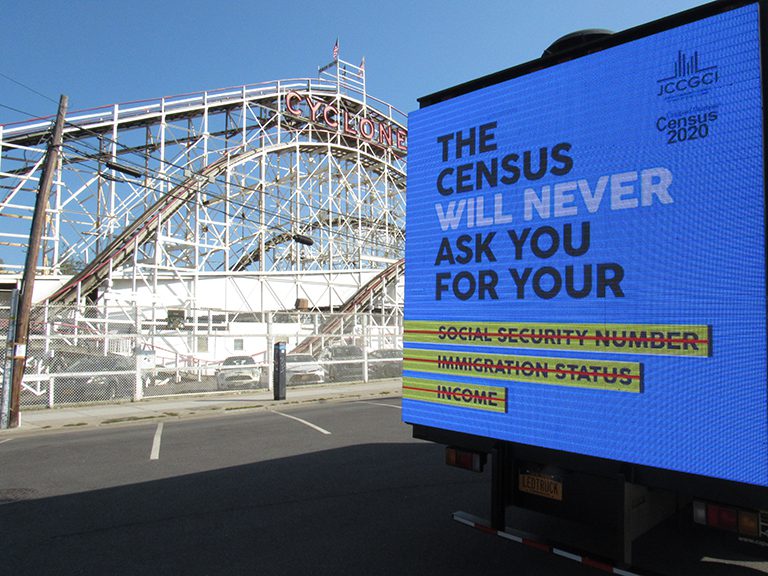
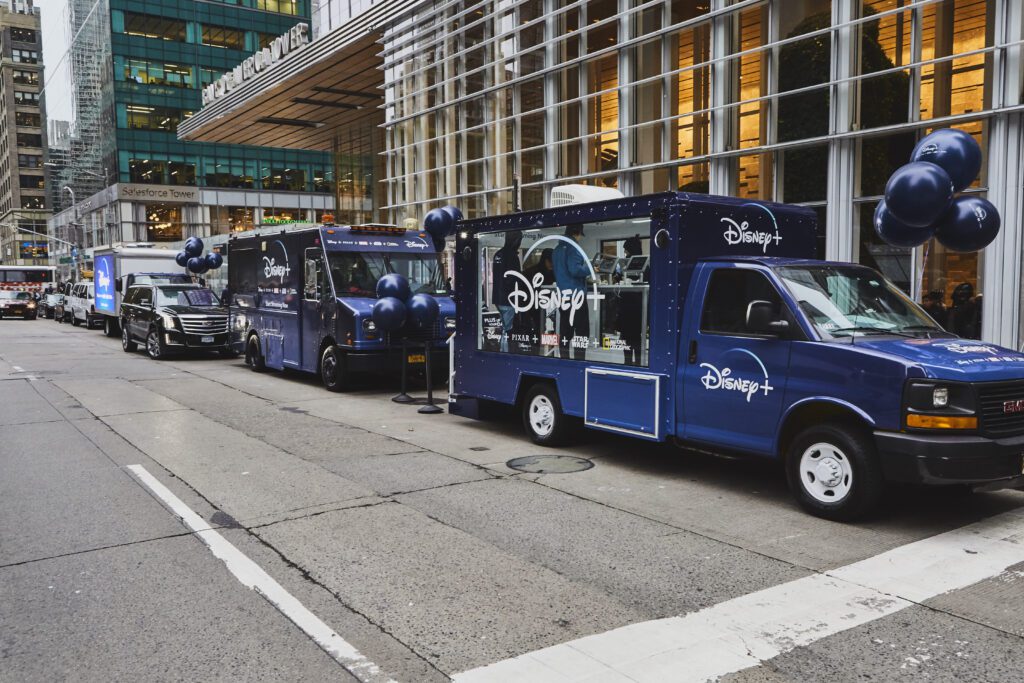
At American Guerrilla Marketing, we specialize in LED billboard-truck campaigns that bring your message directly into the streets, delivering high visibility with mobility and style. Our trucks are equipped with state-of-the-art LED displays and can be customized to showcase your brand’s visuals in a vibrant, attention-catching format. Whether you’re promoting an event, product launch, or brand campaign, our LED billboard trucks provide an effective way to reach dynamic audiences on the move. With strategic routing and standout visuals, your message travels where people are — spreading awareness and making a bold impact wherever the truck goes.