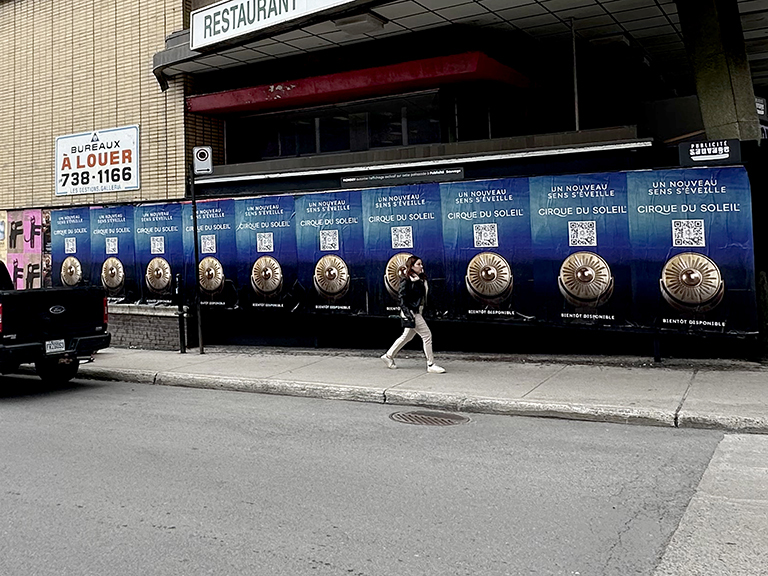
Wheatpasting in Brick Lane London: Where Street Posters Perform Best starts with matching the right streets, surfaces, audience, and campaign timing. Brick Lane is approximately one mile long, running from Bethnal Green Road in the north to Whitechapel Road in the south. Within that mile, it contains one of the oldest commercial street cultures in London, a Bangladeshi restaurant district that has evolved from immigrant community institution to tourist destination, a Sunday market that draws 20,000-30,000 visitors weekly, a concentration of vintage clothing shops and independent galleries, and some of the most photographed street art in Europe.
It is also, on its best surfaces and on its best days, one of the most effective postering locations in London. The combination of genuine foot traffic, a community that actively engages with visual content on the walls, and a cultural reputation that gives brands context simply by appearing here makes it a genuine asset for the right campaign. It is not, however, a passive backdrop that makes every campaign look good by association. Brick Lane has high standards and a community with a good memory for brands that don’t deserve to be here.
This guide is about understanding Brick Lane as a campaign zone — the surfaces, the traffic patterns, the cultural context, the operational specifics of running a campaign here, and what separates the campaigns that land from the ones that are ignored or actively rejected by the community that defines this street’s identity.
The Physical Character of Brick Lane
Brick Lane runs through Tower Hamlets, one of London’s most densely populated and historically layered boroughs. The northern section, from Bethnal Green Road down to Hanbury Street, is primarily commercial — the Truman Brewery complex on the western side, the vintage market on Cheshire Street (which runs east from Brick Lane), and the independent shops and restaurants that have proliferated in the decade since the area became a destination. The southern section, from Hanbury Street toward Whitechapel, is more residential and has a stronger Bangladeshi commercial character — the restaurant strip, the fabric shops, the community-serving businesses that predate the gentrification.
The walls in the northern section are the primary campaign postering zone. The Truman Brewery’s external walls, the hoardings around development sites that appear and disappear as the area continues to regenerate, and the surfaces on the independent shops and studios that line the street between Bethnal Green Road and Cheshire Street are where the majority of wheatpaste campaigns concentrate.
Brick Lane’s Sunday market attracts an estimated 25,000-35,000 visitors every week, making it one of the most visited outdoor markets in London. The street has been a center of successive immigrant communities — Huguenot, Jewish, Bangladeshi — and their economic and cultural imprint is visible in the architecture and street life that now hosts one of Europe’s largest street art markets.
The Truman Brewery Complex
The former Truman’s Black Eagle Brewery occupies a large section of the western side of Brick Lane between Hanbury Street and Quaker Street. Now used as a creative industry complex — studios, galleries, event spaces, a market — it has substantial external walls that face directly onto Brick Lane’s main pedestrian flow. These walls are managed surfaces that the Truman Brewery uses for their own programming and makes available to selected campaigns. Large-format installations on these walls are some of the most prominent postering opportunities in east London.
The Side Streets
Cheshire Street running east from Brick Lane is a vintage and independent shopping corridor with its own poster culture. Sclater Street between Brick Lane and the Shoreditch High Street Overground connects the two neighborhoods and has postering opportunities that reach people moving between them. Hanbury Street and Fashion Street have smaller-scale surfaces that can complement a main Brick Lane campaign with secondary neighborhood penetration.
Understanding the Audiences: It’s Not One Crowd
The mistake brands make about Brick Lane is treating it as a single demographic. There are actually three overlapping audiences here, and understanding them determines where on the street and when a campaign should post:
The Weekend Tourist and Visitor Audience
On Saturday and Sunday, Brick Lane draws visitors from across London and from other countries — people who have come specifically to do the market, eat in the restaurants, buy vintage clothing, and take photographs of the street art. This audience is large (tens of thousands per day), relatively undifferentiated demographically, and heavily photographically engaged — they are actively looking for things to photograph. A visually striking campaign on the right surface will be photographed thousands of times over a weekend by this audience.
The Resident and Regular Community
The Bangladeshi community that has lived in and around Brick Lane for generations continues to be the foundation of the neighborhood’s character in important ways. The restaurants, the fabric shops, the mosque on Fournier Street (the building that was previously a Huguenot church, then a Jewish synagogue, then a mosque — the most multi-layered building in London). This community sees campaigns through a lens of whether they belong here in a cultural sense, and they’re right to be skeptical of brands that arrive to exploit the street’s credibility without contributing anything back.
The Local Creative Industry Audience
The studios, agencies, and creative businesses that have established in the Truman Brewery and surrounding buildings constitute a third audience — less numerous than the tourist crowd but significantly more influential. These are the people who work in fashion, music, film, and media and who set trends rather than following them. A campaign that resonates with this audience on Brick Lane gets picked up and amplified within the creative industry networks that operate here.
“Brick Lane’s street art culture means the bar for visual quality is genuinely high. The walls here have seen everything from Banksy’s early work to major international artists. A mediocre campaign poster looks worse in this context than it would on any other London street.”
Campaign Timing and Refresh on Brick Lane
The high turnover rate of popular Brick Lane surfaces is the main operational challenge for campaigns here. On the busiest sections near the market entrance on Bethnal Green Road and the Truman Brewery frontage, fresh posters can be covered within five to seven days by subsequent campaigns. This means that a campaign planning to maintain Brick Lane presence for two to three weeks needs a refresh round built in at the one-week mark.
The optimal posting time for Brick Lane campaigns targeting the weekend market audience is Thursday or Friday overnight — ensuring fresh, high-quality placements are in place for the Saturday and Sunday peak. Posting Sunday night or Monday reaches a smaller residual audience and puts fresh placements up for the lower-traffic weekday period.
Design for Brick Lane
Brick Lane’s visual environment is one of the most demanding in London. The commissioned murals from internationally recognized artists, the layers of previous campaigns, the general visual intensity of the street — this is not a context where a modest or tentative design registers. Campaigns here need to commit to their visual statement with the kind of confidence that the street’s aesthetic environment demands.
Black and white campaigns can work exceptionally well on Brick Lane, where the oversaturated color of the street art murals creates a specific kind of visual noise that high-contrast monochrome cuts through. Strong typographic campaigns — where the design is primarily text-based with a distinctive typeface and size — can also perform here when the text itself is worth reading. The worst-performing designs are ones that try to be everything: too much information, too many colors, no clear visual hierarchy.
What Brands Work and What Doesn’t
Streetwear, music, film, food and drink, arts and entertainment, and community-adjacent brands perform well on Brick Lane. The street’s culture provides natural context for these categories. Generic corporate campaigns, financial services, mass-market retail, and brands with no connection to the cultural life of the street either get ignored by the community or generate active negative attention.
There’s a specific type of campaign that lands badly on Brick Lane: the one that’s borrowed the street’s aesthetic vocabulary without understanding its origin or community. Brands that use street art visual language without genuine connection to street culture, or that post in Brick Lane while their marketing communication elsewhere is entirely disconnected from east London’s cultural reality, generate exactly the kind of community pushback that makes a campaign more expensive to manage than it was to run.
Why Brick Lane Earns Its Own Search Intent
Brick Lane queries are less about the basic format and more about place-based fit. Search results around poster and paste-up culture in Brick Lane emphasize the area’s visual density, street art reputation, and the mix of locals, tourists, and creative audiences moving through the corridor. A page that ranks well for this keyword has to explain why Brick Lane is different from simply “East London” in general.
Searchers want specifics. They want to know what kinds of brands belong here, which stretches of the area create the strongest repeat exposure, how poster work sits alongside established street art culture, and whether the aesthetic of the creative should change to avoid feeling corporate or tone-deaf. Common angles that surface in adjacent results include cultural relevance, wall visibility, audience overlap with fashion, music, and independent film, and the importance of choosing surfaces that feel natural to the neighborhood rather than over-managed.
That is why this page should stress local nuance. Brick Lane performs best when campaigns respect the area’s texture, use strong visuals that hold up among murals and layered posters, and launch with enough density that the work feels intentional. The search intent is exploratory but commercially valuable. People are looking for a trusted read on whether Brick Lane is the right East London zone for their poster campaign and how to use it without wasting a culturally loaded location.
For many brands, Brick Lane works best as the cultural centerpiece of an East London route rather than the whole plan by itself. That positioning helps searchers think more strategically about how the area fits into a broader neighborhood mix, which is exactly what this query often implies.
Brick Lane also rewards campaigns that understand pacing. People are browsing, stopping, photographing, and looping back through side streets, which changes how repetition works. That point matters because searchers are often choosing Brick Lane for experience density, not just volume.
That blend of visual culture and walkable repetition is exactly why Brick Lane keeps showing up in location-specific searches. The page should keep reinforcing that Brick Lane is valuable not just because it is famous, but because it gives the right brands a very particular kind of London street presence.
Frequently Asked Questions
Surface-by-Surface Breakdown on Brick Lane
Brick Lane is not one street — it’s an ecosystem. The mile-long corridor from Bethnal Green Road in the north to Whitechapel Road in the south passes through at least four distinct micro-neighborhoods, each with different demographics, different visual cultures, and different surface characteristics. Understanding those distinctions is the difference between a campaign that works and one that gets lost in the noise.
North Brick Lane (Bethnal Green Road to Buxton Street)
The northern stretch is anchored by the Old Truman Brewery complex, which has been the center of East London’s creative industry since the mid-1990s. The brewery’s external walls along Hanbury Street and Brick Lane face the Sunday market, which draws 40,000 to 80,000 visitors. We’ve placed on the large hoarding panels along the Boiler House frontage multiple times for film, fashion, and music clients — these placements are among the highest-visibility spots in East London.
Middle Brick Lane (Buxton Street to Princelet Street)
The middle section is where Brick Lane’s Bangladeshi heritage and the gentrified creative scene overlap most visibly. The walls here are older — Victorian brick on commercial buildings that have been curry houses, textile warehouses, and artists’ studios over successive decades. Paste holds exceptionally well on these surfaces. The demographic walking this stretch on a Saturday afternoon is international tourists mixed with East London regulars — a broad audience that suits brand awareness campaigns over highly targeted niche messages.
South Brick Lane (Princelet Street to Whitechapel Road)
The southern end is quieter and more residential. Surface access exists but foot traffic is lower than the northern sections. We occasionally use south Brick Lane for campaigns where the client wants neighborhood saturation rather than pure impression volume.
The Sunday Brick Lane market is one of the ten most visited street markets in the UK. On peak summer Sundays, the combined footfall across the Brick Lane Market, Upmarket at Old Truman Brewery, and the surrounding side streets exceeds 60,000 people.
Foot Traffic and Timing Strategy for Brick Lane
Brick Lane’s traffic varies more dramatically between weekday and weekend than almost any other London location. On a Tuesday morning, it’s quiet. On a Sunday afternoon, it’s packed. That variance means campaign timing is critical.
For brands that want maximum raw impressions, post on Thursday night so the campaign is fresh Friday-Saturday-Sunday. That gives the posters their freshest appearance during the peak three-day window. For brands that want the more discerning weekday audience — the creative professionals who work in and around the brewery complex, the gallery visitors, the studio tenants — Tuesday or Wednesday posting is more appropriate.
We run all Brick Lane campaigns starting between 3am and 4am. The narrow streets and heavy surveillance make daytime or evening posting impractical at scale. The early-morning window gives crews access to the walls without interference and ensures posters are dry and settled before the morning foot traffic starts.
How AGM Operators Work Brick Lane
From what we’ve seen in the field, Brick Lane requires more crew coordination than most London locations. The pedestrian streets and the mix of public and private surface types mean the crew needs to know exactly which walls are permitted before the posting run starts. We don’t improvise on Brick Lane — the surface list is confirmed, photographed, and briefed to crews 48 hours in advance.
Paste mix for Brick Lane’s Victorian brick runs thick — 15% more starch concentration than our standard mix. The aged, porous brick surface soaks paste fast and rewards the denser formulation with adhesion that holds through the weekend market crowds and the mid-week cleanup activity that follows.
We’ve placed on Brick Lane more times than anywhere else in London. Every run teaches us something. The Sunday market context rewards large format — people are moving slowly, browsing, and genuinely looking at what’s around them. The weekday runs work better for campaigns targeting the creative professional demographic that inhabits the brewery complex Monday through Friday.
Past Campaigns on Brick Lane: What Worked
The campaigns that have performed best on Brick Lane share three characteristics: strong visual identity, appropriate size (A0 or larger for the market area), and design that acknowledges the visual context rather than ignoring it. Brick Lane has one of the most photographed street environments in Europe. A poster that looks out of place doesn’t just underperform — it gets actively noticed as wrong, which generates the opposite of the intended brand impression.
Fashion campaigns consistently outperform here because the audience is inherently fashion-interested. Film campaigns with strong visual identity — particularly those with an independent or art-house aesthetic — also work well. Corporate brand awareness campaigns with generic creative tend to get lost against the visual richness of the surrounding environment.
What makes Brick Lane a good wheatpaste location in London?
Brick Lane generates some of the highest weekend foot traffic of any street in London — 25,000-35,000 visitors on Sundays during market season. The audience is demographically specific (young, culturally engaged, visually literate), actively engages with the walls through photography and social sharing, and exists within a strong tradition of street art and poster culture that gives brands cultural context simply by appearing here.
How does foot traffic on Brick Lane differ between weekdays and weekends?
Weekend foot traffic — particularly Sunday when the market runs — can exceed 30,000 visitors in a single day. Weekday traffic drops to a fraction of that but remains significant due to the concentration of restaurants, creative industry offices, and independent businesses along the street. Campaigns targeting the maximum-visibility weekend audience should post Thursday or Friday overnight to ensure fresh placements for Saturday and Sunday.
What is the poster turnover rate on Brick Lane?
On prime surfaces near the market entrance and Truman Brewery frontage, fresh posters can be covered within five to seven days by subsequent campaigns. This is faster than most London neighborhoods. Campaigns maintaining Brick Lane presence for two to three weeks need a refresh round at the one-week mark. Either build in the refresh budget or accept that the campaign window on prime surfaces is effectively one week.
Are there specific walls on Brick Lane that are better than others?
The walls on the eastern side of Brick Lane between Bethnal Green Road and Cheshire Street see the highest weekend foot traffic. The Truman Brewery complex walls on the western side offer large, managed surfaces that many brands have used for major installations. Surfaces near the junction of Brick Lane and Bethnal Green Road are among the highest-impression locations in east London due to the pedestrian concentration at the market entrance area.
Does wheatpasting work equally well for all brands on Brick Lane?
No. Brick Lane works best for brands with genuine cultural credibility — streetwear, music, arts, food and drink, entertainment, and brands with authentic connections to east London culture. Generic corporate campaigns or brands with no connection to the street’s cultural identity get ignored or generate negative community attention. The street’s audience has developed a sophisticated capacity to distinguish between brands that belong here and brands that are visiting to extract credibility.