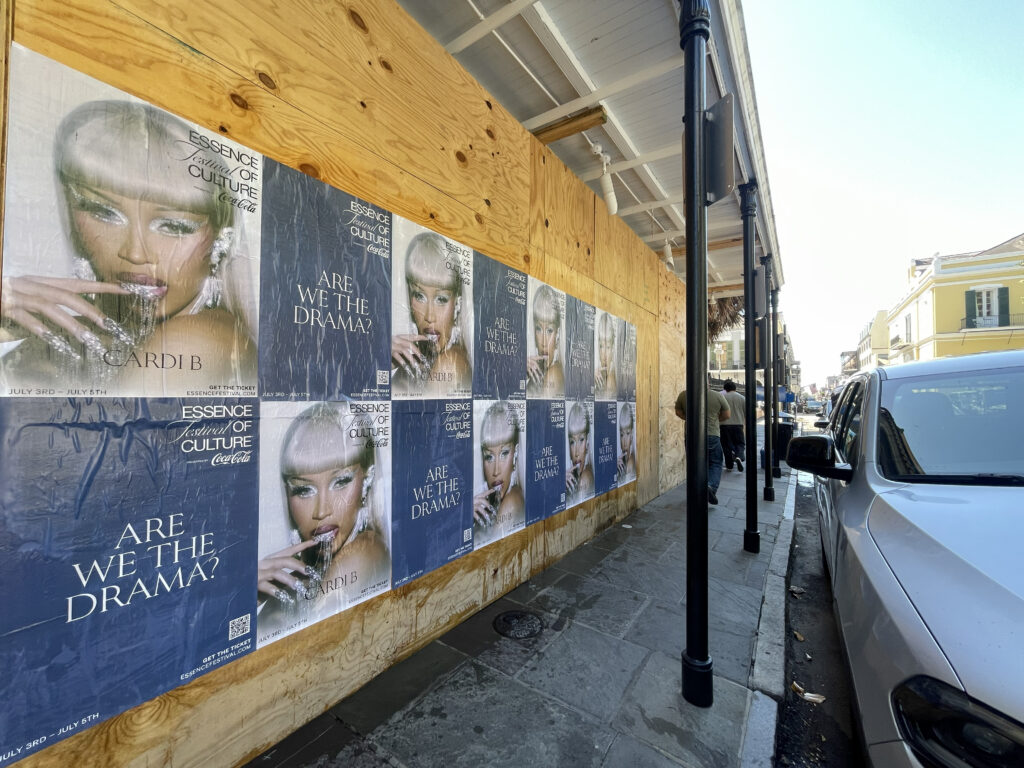
Every brand that runs a city takeover wheatpaste campaign wants the same outcome: for people who weren’t paid to post about it to post about it anyway. Organic social coverage — real people photographing installations, sharing them to their accounts, tagging the brand or the neighborhood — is the multiplier that makes a physical campaign extend into digital reach. It’s also the one outcome that cannot be bought directly. It can only be created by getting the right elements in the right place at the right time.
American Guerrilla Marketing field operators have been watching this pattern play out in the field for over 10 years. We’ve placed campaigns that generated hundreds of organic posts in 48 hours, and we’ve seen campaigns with identical wall counts in similar neighborhoods generate almost nothing beyond the client’s own documentation. The difference is almost never luck. It’s design, location, density, and timing — four variables that can be planned and executed deliberately.
This piece breaks down each of those variables: what makes pedestrians stop and photograph a campaign, which neighborhoods are the most reliable organic documentation zones in New York, Los Angeles, and Chicago, how saturation density multiplies photography rates, who the street photographers and bloggers are who document these campaigns and where their content goes, and how to design and deploy a campaign specifically to maximize organic photography. At the end is a case study of a fashion brand whose Williamsburg campaign out-performed their paid social for the same launch.
Why Physical Street Campaigns Generate Organic Digital Content
The answer starts with why people photograph things in the first place. People photograph things that feel worth documenting — visually interesting, culturally resonant, surprising, or expressive of something about where they are and who they are. A billboard on the I-405 is part of the infrastructure of transit; nobody photographs it unless it’s spectacularly unusual. A wheatpaste installation on the side of a building on Bedford Ave is part of the cultural environment of a neighborhood that people actively document. It belongs to the category of “things worth photographing.”
This is not just about the physical format. It’s about where the format appears. Wheatpaste campaigns reach people in their own environments — neighborhoods they chose to live in, walk through, and document. The campaign arrives in spaces that already have high ambient documentation rates, where photographing the street is part of how residents experience the city. A brand that places a campaign in Williamsburg or Silver Lake or Wicker Park is placing it in a neighborhood where people are already active content creators. The campaign enters that existing stream rather than trying to create a new one.
There is also a discovery effect unique to street campaigns. Paid social media content is served — it arrives in your feed because an algorithm or a media buyer decided to put it there. Street campaign content is discovered — you’re walking to get coffee on a Saturday morning and you turn a corner and there’s a wall covered in a campaign you’ve never seen. Discovery creates a different psychological relationship with the content than serving does. When you discover something, you feel like you found it. Sharing it feels like giving something to your audience, not just passing along branded content. That distinction drives higher organic sharing rates for street campaigns than for digital ads with the same brand message.
The Photography Trigger: What Makes People Stop
Not every wheatpaste installation gets photographed. The ones that do have specific characteristics. American Guerrilla Marketing field operators have been watching this firsthand — walking campaigns after installation, observing which walls attract people and which ones don’t, and feeding those observations back into design and placement guidance.
The most reliable photography trigger is scale combined with visual surprise. A large installation on a wall that typically has nothing on it creates an immediate visual contrast with the environment. Your eye goes to it before your brain has processed what it is. In a neighborhood like Bushwick or Silver Lake, where the walls have a high baseline of visual content, the trigger works differently — the installation needs to stand out not by being there when nothing else is, but by being more arresting than what surrounds it.
Installations that face pedestrian foot traffic at eye to chest height generate more spontaneous photography than installations that are higher up and require tilting the phone. This is a practical constraint — most people photograph street content in portrait mode with their phone at chest or face height. Designs that work at that angle and distance (roughly 10 to 25 feet from the wall for standard format installations) are more likely to be captured cleanly.
Novelty in a familiar context is a consistent trigger. When a campaign appears in a spot where the audience has never seen a campaign before — an unusual building surface, a neighborhood wall that’s typically blank — the novelty itself drives documentation. “I’ve never seen anything on this wall” is a reason to photograph it.
Design Factors That Drive Organic Photography
Bold, high-contrast imagery at appropriate scale is the most consistent design predictor of organic photography. Campaigns that rely on small type, low-contrast photography, or busy layouts with multiple competing elements tend to read poorly from the distances and angles at which most street photography happens. Campaigns that lead with a single dominant visual element — a face, a graphic, an image with strong tonal contrast — read clearly and photograph cleanly.
Color matters. Campaigns with colors that contrast sharply with the typical environment of the wall location perform better than campaigns that blend in. In New York, where walls are often brick or muted gray, high-contrast campaigns in black and white or with strong color fields generate more organic photography than campaigns in earth tones. In LA, where buildings are often white or light-colored, campaigns with rich color fields stand out.
Minimal text. The more text in a design, the less it works as a photograph. Photographs of text-heavy designs look like design documents rather than street art. The campaigns that generate organic photography are the ones where the image is the content and the brand is secondary. The brand earns placement in the photograph by virtue of the image being worth photographing, not by occupying the most real estate in the design.
Format scale relative to the wall matters enormously. A 24×36 poster on a 12-foot wall is a small detail. A 27×40 on the same wall is a statement. For campaigns where organic photography is a primary objective, American Guerrilla Marketing recommends prioritizing larger format installations on the walls most likely to be documented, even if it means fewer total placements in those locations.
Location Factors: Neighborhoods Where Audiences Document Their Environment
Organic photography rates for street campaigns are not evenly distributed across a city. They cluster in specific neighborhoods where the combination of a culturally engaged residential base, walkable street environments, and existing content creation habits produces an audience that both encounters campaigns and documents them.
In New York, Williamsburg is the highest-organic-documentation zone for street campaigns targeting fashion, music, and lifestyle audiences. The blocks around Bedford Ave and the stretch toward the waterfront see consistent street photography, food photography, and neighborhood documentation from residents, visitors, and working photographers alike. Bushwick, particularly the Myrtle Ave corridor and the surrounding blocks, has a strong concentration of artists and creative professionals who document the neighborhood’s visual environment as part of their own content creation. LES — Orchard, Ludlow, Delancey — is where the fashion and nightlife overlap and where street photographers cover the neighborhood as a cultural beat.
In Los Angeles, Silver Lake is the clearest equivalent — the stretch of Sunset through Silver Lake and the residential blocks around Hyperion and Rowena see consistent neighborhood documentation from a culturally engaged residential base. The Fairfax District, particularly around the streetwear retail corridor, has a strong concentration of sneakerheads, streetwear fans, and photographers who document drops, releases, and anything new on the walls. Echo Park has been growing as an organic documentation zone as the neighborhood’s creative community has expanded.
In Chicago, Wicker Park and Logan Square lead organic documentation rates for street campaigns. The Milwaukee Ave corridor through Wicker Park has the highest foot traffic of any creative neighborhood in the city, and the concentration of bars, restaurants, and independent retail creates a long dwell time that multiplies the chance of a passerby stopping to photograph a campaign. Logan Square’s arts scene and the density of murals on its walls creates an audience that is visually attentive to what’s on the surfaces around them.
How Saturation Density Multiplies Organic Photography
One wall in a neighborhood might get photographed by one or two people. Fifteen walls in a 6-block radius get photographed by every person who walks through the area and encounters the campaign in multiple locations. The experience of encountering a campaign multiple times in the same walk — on the building at the corner of Bedford and North 7th, again on the wall facing the park two blocks down, again on the side of the coffee shop you stop at — creates a very different response than encountering a single isolated installation.
Saturation density transforms the campaign from a single piece of content into a neighborhood event. Multiple independent people walking through the same area will all encounter the campaign, photograph it from different angles and at different times, and post about it from their own accounts. This is why campaigns with sufficient density in the right neighborhoods consistently outperform sparse campaigns that spread the same number of walls across a larger area.
The photography multiplier effect is geometric, not linear. American Guerrilla Marketing’s firsthand experience across campaigns in our nationwide portfolio confirms this: a campaign with 20 walls concentrated in a 6-block radius generates more organic posts than the same campaign with those 20 walls spread across a full neighborhood. Concentrated density creates the sense of ubiquity that drives the “this is everywhere right now” social response.
The first 48 to 72 hours after installation are the highest-documentation window for any street campaign. Organic photography rates drop significantly after 72 hours as installations become part of the visual environment and lose their novelty trigger.
The Street Photographer and Influencer Ecosystem
Every major city has a network of photographers, bloggers, and content creators who specifically document street campaigns, murals, and outdoor brand activations as part of their regular content. These are not people who happen to walk past an installation — they are people who actively walk specific neighborhoods looking for new content, and whose posts have established audiences that trust them as sources for what’s new and interesting on the street.
In New York, these accounts and creators concentrate in Williamsburg, Bushwick, and LES. Some work as photographers for fashion and music publications. Others run independent Instagram accounts covering street style, street art, and neighborhood culture. When a new campaign appears on Bedford Ave, these accounts will find it within 24 to 48 hours — and when they post it, their audience of tens of thousands of followers encounters the campaign through a trusted, non-paid source.
In LA, the same ecosystem exists in Silver Lake and on the Fairfax corridor. In Chicago, it operates through the Wicker Park and Logan Square arts community and the network of independent culture writers who cover the city’s neighborhoods.
A campaign that is placed in the right neighborhoods, with the right design, at the right time will be found by these creators without any paid arrangement. They document what they discover. The key is being present in their geography — on the streets they walk, in the blocks they cover — with imagery that is worth sharing to their audience.
How to Design for Maximum Organic Photography
Designing specifically for street photography means making decisions at every stage that optimize for how the installation will look as a photograph taken by a stranger at a moderate distance on a smartphone camera.
Orientation: vertical formats photograph better in portrait mode, which is how most people hold their phones for street photography. 24×36 and 27×40 are both vertical formats that work cleanly in portrait capture.
Scale: the installation should fill most of the frame when photographed from a comfortable standing distance. This means knowing the dimensions of the wall, the typical approach distance a pedestrian would have, and how the format fills that visual field. A 24×36 on a 10-foot wide wall fills the frame. A 24×36 on a 30-foot wide wall is a small element in a landscape photograph.
Contrast: the installation should have higher contrast than the surface behind it. On brick, that means any strong graphic — black and white work, high-saturation color fields, large flat graphic elements. On painted wall surfaces, the contrast requirement depends on the wall color.
The visual subject: campaigns centered on a strong visual subject — a face, a figure, a recognizable graphic — photograph more consistently than campaigns centered on a product image or a logo. The face or figure creates a subject-object relationship with the viewer that pure product photography does not.
The 48-72 Hour Window: When Organic Photography Peaks
American Guerrilla Marketing’s on-the-ground experience and post-campaign analysis consistently shows that organic photography of a new street campaign peaks in the first 48 to 72 hours after installation. This is when the installation is newest, when the novelty trigger is strongest, and before the campaign has become part of the neighborhood’s visual background.
After 72 hours, organic photography continues but at a lower rate. The installation has been seen by most of the people who walk that route regularly. It’s familiar now. New foot traffic — visitors to the neighborhood, people who don’t walk that block every day — will still photograph it, but the peak has passed.
This 48-72 hour window should be the focus of any organic seeding efforts. Posting your own content — campaign documentation, behind-the-scenes installation photos — during this window feeds the social algorithm at the moment when organic posts from other accounts are also appearing. The combined effect of owned posts and organic user posts during the peak window generates far more total reach than spreading that content over two weeks.
Seeding Organic Coverage: What to Post and When
Seeding does not mean paying for posts. It means activating your own owned channels at the right time to amplify what is already happening organically. Three to five posts from your brand account during the 48-hour peak window — installation documentation, neighborhood context, behind-the-scenes imagery — give organic posts something to attach to. When someone reposts your brand’s content about the campaign or tags your account in their own photo of a wall, the post amplification compounds rather than starting from scratch.
The type of content matters. Documentation photos that show the installation in its full neighborhood context — the wall, the street, the neighborhood — outperform tightly cropped product shots of the poster. Audiences respond to the context. They want to see where this is, whether they recognize the block, whether they can go see it themselves. Tight product shots remove that context and reduce the content to advertising rather than discovery.
What Documentation to Save for Your Own Social Use
American Guerrilla Marketing’s GPS-tagged documentation package — the installation photos captured by field operators during and after installation — is also a social media asset library. These are high-quality, in-context photographs of every installation, taken during the installation window, in the actual neighborhood environment.
Selecting the 10 to 15 strongest images from the full documentation set — the best walls, the best light, the strongest neighborhood context — gives the brand a content library that can fuel social posts for weeks. Using these images on social during the peak 48-72 hour window, then continuing to release them over the following weeks, extends the campaign’s social footprint beyond the installation window itself.
Case Study: A Fashion Brand in Williamsburg That Beat Paid Social
A fashion brand launching a new collection ran a city takeover wheatpaste campaign in Williamsburg and Bushwick as part of a broader launch strategy that included paid social, PR outreach, and email to their customer list. The physical campaign was 85 walls across the two neighborhoods, concentrated on Bedford Ave, North 7th, Myrtle Ave, and the surrounding residential blocks. The design was a high-contrast black and white photograph of a model in a key piece from the collection, with the brand name in a small lower-right placement — minimal text, dominant image.
The paid social campaign for the same launch was running simultaneously — retargeting existing customers and lookalike audiences on Instagram and TikTok, with a daily spend over the launch week.
By the end of the first 48 hours after the wheatpaste campaign was installed, the brand’s social team had identified more than 60 organic posts from independent accounts — street photographers, Williamsburg residents, fashion accounts, and two independent music and culture blogs — all featuring the wheatpaste installations. Combined, those posts reached audiences that the brand’s owned paid social had not reached: non-retargeted users, people outside their existing customer and lookalike audiences, and followers of street photography and culture accounts who had no prior exposure to the brand.
The brand’s internal analysis, shared in a debrief with American Guerrilla Marketing, found that the organic reach from the Williamsburg wheatpaste campaign over the first 72 hours exceeded the total paid social reach for the same period. The paid social continued beyond 72 hours and ultimately reached more accounts in aggregate over the full two-week campaign. But in the critical launch window — the period of highest audience receptivity — the physical campaign out-performed paid media because it occupied the discovery channel rather than the advertising channel.
The brand’s creative director noted in the debrief that several independent posts cited the physical campaign as their first awareness of the new collection. They discovered the brand on Bedford Ave before they were served a digital ad about it. That sequence — physical discovery before digital follow-up — is the conversion pathway that no amount of paid social can manufacture.
Frequently Asked Questions
Why do wheatpaste campaigns generate organic social media coverage when other outdoor formats don’t?
Wheatpaste campaigns appear in the neighborhoods where people actively document their environment — creative, culturally engaged neighborhoods where photographing the street is part of how residents experience the city. A billboard on a freeway is in a transit zone where no one lingers. A wheatpaste installation on Bedford Ave is in a space where the audience walks, slows down, and posts. The physical format and location choice work together to place the campaign in the discovery channel rather than the advertising channel.
Which neighborhoods generate the most organic photography of street campaigns?
In New York, Williamsburg (Bedford Ave), Bushwick (Myrtle Ave), and LES (Orchard/Delancey) consistently generate the highest organic documentation rates for fashion, music, and lifestyle brands. In LA, Silver Lake (Sunset Blvd corridor) and the Fairfax District lead. In Chicago, Wicker Park (Milwaukee Ave) and Logan Square are the primary organic documentation zones. American Guerrilla Marketing field operators have boots on the ground experience in all of these markets and can advise on neighborhood selection for any campaign objective.
How long does organic social coverage of a wheatpaste campaign last?
The most concentrated organic photography happens in the first 48 to 72 hours after installation. After that, documentation continues at a lower rate as the installations become part of the neighborhood’s visual fabric. Seeding your own social accounts during the first 48 hours — using GPS-tagged documentation photos as content — maximizes the compounding effect of organic coverage during its peak window.
What design characteristics make a wheatpaste installation more likely to be photographed?
Bold, high-contrast imagery at a scale that fills the wall. A dominant visual subject — a face or figure — over a product-only image. Minimal text so the visual element does the work. Colors that contrast with the typical environment of the wall surface. Vertical orientation for portrait-mode smartphone photography. These are not theories — they are design principles American Guerrilla Marketing’s field operators have validated through firsthand observation across campaigns in our nationwide portfolio.
Can a wheatpaste campaign generate more organic reach than paid social?
Yes — and we have case studies where it has. A fashion brand’s Williamsburg campaign generated more organic social reach in the first 72 hours than their paid social campaign for the same launch. Physical presence in the right neighborhood with the right design creates a photography trigger that no paid media can replicate. Paid social is served; street campaigns are discovered. That difference in how the audience encounters the content drives fundamentally different organic response rates.