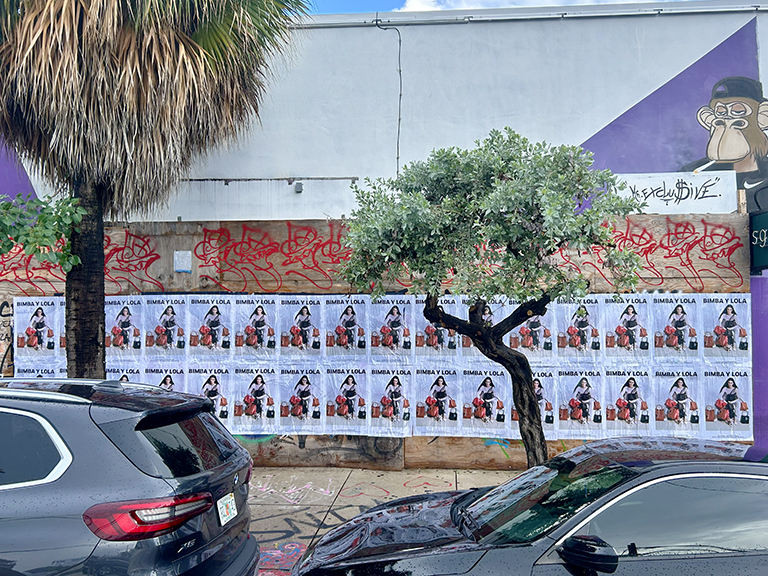
Managing a wheatpaste campaign from a New York office while installations are happening in London or Mexico City is a coordination problem, not a creative one. The creative brief travels. The operational sequence doesn’t run itself — it requires systems, pre-agreed standards, and a coordinator who knows what needs to happen before installation day so that nothing critical depends on real-time management across a 5-6 hour time zone gap.
American Guerrilla Marketing operates as a single coordinating contact for multi-market international campaigns. That means a brand working with us on a campaign in New York and London is not managing two separate vendors, two separate documentation chains, or two separate communication channels. They are working with one contact who is managing both markets — and who has spent over a decade building the systems that make cross-timezone coordination work at street level.
This piece walks through how that coordination actually functions: the time zone math, the installation windows, the client communication chain, and what a real rush scenario looks like end to end.
The Time Zone Math: Where Each Market Sits Relative to New York
Before anything else, you need to understand the time gaps and what they mean for installation scheduling and documentation delivery.
London: GMT+1 (BST) or GMT — 5 to 6 Hours Ahead of New York
During British Summer Time (late March through late October), London runs on GMT+1, which puts it 5 hours ahead of New York EDT. During the winter months, when the UK is on GMT and New York is on EST, the gap is 5 hours. When the US shifts clocks and the UK hasn’t (or vice versa — the transitions don’t always align exactly), the gap can briefly be 4 or 6 hours for a week or two around the clock change dates.
For practical campaign coordination, AGM uses a 5-hour gap as the working assumption during summer campaigns and 5 hours during the winter months when both markets are on standard time. The specific gap is always confirmed in the campaign brief, not assumed.
Mexico City: CST — 1 Hour Behind New York
Mexico City runs on Central Standard Time, which is 1 hour behind New York EDT for most of the year. There is a complication: Mexico’s daylight saving time schedule does not align exactly with the US schedule. Mexico shifted its DST start date in recent years, so there are brief windows in spring and fall when the time gap between Mexico City and New York is not a clean 1 hour. AGM confirms the specific gap at the time of campaign planning, not from memory.
Installation Windows: When the Work Happens in Each Market
Wheatpaste installations happen early in the morning, before foot traffic is heavy and before business activity makes installation inconvenient. The standard window is 4am to 6am local time in each market. Here is what that means for the campaign coordinator in New York:
London: 4am-6am GMT = 11pm-1am EDT
A London installation starting at 4am GMT is starting at 11pm New York time the previous night. The London crew finishes between 6am and 8am GMT, which is 1am to 3am EDT. Documentation is submitted by 8am-9am GMT — which is 3am-4am EDT.
This means that by the time a New York-based campaign coordinator wakes up and checks their messages, the London installation is already complete and the documentation should already be submitted. The question is not whether to supervise the London installation in real time — that’s not possible without being awake at midnight — but whether the London operator was briefed well enough to execute without real-time oversight.
This is the core reason that systems matter more than supervision in international campaigns. The brief is your supervision. If the brief is complete and the operator understands it, the installation happens correctly while you sleep. If the brief is incomplete, you find out about the problems in the morning, when it is too late to fix them.
Mexico City: 4am-6am CST = 5am-7am EDT
A Mexico City installation starting at 4am CST is starting at 5am EDT. The crew is finishing between 6am and 8am CST, which is 7am to 9am EDT. Documentation submission by 9am CST is 10am EDT — well within the New York business day.
Mexico City is the most favorable time zone for New York-based campaign coordination. The 1-hour gap means there is genuine overlap between the installation window and the early New York morning. A campaign coordinator who starts early can be available for real-time communication with Mexico City operators during the tail end of their installation window.
London installations finish in the middle of the New York night. Mexico City installations finish during the early New York morning. Both require pre-set documentation standards — but only Mexico City allows for real-time coordinator availability during installation.
How AGM Structures the Client Communication Chain for Time Zone Overlap
The client communication chain for an international campaign has three phases, and each phase has a different structure depending on the time zone involved.
Phase 1: Pre-Campaign (Overlapping Business Hours)
All campaign approvals, creative sign-offs, location confirmations, and documentation requirement agreements happen during overlapping business hours — typically New York business hours (9am to 6pm EDT). London clients who need to reach AGM during their business day can connect between 9am and 1pm BST (when AGM is available from 9am EDT). Mexico City clients have near-full overlap with New York business hours.
This phase is where everything that needs to be decided before installation day gets decided. Location list approval, format confirmation, documentation delivery window, escalation contact chain — all of this is resolved before the campaign brief is final. Nothing critical should remain open on the eve of installation day.
Phase 2: Installation Day (Asynchronous)
On installation day, the campaign coordinator in New York is not available to manage the London installation in real time — it is happening in the middle of the New York night. The coordinator is available for urgent messages and will respond to anything flagged as critical, but the expectation is that the operators are executing the brief they received, not waiting for real-time instructions.
AGM’s protocol for installation day is: operators confirm installation start when they begin, send a progress update at the midpoint of the installation window, and submit documentation upon completion. The coordinator reviews the documentation at the start of the New York business day and follows up on any gaps before the client report is due.
Phase 3: Post-Installation (Documentation Compilation)
Post-installation, the coordinator’s job is to compile documentation from all markets and deliver the client report by the agreed time. For a London-only campaign with a 9am EDT delivery target, the sequence is: documentation submitted by operators by 8am GMT (3am EDT), coordinator compiles report between 6am and 8am EDT, report delivered before 9am EDT. This works — but it requires the coordinator to be an early riser on campaign day, and it requires documentation from the operators to be complete and on time.
Pre-Agreed Documentation Delivery Standards: Non-Negotiable
The documentation delivery standard for an international campaign must be agreed before installation day. Not the morning of. Not during. Before.
Here is why: if the London operator submits documentation at noon GMT — which might feel like “morning” to them after a 4am installation — that is 7am EDT. If the client’s deadline is 9am EDT, that leaves 2 hours for the coordinator to compile and deliver the report. That is possible, but tight. If documentation arrives at 2pm GMT (9am EDT), the deadline is already missed.
The brief for every AGM international campaign specifies the documentation delivery window in the client’s time zone, not the operator’s. “Submit all documentation by 9am GMT” is a London operator instruction. “The client needs the report by 9am EDT — documentation must be submitted by 9am GMT to allow compilation time” is the full instruction. The operator knows why the timing matters, not just what the deadline is.
When operators understand the downstream impact of their documentation timing, they prioritize it differently than when it is just a number on a brief.
How Rush Timelines Compress When Time Zone Differences Eat Into the Available Window
Rush timelines are the stress test for international campaign coordination. When a client needs documentation the same morning as installation — not 24 hours later, but 3 to 4 hours later — the time zone gap becomes a real constraint.
For a London campaign with a same-morning documentation requirement:
- Installation window: 4am-6am GMT
- Documentation submission: by 8am GMT
- Coordinator review and compilation: 8am-10am GMT (3am-5am EDT)
- Delivery to client: by 6am EDT (11am GMT)
This sequence works if the operator finishes on time and submits documentation immediately. It breaks down if the installation runs over, documentation is delayed, or there are any gaps that require follow-up. Rush timelines for international campaigns need to be discussed during the planning stage — not requested the day before installation.
AGM’s experience is that same-morning documentation delivery from London is achievable for campaigns where the location list is finalized, the operator knows the territory, and the documentation brief is explicit. It is not achievable for campaigns where any of those elements are uncertain.
Real Scenario: Streaming Platform Needs Next-Morning Proof from London for a 9am New York Meeting
This is a scenario we have coordinated firsthand. A streaming platform launching a new series needed proof-of-posting from a London wheatpaste campaign in the client’s hands before a 9am EDT editorial review meeting. Here is the full operational sequence of how that works.
72 Hours Before Installation
Campaign brief is finalized and delivered to the London operator. Brief includes: location list with GPS coordinates and surface descriptions for all planned placements, format specification (A1), quantity per location, documentation requirements (GPS-tagged photo, timestamp in both BST and EDT, surface description, quantity), submission method (shared folder, file naming convention), and delivery window: “All documentation submitted to shared folder by 8am BST. AGM will compile and deliver client report by 8:30am EDT.”
The London operator confirms the brief and confirms their ability to meet the documentation window.
24 Hours Before Installation
Final location walkthrough confirmation from the London operator — every location on the list is confirmed accessible and surface condition is acceptable. Any locations with concerns are flagged and substitutes are agreed. The location list is locked.
Print is confirmed delivered to the operator’s staging location.
Installation Day: 4am BST (11pm EDT Previous Night)
London operator begins installation. AGM coordinator in New York is not monitoring in real time. A brief “starting now” message from the operator confirms the campaign is underway.
6am BST (1am EDT)
Installation complete. Operator begins documentation submission to shared folder. GPS-tagged photos, timestamps in BST and EDT, surface descriptions, quantities. This takes 30-45 minutes for a thorough job on a 20-location campaign.
7am BST (2am EDT)
Documentation fully submitted. AGM coordinator receives a completion notification by text or message.
6am EDT (11am BST)
AGM coordinator begins compiling the client report. Reviews all documentation for completeness, flags any gaps, compiles master location list, creates map view of all placements, formats the report for client presentation.
8am EDT (1pm BST)
Complete client report delivered — GPS-tagged photos, timestamps, location summary, map view, total spot count. Delivered as a PDF with a shared folder link for the full photo archive.
9am EDT
Client editorial review meeting. The campaign documentation is in the room.
This sequence works because every decision was made before installation day. The brief was complete. The operator knew the territory. The documentation window was set in advance. The coordinator’s job on the morning of the meeting was compilation, not problem-solving.
Why Campaign Coordination Across Time Zones Requires Systems, Not Just Effort
There is a version of international campaign coordination that runs on hustle — late nights, early mornings, constant messages, real-time supervision attempts across a 5-hour gap. We have seen agencies and brands try to manage international campaigns that way. It works occasionally and fails regularly, because it is entirely dependent on individual people being available at the right moments across time zones that do not naturally overlap.
The systems-based approach is different. The brief is the supervisor. The documentation standard is the standard, communicated before installation so it does not need to be enforced during. The delivery window is agreed, not hoped for. The escalation chain is specified so that problems are reported through a known channel, not via random messages that may or may not reach the right person at 3am EDT.
American Guerrilla Marketing has spent over a decade developing the operational infrastructure for this kind of coordination. Our systems are not complex — they are complete. Every brief covers what needs to be covered. Every operator is confirmed on the standard before they start. Every documentation window is set relative to the client’s deadline, not the operator’s convenience.
The result is campaigns that run correctly the first time, documentation that arrives when it needs to, and clients who do not spend their morning chasing a report that should already be in their inbox.
Every problem we have ever fixed on an international campaign in the field traces back to something that could have been resolved in the brief. That is the lesson. Write a complete brief and the campaign runs. Write an incomplete brief and the campaign reveals every gap.
Frequently Asked Questions
When does a London wheatpaste installation happen relative to New York time?
London installs typically happen between 4am and 6am GMT/BST, which is 11pm to 1am New York time (EDT) during British Summer Time, or midnight to 2am during GMT. This means London operators are finishing their work in the middle of the New York night. AGM campaign coordinators in New York review London documentation first thing in the morning — documentation should be submitted by 7am GMT to arrive before the New York business day opens.
How does AGM handle client communication across time zones for international campaigns?
AGM structures the client communication chain before the campaign launches. Pre-campaign: all approvals and sign-offs happen during overlapping business hours. Installation day: the campaign coordinator monitors installation remotely and is available by phone or message. Post-installation: documentation is compiled and delivered in the client’s time zone, typically by mid-morning EDT regardless of where the campaign installed overnight.
What happens when a campaign needs next-morning proof-of-posting from London for a New York meeting?
This is manageable but requires pre-planning. London installs at 4-6am GMT. Documentation is submitted by operators by 7-8am GMT (2-3am EDT). AGM’s coordinator reviews and compiles the report between 6-8am EDT and delivers the complete package before the 9am New York meeting. The entire sequence depends on the documentation delivery window being agreed before installation day — not the morning of.
Can Mexico City campaigns be coordinated the same day as New York installations?
Yes. Mexico City is 1 hour behind New York (CST vs. EDT for most of the year), so a 4am CST Mexico City installation finishes at 5am EDT New York time. This is actually the most compatible time zone overlap for same-day coordination. Documentation from Mexico City arrives during the early New York morning, giving AGM time to compile a combined report before the business day is in full swing.
Why do international wheatpaste campaigns require systems rather than just communication?
Because time zone gaps mean you cannot supervise installations in real time from a New York office. A London installation at 4am GMT is happening at 11pm New York time — you are not going to be on the phone managing it live. The work needs to be done before installation day: briefing the operator, confirming the location list, agreeing the documentation standard, and setting the delivery window. Systems replace supervision when supervision is not possible.