Georgia’s convention infrastructure, centered on Atlanta’s Georgia World Congress Center, one of the largest convention facilities in North America, hosts events drawing hundreds of thousands of attendees annually from across the Southeast and beyond.
National brands entering Atlanta face the same challenge: the market doesn’t know them yet, and digital advertising alone doesn’t build the local credibility that drives first-purchase conversions. Convention marketing accelerates that local authority-building by putting your brand visibly into Atlanta’s commercial environment before competitors stake the same claim. American Guerrilla Marketing specializes in Atlanta market-entry convention floor and adjacent marketing designed for exactly this objective.
One of the most commercially underused characteristics of convention marketing is its ability to intercept purchase-decision moments at the point of proximity. A well-placed campaign adjacent to a Atlanta retail corridor, transit node, or entertainment district reaches consumers when they’re already in commercial motion, not passively browsing digital feeds at home. That proximity to purchase is the conversion advantage that physical advertising holds over any screen-based channel. In Atlanta, where Atlanta Film Festival, BronzeLens, Masters week in Augusta, and Atlanta Pride drive concentrated commercial traffic, proximity-timing is the variable that separates high-performing campaigns from mediocre ones.
Everything on this page is specific to convention marketing in Atlanta, not generic outdoor advertising theory. The market analysis covers Atlanta’s specific commercial geography, the tactics section covers format options and their performance data in this market, and the budget section covers realistic cost structures and ROI ranges for different campaign scales. American Guerrilla Marketing has executed campaigns in Atlanta at every budget level, and the guidance here reflects that field experience directly.
Georgia’s Convention Landscape: Atlanta and Beyond
Georgia’s convention market is almost entirely centered in Atlanta, a concentration that reflects the city’s unique position as the Southeast’s dominant business center, air travel hub, and corporate headquarters location. Hartsfield-Jackson Atlanta International Airport, consistently one of the world’s busiest airports by total passenger volume, makes Atlanta accessible from virtually every U.S. market without a connecting flight, giving it a logistical advantage for national convention organizers that comparable Southern cities can’t match. This accessibility is a core reason that Atlanta consistently draws conventions that, in other regions, might be split between multiple cities.
The GWCC campus is the physical anchor of Atlanta’s convention market, but Atlanta’s convention infrastructure extends well beyond it. The Hyatt Regency Atlanta, the Westin Peachtree Plaza, the Hilton Atlanta, the Marriott Marquis, and dozens of additional downtown hotels collectively add millions of square feet of meeting and ballroom space that host conferences ranging from a few hundred to tens of thousands of attendees without ever using the GWCC exhibition halls. The Atlanta Convention Center at AmericasMart, the Cobb Galleria Centre in the Cumberland business district, and the Georgia International Convention Center near Hartsfield-Jackson add further capacity for conventions that need proximity to the airport or to suburban Atlanta’s office parks and business campuses.
This distributed convention geography means that guerrilla marketing in Atlanta’s convention environment requires market-specific knowledge of which venues are hosting which events and what the geographic footprint of each convention’s attendee concentration actually looks like in the city. A Dragon Con campaign concentrated on the Peachtree Street hotel corridor is deploying in a completely different location than a campaign targeting medical conference attendees at the Hyatt Regency or tech industry professionals at the AmericasMart Apparel Show. Knowing the geography of each event’s attendee concentration, where they stay, how they move between venues, where they eat and drink, is the operational knowledge that makes perimeter guerrilla marketing work effectively at Atlanta conventions.
Key Georgia Conventions and Their Marketing Potential
Dragon Con
Dragon Con is one of the most distinctive convention marketing environments in the country, a multi-genre pop culture convention that doesn’t use the GWCC at all, instead taking over five of downtown Atlanta’s largest hotels (the Marriott Marquis, Hyatt Regency, Westin Peachtree Plaza, Sheraton Grand, and Hilton Atlanta) plus surrounding streets over the Labor Day weekend. The convention draws 80,000+ registered attendees who are physically concentrated in a roughly eight-block radius of downtown Peachtree Street, creating a pedestrian density that rivals urban street scenes far beyond anything Atlanta typically achieves.
For brands targeting the 20–40 creative, gaming, entertainment, and technology culture demographic, one of the most brand-engaged and socially active consumer segments in the country, Dragon Con represents an extraordinary concentration opportunity. The Peachtree Street corridor from Baker Street south to Andrew Young International Boulevard, the John Portman-designed hotel cluster between Courtland Street and Peachtree Center Avenue, and the surrounding streets in downtown Atlanta’s hotel and entertainment district are the primary marketing zone for Dragon Con-adjacent brand activations. Wheat Paste Poster Campaigns in this zone in the week before Labor Day weekend, combined with brand ambassador programs working the hotel block sidewalks during peak Dragon Con daytime hours, create outstanding brand contact rates with exactly this demographic.
MomoCon
MomoCon, Georgia’s anime, gaming, and comics convention, draws 52,000+ attendees to the Georgia World Congress Center Building B over Memorial Day weekend in late May. The GWCC location makes this event more accessible to perimeter marketing than Dragon Con’s hotel-based format, because the convention’s physical footprint creates predictable pedestrian corridors between the GWCC, the adjacent Omni Atlanta Hotel and new Hilton Signia, the nearby CNN Center and Centennial Olympic Park, and the downtown hotel and restaurant district along Spring Street and Marietta Street.
MomoCon’s audience skews younger than Dragon Con, heavily 16–28, with strong anime and gaming interests, making it a particularly valuable target for consumer technology, entertainment services, gaming and collectibles brands, and any brand whose target customer is a highly socially active young adult. The attendee’s propensity to share convention experiences on social media means that brand encounters in the MomoCon perimeter zone have significant earned media amplification potential beyond the direct impression count.
Healthcare and Medical Conferences
Atlanta is a major destination for healthcare industry conferences, driven in part by the presence of the CDC headquarters in the Atlanta metro and the significant healthcare sector employment in the region. The Atlanta Convention Center at AmericasMart and the downtown hotel conference facilities host medical association meetings, healthcare technology conferences, and pharmacy and nursing professional gatherings throughout the year. These events draw professional healthcare audiences, physicians, nurses, pharmacists, hospital administrators, and healthcare technology buyers, that are among the most valuable professional demographics in B2B brand marketing.
Healthcare conference-adjacent guerrilla marketing in Atlanta requires more conservative creative approaches than pop culture convention marketing, but the tactical opportunity is real: a Wheat Paste Poster Campaign in the hotel corridors and restaurant blocks frequented by medical conference attendees, combined with branded ambassador programs working the conference hotel lobbies’ immediate exterior sidewalks, reaches these high-value professional audiences with brand presence that exceeds what most healthcare B2B brands invest in convention-adjacent marketing.
Technology and Business Conferences
Atlanta’s growing technology sector, driven by the presence of major tech employers in the Midtown and Buckhead districts, a strong Georgia Tech pipeline, and significant venture investment in the Atlanta startup community, generates increasing convention activity in technology and business categories. The Cobb Galleria Centre in Cumberland hosts business and technology conferences serving the Atlanta metropolitan professional community, while conferences targeting the broader Southeast technology sector use the GWCC and downtown hotel infrastructure for events that draw attendees from across the region.
Guerrilla Marketing Tactics for Georgia Convention Environments
Wheat Paste Poster Campaigns
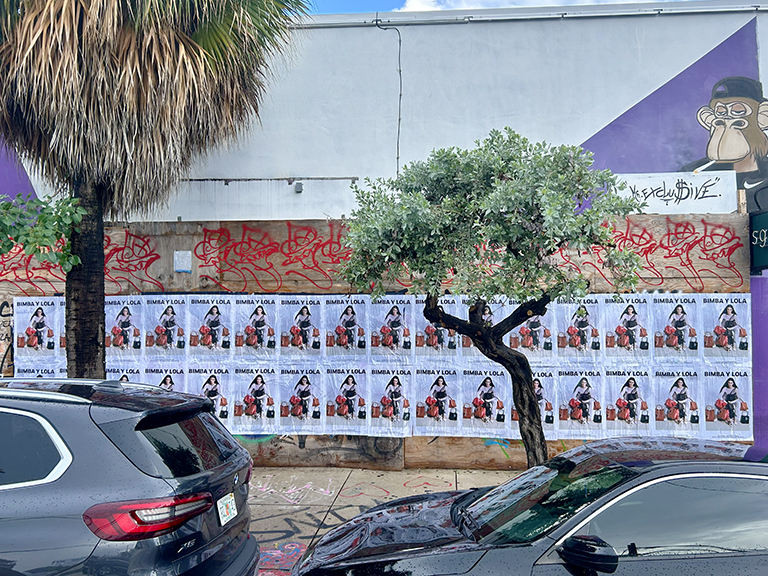
Wheat Paste Poster Campaigns, large-format poster installations in commercial corridors and entertainment districts, are the foundation of convention-adjacent brand marketing in Atlanta. The GWCC perimeter zone, the downtown hotel corridor along Peachtree Street and Marietta Street, and the CNN Center–Centennial Olympic Park–GWCC pedestrian zone together constitute a concentrated marketing environment where poster placements in the two weeks leading into a major convention will be seen by virtually every attendee multiple times as they work through between their hotel, the venue, and the surrounding dining and entertainment district.
Creative for Atlanta convention poster campaigns should be matched specifically to each convention’s audience profile. Dragon Con campaigns benefit from visually bold, genre-aware creative that speaks the cultural language of the pop culture community. Healthcare conference campaigns require professional positioning that reflects the brand authority expected by clinical and administrative professionals. Technology conference campaigns can use the bold, minimalist design aesthetic associated with tech brand culture. Mismatched creative, generic brand messaging deployed at a convention with a highly specific audience identity, consistently underperforms compared to audience-aware creative in the same placement locations.
Brand Ambassador Programs
Brand ambassador programs at Georgia conventions work best when deployed in the high-foot-traffic public zones where convention attendees concentrate outside the formal event footprint, the sidewalks around hotel entrances, the restaurant and bar corridors where attendees gather during meal and break periods, and the transit nodes where attendees arrive and depart.
For Dragon Con, the specific zones are the Peachtree Street sidewalks between the five convention hotels, the Baker Street and Andrew Young International Boulevard intersections where foot traffic concentrates between the hotel cluster and the surrounding dining district, and the MARTA Five Points and Peachtree Center stations where attendees transit in and out of downtown. For GWCC-based events like MomoCon, the primary ambassador zones are the Spring Street and Marietta Street approaches to the GWCC, the pedestrian connection between the venue and the adjacent hotels, and the CNN Center food court area that serves as a natural break-time congregation point.
Ambassador programs at Georgia conventions should be staffed with teams who understand the cultural context of the target event. Dragon Con ambassadors who are themselves pop culture community members create significantly more authentic brand encounters than generic brand representatives with no cultural connection to the convention’s world. This cultural fluency is an execution detail that many brands overlook but that convention audiences, who are highly attuned to authenticity, register and respond to.
LED Mobile Billboard Trucks
Mobile LED billboard trucks in Atlanta’s convention environment are particularly effective on the approach routes from Hartsfield-Jackson Airport, the primary entry point for the majority of out-of-town convention attendees. The I-85 North/I-285 interchange approaching downtown Atlanta from the airport, and the Downtown Connector (I-75/I-85) as it approaches the downtown exit ramps for the GWCC and hotel district, carry the highest concentration of convention-bound vehicle traffic during peak arrival periods. Truck routes covering these corridors during the 24–48 hours before major convention opening days reach the convention audience at exactly the arrival moment when their brand receptivity is highest, new city, new environment, active attention.
Within downtown Atlanta, mobile billboard routes on Ivan Allen Jr. Boulevard (the northern approach to the GWCC), Spring Street through Midtown, and the Peachtree Street corridor provide high-frequency brand delivery to both convention attendees and the significant local Atlanta professional audience that overlaps with most convention demographic profiles.
Sidewalk Stencil Activations
Sidewalk stencil activations at key pedestrian transition points, the GWCC main entrance plaza, the hotel drop-off zones on Courtland Street and Peachtree Center Avenue, and the MARTA station exits at Five Points and Peachtree Center, create brand encounters at exactly the moments when convention attendees are moving between environments and their attention is naturally alert. For conventions with highly engaged, social media-active audiences like Dragon Con and MomoCon, creative sidewalk activations are among the most photographed and shared elements of brand marketing programs, generating earned media amplification that extends total reach well beyond the physical placement footprint.
Atlanta’s Convention Geography: The Marketing Zone
The Perimeter Strategy in Atlanta
Official exhibitor presence at major Georgia conventions is expensive. GWCC exhibit hall booth fees, staffing, shipping, and setup costs make conventional trade show marketing a significant investment, one that creates meaningful financial pressure on smaller brands and startups that need convention-adjacent awareness but can’t justify full exhibitor-level investment.
The perimeter strategy offers the alternative: concentrating guerrilla marketing investment on the public spaces around convention venues, where brands can reach essentially the same audience as official exhibitors without the exhibitor cost structure or the creative restrictions that official sponsor packages often impose. In Atlanta, the perimeter approach is particularly effective because the GWCC campus and Dragon Con’s hotel-district footprint are both surrounded by high-foot-traffic public streets that are ideally suited to Wheat Paste Poster Campaign placements, ambassador programs, and sidewalk activations.
The economics of the perimeter approach at major Atlanta conventions are compelling. A Wheat Paste Poster Campaign covering the key pedestrian corridors around the GWCC or the Dragon Con hotel cluster, executed across a two-week window spanning the pre-convention and event periods, will deliver tens of thousands of impressions to the convention audience at a total program cost that is typically 5–15% of what a comparable-sized booth space would cost in the official exhibition. For brands with strong creative and a well-executed perimeter program, this cost efficiency is not accompanied by a proportional sacrifice in brand impact, well-placed poster campaigns in convention hotel corridors achieve high-recall impression frequencies that frequently match or exceed what attendees remember from booths they visited on the show floor.
Georgia’s Secondary Convention Markets
While Atlanta dominates Georgia’s convention space, the state’s secondary markets host meaningful convention activity that creates guerrilla marketing opportunities for brands targeting regional professional and consumer audiences.
Savannah, Georgia’s second city and one of the most visited historic destinations in the South, hosts boutique conferences, design and architecture gatherings (driven by the Savannah College of Art and Design’s presence), and hospitality industry events in its extensively renovated historic district. The Broughton Street commercial corridor, River Street along the Savannah waterfront, and the SCAD campus areas in Forsyth Park’s neighborhood are the primary marketing zones for Savannah convention-adjacent activations.
Augusta, home of the Masters Golf Tournament and significant healthcare and cybersecurity industry concentration, hosts specialized industry conferences that draw high-value professional audiences for shorter, more focused event windows. The Augusta Convention Center on the Riverwalk, the downtown Broad Street commercial corridor, and the North Augusta commercial zone across the Savannah River are the primary convention marketing zones for Augusta-based events.
Columbus, on Georgia’s western border adjacent to Fort Benning (now Fort Moore), hosts military and defense industry gatherings along with regional business conferences at the Columbus Convention and Trade Center. The Broadway corridor in downtown Columbus is the primary marketing zone.
Campaign Strategy & Market Considerations
Effective guerrilla marketing at Georgia conventions requires a strategic framework that accounts for Atlanta’s specific urban dynamics, the cultural diversity of the convention calendar, and the competitive intensity of the brand marketing environment around major events.
Atlanta’s size requires more geographic precision than smaller convention cities. Atlanta is a sprawling metro with multiple distinct business districts, downtown, Midtown, Buckhead, Cumberland, and convention audiences concentrate in specific zones that may be miles from the overall city center. A Wheat Paste Poster Campaign designed for GWCC-based convention marketing needs to be placed in the specific blocks surrounding that campus, not in Midtown or Buckhead where the convention audience simply isn’t concentrated. Precision in location planning is the execution variable that most often determines whether a convention marketing program achieves its impression frequency goals.
Atlanta’s heat climate affects tactical choices. Georgia’s summer heat, temperatures regularly exceeding 90°F from June through September, reduces outdoor pedestrian activity in the hours around midday and drives convention attendees toward climate-controlled environments during peak heat periods. Convention marketing programs timed for early morning arrival traffic, late afternoon post-session periods, and evening dining and entertainment hours consistently achieve higher contact rates than programs focused on midday deployment. Wheat Paste Poster Campaign materials should be specified for outdoor-grade UV resistance to maintain quality through extended summer exposure.
The MARTA transit system is an underutilized brand marketing channel for Atlanta convention campaigns. Atlanta’s MARTA rail network connects Hartsfield-Jackson Airport directly to the downtown convention district via the Airport line to Five Points, and connects Midtown, Buckhead, and suburban Atlanta communities to the downtown convention zone. Convention attendees who use MARTA, either from the airport or within the metro, move through stations including Five Points, Peachtree Center, and Civic Center that are immediately adjacent to the primary convention marketing zones. Ambassador programs timed to coincide with MARTA arrivals, and sidewalk stencil activations at station exits near convention venues, reach the transit-using convention audience at high-attention transit transition moments.
Dragon Con’s multi-hotel format creates unique creative opportunities that single-venue conventions don’t offer. With the convention split across five major hotels with different programming, attendees move constantly between venues, walking the Peachtree Street corridor multiple times each day as they follow their programming schedule across the convention’s distributed footprint. This movement pattern creates exceptionally high repeat impression rates for Wheat Paste Poster Campaign placements in the connecting sidewalk zone, far higher than a single-venue convention footprint would generate from the same placement locations.
Measuring Results
Convention marketing results at Georgia events are measurable through the same combination of digital attribution tools and field documentation that AGM integrates into every campaign program. QR code integration on Wheat Paste Poster Campaign creative and ambassador materials creates direct attribution from physical convention-zone presence to digital engagement, with scan data by location and date identifying the highest-performing placements. Branded search lift analysis measures the increase in brand name searches from Atlanta-area devices during and immediately following convention windows.
For campaigns targeting professional B2B audiences at industry conferences, post-convention sales pipeline analysis can track whether convention-period brand contact in the perimeter zone corresponds to increased inbound inquiry in the weeks following the event, connecting the brand awareness investment to measurable business development outcomes. Field documentation packages, GPS-tagged photography of every placement, ambassador deployment logs, and truck route records, are delivered within 48 hours of campaign completion and formatted for integration with broader marketing program reporting.
Frequently Asked Questions
What is guerrilla marketing?
Guerrilla marketing uses unconventional, often low-cost tactics in public environments to generate disproportionate brand impact. The approach prioritizes surprise, authenticity, and direct audience engagement over paid media reach. Tactics include wheat paste posting, sidewalk stencils, brand ambassador activations, projection advertising, LED trucks, and pop-up experiences.
How much does a guerrilla marketing campaign cost?
Guerrilla marketing campaigns scale widely by market, tactics, and duration. Small-market activations using a single tactic can start in the mid-hundreds to low thousands. Full multi-tactic campaigns in major metros run higher. American Guerrilla Marketing builds custom programs with transparent pricing based on specific objectives, markets, and timelines.
What industries use guerrilla marketing most effectively?
Entertainment, fashion, food and beverage, technology, nonprofit, and political campaigns are frequent users of guerrilla marketing tactics. The format works for any brand seeking authentic audience connection in physical environments, particularly effective for reaching consumers who actively avoid traditional advertising.
Is guerrilla marketing legal?
Legality depends on the specific tactics and locations used. Wheat paste posting, stencils, and street team work operate in a range from fully permitted to technically unpermitted depending on surfaces and municipalities. American Guerrilla Marketing operates within a compliance framework that balances campaign coverage with appropriate risk management for each client.