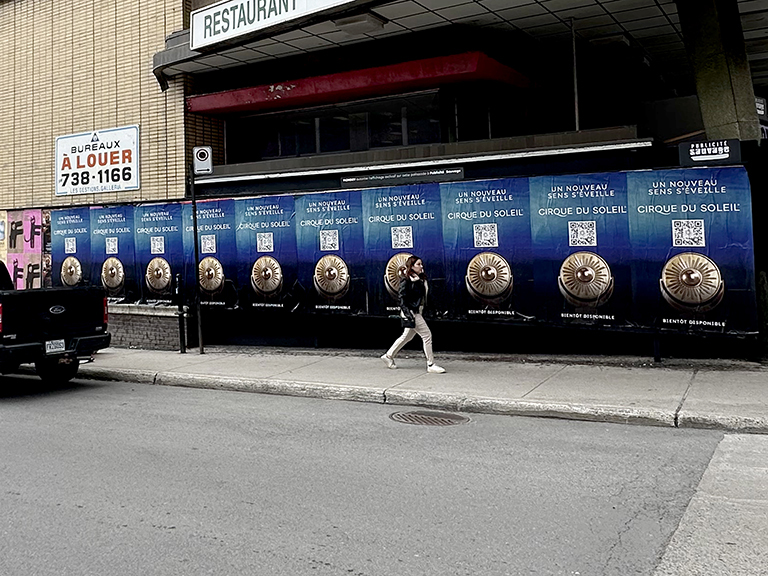
Running an international wheatpaste campaign across multiple countries isn’t just a logistics puzzle — it’s a test of how well your campaign infrastructure holds up under pressure. Most brands figure that out the hard way: they get the artwork right, they pick the cities, and then reality hits. Different time zones. Different paper sizes. Different laws. A print vendor in Berlin who doesn’t take calls from New York. An operator in Tokyo who won’t move without a translated brief. By the time everything shakes out, the launch window has passed.
We’ve run wheatpaste campaigns across four continents from a single New York coordination point. The approach isn’t magic — it’s a system. And the system starts before anyone touches a paste bucket. This guide walks through what actually makes a multi-country international wheatpaste campaign work, from initial planning through final documentation, based on firsthand field experience across dozens of markets.
Why Multi-Country Wheatpaste Campaigns Fail Before They Start
The failure point for most international wheatpaste campaigns isn’t execution — it’s pre-production. Brands spend weeks getting the creative right and 48 hours on logistics. That ratio is backwards.
Here’s what typically goes wrong. A brand wants simultaneous placements in New York, London, and Mexico City for a product launch. The New York team has done wheatpasting before, so they assume the same workflow applies everywhere. They brief their usual NYC crew and ask them to “handle” the other markets. The NYC crew sub-contracts to people they’ve never worked with, based on a cold referral. The artwork goes out in US sizes. The brief is written in American shorthand that means nothing to someone in Shoreditch or Roma Norte.
By launch day, New York looks great. London placements are half the planned count because the paper didn’t arrive in the right format. Mexico City is sitting on unplaced materials because the operator didn’t have clear permission documentation for the sites.
This isn’t a worst-case scenario. It’s a Tuesday.
The Structural Problems in Multi-Country Coordination
International wheatpaste campaigns fail along predictable fault lines:
- No single point of accountability: When each market has its own vendor chain, nobody owns the whole picture. Problems in one market get siloed. The brand finds out at the end, not in time to fix anything.
- Artwork that doesn’t travel: US Letter and Tabloid dimensions don’t match ISO A-series paper. A poster designed for US production needs to be reformatted for every international market that runs on metric paper standards.
- Briefing documents written for one context: What “high foot traffic corner” means in Manhattan is completely different from what it means in Shoreditch or Condesa. Without local translation, operators fill in the gaps with their own judgment — which may or may not match yours.
- No pre-qualified operator network: Finding a trusted wheatpaste operator in an unfamiliar city takes weeks of vetting. Brands that try to do this during campaign prep are already behind.
- Documentation that doesn’t align: Different operators deliver proof photos in different formats, at different times, with different levels of metadata. Aggregating that into a coherent campaign report is nearly impossible without a standardized system.
AGM’s American Guerrilla Marketing field operators maintain an international network of certified, licensed crews across North America, Europe, and Latin America — all briefed to a single quality standard, with GPS-tagged documentation delivered in a consistent format regardless of market.
The Pre-Production Phase: Where Multi-Country Campaigns Are Won or Lost
A well-run international wheatpaste campaign starts with a pre-production phase that most brands underinvest in. This is the 4-6 week window before anything gets printed or pasted. Done right, it removes every preventable problem from the field execution phase.
Market Selection and Feasibility
Not every city is equally easy to run wheatpaste campaigns in. Some markets have straightforward permissioned placement networks. Others require permit applications that take 3 weeks to process. Others have specific restrictions on placement near certain types of property.
Before committing to a city, you need honest answers to a few questions:
- Are there established permissioned placement surfaces in this market?
- What is the average lead time for site access?
- Are there any restrictions relevant to your product category?
- What is the typical permitting environment — is there a licensing structure for operators in this market?
We walked through this process for a campaign that included Berlin and found that two of the planned placement zones had active city permits for a construction project that would block the walls. We caught that in pre-production. If we’d found out on installation day, the campaign would have had a significant hole in one of its key markets.
Operator Vetting and Briefing
Every market needs operators who are familiar with that specific media market — not just physically capable of pasting posters. Local knowledge covers which neighborhoods actually drive the audience you want, which walls have staying power versus high removal rates, and which sites require special handling.
For an international wheatpaste campaign, every operator in the network should be briefed from the same master document, translated and localized for each market. That document should include:
- Visual examples of target placement surfaces
- Written description of the target demographic and what their environment looks like
- Size specifications for the market’s paper standard
- Documentation requirements (photo format, metadata, timestamp method)
- Any brand-specific placement restrictions (no coverage of competitor materials, no specific types of co-placement, etc.)
Operators with a decade of experience in their market know these things intuitively — but they can’t read minds. A thorough brief protects everyone.
Print Coordination Across Markets
Printing for an international wheatpaste campaign requires either a centralized print-and-ship strategy or local print vendors in each market. Both have tradeoffs.
Centralized printing gives you quality control but requires lead time for international shipping, customs clearance, and local delivery. You also need artwork in the correct size for each market’s paper standards — more on that in the next section.
Local printing gives you flexibility and faster turnaround on reprints, but requires vetting local vendors for color accuracy and paper quality. Wheat paste requires specific paper weights to adhere well and resist moisture — not every print shop understands that.
| Approach |
Lead Time |
Cost Control |
Quality Consistency |
Flexibility |
| Centralized print + ship |
4-5 weeks |
High |
High |
Low |
| Local print vendors |
1-2 weeks per market |
Medium |
Variable |
High |
| Hybrid (US ships, local handles reprints) |
3-4 weeks |
Medium-High |
Medium-High |
Medium |
Coordination Infrastructure: The System That Holds It Together
The thing that separates a well-run international wheatpaste campaign from a chaotic one is coordination infrastructure — the tools, processes, and communication channels that keep every market in sync without requiring the brand to manage five separate vendor relationships.
Here’s what that infrastructure looks like in practice.
A Single Campaign Dashboard
Every market’s status — printing, shipping, placement scheduling, and documentation — should be visible in one place. This doesn’t have to be fancy. A well-structured spreadsheet works. What it can’t be is scattered across separate email threads with each market’s operator.
The dashboard should track:
- Print status per market (ordered / in production / shipped / received)
- Placement schedule per market (dates, neighborhoods, site list)
- Documentation status (photos submitted / reviewed / approved)
- Any outstanding issues per market
Time Zone Management
Running a truly simultaneous international wheatpaste campaign — where placements go up in New York, London, and Tokyo within the same 24-hour window — requires careful time zone math. London is 5 hours ahead of New York. Tokyo is 14 hours ahead. A launch meant for “Monday morning” in all three cities actually spans 14 hours of wall clock time.
Decide early whether “simultaneous” means the same calendar date or the same 24-hour window. For most guerrilla marketing campaigns, same calendar date is sufficient and far easier to execute. For campaigns tied to a specific live event or broadcast, you need tighter coordination.
Communication Protocols
Establish clear escalation paths before the campaign starts. Every operator should know who to contact — and how — if something goes wrong in the field. That contact should have the authority to make decisions, not just log the issue.
We typically set up a shared messaging channel for each campaign that includes the brand contact, the AGM coordinator, and the lead operator in each market. Real-time communication during the execution window prevents small problems from becoming missed placements.
On a recent four-market campaign spanning New York, London, Berlin, and São Paulo, our operators completed GPS-tagged documentation for 847 placements across a 48-hour window — all reported back through a single coordination channel with no missed markets.
Market-Specific Considerations: What Changes by Country
Every international market has its own set of ground-level realities. These aren’t things you can fully anticipate from a New York office — they’re the kind of knowledge that comes from actually being on those streets. Here’s what our on-the-ground experience shows up most often.
United Kingdom (London)
London’s wheatpaste environment is well-developed. Shoreditch, Hackney, Brixton, and Camden have established permissioned surfaces that operators with long-term property relationships can access. The challenge is that London’s permissioned inventory is highly competitive — popular walls book out weeks in advance. If you’re targeting specific high-traffic zones in East London, you need operator relationships lined up early.
Artwork in the UK needs to be sized for ISO A-series — A0, A1, A2. US paper sizes don’t translate. More on this in blog 2 of this series.
Mexico City
Mexico City’s street culture — particularly in Roma Norte, Condesa, and Centro Histórico — has a strong tradition of poster-based communication. The visual language of the streets is dense and layered, which works in your favor if your creative holds up against competition for attention. What doesn’t work is sending a brief that assumes the same placement logic as New York. The rhythm of the city, the foot traffic patterns, and the visual hierarchy of the streets are genuinely different.
Permissioning in Mexico City operates differently than the US. Our operators have long-term relationships with property owners in key neighborhoods, but the documentation process is less formalized. Detailed advance briefing is essential to ensure operators are working from the same playbook as the rest of the campaign.
Germany (Berlin)
Berlin has a rich street art and poster tradition — Friedrichshain, Kreuzberg, Mitte, and Prenzlauer Berg all have walls with established poster culture. The permissioning environment is specific: German property law is strict, and operators who work in Berlin without proper authorization face real consequences. This is a market where working with certified, licensed operators is non-negotiable, not a preference.
Berlin audiences are sophisticated and skeptical of brand-driven street campaigns that feel inauthentic. Creative that works in Times Square doesn’t necessarily land the same way in Kreuzberg. Localization of the visual approach, not just the language, matters here.
Japan (Tokyo)
Tokyo operates under some of the tightest public space regulations of any major city. Permissioned placement requires specific site agreements and documentation. The lead time for Tokyo campaigns is longer than most other international markets — plan for 8 weeks minimum. Operators need written authorization for every surface. The upside: Tokyo placement documentation is consistently excellent, and removal rates on permissioned surfaces are extremely low.
The Execution Window: What Happens on the Ground
When the execution window opens — the days when crews are actually on the streets — your job as the campaign coordinator shifts from planning to monitoring and rapid response.
The First 6 Hours
The most critical window is the first 6 hours of execution in each market. This is when you find out whether the print materials arrived in good condition, whether the site access arrangements are working, and whether there are any unexpected obstacles at specific locations.
Our American Guerrilla Marketing field operators check in at the start of every execution day with a brief status update: materials confirmed, sites accessible, any issues flagged. That 5-minute check-in prevents surprises from compounding through the day.
Real-Time Documentation
GPS-tagged documentation starts from the first placement. Photos are timestamped and geolocated, organized by market and neighborhood zone. If a specific site has to be skipped — weather, access issue, anything — it gets logged immediately so the campaign report accurately reflects what was placed.
This real-time documentation chain matters for two reasons. First, it lets you confirm placement counts as the campaign progresses rather than waiting for a post-campaign report. Second, it gives you the ability to redirect resources mid-campaign if one zone is underperforming — if foot traffic at a planned site is lower than expected, an operator with local knowledge can adjust.
Quality Control Across Markets
With multiple crews working simultaneously across multiple time zones, quality control requires a standardized visual check. Before any placement photos are accepted as campaign documentation, they’re reviewed against the brand brief: correct sizing, correct orientation, proper surface condition, no obstructions, correct neighborhood.
We’ve seen international campaigns where operators in one market submitted photos of placements that technically met the placement count but didn’t match the brief’s quality standards. Catching that in real-time lets you request additional placements rather than discovering the problem after the campaign ends.
Post-Campaign: Documentation and Reporting
A well-documented international wheatpaste campaign is a guerrilla marketing asset that goes beyond the initial placement. GPS-tagged photo documentation organized by market creates a campaign archive that’s useful for case studies, client reporting, and future planning.
What the Final Report Should Include
- Total placement count by market
- Neighborhood and zone breakdown
- GPS-tagged photo documentation for every placement
- Any site deviations with explanations
- Timeline documentation (when each market executed relative to campaign schedule)
- Estimated foot traffic exposure by market (where available)
We guarantee delivery of a complete campaign documentation package within 5 business days of campaign completion. That timeline is built into every international engagement we manage.
Using Case Studies for Internal Advocacy
If you’re running an international wheatpaste campaign for the first time, the documentation you collect becomes the case study that justifies the next one. Internal stakeholders who weren’t close to the campaign — and who may have been skeptical — respond to GPS-tagged photo evidence of placements in Shoreditch, Roma Norte, and Friedrichshain in a way they don’t respond to impressions estimates from digital channels.
The visual proof of street-level presence in multiple international markets is something no other media format can replicate. That’s worth capturing carefully.
Frequently Asked Questions
How much lead time do I need for an international wheatpaste campaign?
Plan on 6-8 weeks minimum for a two- to three-country campaign. That window covers artwork localization, operator sourcing, permit research, print production, shipping, and scheduling across time zones. Campaigns with four or more markets need 10-12 weeks.
Do I need separate operators in each country?
Yes. Each market requires operators who know local placement laws, neighborhood dynamics, and property relationships. A New York crew cannot legally or practically handle London placements. AGM coordinates certified, licensed local crews in each market through our international network.
How do you ensure consistent brand quality across markets?
We use a standardized brand brief template, require pre-production print proofs from every market, and GPS-tagged documentation so you can compare placements side by side. Every crew follows the same quality checklist regardless of country.
What documentation do I receive after an international campaign?
You receive GPS-tagged photo documentation from every placement, organized by market, with timestamps and location data. We compile this into a single campaign report you can share internally or with clients.
Can AGM run simultaneous wheatpaste campaigns in the US and Europe?
Yes. We’ve run simultaneous campaigns across New York, London, Berlin, and Paris within the same 72-hour window. The key is pre-aligned scheduling and a single point of coordination on the AGM side so you’re not managing five separate vendor relationships.