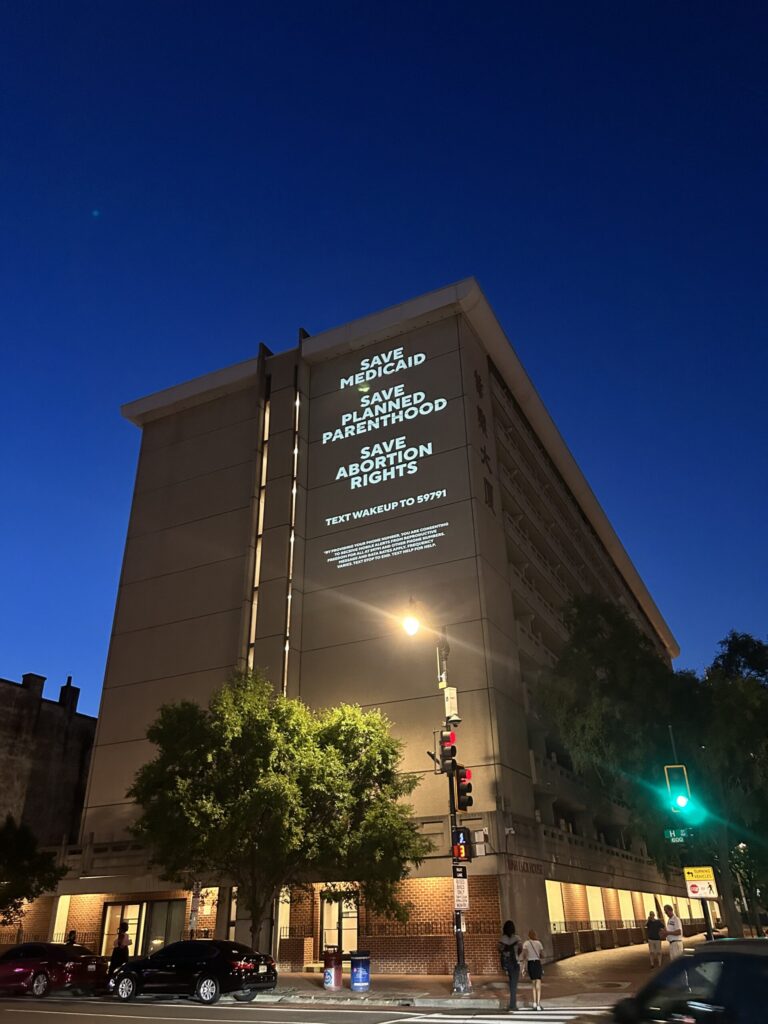
What makes Burlington a strong market for guerrilla marketing isn’t just foot traffic, it’s the city’s Church Street Marketplace in Burlington creates one of the most pedestrian-concentrated commercial corridors in New England relative to market size. In those environments, brands that invest in physical presence signal something that digital ads can’t: they chose this city specifically, and put something real here. American Guerrilla Marketing has run guerrilla marketing campaigns across Burlington for national and regional brands that needed to build that kind of street-level market presence.
The ROI arithmetic for guerrilla marketing in Burlington improves as campaign duration increases. Short-burst campaigns generate initial brand awareness. Extended campaigns, running four to eight weeks in high-traffic Burlington locations, build the frequency that converts awareness into preference and preference into purchase intent. American Guerrilla Marketing structures Burlington campaigns around this frequency-building logic, not just raw impression volume. The brands that get the highest return from street-level advertising in Burlington are those that stay visible long enough for the frequency effect to fully develop.
This page is built for brand and marketing teams who need a serious grounding in guerrilla marketing in Burlington before making a campaign decision. It covers commercial geography and audience concentration in Burlington’s key neighborhoods, tactical format options and their documented performance in this market, American Guerrilla Marketing’s execution process from planning through post-campaign reporting, and budget structures from entry-level campaigns to full-market saturation programs.
Burlington: Church Street and the Waterfront
Burlington’s Church Street Marketplace, a four-block pedestrian mall that serves as the downtown core’s primary commercial and social space, is Vermont’s premier outdoor advertising environment. The pedestrian-only format creates concentrated foot traffic from Burlington residents, UVM students, and tourists visiting the city’s restaurants, independent retailers, and arts venues. On summer evenings and during the shoulder seasons of spring and fall, Church Street generates the outdoor pedestrian density that makes projection advertising effective, large enough audiences to create genuine impression volume, concentrated enough that projections on the surrounding buildings are visible to everyone in the zone simultaneously.
The buildings lining Church Street, a mix of brick commercial buildings, historic storefronts, and the larger facades at the street’s Battery Street terminus facing Lake Champlain, provide strong projection surfaces with good visibility from multiple angles. A projection on the Church Street facade facing the pedestrian mall illuminates the entire mall’s evening crowd simultaneously, creating a brand moment that is shared by everyone present in the Marketplace.
Burlington’s waterfront along Lake Champlain, accessible via Battery Street and the Burlington Bike Path, is an additional evening gathering zone that concentrates residents and visitors during warm months. The ECHO Leahy Center for Lake Champlain on the waterfront provides a large, modern building facade that is one of Vermont’s most architecturally suitable projection surfaces, facing the bike path and waterfront promenade where thousands of pedestrians and cyclists move during summer evenings.
University of Vermont: The Campus Projection Zone
The University of Vermont campus, situated on the hill above downtown Burlington, enrolls approximately 13,000 students, a significant concentration of the 18–24 demographic relative to Vermont’s total population. The campus pedestrian zones, particularly the area around the Davis Center student union and the Redstone Campus along Main Street, create activation opportunities during the academic year that are valuable for brands targeting college-age audiences in Vermont specifically and the New England collegiate demographic more broadly.
UVM’s student population skews toward the specific values profile that Vermont’s broader brand represents: environmentally conscious, politically progressive, active outdoors, and deeply skeptical of marketing that feels corporate or inauthentic. Projection activations near the UVM campus that reflect genuine alignment with these values, outdoor brand projections, sustainability messaging, arts and culture campaigns, earn significantly more engagement from this audience than conventional commercial advertising, regardless of creative quality.
Stowe: Mountain Market Projections
Stowe, Vermont, home to Mount Mansfield (the state’s highest peak) and one of the most iconic ski resorts in the East, concentrates a specific visitor population during ski season that is among the most affluent and brand-discerning in the outdoor recreation market. The Mount Mansfield ski resort attracts destination skiers and snowboarders from across the Northeast and beyond; Stowe Village, the charming town center with its white church steeple, concentrates these visitors in a pedestrian commercial environment during winter evenings.
Mountain Road, the corridor connecting Stowe Village to the ski resort, is lined with upscale restaurants, shops, and resort lodging that serve the visitor population during ski season from December through April. Buildings along Mountain Road provide projection surfaces that face the evening foot traffic of returning skiers and après-ski pedestrians moving between the resort area and the village. For outdoor gear brands, luxury ski apparel, resort hospitality, and premium lifestyle brands, a Stowe projection during peak ski season reaches precisely the target demographic in the exact lifestyle context that creates maximum brand resonance.
Stowe’s summer season, when the mountain trails, the Stowe Recreation Path, and the area’s renowned restaurants attract a significant but different visitor population, creates a second projection window for brands targeting the hiking, cycling, and outdoor wellness categories. Summer Stowe visitors skew toward outdoor enthusiasts from the broader Northeast metropolitan markets, particularly New York and Boston, who use the area as a destination for multi-day outdoor recreation trips.
Montpelier and Central Vermont
Montpelier, the smallest state capital in the United States by population (approximately 8,000 residents), has a specific character that makes it valuable for certain brand categories despite its modest size. As the seat of Vermont state government and a center of Vermont’s nonprofit, environmental advocacy, and policy communities, Montpelier concentrates the specific audience of politically engaged, values-driven professionals who are the target demographic for sustainability brands, progressive consumer goods, and advocacy organizations.
State Street, Montpelier’s main commercial corridor leading to the gold-domed State Capitol building, creates a projection opportunity with genuine political and civic symbolism. A projection on State Street facing the Capitol creates a brand moment with implicit associations to Vermont’s legislative and civic culture that no other projection location in the state replicates. For brands with messages about sustainability policy, community investment, or progressive values, a State Street projection is a uniquely powerful statement.
Fall Foliage Season: Vermont’s Peak Projection Window
Vermont’s fall foliage season, typically running from late September through mid-October, with peak color varying by elevation and year, is the single highest-tourism period in the state’s calendar. Millions of visitors from across the Northeast and beyond travel to Vermont specifically to see the foliage, concentrating enormous visitor volume in the state’s scenic corridors, small town centers, and outdoor viewing destinations. Burlington’s waterfront, Stowe Village, Woodstock’s green, and the covered bridge corridors throughout the state all attract significant visitor foot traffic during peak foliage weeks.
For brands targeting the fall foliage visitor, typically a Northeast professional, 35–65, household income above $100,000, interested in outdoor scenery, artisanal food and beverage, and Vermont’s cultural identity, projection campaigns during foliage season reach an audience that is in a specific state of mind (appreciative of beauty, relaxed from vacation, open to discovery) that maximizes receptivity to creative brand encounters. The natural beauty of the foliage season also creates a social sharing context in which visitors are already photographing their environment and sharing it constantly, meaning that projection activations that feel beautiful rather than intrusive can earn organic social documentation from visitors who are already in “share mode.”
Ski Season: Winter Projection Opportunities
Vermont’s ski season creates a second major tourism concentration window, running from December through March, with peak periods around holiday weekends (Christmas/New Year’s, MLK weekend, Presidents Week) when Northeast ski resort towns fill with visitors from Boston, New York, and other major metro areas. Stowe, Sugarbush, Mad River Glen, Jay Peak, and the other major Vermont ski areas each create specific visitor concentrations during these peak weeks.
Winter projection campaigns in Vermont ski markets require equipment specifications optimized for cold-weather operation, projection technology designed to function in sub-freezing temperatures without performance degradation. AGM’s winter Vermont programs use equipment and operational approaches specifically calibrated for the region’s winter conditions, ensuring that cold-weather deployments perform reliably throughout the activation window.
What Vermont’s Brand Culture Means for Projections
Vermont’s cultural identity, built around values of sustainability, authenticity, community, and the kind of principled individualism that makes Vermont both a progressive bastion and a fiercely independent small-government state, creates a specific advertising environment where creative authenticity is not just preferred but required for effectiveness. Vermonters and Vermont-oriented visitors are unusually sophisticated advertising consumers who quickly identify and discount campaigns that feel generic, corporate, or inauthentic to the values they associate with the state.
Projection campaigns that earn genuine engagement in Vermont markets are those that either clearly align with Vermont’s sustainability and outdoor values, or those that demonstrate such creative ambition and visual quality that they earn appreciation on purely aesthetic grounds. The middle ground, corporate-looking projections with generic messaging that would work equally well anywhere, earns the least engagement in a market that has been defined by a specific cultural identity for decades.
Creative That Works in Vermont
Vermont’s projection creative environment favors visual approaches that feel connected to the natural beauty and cultural values of the region: natural color palettes inspired by the mountains, forests, and Lake Champlain; visual simplicity that reflects the state’s anti-excess aesthetic; creative humor that reflects Vermont’s dry, New England wit; and any creative that demonstrates genuine environmental or community values alignment.
For outdoor brands projecting in Stowe or Burlington, creative that shows the brand in genuine Vermont terrain, on the mountains, on the water, in the winter space, earns authenticity that stock-photo outdoor imagery doesn’t. For food and beverage brands, creative that references Vermont’s agricultural heritage and farm-to-table culture connects with the values that make Vermont a premium origin designation for any food product. For non-outdoor brands seeking Vermont projection presence, simplicity and visual quality are the primary differentiators, a minimal, beautifully executed projection earns more engagement from Vermont’s design-conscious audiences than anything complicated or busy.
Campaign Strategy & Market Considerations
Vermont projection campaign strategy is fundamentally shaped by the state’s seasonal tourism patterns. The two peak projection windows, fall foliage (late September–mid October) and ski season (December–March), require advance booking and planning because Vermont’s visitor concentration is predictable, demand for quality activation moments is high, and field team availability in small Vermont markets must be secured early. AGM recommends booking Vermont projection campaigns 6–10 weeks in advance during peak seasons.
Vermont’s small market scale means that a projection in Burlington reaches a comparatively small absolute audience, but the social media amplification from that audience is disproportionately large relative to market size, because Vermont’s visitor and resident population is both highly social-media-active and genuinely motivated to share Vermont experiences. A Burlington waterfront projection during foliage season reaches 500–2,000 direct pedestrian viewers, but those viewers include significant numbers of New York and Boston visitors who are actively sharing Vermont content with follower bases in the country’s largest media markets.
Ready to Build Your Campaign?
Tell us your markets, goals, and timeline. AGM will put together a custom street-level plan built around where your audience actually moves.
Measuring Projection Impact in Vermont
Vermont projection campaign measurement uses standard field documentation (photography, headcounts, video documentation), branded search lift monitoring in Vermont zip codes during campaign windows, and social media monitoring for organic documentation. Vermont’s social media multiplier is particularly strong during foliage and ski seasons when visitors are actively documenting and sharing their Vermont experience, making social media monitoring a more reliable indicator of campaign reach than in markets with lower organic sharing rates.
AGM provides complete post-campaign documentation for all Vermont projection activations, including high-quality photography and video that supports campaign case study development and future budget justification. The visual drama of a projection on Burlington’s Church Street or Stowe’s Mountain Road corridor produces particularly compelling documentation imagery that serves brands’ own content marketing needs beyond the activation itself.
Frequently Asked Questions
How large can projection advertising be?
Projections typically range from 10 to 60 feet wide depending on building surface and distance. Larger formats are possible with additional equipment.
What time does projection advertising run?
Projections run from dusk until 2 AM for maximum visibility. AGM coordinates timing with local conditions.
Do I need permits for projection advertising?
Permit requirements vary by city. AGM handles all coordination with local authorities before any projection campaign.
Find American Guerrilla Marketing on Google: View American Guerrilla Marketing’s Google Business Profile for Vermont campaign reviews, installation documentation, and service details.
View AGM on Google Business Profile →