July 6, 2026

Street Advertising Mural Advertising

Corporate Murals That Actually Move People

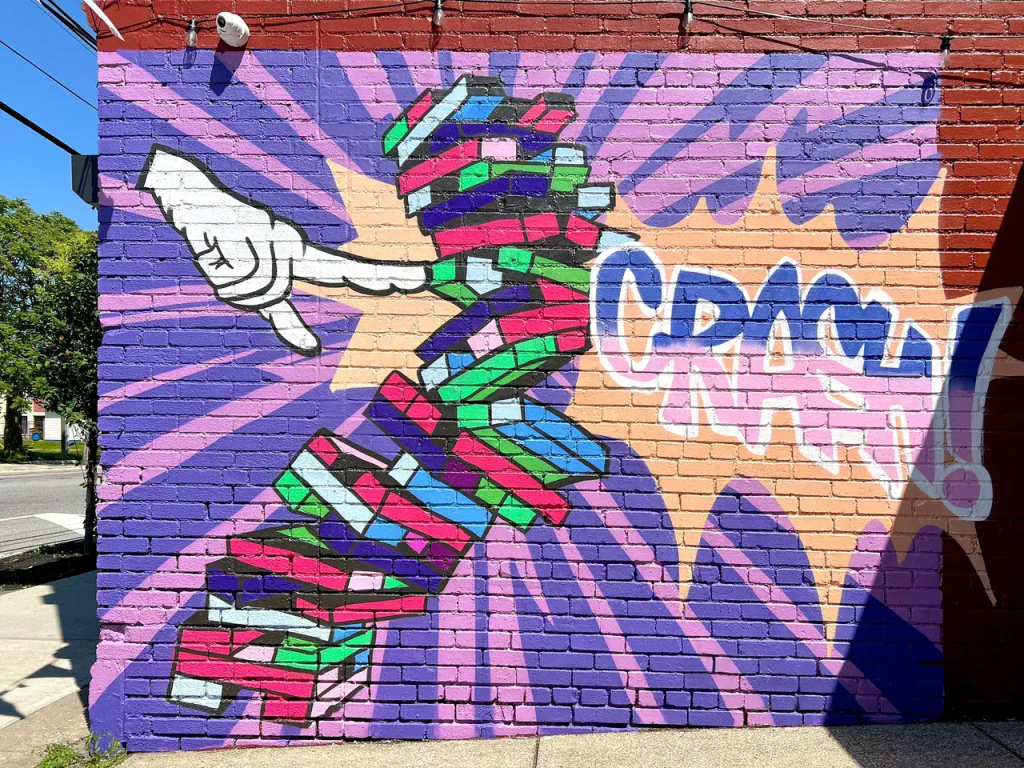
Corporate mural on urban building exterior wall — outdoor brand advertising campaign

By Millie Phillips, Campaign Architect at American Guerrilla Marketing

There is a specific kind of outdoor advertising that stops people on the sidewalk, gets photographed thousands of times, generates press coverage without a media budget, and outlasts every digital banner you will run this quarter. It is called a corporate mural, and it is one of the most misunderstood formats in the marketing mix.

When most people hear “corporate mural,” they picture something painted on a breakroom wall with an inspirational quote about teamwork. That is not what we are talking about. A corporate mural, in the marketing sense, is a large-format outdoor wall painting commissioned by a brand as an advertising asset. It lives on the exterior of a building in a neighborhood where your customers actually spend time. It works in the open air. It generates impressions continuously, from the day it goes up until the day it comes down, with no recurring media spend attached.

This guide is written for marketing directors and brand managers who are evaluating outdoor murals as a campaign tactic. It covers what they are, how they work, what they cost, which brands use them well, and how to plan and execute one properly.


Table of Contents

  20 Minutes Read

What Corporate Murals Are (and Are Not)

A corporate mural is an outdoor brand installation applied to the exterior face of a building or structure, functioning as advertising. The canvas is the city itself. The audience is everyone who passes by, photographs it, or shares it online.

This is fundamentally different from interior office murals, which are design choices made for employee culture, lobby aesthetics, or brand environment. Those serve their purpose. They are simply not the topic of this guide, and they do not reach anyone except the people who already work at or visit the building.

Corporate murals used as marketing assets are placed in neighborhoods where the target audience congregates. They are commissioned with specific campaign objectives: brand awareness, product launch, cultural credibility, earned media generation, or social photography. The brand either leases wall space from a property owner or owns the surface outright. An artist or production team applies the creative. The mural sits there, working passively, for weeks, months, or years.

What makes them different from a standard billboard: they feel like art, not advertising. That distinction is not small. It changes how audiences engage with the format entirely.


Why Corporations Commission Outdoor Murals

Brands do not commission murals because they are charming. They commission them because they perform. Here is why the format earns its place in the media mix:

Longevity vs. Paid Media

A digital campaign has a start date and an end date. When the budget runs out, it stops. A hand-painted mural, once up, continues generating impressions until it is painted over. Many murals in high-traffic urban locations outlast their original campaign window by months or years. The cost-per-impression over a 12 to 24 month lifespan is among the lowest of any outdoor format.

Earned Media and Press Value

A well-executed mural in a cultural neighborhood generates press that a media buyer cannot purchase. Local arts publications, neighborhood blogs, and Instagram photographers document new murals routinely. Brands like Netflix, A24, and Spotify have used mural unveilings as press moments, timing installations to coincide with premieres and campaign launches specifically to capture that coverage.

Social Photography and UGC

Murals are among the most photographed outdoor formats in existence. People photograph billboards when they are funny or shocking. They photograph murals because they are beautiful, because the brand feels authentic in that space, because the image is worth sharing. That user-generated content is real media — distributed across Instagram, TikTok, and Twitter by people who are not on your payroll.

Studies consistently show that consumers trust peer-generated content 2.4x more than brand-created content. A mural that generates organic photography earns the marketing value of influencer posts without the negotiation or disclosure requirements.

Neighborhood Credibility

There is a category of brand that needs to demonstrate cultural relevance, not just awareness. A tech company launching a consumer product, a fashion house expanding into streetwear, a food brand repositioning for a younger audience: these brands need to show up where culture actually lives, not just in paid media channels. A mural in Bushwick or the Arts District in LA signals something that a TV spot cannot.

Brand Authenticity Signal

Hand-painted work in particular carries an authenticity that digital and print formats lack. The visible brushwork, the scale, the permanence — these communicate that a brand was willing to commit to a neighborhood in a real and tangible way. For brands that are trying to close the gap between “corporate” and “cultural,” a commissioned outdoor mural is one of the most direct tools available.


Types of Corporate Murals

Not all corporate murals are the same format. The three main approaches differ in cost, timeline, lifespan, and aesthetic quality.

Hand-Painted Brand Murals

The premium format. Artists apply paint directly to the wall, often working from a brand-approved design with enough creative latitude to make the piece feel authentic rather than mechanical. Hand-painted murals can survive on a well-maintained exterior wall for one to five years or longer. They photograph beautifully, carry the most cultural credibility, and are the format brands like Hermès, Starbucks, and Apple have relied on for flagship outdoor campaigns.

The production timeline for a hand-painted mural varies by size and complexity. A single-story wall panel might take two to five days. A building-side installation in a major metro could take three to six weeks. Artists and their crews often work in stages, sometimes pausing for weather. The process itself becomes a public event — passersby watch the mural develop, which generates additional organic attention.

Vinyl-Applied Brand Murals

Vinyl is a printed graphic adhered directly to the wall surface. It offers photographic-quality output, precise color matching, and faster production timelines than hand-painted work. For brands with complex imagery, detailed product photography, or tight campaign windows, vinyl is often the right call. The lifespan is shorter — typically six months to two years depending on sun exposure and wall surface — and vinyl does not carry the same cultural weight as hand-painted work. But it is a legitimate and widely-used brand mural format.

Large-Format Wheatpaste (Mural-Adjacent)

Wheatpaste is the fastest and most cost-efficient entry point in the mural-adjacent category. Large-format printed panels are applied to approved or permitted surfaces using wheatpaste adhesive, creating the visual impression of a mural without the production time or cost. The lifespan is 2 to 4 weeks in most markets before weather and surface conditions begin to degrade the panels.

Wheatpaste performs well for time-sensitive campaigns: album drops, product launches, film releases, event promotion. Brands that want street-level presence quickly, across multiple locations and markets simultaneously, often rely on wheatpaste as a high-frequency complement to longer-running mural programs.

Format Typical Lifespan Production Timeline Cost Range Best For
Hand-Painted Mural 1 to 5+ years Days to weeks $20,000 to $100,000+ Flagship brand presence, press moments, long-term visibility
Vinyl-Applied Mural 6 months to 2 years 1 to 2 weeks $8,000 to $40,000 Product photography fidelity, faster turnaround, moderate budgets
Wheatpaste (Mural-Adjacent) 2 to 4 weeks 24 to 48 hours From $10,500 (100 posters) Launch campaigns, multi-market activation, time-sensitive coverage

Which Corporate Verticals Use Murals Most

Corporate murals are not exclusive to any single industry, but certain verticals have made the format part of their standard toolkit.

Consumer brands in beauty, personal care, and lifestyle have been among the most aggressive adopters. Glossier built its early brand presence in New York and Los Angeles through mural-first campaigns that generated far more earned media than comparable paid placements. The format matched the brand’s ethos and attracted the exact consumer segment it was targeting.

Tech and platform companies use murals to signal cultural relevance in ways their core digital product cannot. Spotify has deployed murals as part of its Wrapped campaign rollouts, commissioning location-specific installations timed to the annual data-driven campaign. The physical presence in neighborhoods extends the Wrapped conversation beyond social media into the actual streets those listeners walk.

Entertainment and film studios are among the heaviest users. Netflix, A24, and major streaming services have used outdoor murals to promote series premieres, films, and character launches. Apple TV+ commissioned a hand-painted mural for the Severance premiere through Colossal Media. These campaigns generate immediate press pickup because the entertainment press tracks outdoor advertising activations as cultural news.

Fashion and luxury brands use murals to communicate brand values in physical spaces. Hermès has commissioned hand-painted murals in SoHo as an alternative to standard outdoor media. The hand-painted format aligns with the brand’s emphasis on craft and artisanship in a way that a printed billboard does not. Vans, Adidas, and other streetwear brands use murals to maintain credibility in the neighborhoods that actually shape their audience’s taste.

Food and beverage brands, from Coca-Cola to Häagen-Dazs to craft spirits labels, have used murals for both broad-reach campaigns and targeted market activations. The format works particularly well for brands with strong visual identities that translate well to large-scale application.


Corporate Mural Case Studies: What the Best Brands Did and Why It Worked

Glossier: Building a Brand on Sidewalk Photography

Glossier’s early murals in New York City and Los Angeles were not the most expensive or technically impressive outdoor work ever produced. What made them effective was placement and messaging. The brand put simple, bold text murals in SoHo and Silver Lake with copy like “You Look Good” — direct, identity-affirming statements in neighborhoods where the Glossier customer was already spending her weekend. The murals became de facto Instagram backdrops. Organic photography of those walls reached audiences the brand could not have targeted through paid channels. The cost of the mural installations was a fraction of the earned media value generated. Glossier went on to grow to forecast $275 million in retail sales without ever relying heavily on traditional advertising.

Hermès: Hand-Painted as a Luxury Signal

Hermès has commissioned hand-painted murals in Lower Manhattan and SoHo as a deliberate departure from standard OOH formats. The choice is strategic: for a brand whose entire positioning rests on craftsmanship and attention to detail, the visible brushwork of a hand-painted mural communicates those values in a medium that a printed billboard cannot replicate. The murals function less as awareness drivers and more as brand character statements — visible proof that the brand’s commitment to artistry extends beyond its products into its public presence.

Spotify Wrapped: Murals as Campaign Extensions

Spotify’s annual Wrapped campaign is one of the most effective data-driven marketing programs in the industry. The brand has extended the Wrapped moment into physical space through commissioned murals in major cities, using local artists to create installations that reference the year’s data themes. The murals function as press moments timed to the campaign launch, giving music publications and culture writers something tangible to photograph and document. The street presence extends the Wrapped conversation beyond its native digital environment and validates it as a genuine cultural moment rather than a streaming platform promotion.

Netflix: Series Murals as Press Events

Netflix has used hand-painted outdoor murals extensively for series and film promotion, treating the installation itself as a news story. The Stranger Things campaigns in particular generated significant press coverage through well-placed murals in culturally active neighborhoods. Apple TV+ did the same for Severance, working with Colossal Media on a hand-painted mural that circulated widely in entertainment press coverage of the premiere. The formula is repeatable: place a high-quality mural in a neighborhood with a strong press presence, time the installation to a campaign launch, and document the process for additional content.

A24: Murals as Brand Identity

A24 has built an extraordinary brand identity for an independent film studio by treating marketing as creative work, not distribution. Their mural campaigns for films like Midsommar, Hereditary, and Everything Everywhere All at Once have appeared in arts districts in New York, LA, and Chicago. The murals are not simply posters scaled up. They are designed as standalone art objects that happen to promote the film. This approach works because A24’s audience is exactly the kind of person who visits those neighborhoods, photographs murals, and shares them — and because it signals that A24 is a studio that respects its audience’s taste.

Apple: Scale as a Statement

Apple has deployed large-scale murals in support of its Shot on iPhone campaign and multiple Apple TV+ premieres. The brand’s visual identity is strong enough that minimal text or logo treatment is needed. The murals in high-foot-traffic locations in San Francisco, New York, and Los Angeles have generated consistent press coverage and social photography because they are simply well-executed at impressive scale. Apple’s approach demonstrates a principle that applies broadly: corporate murals do not require complex creative to work, but they do require quality production.


Thinking About a Corporate Mural Campaign?

American Guerrilla Marketing commissions hand-painted murals and runs large-format wheatpaste campaigns across major U.S. markets. We handle wall sourcing, artist relationships, approvals, installation, and documentation.


The Corporate Mural ROI Argument

Marketing directors are accustomed to justifying budget allocations with data. Corporate murals can be evaluated the same way. The numbers are frequently compelling.

Cost Per Impression vs. Standard Outdoor

A standard billboard in a major metro runs $3,000 to $15,000 per four-week period depending on market and location. A corporate mural at $30,000 for production and wall lease might generate the same or greater impressions over 12 to 18 months of continuous presence, producing a CPM of under $2 at scale. The up-front cost looks higher than a single billboard cycle. The annualized cost-per-impression is significantly lower.

Earned Media Multiplier

Press coverage, influencer posts, and organic social photography generated by a well-placed mural can multiply the effective reach of the investment by several times the production cost. A mural that costs $25,000 to produce and generates $80,000 in equivalent earned media coverage — a realistic scenario for a launch campaign in a high-visibility arts district neighborhood — has delivered effective media value at a fraction of what a paid campaign achieving similar reach would cost.

Entertainment brands routinely measure mural campaign earned media value in the hundreds of thousands of dollars from a single high-quality installation. Press coverage from a Variety or Deadline piece referencing a Netflix mural installation reaches far more of the target audience than the physical location footprint alone.

Longevity Premium

Most paid media channels charge you by the impression, the click, or the day. When you stop paying, the presence stops. A hand-painted corporate mural that survives on a wall for two years continues generating impressions at zero recurring cost after the initial production and wall lease fee. This longevity premium makes murals one of the few outdoor formats with an investment-like return profile rather than a pure expense profile.

Social Photography as Free Distribution

When consumers photograph a mural and share it organically, they are doing media distribution work for the brand. That content is not subject to ad blockers, platform algorithm suppression of paid content, or the declining click-through rates that affect standard digital formats. It is peer-distributed, trusted, and genuinely interesting to its audience. Brands that design their murals to be photographed — through distinctive aesthetic, unexpected scale, or clever placement relative to natural photography compositions — see organic distribution that dramatically extends the campaign’s effective reach.


How to Plan a Corporate Mural Campaign

Executing a corporate mural campaign involves more moving parts than purchasing standard outdoor media. Here is what the process actually looks like.

Wall Sourcing and Access

The wall is the media unit. Finding and securing the right wall requires either a media buyer with an existing network of property relationships or the ability to identify and negotiate with property owners directly. In well-established mural markets like New York, Los Angeles, Chicago, and Miami, there are owners who regularly lease wall space for brand murals. They understand the format, have approved the process with their building management, and have standard lease terms.

Outside those established markets, sourcing often means identifying appropriate building faces in target neighborhoods and initiating direct conversations with owners. Property owners generally respond well to mural proposals for several reasons: the mural often beautifies a blank wall, the brand association can add cachet to the building, and the lease income is passive revenue. Property conditions, legal permissions, and any required building permits vary by market and must be verified before production begins.

Artist Selection

The artist selection decision is more strategic than it appears. A locally based artist brings neighborhood credibility, existing relationships within the local arts community, and the kind of authentic presence that reduces the risk of the campaign feeling imported or corporate. Their work resonates specifically with the people who live and work in that neighborhood.

A nationally recognized artist brings a different kind of value: their name itself generates press coverage, and their following may amplify the campaign through their own channels. This approach costs more and requires more advance planning, but for brands where the artist collaboration story is part of the campaign narrative, it is often worth it.

Neither approach is universally correct. The right choice depends on the brand’s objectives, the target market’s character, and whether the campaign is primarily local or nationally distributed through press and social media.

Brief Development

Artists work best when they are given enough creative latitude to make something genuinely interesting. A brief that specifies every element down to color palette, exact logo placement, and required tagline will produce mechanical work. Mechanical work does not generate organic photography or press coverage.

The most effective corporate mural briefs establish brand parameters clearly — color palette guidance, content restrictions, required brand identification, and campaign themes — and then give the artist room to interpret. The brand is buying access to the artist’s creative capabilities, not overriding them. The best murals are collaborations, not executions.

Approval Process

Corporate mural campaigns involve multiple approval layers. Legal needs to review the artist contract, property lease, and any co-branded elements. Brand needs to sign off on the final design before production begins. The property owner needs to approve the design and has final say over what appears on their building. In some municipalities, permits are required for large-format work.

Build approval timelines into the project schedule realistically. A campaign that compresses the approval process runs the risk of production delays that can push a mural installation past a campaign launch window.

Installation Timeline

Hand-painted murals take days to weeks depending on size and complexity. A two-story wall with moderate complexity typically requires five to ten working days of on-site painting. A building-side installation can take three to six weeks. Weather delays are real, particularly in markets with variable spring and fall conditions.

Vinyl-applied murals require surface preparation, printing, and installation. The physical install of a vinyl mural is typically faster than hand-painted work once the material is produced, often completing in one to three days. Production of the vinyl itself adds one to two weeks to the timeline.

Wheatpaste is the fastest format in the category. A full multi-location wheatpaste campaign can be executed in 24 to 48 hours once materials are printed. This makes it uniquely suited to campaigns that require rapid market presence.

Documentation

Documentation is not optional. GPS-tagged photography of each mural installation before, during, and after completion is standard practice for corporate campaigns. The photography serves multiple functions: campaign reporting and proof-of-performance, content for brand social channels, press assets, and condition monitoring for ongoing maintenance. Professional documentation of a mural installation is typically a built-in component of any reputable execution partner’s delivery.


Where Corporate Murals Perform Best

Location is the most important creative decision in any outdoor campaign. For corporate murals specifically, the type of location determines which objective the mural primarily serves.

Arts Districts: Social Value and Press Performance

Wynwood, Miami is one of the most photographed neighborhoods in the United States. The district’s identity is built on street art, and major brands have placed murals there for decades. A Wynwood mural reaches a national and international audience through tourism and social photography in addition to the local market.

Bushwick, Brooklyn operates as the street art capital of New York. The Bushwick Collective has made the neighborhood a pilgrimage destination for urban art photography. Brands commissioning murals there benefit from association with an established arts ecosystem and significant press coverage.

Arts District, Los Angeles has become the primary mural destination for brands targeting the West Coast. The neighborhood attracts creative industry professionals, entertainment workers, and the kind of culturally influential social media users whose posts travel further than their follower counts suggest.

Pilsen, Chicago carries one of the strongest mural traditions in any American city. The neighborhood’s murals are routinely documented in Chicago arts coverage. For brands targeting Midwest markets or the Chicago metro specifically, Pilsen offers strong earned media potential.

Mission District, San Francisco has a decades-long mural history with deep community roots. For tech and consumer brands targeting the Bay Area, a well-executed Mission mural generates both local press and the kind of social documentation that tech-industry social networks distribute effectively.

High-Traffic Commercial Corridors: Broad Impressions

For campaigns where raw impressions and brand awareness are the primary objective rather than social photography and press, high-foot-traffic commercial corridors in major metros outperform arts districts. A mural on a major artery in Manhattan, on a heavily trafficked block in downtown Chicago, or adjacent to a major commuter hub generates continuous impressions from a population broader than the arts-district tourist audience. The earned media value is typically lower, but the raw impression volume is higher.


What a Corporate Mural Campaign Costs

Cost depends on format, market, size, artist, and campaign duration. Here are realistic ranges based on current market conditions.

Format Market Wall Size Estimated Cost Range What’s Included
Hand-Painted Mural New York, LA, Chicago 1,000 to 2,000 sq ft $25,000 to $75,000 Wall lease, artist fee, materials, documentation
Hand-Painted Mural Secondary markets 500 to 1,500 sq ft $15,000 to $40,000 Wall lease, artist fee, materials, documentation
Hand-Painted (Premium/Building-Side) Major metro flagship 3,000+ sq ft $60,000 to $150,000+ Wall lease, senior artist team, scaffolding, full documentation
Vinyl-Applied Mural Any major market 500 to 2,000 sq ft $8,000 to $40,000 Print production, install, wall lease, documentation
Wheatpaste (100 posters, 48×72) New York Multiple locations From $10,500 Print, paste, multi-location installation, GPS documentation
Wheatpaste (200 posters, 48×72) New York Multiple locations From $13,500 Print, paste, multi-location installation, GPS documentation

Custom-quoted projects — particularly hand-painted murals in premium markets with nationally known artists or complex multi-story designs — can range significantly higher. Wall lease costs vary substantially by neighborhood desirability and wall visibility. Artist fees vary by reputation, portfolio, and demand. The ranges above reflect typical projects rather than outliers in either direction.

At $10,500 for a 100-poster wheatpaste campaign across multiple New York locations, the entry-level cost of street-level mural-adjacent presence is substantially lower than most digital display campaigns generating comparable local impressions.

American Guerrilla Marketing’s Approach to Corporate Mural Campaigns

American Guerrilla Marketing commissions outdoor murals and executes large-format wheatpaste campaigns across major U.S. markets. We work with corporate clients from brief development through installation and documentation, handling the production relationships, property access, permitting considerations, and on-site execution that most marketing teams do not have the infrastructure to manage internally.

Our mural advertising service covers hand-painted mural campaigns for brands that want permanent or semi-permanent outdoor presence with genuine cultural authenticity. We maintain working relationships with artists across the markets where corporate murals perform best, and we can match brand needs to artist capabilities without the process overhead of managing those relationships from scratch.

Our wheatpaste campaign service is the fastest path to multi-location outdoor presence in the mural-adjacent format. Starting at $10,500 for 100 posters in markets like New York, wheatpaste campaigns provide brand visibility at street level within 24 to 48 hours of launch, making them well-suited to product launches, premiere campaigns, and event activation windows.

Both formats are documented with GPS-tagged photography, condition reporting, and post-campaign assets ready for press and social distribution.


Frequently Asked Questions: Corporate Murals

What is a corporate mural?

A corporate mural is a large-format outdoor wall painting or installation commissioned by a brand as a marketing asset. It functions as outdoor advertising, generating impressions, earned media, and social photography from the exterior of a building in a location where the target audience is present. It is distinct from interior office murals, which serve an entirely different purpose and audience.

How much do corporate murals cost?

Hand-painted corporate murals typically range from $20,000 to $100,000+ depending on size, market, artist tier, and campaign duration. Vinyl-applied murals run $8,000 to $40,000. Large-format wheatpaste campaigns, which are a mural-adjacent format, start at $10,500 for 100 posters in markets like New York and scale from there based on volume and geography.

How long do corporate murals last?

Hand-painted murals can last one to five or more years depending on weather exposure, wall surface condition, and whether the property owner repaints for a subsequent advertiser. Vinyl murals typically hold for six months to two years. Wheatpaste is the shortest format at roughly two to four weeks in most markets before weather and surface conditions begin to degrade the panels.

Where do corporate murals perform best?

For social media value and press coverage, arts districts consistently outperform: Wynwood in Miami, Bushwick in Brooklyn, the Arts District in Los Angeles, Pilsen in Chicago, and the Mission District in San Francisco are the premier locations for earned media generation. For broad impressions from raw foot traffic, high-visibility commercial corridors in major metros deliver more consistent volume from a broader demographic range.

What is the difference between a hand-painted mural and a vinyl mural?

Hand-painted murals are applied directly to the wall by artists using paint. They carry more cultural authenticity, last longer, and generate stronger press and social response in arts-oriented contexts. Vinyl murals are printed graphics adhered to the wall surface. They offer photographic-quality image reproduction, faster production timelines, and lower costs, but carry less of the handcrafted character that drives organic photography and press interest. Both are legitimate brand mural formats; the right choice depends on the campaign’s objectives, budget, and timeline.

Do corporate murals generate earned media?

Yes, particularly in neighborhoods with established arts press coverage and a culture of mural documentation. A well-executed mural in Wynwood or Bushwick regularly generates pick-up from local arts publications, neighborhood blogs, and influential social accounts. Entertainment murals timed to series and film launches are frequently covered in industry trade press. The earned media value from a single high-quality installation in the right location can exceed the production cost of the mural itself.

What types of brands use outdoor corporate murals?

Consumer brands across fashion, beauty, food and beverage, entertainment, and technology are the heaviest users. Specific examples include Glossier, Hermès, Spotify, Netflix, Apple, A24, Starbucks, Coca-Cola, Häagen-Dazs, Adidas, Vans, Chase, and hundreds of others ranging from regional challengers to Fortune 500 companies. The format is available to any brand with a strong visual identity and a target audience that spends time in urban environments.

How do I find wall space for a corporate mural?

In established mural markets, media buyers and outdoor advertising agencies maintain networks of property owners who regularly lease wall space for brand murals. American Guerrilla Marketing handles wall sourcing as part of the campaign execution process. Direct outreach to property owners is also viable in less established markets, though it requires more lead time and negotiation. Wall leases are structured contracts covering the duration, permitted use, and compensation terms that protect both the brand and the property owner.

Ready to commission a corporate mural or launch a wheatpaste campaign? Contact American Guerrilla Marketing at (646) 776-2770 or through the contact form to discuss your campaign objectives.

Ready to Run Your Campaign?

Call us or email us. We’ll tell you exactly what we can do in your market and what it costs.

American Guerrilla Marketing — Los Angeles

★★★★★ 5.0 · 34 Google reviews

Street-level campaigns in Los Angeles and nationwide. Wheatpasting, LED trucks, street teams, and more.

(646) 776-2770