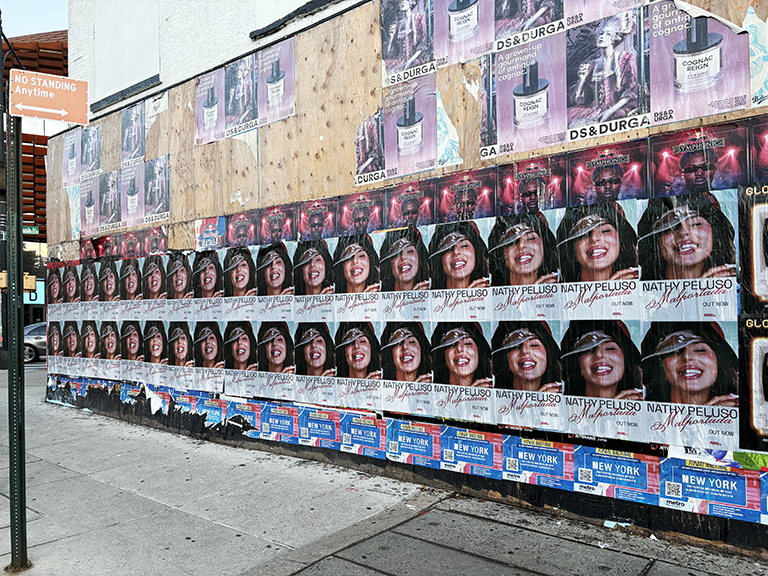
Los Angeles has a street advertising culture unlike any other American city. The combination of entertainment industry promotional activity, a thriving independent art scene, and a population that treats visual communication as a genuine part of the urban experience means wheatpaste poster campaigns in LA land differently than in most markets. A well-placed campaign in Silver Lake or the DTLA Arts District doesn’t just reach people — it becomes part of the neighborhood’s visual conversation for weeks.
American Guerrilla Marketing executes wheatpaste campaigns across Los Angeles with a focus on legal placements, precise neighborhood targeting, and GPS-tagged documentation so every client has proof of exactly what ran and where. Our LA crew covers Silver Lake, Echo Park, Downtown, Venice, Culver City, West Hollywood, Fairfax, and any neighborhood combination that fits the campaign’s audience and objectives.
What Wheatpasting Is and How It Works
Wheatpasting is the application of large-format paper posters to wall surfaces using wheat paste adhesive — a cooked flour-and-water solution that bonds paper to exterior walls with significant durability. Applied correctly, a wheatpasted poster becomes flush with the wall surface and holds through wind, light rain, and foot traffic for two to four weeks.
The format has been used in entertainment marketing, political campaigns, and brand advertising for over a century. What makes it valuable in 2026 is the same thing that made it valuable in 1980: it’s physical, it’s unexpected, it’s impossible to scroll past, and it creates a form of presence that digital advertising simply cannot replicate. In a city as visually sophisticated as Los Angeles, a striking wheatpaste campaign reads as a genuine creative statement rather than just an advertisement.
Our LA campaigns run overnight, with crews installing during the late-night and early-morning hours to ensure placements are fresh and complete for the morning commute — the highest-volume pedestrian window in most neighborhoods.
Los Angeles Neighborhoods: Where to Post and Why
The most critical decision in any LA wheatpaste campaign is neighborhood selection. Los Angeles is not a single market — it’s a constellation of distinct communities, each with its own demographic character, cultural associations, and foot traffic patterns.
Silver Lake
Silver Lake is the heartbeat of LA’s creative, music, and independent cultural community. The neighborhood’s main corridors — Sunset Boulevard, Silver Lake Boulevard, and the streets around Intelligentsia and the Reservoir — concentrate the exact audience that entertainment, music, fashion, and lifestyle brands most want to reach. Organic photography rates are extremely high here; striking wheatpaste campaigns in Silver Lake consistently generate significant earned social media amplification.
Echo Park
Adjacent to Silver Lake, Echo Park has a gritty independent character and a dense residential population skewing young and creative. The Sunset corridor through Echo Park offers excellent posting inventory alongside high foot traffic and a culturally engaged audience. For campaigns targeting the music scene, DIY culture, and authenticity-seeking consumers, Echo Park is a priority zone.
Downtown LA Arts District
The DTLA Arts District has become the city’s premier hub for fashion, media, tech, and creative professional audiences. Brands like Nike, Supreme, and major entertainment companies run regular street campaigns in the Arts District because its foot traffic uniquely mixes the tastemaker community that shapes broader cultural conversation. Wall inventory here includes some of the highest-quality and most-photographed surfaces in the city.
Venice and Abbot Kinney
Venice and the Abbot Kinney corridor reach LA’s health, wellness, lifestyle, and tech community in a visually rich environment. The area’s combination of murals, independent retail, and steady foot traffic of financially established pedestrians makes it ideal for campaigns in wellness, outdoor lifestyle, DTC consumer products, and premium entertainment. Venice is also extremely high in social media photography activity, which generates organic campaign amplification.
Culver City
Culver City is where LA’s entertainment and streaming industry is headquartered. For campaigns targeting entertainment industry decision-makers, studio and production professionals, or tech workers, Culver City offers a concentration of the right audience in a walkable, commercially active environment.
West Hollywood
WeHo’s Sunset Strip and its surrounding blocks concentrate nightlife brands, entertainment, and LGBTQ+ community organizations. For campaigns in entertainment, nightlife, fashion, and LGBTQ+ marketing, West Hollywood is a primary zone with consistent foot traffic and high attention to street-level advertising.
Fairfax and Melrose
The Fairfax and Melrose corridor is where streetwear, sneaker culture, and youth fashion live in LA. For brands in these categories, the corridor is mandatory — the audience is exactly right, the foot traffic is consistent, and the cultural context makes a wheatpaste campaign feel native to the environment rather than imposed on it.
Poster Formats for Los Angeles Wheatpaste Campaigns
Format selection affects visual impact, installation efficiency, and cost. Our LA campaigns use several standard formats:
24×36 Single Sheet
The most commonly used format for neighborhood flyposting campaigns. Strikes the right balance between visual presence and installation speed. For campaigns prioritizing coverage volume — many locations across multiple neighborhoods — 24×36 is typically the right call.
27×40 Single Sheet
The entertainment industry standard, used by film and streaming campaigns for decades. Slightly more visual presence than 24×36 with comparable installation time. Ideal for entertainment-adjacent campaigns where the format itself signals alignment with the city’s poster culture.
Multi-Panel Snipe
Multiple sheets assembled on-wall to create an oversized installation, often 4 to 8 feet tall or wider than a standard doorway. Snipe configurations are used for high-impact anchor placements on major walls at key intersections. They photograph well, dominate the visual field, and create the kind of memorable installation that generates earned media coverage and extensive social photography. For city takeover campaigns, a mix of standard single-sheet volume posters plus anchor snipe placements at the best walls in each neighborhood produces the strongest results.
Campaign Planning: From Brief to Installation
Our LA wheatpaste campaigns follow a structured planning process that ensures every installation meets quality and coverage standards.
Campaign Brief
We start with a brief covering campaign objectives, target audience, timing requirements, creative assets, and budget. The brief lets us recommend the right neighborhood mix, volume, and format for the specific campaign goals.
Location Scouting
Our team scouts the planned neighborhoods before every campaign, identifying the best available walls, confirming location status, and mapping the installation sequence for maximum overnight efficiency. Scouting also lets us identify any locations that are currently occupied by high-quality competing campaigns that might visually conflict with the new installation.
Print Production
We coordinate with print partners who produce flyposting-ready materials — papers and inks designed for exterior application and wheat paste adhesion. Print turnaround is typically two to three business days for standard formats and up to five days for large-format snipe configurations.
Installation
Overnight installation, simultaneous across all target neighborhoods. Crews document every placement at time of installation with GPS-tagged photographs and timestamps. We complete installation before 6 AM to ensure the campaign is fresh for the morning commute.
Post-Campaign Report
Every client receives a complete post-campaign report organized by neighborhood, with location addresses, installation timestamps, and photographs of each placement. For campaigns with multiple stakeholders or agency reporting requirements, we format reports to match your internal templates.
Campaign Types That Work in Los Angeles
Different campaign types call for different neighborhood mixes, volume levels, and creative approaches in the Los Angeles market. Here is how we approach the most common campaign categories:
Streaming and Film Launch Campaigns
Entertainment launch campaigns are the bread and butter of LA wheatpasting. Netflix, Amazon, Apple TV+, and every major studio and streaming platform run street campaigns in LA as a standard component of their marketing mix for major titles. The entertainment industry’s concentration in LA means that a campaign here reaches not just consumers but the press, the influencers, and the industry executives whose conversation determines which launches become cultural events.
For streaming campaigns, we target Silver Lake and Echo Park for the creative media community, Culver City for the streaming industry itself, and the Arts District for the broader cultural tastemaker audience. Large-format anchor placements at the best walls in each neighborhood are paired with volume placements that saturate the pedestrian corridors between the anchor sites.
Music and Album Campaigns
LA’s music industry — concentrated in Silver Lake, Hollywood, and the Cahuenga corridor — makes it one of the top three markets for music-related wheatpaste campaigns alongside New York and Chicago. For album releases, tour announcements, and festival marketing, LA wheatpaste campaigns target the neighborhoods where music industry professionals and engaged music fans live and work.
Music campaigns in LA often combine standard neighborhood saturation with targeted placements near specific venues — the Wiltern, the Troubadour, the Greek Theatre, the Hollywood Bowl — to reach audiences already in a live music attendance mindset. Concert-specific campaigns typically launch two to four weeks before the show date to build sustained awareness through the ticket consideration window.
Streetwear and Fashion Brand Campaigns
The Fairfax and Melrose corridor has become one of the most active streetwear wheatpaste zones in the country. Supreme, KITH, Off-White, and the full ecosystem of independent and boutique streetwear labels treat Fairfax wall presence as a legitimate brand signal. For any brand in streetwear, sneakers, skate, or youth fashion, a Fairfax area campaign creates the street credibility that digital-only launches can’t generate in the same community.
We maintain active posting inventory in the Fairfax corridor alongside the Arts District, which has developed its own fashion and streetwear culture as the neighborhood’s brand retail presence has grown. For campaigns targeting both markets, a Fairfax and Arts District simultaneous launch covers the full spectrum of LA’s streetwear community geography.
DTC and Consumer Product Campaigns
Direct-to-consumer brands entering the California market use LA wheatpaste campaigns to establish physical presence before or alongside digital launch campaigns. A DTC brand that appears on the walls of Venice and Silver Lake before launching paid social advertising in California has already created brand recognition in the neighborhoods where its likely early adopters live — which makes subsequent digital ads more effective because the brand isn’t entirely new when the ads appear.
Pricing Structure for Los Angeles Wheatpaste Campaigns
Campaign costs in Los Angeles are structured around the four primary cost variables: neighborhood count, poster volume, format mix, and campaign duration. Here is how these variables interact:
Neighborhood count affects scouting time, crew routing, and the logistics overhead of covering multiple distinct geographic zones. A single-neighborhood campaign in Silver Lake has lower overhead per placement than a four-neighborhood campaign covering Silver Lake, Venice, Culver City, and the Arts District simultaneously.
Poster volume within each neighborhood determines saturation density. We recommend minimum volumes for each neighborhood based on its geographic footprint — below those minimums, the campaign reads as isolated placements rather than genuine market presence. Volume above the minimum creates increasing saturation return up to the point where the neighborhood’s available legal posting inventory is covered.
Format mix affects both cost and visual impact. Standard single-sheet formats at 24×36 or 27×40 are the most cost-efficient per impression. Multi-panel snipe configurations at anchor walls cost more in materials and installation time but generate disproportionate visual impact and social photography. Most campaigns use a mix of both.
Campaign duration typically refers to how long the materials are expected to hold — standard outdoor durability is two to four weeks — but for some campaigns additional installation visits during the campaign window to refresh faded or covered placements extend the effective duration at an additional cost.
Earned Media: LA Campaigns That Get Photographed and Shared
The organic social media documentation that LA wheatpaste campaigns generate is a measurable campaign deliverable in itself. Our location selection process factors in each wall’s photography viability — clear sightlines, good natural light in the morning, placement angles that create compelling smartphone images — to maximize the earned media potential of every placement.
For campaigns with specific social amplification objectives, we provide campaign photography immediately after installation, formatted for your social media use. Coordinating the campaign launch with artist or brand social posts — “posters are going up in LA tonight” style announcements — can significantly amplify the organic documentation window by directing followers to look for and photograph the campaign in their neighborhoods.
LA Wheatpaste Campaign Timeline and Process
A standard Los Angeles wheatpaste campaign follows a defined process from brief to installation. Understanding this timeline helps clients plan campaign launches accurately and manage their internal approval processes against real execution lead times.
Week One: Brief, Planning, and Print
The campaign brief covers objectives, target audience, neighborhood targets, timeline, and creative assets. Once the brief is complete, our team builds the location plan and installation sequence, confirms creative compatibility with outdoor specifications, and initiates print production. Standard print turnaround for LA campaigns is two to three business days for standard single-sheet formats. Multi-panel snipe configurations require up to five business days for production and finishing.
Day Before Installation: Scouting
Our LA team scouts all target neighborhoods 24 to 48 hours before the overnight installation. Scouting confirms that every planned location is available, maps the optimal installation sequence for each crew, and identifies any new high-value locations that weren’t visible in the initial planning phase. We communicate the final location plan and any changes from the scouted conditions to the client before installation.
Installation Night
Crews deploy to their assigned neighborhoods at midnight. Split-crew operations in multi-neighborhood campaigns allow all zones to be covered simultaneously rather than sequentially. Every placement is photographed with GPS and timestamp at time of installation. Crew leads report completion by neighborhood to a central coordinator throughout the night. Installation is complete before 5 AM to ensure the campaign is fresh for the morning commute.
Morning After: Documentation Delivery
Campaign documentation — GPS-tagged photos organized by neighborhood and location address — is delivered to the client by end of business on the day after installation. For clients with agency reporting deadlines, we expedite documentation delivery to match reporting requirements.
Why Work with AGM for Los Angeles Campaigns
Our team is headquartered in Brooklyn, NY, with established crew relationships and location networks across 50+ U.S. markets including Los Angeles. Here is what distinguishes our LA campaign execution from alternatives:
- Established legal location network: We maintain active agreements with wall owners across Silver Lake, Echo Park, DTLA, Venice, Culver City, and other key LA neighborhoods. Every placement we execute is on a permitted surface — no trespassing, no property disputes, no liability exposure for clients.
- Entertainment industry experience: LA is one of the two primary markets for streaming platform, film, and music campaign execution. We have extensive experience with entertainment industry timelines, approval processes, and documentation requirements.
- GPS documentation standard: Every placement in every LA campaign receives GPS-tagged photography at installation time, not reconstructed afterward. Documentation is a built-in deliverable, not an option.
- Multi-neighborhood coordination: Our split-crew operational model allows simultaneous coverage of multiple LA neighborhoods in a single overnight window — the city takeover effect that sequential installation can’t achieve.
Integrating Wheatpaste with Broader LA Street Campaigns
Wheatpaste campaigns generate their best results when paired with complementary street-level tactics:
- Street team activations in Silver Lake, DTLA, and Venice the morning after installation to extend the campaign’s reach through direct audience engagement
- Sidewalk stencil campaigns adding horizontal surface presence in the same neighborhoods as the poster campaign
- Mobile LED billboard trucks routing through key neighborhoods on campaign launch day for an additional moving-media layer
- Large-format building murals and outdoor installations at major intersections to anchor the campaign visually in each neighborhood zone
Frequently Asked Questions
How does wheatpasting work in Los Angeles?
We apply wheat paste adhesive to permitted wall surfaces and press large-format posters onto the paste. Once cured, the posters bond to the surface and hold for two to four weeks outdoors. Our LA crews install overnight for maximum morning impact.
Which LA neighborhoods are best for wheatpaste campaigns?
Silver Lake, Echo Park, DTLA Arts District, Venice, Culver City, West Hollywood, and Fairfax/Melrose are the primary zones. Each reaches a distinct audience demographic. We recommend a neighborhood mix based on your target audience profile.
Is wheatpaste advertising legal in Los Angeles?
Legal wheatpasting requires property owner permission. AGM operates exclusively on permitted locations in LA — walls where we have active agreements with property owners. We never install on surfaces without explicit authorization.
What does a wheatpaste campaign in LA cost?
Single-neighborhood campaigns start around $2,500 to $5,000. Multi-neighborhood city takeover campaigns run $8,000 to $25,000 depending on volume and format. We provide itemized quotes for every project after a brief campaign brief.
How long do wheatpaste posters last in LA?
Most properly applied wheat paste installations hold for two to four weeks in LA’s climate. Heat and direct sun can accelerate fading, but adhesion is typically excellent in LA’s dry conditions.
Can I see my campaign in real time?
We provide GPS-tagged photo documentation of every placement with timestamps. You can review exact locations and installation times in your post-campaign report. For clients who want to visit placements in person, we provide a location list with addresses.