July 6, 2026

Street Advertising Sidewalk Stencil Advertising

Sidewalk Chalk Advertising: What It Is, What It Costs, and Who Uses It

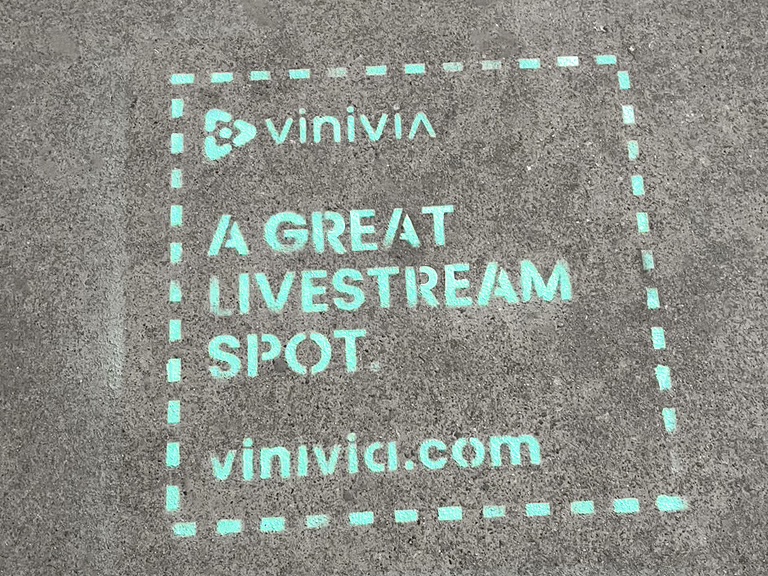
Sidewalk chalk advertising on urban pavement — brand stencil campaign

By Millie Phillips, Campaign Architect at American Guerrilla Marketing | Updated July 2026


Table of Contents

  18 Minutes Read

What Is Sidewalk Chalk Advertising?

Sidewalk chalk advertising is the commercial use of chalk-based media on pavement surfaces to promote a brand, event, product, or message. It ranges from simple hand-lettered announcements drawn by a local business to fully produced, multi-location stencil campaigns run by national brands across dozens of cities.

As an advertising format, chalk sits in the outdoor media category alongside wild posting, street murals, and ambient signage. What makes it distinct is the combination of three properties almost no other format can claim: it reaches people at street level where they’re already looking, it requires no permits in most cities when applied correctly, and it disappears on its own once the job is done.

The commercial practice of chalk street advertising grew out of guerrilla marketing playbooks in the early 2000s, when street teams started using water-soluble chalk spray and stencils to place brand logos near concerts, college campuses, and retail corridors. Today, it’s a standard tactic for film studios, CPG brands, alcohol labels, footwear companies, and event producers who want street-level presence without the permanence of paint or the cost of outdoor media buys.

Street-level sidewalk chalk impressions in a high-foot-traffic urban corridor can deliver 10,000 to 50,000+ daily exposures per placement at a fraction of the cost of a single billboard face.

The term “sidewalk chalk advertising” is often used interchangeably with chalk stencil advertising, pavement chalk advertising, chalk street advertising, and sidewalk chalk marketing. They all refer to the same category: brand messaging applied to public pavement using water-soluble chalk or chalk-based spray.


Types of Sidewalk Chalk Advertising

Not all chalk campaigns look or function the same way. There are three main formats, each suited to different budgets, scales, and objectives.

1. Chalk Stencil Campaigns (Professional and Systematic)

Chalk stencil campaigns use custom-cut stencils and water-soluble chalk spray to reproduce a brand’s logo, tagline, URL, or graphic at consistent quality across multiple locations. A street team covers a predetermined route, applying the same image at intervals calculated for maximum exposure.

This is the format most national brands use. It’s repeatable, scalable, and quality-controlled. A single stencil can be applied dozens or hundreds of times in a single day, blanketing a neighborhood, campus, or event perimeter with a consistent impression. The resulting look is clean and branded, not hand-made.

Professional chalk stencil campaigns are what agencies like American Guerrilla Marketing run for clients in NYC, LA, Chicago, Miami, and Austin. The stencil is typically 18 inches to 3 feet across, applied at pedestrian eye-drop level (meaning where eyes travel when walking), with placement density adjusted for foot traffic and geography.

2. Hand-Drawn Chalk Art (Event Activations and Pop-Ups)

Freehand chalk art involves trained street artists creating original, large-scale designs directly on pavement without a stencil template. This format is common at brand activations, street festivals, retail pop-ups, and product launches where the act of creation is part of the experience.

The chalk art becomes a live event. Passersby stop, watch, photograph, and share. The resulting content lands on social feeds with a reach that often exceeds the physical location’s audience. This format costs more per placement than stencil work because it requires skilled artists and more time, but the experiential value is higher and the shareability is much greater.

Hand-drawn chalk art works best when the visual is dramatic enough to stop foot traffic and when the brand has a social angle to promote. Film premieres, sneaker drops, and album releases are natural fits.

3. Chalk-Based Temporary Decals and Water-Soluble Spray

A third category is chalk-based temporary decals and spray-on applications that go down like paint but wash away like chalk. These include peel-and-stick chalk decals for indoor surfaces, water-soluble chalk spray applied through custom stencils or freehand, and eco chalk products formulated for longer outdoor life (up to four weeks in dry weather).

This format is most common for retail activations, trade shows, and interior brand experiences where permanent adhesives aren’t allowed and chalk dust would be impractical.


Why Brands Choose Chalk Over Permanent Formats

Chalk isn’t a compromise format. Brands that use it choose it intentionally, for specific reasons that permanent paint or vinyl can’t satisfy.

No Permanent Surface Impact

Chalk doesn’t damage concrete, asphalt, or stone. It bonds to the surface texture but never penetrates the material. When rain hits it, the chalk breaks down and rinses away. When it’s dry, foot traffic gradually wears it down. Property owners, landlords, and venues that would never approve paint or adhesive decals often approve chalk, because there’s nothing to restore after the campaign ends.

For brands that want placement on privately owned plazas, shopping centers, transit hubs, or university walkways, chalk is the one format that gets a yes when everything else gets a no.

Preferred for Events and Festivals

Festivals, outdoor markets, and community events run on temporary infrastructure. Everything goes up fast and comes down fast. Chalk fits that rhythm perfectly. A festival brand activation team can arrive the morning of an event, apply chalk graphics across the entrance and interior pathways, and leave nothing behind when the event ends.

This is not a minor operational advantage. Events that require vendors and partners to restore surfaces to original condition make permanent signage expensive and complicated. Chalk eliminates that friction entirely.

Lower Regulatory Friction in Most Cities

Chalk applied to public sidewalks with water-soluble products is treated differently from graffiti or permanent signage in most U.S. cities. Because it washes away naturally, chalk does not permanently alter public property. Courts and city agencies in New York, Los Angeles, Chicago, and Austin have generally treated water-soluble chalk as temporary expression, not vandalism.

That said, chalk campaigns on public property are not permit-free by default everywhere. Cities with specific ordinances, business improvement districts with their own rules, and transit authorities all have their own policies. A professional agency will know which zones are open and which require coordination. DIY chalk campaigns that ignore local rules can still result in fines or cleanup orders, especially in business districts with active code enforcement.

Weather Self-Removal Cuts Cleanup Costs

With permanent advertising, the campaign’s end requires active removal: power washing paint, peeling vinyl, taking down banners. With chalk, the weather does the work. In cities with regular rainfall, a chalk campaign from a Thursday placement will typically be significantly faded or gone by the following week with no action required by the brand.

This is a real budget line that brands account for. In markets where cleanup labor costs $50 to $150 per location, a 50-location campaign might carry $5,000 to $7,500 in removal costs. Chalk campaigns carry $0 in removal costs.

Water-soluble chalk spray begins to fade after the first significant rain (0.25 inches or more) and is typically unreadable within 7 to 14 days in most U.S. urban markets.

Who Uses Sidewalk Chalk Advertising

Sidewalk chalk advertising is used by a wider range of brands and organizations than most marketing managers expect. Here’s the breakdown by category.

Entertainment and Film Studios

Film studios and music labels are among the heaviest users of sidewalk chalk advertising in major cities. A movie release in NYC might involve chalk stencil placements across 200+ locations in SoHo, the Village, Brooklyn, and Times Square adjacency zones, all timed to drop within 48 hours of a trailer release or premiere date. The visual language of the street creates credibility that digital advertising can’t buy.

CPG and Beverage Brands

Consumer packaged goods brands, especially alcohol, energy drinks, and food brands, use chalk campaigns around retail clusters. The tactic drives recall at the point close to purchase: a chalk impression of a new seasonal beer three blocks from a bar district primes the customer before they walk in the door. Brands like Anheuser-Busch, Red Bull, and various spirits labels have used street chalk campaigns for product launches and seasonal promotions.

Footwear and Apparel

Sneaker and streetwear brands were early adopters of chalk advertising because the target customer lives on the street. A chalk campaign around a sneaker boutique’s grand opening or a limited-edition drop announcement reaches exactly the right audience in exactly the right context. Nike, Adidas, and challenger brands have all run chalk programs as part of broader launch strategies.

College Campuses and Educational Institutions

Universities are among the best environments for chalk advertising: high foot traffic, concentrated audience, and outdoor walking surfaces everywhere. Orientation programs, student organizations, and campus event organizers all use chalk to drive awareness. Brands targeting 18-to-24-year-olds often run chalk campaigns timed to back-to-school and spring semester on campuses in college towns and urban universities.

Retail and Commercial Real Estate

New retail openings, pop-up shops, and shopping center traffic programs use chalk to direct foot traffic and announce arrivals. A new restaurant can chalk a directional arrow and menu preview on the sidewalk outside the entrance for opening week. A commercial real estate leasing team can mark wayfinding arrows from a subway exit to a property tour location.

Event Organizers and Nonprofits

5K runs, community festivals, charity events, and awareness campaigns all use chalk for wayfinding, sponsor recognition, and messaging. Nonprofits value chalk’s low cost and the fact that nothing is left behind for property owners to deal with. It’s also a format that reads as grassroots and genuine, which fits nonprofit brand voice better than polished outdoor media.


Design That Works for Chalk

Chalk is not forgiving of complicated design. The medium has physical constraints that require specific design decisions if the campaign is going to land visually.

Bold, High-Contrast Graphics

Chalk on pavement has inherently lower contrast than print on paper or digital on screen. A design with thin lines, small text, or complex gradients will read poorly on a sidewalk, especially under afternoon glare or artificial lighting. The most effective chalk designs are built on bold shapes, thick letterforms, and two to three colors maximum.

For stencil campaigns, the practical constraint is that the stencil must hold its shape under repeated use. Thin connection points and intricate cut-outs wear down quickly. A stencil that’s been applied 50 times starts to show edge degradation. Design for production durability, not just visual beauty.

Weather-Aware Color Selection

Not all chalk colors perform equally outdoors. White and yellow have the best visibility on dark pavement. Red and orange fade faster than blue and purple in direct sunlight. If the campaign needs to hold for 7 to 10 days, color choice should weight toward the higher-durability end of the spectrum, especially in sun-exposed placements.

Wet conditions also affect color immediately after application. Chalk applied during or right after rain will bleed slightly before setting. For high-stakes placements (outside an event venue, at a launch activation), schedule application at least six hours before rain is forecast and allow 30 to 60 minutes of dry time after application before foot traffic hits the surface.

Legibility at Walking Speed

Pedestrians don’t stop to study sidewalk graphics. The message has between one and three seconds of attention, and the person is moving. Design for immediate comprehension: logo or brand mark, one line of copy, maybe a URL or handle. That’s it. Everything else is visual noise that reduces the impact of the core message.

The most shared chalk activations on social media are those with a single dramatic visual that reads clearly in a smartphone photo taken from standing height.

How Long Chalk Advertising Lasts

The lifespan of a chalk campaign depends on four variables: chalk formula, weather, foot traffic, and surface type.

Condition Estimated Lifespan Notes
Dry weather, low foot traffic 10 to 21 days Best case; dry climates like LA or Austin in summer
Moderate weather, medium foot traffic 5 to 10 days Typical NYC or Chicago result in spring or fall
Rainy weather, high foot traffic 2 to 5 days Urban sidewalks during wet season; Miami summer
Indoor or covered surface 2 to 6 weeks Protected from rain; degrades from foot traffic only
Eco chalk / extended formula Up to 4 weeks outdoors Commercial formulas designed for longer hold

For event-based campaigns where visibility is needed for a specific 48-to-96-hour window, standard chalk formula works fine. For campaigns meant to run for two to three weeks, eco chalk or chalk-based spray with UV stabilizers performs better.

Surface texture also matters. Smooth, sealed concrete holds chalk longer than rough aggregate or brick. Textured pavers and cobblestones break up the image faster because chalk only deposits on the high points of the surface texture. When scouting placement locations, favor smooth concrete over rough finishes for longevity.


Cost Breakdown

Sidewalk chalk advertising costs vary significantly depending on whether you’re running a professional campaign or handling it in-house. Here’s an honest breakdown of what to expect at each level.

Professional Chalk Stencil Campaign (Agency-Executed)

A professionally run chalk stencil campaign through a street marketing agency covers stencil design and fabrication, street team labor, route planning, location permitting or coordination where needed, and documentation photography.

Campaign Element Typical Cost Range
Stencil design and fabrication $300 to $800 per stencil
Street team labor (per day, per city) $500 to $1,500
Chalk spray and materials $150 to $400 per day
Campaign management and routing $500 to $2,000 (one-time setup)
Multi-city coordination $1,500 to $5,000+ per additional market
Documentation and reporting Typically included in agency fee

A single-city chalk stencil campaign running one day with 50 to 100 placements typically ranges from $1,500 to $4,000 all-in, depending on the agency and market. A multi-city national rollout across five markets over two weeks can run $15,000 to $40,000 or more, depending on scope, placement density, and whether hand-drawn chalk art is included.

Professional Chalk Art Activation (Hand-Drawn)

Freehand chalk art activations cost more because skilled artists charge accordingly. A single large-format chalk mural at an event activation typically runs $1,200 to $4,000 depending on artist, size, complexity, and duration. Live chalk art at an event (the artist works during the event as part of the experience) adds a minimum of $800 to $2,500 for four to eight hours of artist time.

DIY Chalk Campaign (In-House)

If your team executes the campaign in-house, your primary costs are stencil fabrication and chalk supplies. A basic laser-cut or hand-cut mylar stencil runs $50 to $200. Professional chalk spray is $8 to $20 per can; a day’s campaign might use 6 to 12 cans. For a small brand doing a neighborhood activation on a tight budget, in-house chalk execution can come in under $500.

The tradeoff is quality, consistency, and time. Street team execution requires people who know the route, can apply the stencil cleanly at pace, and can navigate location variables in real time. Most small businesses underestimate the execution complexity until they’re doing it.

Compared to a single billboard face in New York City (starting at $5,000 per month), a 50-location chalk stencil campaign in the same city can deliver equivalent or higher foot-traffic impressions at 30 to 50 percent of the cost.

City-Specific Applications

Sidewalk chalk advertising is not equally suited to every city or neighborhood. The best markets have three things in common: high pedestrian density, a permissive regulatory environment for temporary street expression, and a culture where street-level messaging is noticed and shared.

New York City

New York is the natural home of sidewalk chalk advertising. Foot traffic densities in Manhattan, Brooklyn, and Queens create impression counts that no other U.S. market can match. SoHo, the Lower East Side, and Williamsburg are especially productive for culture-forward brands. Campus adjacency zones near NYU, Columbia, and New School are strong for brands targeting students. The city’s overall tolerance for water-soluble chalk as temporary expression makes it operationally accessible.

Los Angeles

LA chalk campaigns focus on different geographies: Silver Lake, Echo Park, West Hollywood, and Venice for culture-forward brands; Koreatown and Highland Park for community-embedded activations; the entertainment industry corridor for film and music campaigns. Dry weather in LA extends chalk lifespan significantly, making it a market where a single application can run two to three weeks without refresh.

Chicago

Chicago’s compact neighborhood structure makes it efficient for chalk campaigns. Wicker Park, Logan Square, and River North have high foot traffic and creative-class audiences. The challenge in Chicago is weather: a spring or fall chalk campaign can be washed out by rain within 48 hours. Campaign planning in Chicago should build in weather contingency or refresh scheduling.

Miami

Miami chalk campaigns cluster around Wynwood, the Design District, and South Beach. The art and culture associations of Wynwood in particular make it a strong market for visual brand activations. Miami’s rain season (June through September) requires careful timing; dry season (November through April) is the reliable window for extended chalk campaigns.

Austin

Austin’s event culture makes it one of the best chalk markets in the country. SXSW alone generates demand for street-level marketing that exceeds any other annual event in the U.S. The Sixth Street corridor, East Austin’s creative district, and the University of Texas campus zone are all productive for chalk campaigns targeting 18-to-35-year-old audiences.


Event and Activation Use Cases

The strongest use of chalk advertising is almost always event-adjacent. Here are the formats that consistently deliver results.

Film Premieres and Album Releases

A chalk campaign timed to a film premiere drops in the 48 hours before the event in the neighborhood surrounding the venue. The brand impression saturates the arrival experience. Talent, press, and fans all walk through chalk-branded streets. The images land on social media as organic content. The production cost is a fraction of any other premium out-of-home format available in that geography.

Brand Launches and Product Drops

Product launches use chalk to create street-level urgency. A chalk impression near a retail location that reads simply “In Store Now. [Brand]. Tomorrow.” can drive same-day traffic more directly than a digital ad to the same demographic. The physicality and specificity of the message creates immediacy that digital formats struggle to replicate.

Festival and Event Perimeter Marketing

For multi-day festivals, chalk advertising works the perimeter and the ingress routes. Pedestrians approaching a festival entrance walk through brand-marked pavement for several blocks before they arrive. Directional chalk arrows with sponsor branding create repeated impressions during the approach and drive traffic to specific activations inside the event.

Grand Openings and Pop-Up Shops

A new business opening in a neighborhood without an established customer base has a narrow window to create foot traffic before initial momentum determines long-term viability. A chalk campaign in a 4-to-6-block radius around a new restaurant, retail shop, or pop-up can drive discovery from the existing local foot traffic in a way that social media advertising cannot target with the same precision.

Ready to Run a Chalk Campaign?

American Guerrilla Marketing runs sidewalk chalk advertising campaigns in NYC, LA, Chicago, Miami, and Austin. We handle stencil design, street team execution, and campaign documentation so you can focus on the launch.


How to Run a Professional Chalk Advertising Campaign

If you’re planning a chalk campaign for the first time, here’s what the process looks like when it’s done right.

Step 1: Define the Goal and Geography

Start with one specific objective: drive foot traffic to a location, create impressions at an event, or build brand awareness in a specific neighborhood. Then define the geographic area. A chalk campaign is a hyperlocal medium. It works in a defined zone, not across a city. Be specific about the blocks and corridors where your target audience walks.

Step 2: Choose Your Format

Decide whether your campaign needs stencil consistency (for brand-mark repetition at scale) or chalk art originality (for a single high-impact activation point). Most campaigns combine both: a stencil program to blanket the area with the brand mark and one or two chalk art pieces at anchor locations for social and experiential impact.

Step 3: Design for the Surface

Take the design constraints seriously. The stencil or art piece should be visible, bold, and readable in a two-second walking pass. Get the stencil fabricated professionally; hand-cut mylar loses edge quality after 20 to 30 applications. For chalk art, brief the artist on brand standards and the specific space dimensions before the day of execution.

Step 4: Scout Locations

Walk the route. Look for high-foot-traffic intersections, building entrance aprons, crosswalk approaches, and plaza pavement. Note surface texture, sun angle at peak traffic hours, and any maintenance schedules that might affect placement. In New York, BID maintenance crews clean sidewalks on predictable schedules; in some zones, a chalk placement on a freshly cleaned sidewalk on Monday morning might be pressure-washed by Tuesday at noon.

Step 5: Brief the Street Team

Street teams need a route map, a placement guide showing approved locations and any no-go zones, a photo checklist, and contact information for the campaign lead. Document every placement with a geotagged photo immediately after application. This creates your proof of performance and your content asset library for post-campaign reporting.

Step 6: Monitor and Refresh If Needed

Check placements on day two and day four. If rain hit overnight, assess which locations need refresh. For campaigns with a specific end-date event, schedule a refresh application 24 hours before the event to ensure placements are fresh when they matter most.

Step 7: Document and Report

After the campaign, compile placement photos, location count, estimated foot traffic impressions (using available pedestrian count data for the specific blocks), and any organic social content that included the chalk placements. This gives the campaign a measurable output that justifies the spend and informs future programs.


Frequently Asked Questions

Is sidewalk chalk advertising legal?

In most U.S. cities, chalk applied with water-soluble products to public sidewalks is treated as temporary expression rather than vandalism, because it washes away naturally. However, rules vary by city, district, and property type. Private property requires owner permission. Some cities and BIDs have specific ordinances. Always consult local regulations and, when using a professional agency, confirm their compliance process before the campaign launches.

How is chalk advertising different from chalk stencil advertising?

Chalk advertising is the broad category, covering all commercial uses of chalk-based media on pavement. Chalk stencil advertising is a specific technique within that category, using custom-cut stencils and chalk spray to apply a consistent brand image at multiple locations. All chalk stencil advertising is chalk advertising, but not all chalk advertising uses stencils.

How long does sidewalk chalk advertising last outdoors?

Under normal conditions in a city like New York or Chicago, a chalk stencil campaign applied with professional chalk spray will remain visible for 5 to 14 days. In dry markets like Los Angeles in summer, placements can last 2 to 3 weeks. Heavy rain accelerates fading. High foot traffic on rough surfaces also reduces lifespan. Eco chalk formulas extend outdoor life up to four weeks in dry conditions.

What does a chalk advertising campaign cost?

A single-city professional chalk stencil campaign with 50 to 100 placements and one day of street team execution typically costs between $1,500 and $4,000. Multi-city campaigns scale from $10,000 to $40,000 or more depending on markets, duration, and scope. DIY campaigns using in-house teams can be executed for under $500 in materials, with labor costs added separately.

Do I need a permit for sidewalk chalk advertising?

For public sidewalks with water-soluble chalk, permits are generally not required in most major U.S. cities, but this varies. Chalk applied in business improvement districts, near transit infrastructure, or on private property may require coordination or written permission. Professional agencies typically know the permitting landscape in their operating markets and manage this as part of campaign execution.

What surfaces can chalk advertising be applied to?

Chalk advertising is most commonly applied to concrete, asphalt, and stone pavement. Smooth, sealed concrete gives the best visual quality and longest lifespan. Rough aggregate, brick pavers, and cobblestone reduce image clarity and longevity. Chalk spray can also be applied to some interior surfaces for retail activations, though the specific formula should be tested on the surface first.

Can chalk advertising include QR codes?

QR codes in chalk advertising are possible but challenging. The code must be large enough to scan reliably in varying light conditions, typically at least 18 inches square for outdoor use, and the surface texture must be smooth enough to produce clean pixels. In practice, most agencies advise using a short URL or social handle instead, which communicates the digital destination without the QR scan reliability issues.

Who runs professional chalk advertising campaigns?

Street marketing agencies and guerrilla advertising firms handle professional chalk campaigns. Look for agencies with documented experience in your target markets, a portfolio of previous chalk executions, and a clear process for location scouting, street team management, and campaign documentation. American Guerrilla Marketing runs chalk stencil campaigns in New York, Los Angeles, Chicago, Miami, and Austin.

What is pavement chalk advertising?

Pavement chalk advertising is another term for sidewalk chalk advertising, more commonly used in the UK and Europe. Both terms describe the same medium: commercial brand messaging applied to pavement surfaces using water-soluble chalk or chalk spray. The term “pavement” is standard British English for what Americans call a sidewalk.


American Guerrilla Marketing specializes in street-level brand campaigns including sidewalk chalk advertising, wild posting, and outdoor activations. To discuss a chalk campaign for your brand, visit americanguerrillamarketing.com/contact or call (646) 776-2770.

Ready to Run Your Campaign?

Call us or email us. We’ll tell you exactly what we can do in your market and what it costs.

American Guerrilla Marketing — Los Angeles

★★★★★ 5.0 · 34 Google reviews

Street-level campaigns in Los Angeles and nationwide. Wheatpasting, LED trucks, street teams, and more.

(646) 776-2770