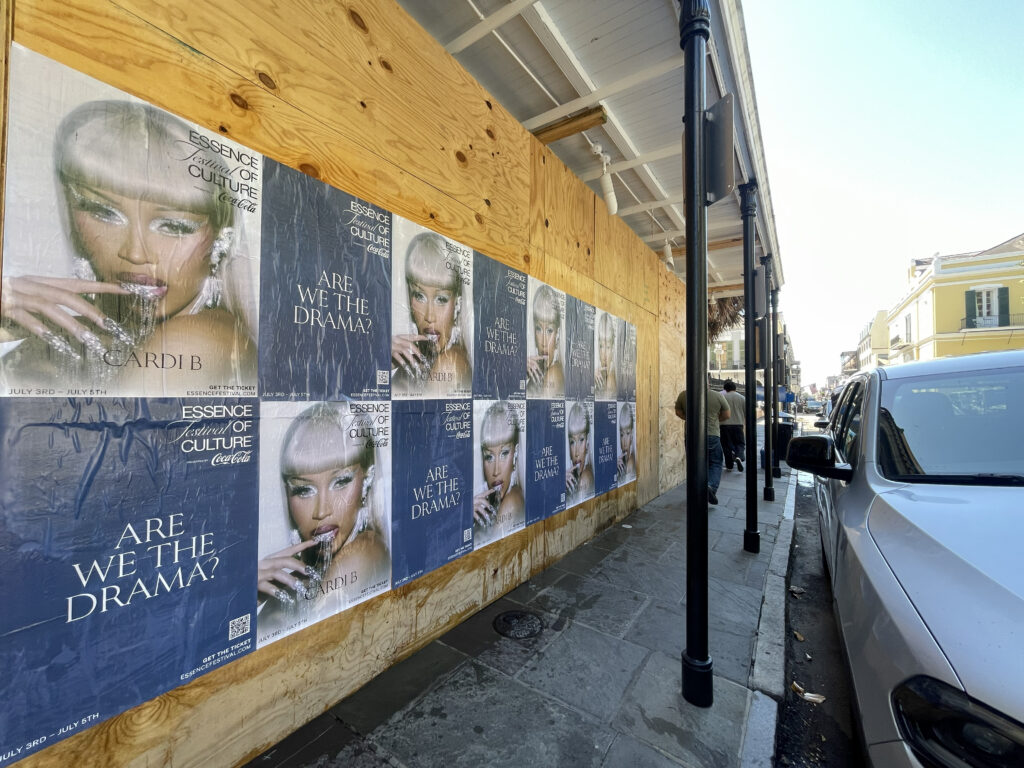
Chicago in 2026 is not a normal event year. Lollapalooza returns to Grant Park for its annual four-day run, and FIFA World Cup 2026 brings international match audiences through the city across multiple weekends. Together, those two events create a concentration of foot traffic, media attention, and consumer energy that few North American markets can match in a single summer season. For brands that want physical presence during that window, the opportunity is real. So is the operational complexity.
Brand activation in Chicago requires more than showing up with a van and a stack of flyers. The city moves in specific corridors. Audiences follow predictable routes between transit hubs, hospitality clusters, event perimeters, and neighborhood nightlife. Getting in front of those audiences at the right moment requires advance planning, local knowledge, and execution discipline that holds up across multiple deployment days.
Our team at American Guerrilla Marketing has run street-level campaigns across 50-plus U.S. markets, including Chicago event activations with strict timelines and high documentation requirements. This guide explains how we approach Chicago as a brand activation market, what the World Cup and Lollapalooza windows actually mean for campaign planning, and what formats deliver results when the city is at peak density.
Why Chicago Is One of the Strongest Street-Level Markets in the U.S.
Chicago’s grid makes it unusual. Most major American cities funnel foot traffic through unpredictable paths, but Chicago’s combination of a compact downtown, accessible lakefront, strong transit ridership, and defined neighborhood identities creates corridors that experienced operators can map and own with precision.
The Loop, River North, Wicker Park, the West Loop, and Wrigleyville each function as distinct audience environments. A campaign that reads as premium in River North can feel out of place two miles south. That neighborhood logic matters during event weeks, when audiences blend local regulars with out-of-town visitors who move differently, spend differently, and respond to messaging with different frames of reference.
Event Volume and the Opportunity Window
Lollapalooza typically draws 100,000-plus attendees across four days. World Cup match days in Chicago will pull international audiences who arrive early, stay late, and spend heavily in hospitality areas. The overlap of those two events creates a summer calendar where street-level visibility can reach an audience that is simultaneously massive in number and unusually engaged with city experience.
The valuable window is narrower than it looks. Not every day of a four-day music festival carries equal audience density. Not every World Cup match day generates the same neighborhood activation. Strong campaign planning identifies the specific days, times, and zones where audience concentration is highest, then commits resources there rather than spreading thin across the full event calendar.
Audience Behavior During Event Weeks
People move differently during major events. They walk farther, tolerate more waiting, take more photos, and are more likely to share what they see. Physical brand moments that would produce a quick glance in normal conditions can generate genuine engagement during event weeks, because dwell time and social context both improve. That behavioral shift is what makes street-level activation valuable in event-adjacent environments.
The flip side is that weak execution is also more visible. Generic creative, poor placement, and off-route deployments stand out clearly in crowded environments because there is so much else competing for attention. Quality and intentionality matter more, not less, when the city is packed.
How Our Team Maps Chicago Activation Routes
We start every Chicago campaign with a corridor analysis before any creative conversation. Where does the target audience arrive from? Which transit stations serve the event perimeter? What are the primary hotel clusters, and what routes connect them to the event site? Where do post-event audiences decompress, eat, and drink?
Those questions are not abstract. They have specific geographic answers for Lollapalooza (centered on Grant Park, with spillover into the South Loop and the Lakeshore transit corridor) and for World Cup matches at Soldier Field (with different audience composition and different route logic from Lollapalooza crowds). We scout those routes in advance, identify the highest-density intersections and surfaces, and build deployment plans that reflect how the audience actually moves.
Transit Nodes and Arrival Corridors
Chicago’s CTA Red Line, Blue Line, and Green Line all feed into event perimeters. Stations near Grant Park become choke points on event days, with thousands of people queuing, waiting, and moving in compressed windows. Those moments of enforced attention create high-value opportunities for street team deployments and high-visibility poster placements.
We position crews to intercept the audience at these nodes before the event, during long queues, and after the event ends. Post-event windows are particularly underutilized by most brands: the audience is still energized, the event experience is fresh in their memory, and they are making decisions about where to go next. That is a moment where a direct hand-off or a compelling street-level visual can convert attention into action.
Hospitality Districts and Nightlife Spillover
A significant portion of the event-week audience never enters the event itself. They gather in surrounding bars, restaurants, and hotel lobbies to watch, socialize, and share in the energy. River North, the West Loop, and the Randolph Street restaurant corridor all absorb that overflow during major event weeks.
We deploy in those areas because the audience there is often more accessible, more relaxed, and more receptive than inside a crowded venue. A well-placed LED billboard truck circulating through the hospitality district during a World Cup match creates visibility among an engaged audience that paid social cannot reach.
Brand Activation Formats That Work in Chicago
Format selection for Chicago should match the specific event, neighborhood, and audience rather than defaulting to whatever worked in the last market. Here is how we think about the primary formats for Chicago event-week campaigns.
Street Teams and Direct Engagement
Our brand ambassador teams are the highest-ROI format for event-adjacent activations when the goal involves direct consumer contact, sampling, or conversion actions. A trained crew deployed at the right transit node or hospitality cluster can create thousands of genuine brand interactions per day.
In Chicago, street team work benefits from the city’s walkability and the natural crowd formations that event weeks create. We staff with brand-knowledgeable ambassadors who can represent the product, handle objections, and execute documentation protocols that produce campaign-ready proof of performance.
Poster Campaigns and Wheatpasting
High-quality poster campaign placements in Chicago build a physical presence that extends the campaign beyond direct-contact windows. A strong visual placed at high-footfall corridors creates repeated impressions over multiple days, reinforcing brand presence for audiences that encounter the work multiple times across the event week.
We select surfaces based on sightlines, pedestrian rhythm, and surface quality. Chicago’s visual environment is competitive during major events, so creative execution and placement precision both matter more than raw quantity of placements.
Sidewalk Stencils
Sidewalk stencil campaigns create distinctive branded moments on the route to an event. When executed correctly, they function as a directional tool and a brand signal simultaneously. Chicago’s concrete grid lends itself to stencil work, and the high-footfall event corridors ensure strong impression volume during peak days.
LED Billboard Trucks
For maximum visual impact across multiple neighborhoods, LED billboard trucks offer flexibility that static placements cannot match. We route trucks through the hospitality district, the event perimeter, and adjacent neighborhoods according to audience movement patterns. The truck moves where the audience is, rather than waiting for the audience to pass a fixed location.
This format is particularly effective on World Cup match days, when viewing parties and fan gatherings spread across multiple venues and neighborhoods. The truck visits each concentration in sequence, maximizing total impression volume across a dispersed audience.
Planning Timeline for Chicago Event-Week Campaigns
Chicago event activations require earlier planning than most brands expect. The operating environment during major events creates logistical constraints that cannot be resolved at the last minute.
8-12 Weeks Out: Strategy and Permitting
We begin with audience and route analysis, format selection, and creative brief development. Permitting for street-level work in Chicago requires advance lead time, and high-quality production materials need time to produce correctly. Surface scouting for poster placements happens in this window, and crew scheduling locks down before the market gets tight.
4-6 Weeks Out: Production and Logistics
Materials go into production. Route plans are finalized. Crew briefings and brand training happen. For campaigns involving multiple formats, the logistics of coordinating street teams, printed materials, and LED truck routing all need to be resolved with enough lead time to allow for adjustments.
1-2 Weeks Out: Final Scouting and Confirmation
We conduct a final route walk to confirm surface availability and identify any changes in the event footprint. Chicago’s city management of major events can shift permitted zones and traffic patterns close to the event date. Final crew briefings and operational readiness checks happen in this window.
Documentation and Proof of Performance
Every campaign we run in Chicago includes GPS-tagged photo documentation, route logs, crew activity records, and a formatted campaign recap. That documentation matters for two reasons: it gives our clients proof that the work was executed as planned, and it creates the data foundation for optimizing the next campaign based on what actually performed.
Street-level marketing gets talked about loosely too often. We treat documentation as part of the job rather than an afterthought. A Chicago World Cup activation that cannot be measured is a story that cannot be told to the CMO who approved the budget.
Measurement Beyond Impressions
Impression estimates are the floor, not the ceiling, of campaign reporting. We also track distribution counts, crew engagement metrics, geographic coverage logs, and client-supplied downstream performance data like website traffic, social mentions, and redemption rates. Where conversion tracking is possible through branded URLs or QR codes, we build those into the creative from the start.
What Makes a Chicago Activation Different From Other Markets
Chicago’s operational complexity is higher than many second-tier markets because of permit requirements, crew logistics, surface competition, and the presence of multiple overlapping events that create scheduling and routing conflicts. Brands that try to transplant a playbook from a simpler market into Chicago during Lollapalooza or World Cup week consistently underperform.
We deploy our full guerrilla marketing service stack in Chicago, which means we are not selecting formats from a catalog. We are building a campaign around the audience behavior, the event calendar, the neighborhood logic, and the operational constraints that are specific to Chicago in 2026. That is what separates a campaign that works from one that simply runs.
Local Regulatory Context
Chicago has specific rules governing street-level marketing activity. Certain formats require city permits. Others are restricted near event perimeters under event management agreements. We navigate those requirements as part of standard planning, which protects the client from enforcement actions that can shut down a campaign at the worst possible moment.
Competitive Environment During Event Weeks
Major brands with significant budgets are also activating during Lollapalooza and World Cup windows. That competition for attention makes creative quality and placement precision more important. A mediocre campaign that might earn a glance in a quiet market will not compete for attention when the city is saturated with brand messaging from multiple directions.
Our advantage is not budget, it is operational intelligence. Knowing the specific corridor where an audience pauses, the exact sightline from a transit queue, or the precise timing of post-event pedestrian movement creates opportunities that a bigger spend cannot buy if the deployment logic is wrong.
Integrating Street-Level Work With Broader Campaign Strategy
The strongest Chicago activations we run are not standalone street campaigns. They are the physical layer of a campaign that also runs paid social, influencer content, and owned media. The street work creates the moment and the documentation. The digital layer amplifies it.
When a street team interaction gets photographed and shared, that content feeds the organic reach of the brand’s digital presence. When a poster campaign gets featured in a local media outlet covering the event, that coverage extends far beyond the impression count of the physical placement. We build campaigns with that amplification potential in mind, which means creating moments that are visually distinctive, geographically specific, and story-worthy enough to travel.
Connecting Physical and Digital
Branded QR codes on printed materials, campaign-specific landing pages, and geo-targeted social amplification all connect the physical campaign to measurable digital behavior. We recommend building those connections into the creative from the start rather than retrofitting them after the campaign is already in production.
For World Cup activations in particular, where international audiences may not have existing brand awareness, a QR code that delivers a localized offer or a brand story in the audience’s language can meaningfully improve conversion rates from physical to digital engagement.
Frequently Asked Questions
Why is Chicago such a strong brand activation market in 2026?
Chicago hosts Lollapalooza and FIFA World Cup 2026 matches, drawing millions of visitors with concentrated movement through specific corridors, transit nodes, and hospitality districts. Those windows create disproportionate opportunity for street-level campaigns that reach an audience already primed for discovery and sharing.
What brand activation formats work best in Chicago?
Street teams, poster campaigns, LED billboard trucks, and sidewalk stencils all perform well in Chicago because the city’s grid is walkable and event corridors are predictable. Format selection depends on the audience segment, the neighborhood, and the specific event window. Our team evaluates all of those factors before recommending a format mix.
How early should a brand start planning a Chicago activation?
For major events like Lollapalooza or World Cup matches, planning should begin 8-12 weeks in advance. Permitting, production, crew scheduling, and route scouting all take time, and the best placements fill quickly in competitive event markets. Brands that wait until four weeks out typically compromise on format quality or placement quality.
What neighborhoods should brands target during event weeks?
Grant Park surrounds and the Lakeshore corridor work for Lollapalooza. World Cup audiences move through Millennium Park, River North, and the West Loop. Wrigleyville, Wicker Park, and Logan Square serve as after-event spillover destinations. We scout all of these to identify the highest-density windows for each client’s specific audience.
Does AGM handle Chicago campaigns directly or through local partners?
We deploy our own crews in Chicago and manage campaigns centrally from our Industry City, Brooklyn headquarters. GPS-tracked documentation, proof-of-execution photos, and real-time route logs are standard for every market we operate in.
What does a typical Chicago brand activation campaign cost?
Campaign budgets vary by format, duration, and market scope. Street team deployments start in the $5,000-$15,000 range for event-week activations. Integrated campaigns combining multiple formats run higher. We provide custom quotes based on your objectives and timeline. Contact our team at (646) 776-2770 to start the conversation.