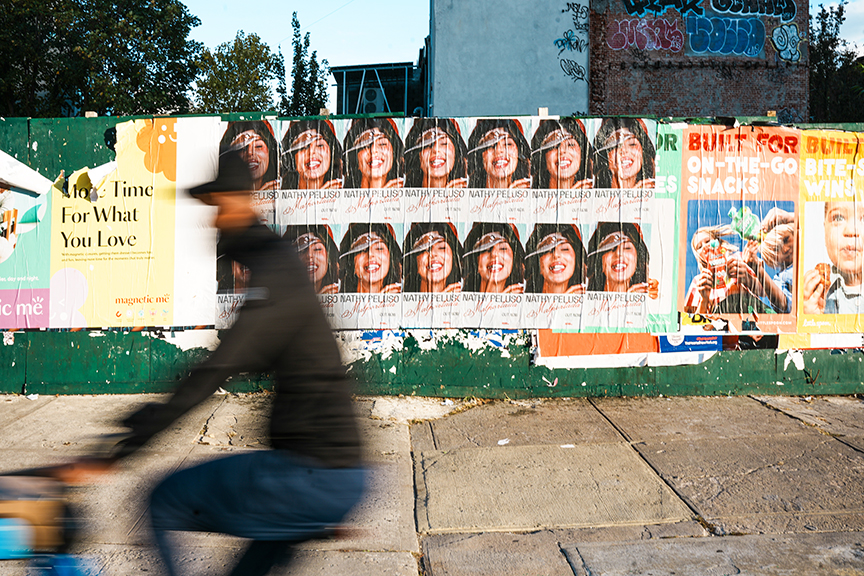
Arkansas brands that commit to in-person, street-level presence at conventions and events build the kind of local recognition that digital campaigns alone can’t manufacture, and a convention marketing agency with on-the-ground execution experience makes that presence possible at scale.
Guerrilla marketing uses unconventional, low-cost tactics deployed in public spaces to generate outsized brand impact. American Guerrilla Marketing designs and executes street-level campaigns, wheat posting, stencils, brand ambassadors, projections, and LED trucks, that create genuine consumer encounters and earned media coverage for brands of all sizes.
Campaign design for convention marketing starts with the question most media plans skip: where does your specific audience spend time in the physical world, and when are they most receptive to brand discovery? The answers to those questions shape location selection, timing, format choice, and creative strategy. American Guerrilla Marketing’s planning process is built around answering those questions accurately for each client’s specific market and audience objective.
Whether you’re evaluating convention marketing for the first time or looking to improve the ROI of an existing street-level program, this page covers the strategic and operational dimensions that determine campaign success. American Guerrilla Marketing brings field-tested execution frameworks to every engagement, not just creative strategy, but the production and logistics infrastructure that ensures campaigns actually perform as planned.
Why Convention City Marketing Outperforms Convention Floor Advertising
The convention floor is, by design, a sensory overload environment. Hundreds of exhibitors compete for the same pool of attendee attention, with identical booth formats, similar signage scales, and the same fundamental dynamic of brands competing simultaneously for a share of what is a finite and fatigued audience attention budget. In this environment, the brands that “win” convention floor attention often do so by sheer scale of investment, the largest booth, the loudest demo, the most attractive promotional item. Small and mid-sized brands face a structural disadvantage that no amount of creative cleverness fully overcomes.
The streets around the convention center are a completely different advertising environment. Convention attendees leave the floor multiple times per day, to get lunch, to return to their hotel, to walk to dinner, to explore the host city’s bars and restaurants in the evening. During these transitions, they move through the city geography as individuals rather than as part of a crowd, in a lower-stimulation state than the convention floor creates, and genuinely receptive to visual brand encounters in a way that convention-floor mode often prevents.
A well-placed Wheat Paste Poster Campaign in the blocks between the Statehouse Convention Center and Little Rock’s River Market district reaches the same attendees who just left the floor, but in a moment when they’re actually looking around, walking at human pace, and processing their environment rather than working through a crowded booth hall. The impression quality in that moment is higher than anything achieved on the convention floor, at a fraction of the cost of a premium booth placement.
Little Rock: The Convention Capital
Little Rock’s convention geography is centered on the Statehouse Convention Center and the adjacent Robinson Center along the south bank of the Arkansas River, with the River Market district, Little Rock’s most vibrant pedestrian commercial zone, extending east along President Clinton Avenue between the convention campus and La Petite Roche Plaza. The River Market is anchored by the Ottenheimer Hall farmers market building, a dense collection of restaurants and bars in the adjacent streets, and the walkable riverfront promenade that convention attendees naturally gravitate toward during meal and evening hours.
AGM’s Little Rock convention campaigns concentrate deployments in the River Market zone, the geography where convention foot traffic and local dining and entertainment foot traffic intersect most densely. Wheat Paste Poster Campaigns along President Clinton Avenue and the surrounding streets create brand presence in the primary walkable corridor connecting the convention center to the hotel and restaurant cluster. Brand ambassador programs deployed at the River Market entrances and along the riverfront promenade intercept convention attendees during the morning farmers market and evening dining windows, creating direct brand encounters in a relaxed, community-oriented setting.
Little Rock’s SoMa (South Main Cultural District) neighborhood, centered on the South Main Street arts and food corridor about two miles south of downtown, offers a secondary activation zone for brands targeting the creative and young professional audience that concentrates in this emerging district. The Thea Foundation, the Oxford American Magazine, and the growing collection of independent restaurants and bars in SoMa create a cultural ecosystem that draws a specific audience profile quite different from the convention center’s primary attendee demographics. For brands with a creative or cultural positioning, SoMa activations complement convention-area campaigns effectively.
Frequently Asked Questions
What makes Boosting Engagement: Convention Marketing Agency Arkansas an effective marketing approach?
Effective street-level marketing programs combine location intelligence, creative execution, and precise timing to reach target audiences in the physical environments where they spend time. American Guerrilla Marketing builds campaigns around audience movement patterns and market-specific context rather than generic placement strategies.
How does American Guerrilla Marketing measure campaign success?
American Guerrilla Marketing tracks campaign performance through impression counts, field documentation, engagement data from brand ambassador activations, and digital attribution from QR codes and campaign-specific landing pages. Post-campaign reports provide market-by-market breakdowns with actionable insights for future activations.
What markets does American Guerrilla Marketing operate in?
American Guerrilla Marketing executes campaigns in major U.S. markets including New York City, Los Angeles, Chicago, Austin, Nashville, Miami, Atlanta, Denver, Seattle, and Boston, with additional reach into secondary markets and international locations for brands with broader geographic objectives.
How long does it take to launch a campaign?
Campaign timelines vary by scope and tactic mix. Simple wildposting or stencil programs can launch within 1–2 weeks. Full brand ambassador activations, experiential installations, and multi-market rollouts typically require 4–8 weeks for planning, production, and logistics coordination. Rush timelines are available for time-sensitive activations.