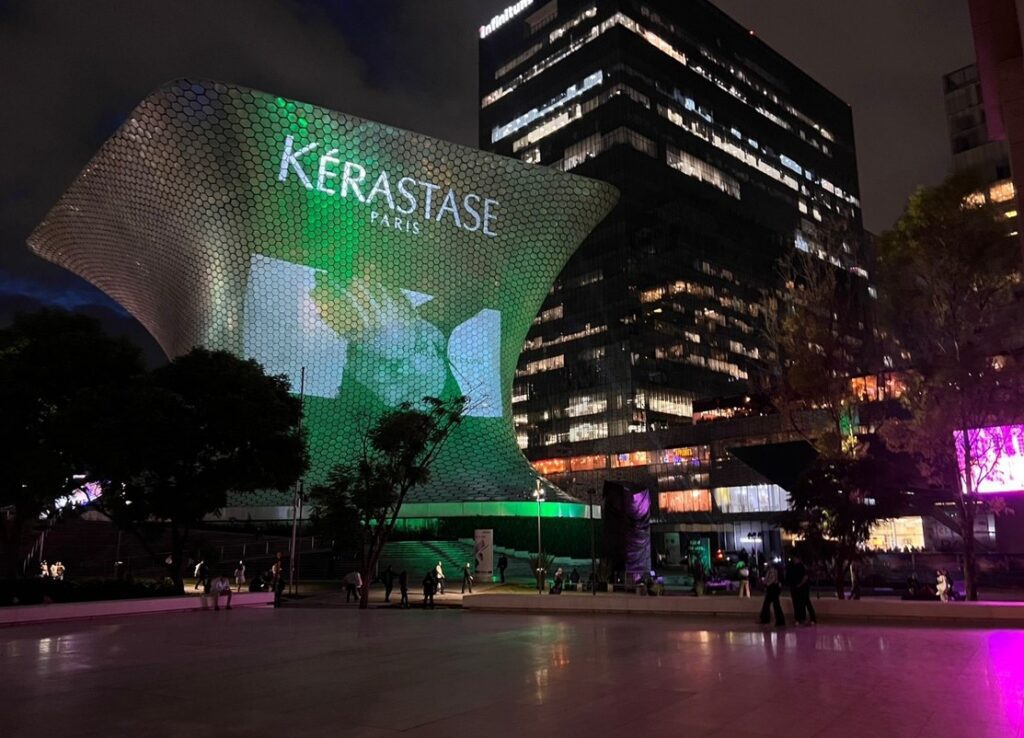
Del Valle does not have the coffee shop cool of Roma Norte or the tourist foot traffic of Condesa, and that is precisely what makes it one of the most underutilized projection markets in Mexico City. With a population exceeding 150,000 residents packed into a dense urban grid, Del Valle is one of the largest middle-class colonias in the entire city. When AGM runs projection campaigns here, we are not chasing a niche. We are talking to mainstream CDMX — the families, the dual-income professionals, the established households that actually drive consumer spending in this city.
Most guerrilla advertising conversations in Mexico City default to the same handful of colonias: Roma, Condesa, Polanco. Those are legitimate markets, but they represent a narrow slice of the city’s population. Del Valle represents something different — scale without the premium address. For brands that need reach rather than coolness by association, this colonia is a primary target, not an afterthought.
AGM has executed projection work across multiple Del Valle corridors, and the mechanics here differ from what you manage in the more compact creative districts to the north. The streets are wider. The apartment building facades are larger. The audiences are denser but spread across a bigger geography. This guide breaks down how projection campaigns work in Del Valle and what brands should understand before planning a run here.
Del Valle’s Geography: One of Mexico City’s Biggest Residential Grids
Del Valle is enormous by colonia standards. Its boundaries run roughly from Avenida Insurgentes to the west, Avenida División del Norte to the east, Eje 6 Sur (Félix Cuevas) to the north, and Avenida Churubusco to the south. That footprint covers a massive swath of urban terrain — a near-perfect grid of residential streets lined with apartment buildings, corner stores, and local commercial strips.
The colonia’s grid structure is both its strength and its planning challenge. Unlike the organic, winding streets of San Ángel or the compact blocks of Condesa, Del Valle is laid out in a systematic pattern. That predictability helps our team identify projection corridors — stretches where a projected image will be visible for a meaningful walking distance — but it also means campaigns need to be distributed across multiple nodes rather than concentrated in a single plaza or landmark zone.
Avenida División del Norte
División del Norte is the main commercial spine of Del Valle, running north-south through the heart of the colonia. The street is lined with restaurants, pharmacies, banks, furniture stores, and the kind of everyday retail that serves a residential population. Evening foot traffic here is consistent and high-volume. Residents use this corridor to shop, eat, and move between the Metro and their homes.
Projection surfaces on División del Norte tend to be mixed: some buildings have large blank facades at their upper stories, while others are broken up by signage, windows, and balconies. Our team identifies the cleanest surfaces before each campaign run — typically the end walls of corner buildings where the blank stucco face is visible from the sidewalk across the street.
Avenida Insurgentes: The World’s Longest Urban Boulevard
The western boundary of Del Valle runs along Avenida Insurgentes, which holds the distinction of being one of the longest urban streets in the world — stretching more than 28 kilometers from north to south through Mexico City. At Del Valle’s western edge, Insurgentes carries heavy vehicular traffic during peak hours and consistent Metrobus ridership throughout the day and evening.
The Teatro de los Insurgentes sits on this stretch of the boulevard, and its presence matters to any projection planner. The theater’s curved facade features one of Mexico City’s most recognizable public artworks — a massive Diego Rivera mosaic mural that wraps around the building’s exterior. This facade has been used as a projection backdrop for special events and brand activations. It is architecturally unusual in the best way: the curved surface and the existing mosaic create a layered visual effect when projection content is designed to complement rather than fight the underlying imagery.
Del Valle covers approximately 6.9 square kilometers and holds an estimated 150,000+ residents, making it one of the five most densely populated middle-class colonias in Mexico City proper.
Parque Hundido: The Campaign’s Captive Audience Node
Parque Hundido — officially Parque José Ma. Morelos y Pavón — is a sunken park that sits along Insurgentes near the northern edge of Del Valle. The name translates to “sunken park,” and the design is exactly that: the park’s main areas sit below street level, creating a natural amphitheater effect surrounded by walking paths at the upper perimeter.
For projection planning, this geography is interesting. The park itself is not a projection surface — it is green space. But the buildings facing Insurgentes on either side of the park function as a continuous wall of facade visible from the park’s upper paths. Evening joggers, weekend families, and the steady stream of dog walkers who use the park’s perimeter track become an audience for projections aimed at the buildings across the street or at the park-facing walls of the structures bordering the space.
Audience Quality at Parque Hundido
The park draws a specific demographic that matters for certain campaign types. Families with young children use the playground areas. Joggers and fitness-focused residents circle the track in the early morning and evening hours. Weekend afternoons bring families from surrounding streets who use the park as a neighborhood gathering point.
This is not a tourist audience. These are Del Valle residents — people who live within walking distance and use the park as part of their daily routine. Projection campaigns timed to evening hours when the park is well-used create repetitive exposure: the same residents pass through multiple times per week, which builds brand recognition over the run of a campaign rather than generating a single impression.
Parque Masayoshi Ohira
A second significant green space in Del Valle, Parque Masayoshi Ohira near the colonia’s southern end, similarly functions as a pedestrian gathering point. Named after the former Japanese Prime Minister who donated the park to Mexico City as a gesture of diplomatic goodwill, this space has a distinctly different character — quieter, more formal, with Japanese garden elements. The surrounding residential streets have apartment building facades that function as projection surfaces for campaigns targeting the residential population near this part of the colonia.
Metro Zapata and Metro División del Norte: Traffic Generators
Two Metro stations serve Del Valle directly, and both are significant traffic generators in the projection planning calculus.
Metro Zapata sits at the northern edge of the colonia on Insurgentes, serving Line 3. It is one of the busier stations on this line, handling the daily commuter flow from southern residential colonias toward downtown and the northern business districts. Residents exiting Zapata and walking south into Del Valle pass through a concentrated pedestrian corridor — the blocks immediately surrounding the station exit are high-traffic projection zones in the evening rush window.
Metro División del Norte on Line 3 serves the eastern side of the colonia, at the street for which it is named. This station draws riders from the denser residential areas further east of Del Valle as well as from the colonia itself. The commercial area around this station — pharmacies, food stalls, small restaurants — is another consistent evening traffic zone.
The stretch of Insurgentes running past Del Valle and Parque Hundido carries an estimated 150,000+ vehicle and pedestrian movements per day, ranking among the most-trafficked urban corridors in Mexico City.
Surface Availability Near Transit Nodes
The blocks immediately surrounding both Metro stations offer some of the best projection surfaces in Del Valle. Buildings near transit exits tend to be slightly older, often with large blank stucco faces on their upper stories. The pedestrian density in these zones is high and relatively predictable — peak hours align with morning and evening commute windows, which are precisely the times projection campaigns aim to capture.
AGM typically maps the three to five block radius around each station for surface scouting before a Del Valle campaign. The combination of pedestrian volume and surface quality in these corridors makes them reliable campaign anchors.
Centro Comercial Perisur and the Southern Draw
Perisur sits just south of Del Valle proper — one of the larger shopping centers in southern Mexico City, drawing significant weekend traffic from throughout the colonia and beyond. While Perisur itself is not within Del Valle’s boundaries, its gravitational pull on the colonia’s consumer behavior matters for campaign timing and positioning.
Residents of Del Valle regularly travel south toward Perisur on weekends for major retail shopping. The return trip — families heading back north through División del Norte and the surrounding streets — represents a natural projection audience window. Campaigns timed to Friday and Saturday evenings in the southern portion of Del Valle can intercept this return traffic at residential scale.
The Apartment Building Facade as Del Valle’s Primary Projection Canvas
The defining architectural characteristic of Del Valle is its stock of mid-century and post-war apartment buildings. Built primarily between the 1940s and the 1980s, these structures follow a consistent pattern: five to eight stories, reinforced concrete construction, relatively plain exteriors with large stucco facades broken only by windows and occasional balconies. The end walls — the side faces of these buildings where no windows interrupt the surface — are among the cleanest projection canvases in Mexico City.
A typical Del Valle party wall on a corner building can measure twelve to eighteen meters tall by ten to fifteen meters wide. That is a substantial projection surface, and in a colonia where these buildings line block after block, there is no shortage of viable locations.
Surface Characteristics That Affect Image Quality
Not all stucco ages the same way. Del Valle facades range from freshly painted and smooth to weathered, textured, or covered in accumulated layered paint. Our team scouts each potential surface during daylight to assess how it will read under projection light after dark. A heavily textured facade diffuses the projected image and reduces apparent sharpness at distance. A smooth, light-colored surface — even a faded cream or gray — reflects projected content cleanly and maintains color fidelity at higher throw distances.
The colonia’s grid streets mean that the optimal throw distance from projector to wall is often available: the width of a typical Del Valle street gives enough distance for a projector set up on the opposite sidewalk to throw an image sized to fill a building’s end wall cleanly. Narrower side streets require wider-angle lenses; the main commercial corridors allow for longer-throw configurations that produce larger, brighter images.
Building Height and Visibility Radius
At six to eight stories, Del Valle’s apartment buildings create images that are visible from a significant distance down the street — often three to four blocks on a straight grid corridor. This visibility radius is one of the key arguments for projection advertising in this colonia versus other formats: a single projector positioned on División del Norte or a major cross-street can generate viewable impressions from pedestrians several blocks away who have not yet reached the surface itself.
Del Valle’s Demographic Profile and What It Means for Campaign Strategy
Del Valle’s population is distinctive among Mexico City colonias that get serious marketing attention. The colonia is not young in the way that Roma Norte is young — it is established. The demographic here skews toward families with school-age children, professionals in their 30s and 40s, and longtime residents who have lived in the colonia for decades. Consumer purchasing power is genuine and consistent rather than aspirational.
This demographic profile has direct implications for campaign content and timing. The brands that perform well in Del Valle projection campaigns are not the ones optimizing for Instagram virality among 22-year-olds. They are the ones that speak to family purchasing decisions, everyday consumption, and the practical spending of a household with real income and defined needs.
Consumer Categories That Map Well to Del Valle
Our experience in this colonia points toward certain brand categories as natural fits for projection advertising here:
- Retail and consumer packaged goods — Food, household products, and personal care brands with broad middle-class targeting
- Financial services — Banks, insurance companies, and fintech platforms reaching established earners
- Automotive — Del Valle has significant car ownership; automotive brands targeting family vehicle purchases resonate here
- Telecommunications and streaming — Family entertainment and connectivity products
- Education and professional development — Online courses, certifications, and school enrollment campaigns aimed at the colonia’s professional class
By contrast, luxury fashion, hospitality brands targeting international tourists, or nightlife and entertainment activations find more traction in Polanco, Condesa, or Roma.
Comparing Del Valle to Condesa: Scale vs. Specificity
This comparison comes up repeatedly in client conversations, and it is worth addressing directly. Condesa offers something Del Valle cannot: a concentrated audience of design-aware, trend-following consumers and tourists who respond to brand identity in specific ways. A projection campaign in Condesa is a statement about who a brand is aligned with. It reaches fewer people but in a context that carries cultural meaning.
Del Valle inverts that trade-off. A projection campaign here reaches more people with less contextual signaling. If you are launching a consumer product that needs broad awareness, Del Valle gives you volume. If you are building brand equity with a specific subculture, you go elsewhere. The question is not which is better — it is which fits the campaign objective.
Del Valle’s residential density — approximately 22,000 residents per square kilometer in its core blocks — ranks among the highest in CDMX’s southern middle-class colonias, comparable to parts of Narvarte and Nápoles.
Timing and Seasonality in Del Valle
Del Valle’s campaign windows follow the rhythms of a working residential neighborhood rather than a nightlife or tourist district. The most productive projection hours are the evening commute window (6pm to 9pm on weekdays) and the post-dinner pedestrian period (8pm to 11pm on weekends). Morning windows exist but are less productive for projection advertising specifically, since pre-dawn and early morning hours are darker and colder — reducing the casual pedestrian audience that makes projection campaigns effective.
Seasonal Considerations
Mexico City’s climate is mild year-round, but Del Valle campaigns do follow some seasonal patterns. The dry season (October through April) offers the cleanest projection conditions: clear skies, low humidity, and cool evenings that encourage outdoor activity. The rainy season (May through September) does not eliminate projection work but does require timing flexibility — afternoon rains typically clear by evening in Del Valle, and the post-rain air quality often improves image sharpness due to reduced dust particulate.
Holiday periods create concentrated campaign opportunities. The weeks before Día de Muertos, Christmas, and Semana Santa see heightened retail activity on División del Norte and heightened pedestrian density throughout the colonia. These windows are when projection campaigns in Del Valle generate their highest impression counts.
Multi-Night Campaign Structure for Maximum Del Valle Coverage
Given Del Valle’s size, a single-night projection run covers only a fraction of the colonia’s geography. AGM’s approach for full-colonia campaigns typically involves a three to five night structure, rotating the projection location each night to build coverage across the major residential clusters.
| Night |
Primary Zone |
Key Surface/Corridor |
Audience Profile |
| Night 1 |
Northern Del Valle (near Metro Zapata) |
Insurgentes building facades north of Parque Hundido |
Commuters, fitness audience |
| Night 2 |
División del Norte commercial strip |
Corner building end walls mid-colonia |
Evening retail shoppers, restaurant-goers |
| Night 3 |
Parque Hundido perimeter |
Insurgentes facades facing park |
Park users, joggers, families |
| Night 4 |
Southern Del Valle (near Metro División del Norte) |
Residential mid-blocks east of División del Norte |
Residents, return commuters |
| Night 5 |
Parque Masayoshi Ohira area |
Apartment facades on surrounding residential streets |
Local residents, families |
This rotation builds awareness across the entire colonia rather than saturating one corridor and ignoring others. Residents in different parts of Del Valle encounter the campaign in their immediate neighborhood rather than hearing about it secondhand.
Del Valle vs. the Creative District Colonias: A Frank Assessment
AGM works in both Del Valle and the Roma-Condesa circuit regularly, and the honest answer to “which is better?” is that they serve different briefs entirely.
The creative colonias — Roma Norte, Condesa, Juárez — generate social media pickup at a higher rate. The audience there documents things. They post. A striking projection in Condesa might generate organic content from dozens of bystanders in a single evening. That content multiplier matters for campaigns where earned media is part of the strategy.
Del Valle generates fewer social media impressions per night but reaches a larger raw audience. The residents here are living their lives — they are not primarily documenting them for social platforms. A projection in Del Valle is a direct communication, not a media strategy play. That is not a criticism; it is a description. For brands that need to move the needle on awareness metrics among Mexico City’s mainstream consumer base, Del Valle delivers what the creative colonias cannot.
“Del Valle is where brands go when they need Mexico City to actually know about them — not just Mexico City’s Instagram feed.”
The Audience Size Argument
The numbers support this framing. Del Valle’s resident population of 150,000+ in a compact geographic footprint means that a week-long campaign rotating through five zones will generate impressions among a large share of the colonia’s active pedestrian population. Compare that to a week in Condesa — a much smaller, denser, but less populated colonia — and the raw reach numbers tell the story clearly. Del Valle is built for scale.
Integration with Broader Mexico City Campaign Architecture
Del Valle works best as part of a city-wide campaign structure rather than a standalone effort. The typical AGM recommendation for brands targeting mainstream CDMX is to anchor the campaign in Del Valle for residential middle-class reach, add a Polanco or Santa Fe component for upper-income targeting, and layer in Roma or Condesa if earned media and cultural signaling are campaign objectives.
This multi-colonia approach covers the city’s consumer spectrum without over-indexing on any single demographic or neighborhood type. Del Valle is the mass-market foundation of that structure — the component that generates the most raw impressions against the broadest consumer base.
When our team plans Mexico City projection campaigns, Del Valle consistently appears in the brief as a required zone for any campaign with broad consumer awareness objectives. It is not the most exciting component. It is often the most important one.
Frequently Asked Questions About Guerrilla Projections in Del Valle Mexico City
What makes Del Valle different from Condesa or Roma for guerrilla projections?
Del Valle offers mass-market reach to over 150,000 middle-class residents in a dense residential grid, while Condesa and Roma skew toward a smaller creative and tourist audience. Del Valle projections trade specificity for scale, making them ideal for mainstream consumer brands that need volume over niche cachet.
Which streets in Del Valle are best for guerrilla projection campaigns?
Avenida División del Norte is the primary commercial spine with consistent evening foot traffic. Avenida Insurgentes along the western boundary carries Metro and Metrobus riders. Side streets like Félix Cuevas and Parroquia have dense apartment building facades that serve as excellent projection surfaces.
How does Parque Hundido factor into Del Valle projection strategy?
Parque Hundido draws thousands of joggers, families, and weekend visitors. The buildings surrounding the park on Insurgentes and adjacent streets are visible from the park’s raised perimeter paths, making projections there effective for a captive, relaxed audience rather than people in transit.
What demographics do guerrilla projections in Del Valle reach?
Del Valle’s core demographic is established middle-class Mexico City: young families, dual-income professionals, and longtime residents with strong consumer purchasing power. The colonia skews older and more family-oriented than Roma or Condesa, which makes it well-suited for consumer packaged goods, financial services, and retail brands.
Can guerrilla projection campaigns in Del Valle run on weeknight schedules?
Yes. Del Valle’s residential density means evening weeknight windows between 7pm and 11pm have consistent pedestrian traffic from residents returning home, shopping on División del Norte, and using Metro Zapata or Metro División del Norte. Weeknight campaigns here often outperform weekend-only runs in total impression count.