
July 14, 2026
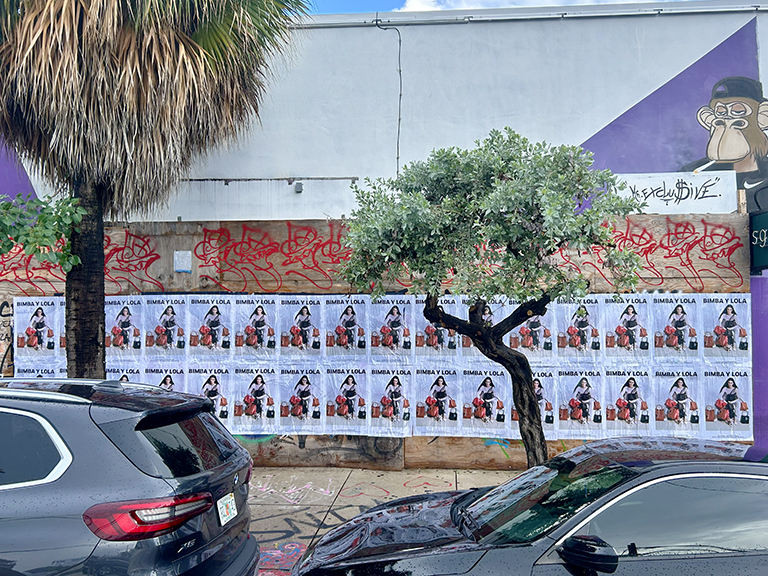
If you’ve walked through Roma Norte at 7am, you’ve seen it — a fresh stack of posters plastered across a concrete wall, edges still damp, the paste smell faint in the air. That’s wheatpasting. It’s one of the oldest forms of outdoor advertising, and it’s still one of the most effective ways to put a brand in front of people who are actually paying attention.
Mexico City runs on this medium. The city’s walls have been a communication channel for generations — political movements, concert announcements, film releases, product launches. What’s changed is the scale and the professionalism behind modern wheatpaste campaigns. Today, a label out of New York or a streaming platform based in Los Angeles can run a coordinated wheatpaste campaign across six Mexico City colonias in under two weeks, documented with GPS-tagged photos and delivered digitally before the paste has fully dried.
This guide covers what wheatpasting actually is, how it works on the ground in CDMX, and what you need to know before you brief a campaign.
Wheatpasting gets its name from the original adhesive — wheat flour mixed with water and cooked into a paste that bonds paper to masonry surfaces. Modern operators use a range of adhesives, but the principle is the same: a large-format paper poster is applied wet to a wall using a brush or roller, then sealed with a top coat of the same paste. When it dries, it’s on there. Rain doesn’t lift it. Wind doesn’t peel it. A properly applied wheatpaste poster can hold for weeks on the right surface.
The format works because it occupies space that standard outdoor advertising doesn’t. There are no permits or landlord approvals for a JCDecaux billboard. But a wall in Doctores, a construction hoarding on Insurgentes, a utility box in Escandón — these are spaces that wheatpaste reaches and traditional OOH doesn’t.
The posters themselves are typically printed on newsprint or uncoated stock — materials that absorb paste well and bond cleanly to rough surfaces. Sizes range from standard 24×36 tabloid sheets up to multi-sheet grids that can cover an entire wall face. Most campaigns in Mexico City use a combination of sizes depending on the available surfaces in each target zone.
Mexico City is the largest city in North America by population — roughly 22 million people in the metropolitan area. That scale alone matters. But beyond the numbers, CDMX has a cultural relationship with street communication that makes wheatpasting read differently here than it does in, say, Dallas or Miami.
The city has 16 alcaldías (administrative boroughs), each with its own character. Within those alcaldías, hundreds of colonias each have distinct audiences, demographics, and street aesthetics. A wheatpaste campaign in Polanco is reaching a different person than one in Tepito or Santa María la Ribera. That granularity is a real asset for brands with specific audience targets.
The city also has a high tolerance for street expression. Murals, paste-ups, and large-format art have been embedded in Mexico City culture since the muralist movement of the 1920s. When a brand poster goes up on a Roma Norte wall between a Diego Rivera-inspired mural and a band announcement, it doesn’t look out of place. It looks like it belongs to the city.
Let’s run through the structure of a standard campaign so you understand what you’re actually buying when you work with an operator here.
Brief and design review: You bring print-ready artwork. Experienced operators will flag sizing issues, file format problems, or design choices that won’t hold up on textured walls. A flat gradient that looks beautiful on screen can look washed out on rough concrete. This review saves you from wasted print runs.
Print production: Mexico City has excellent print infrastructure. Posters are produced locally, which cuts lead time and reduces shipping risk. A print run of 200 to 500 posters for a multi-colonia campaign is standard. Larger campaigns for music tours or film releases can run 1,000+ sheets across multiple formats.
Location scouting: A good operator doesn’t just show up with paste and start slapping things on walls. They scout walls in advance — checking surfaces, confirming which locations have been cleared (formally or informally), noting foot traffic patterns, and timing placement around local rhythms. The wall that’s perfect on Tuesday morning may already be covered by Thursday.
Overnight placement: Most Mexico City wheatpaste work happens between midnight and 5am. The streets are quiet, paste sets before foot traffic, and the work is visible in its best condition for the morning commute. Some colonias have more active overnight environments than others — Centro Histórico and the areas around Eje Central stay busy much later than residential blocks in Narvarte.
Documentation: Every placement gets photographed. GPS-tagged images, timestamps, wide shots and close-ups. You’ll receive a report that shows exactly where each poster went up, with enough detail to verify placement without visiting the city yourself.
Not all Mexico City neighborhoods work equally well for wheatpasting. Here’s a quick breakdown of the major zones:
| Colonia | Best For | Audience |
|---|---|---|
| Roma Norte | Music, fashion, culture brands | 25-40 creative professionals, international visitors |
| Condesa | Lifestyle, food, streaming | Affluent locals, expats, professionals |
| Polanco | Luxury, premium brands | High-income shoppers, business travelers |
| Centro Histórico | Mass awareness, concerts, film | Broad urban audience, tourists |
| Doctores | Music, subculture, youth brands | 18-30, working class, music fans |
| Coyoacán | Art, film, independent culture | Students, artists, intellectuals |
| Juárez | Nightlife, fashion, events | LGBTQ+ community, creatives |
| Narvarte | Emerging brands, food, lifestyle | Young families, upwardly mobile locals |
Experienced operators know these neighborhoods at a granular level — not just which streets to target, but which specific walls have the best sight lines, which surfaces hold paste longest, and which zones have active removal crews that will take down work within 24 hours.
The category of clients running wheatpaste campaigns in CDMX has expanded significantly. A few years ago it was primarily local promoters and regional music acts. Now you’re seeing:
American Guerrilla Marketing coordinates wheatpaste campaigns in Mexico City and across Latin America through our international operator network.
There’s a difference between getting posters on walls and running a campaign that does something. The difference comes down to a few things that separate experienced operators from people who just own a paste bucket.
Location quality over quantity: 50 well-placed posters in high-traffic spots with long dwell time outperform 200 posters stuck on back streets that nobody walks. Operators who prioritize count over placement are selling you a number, not a campaign.
Timing relative to your event or launch: A music release campaign should hit the streets 5 to 10 days before the release date, not the day after. Coordination between your campaign timeline and the operator’s scheduling is essential. Mexico City has a lot of competing campaigns running simultaneously — getting on walls before the space fills up matters.
Design that works at scale and in context: Wheatpaste posters live at eye level, in crowded visual environments, on imperfect surfaces. High-contrast imagery, bold typography, and simple composition perform best. The design that wins at a gallery show will not necessarily work on a wall in Escandón.
Documentation you can actually use: Post-campaign photo reports are standard, but quality varies. Ask for GPS-tagged images with timestamps. If you’re reporting internally or to a client, you want to be able to show proof that’s verifiable, not just a folder of unlabeled JPEGs.
The mechanics of a Mexico City wheatpaste campaign execution follow a consistent pattern across operators, though the quality of execution within that pattern varies enormously. Understanding how it works helps brands ask better questions and identify operators who are serious about their craft.
Execution happens overnight — typically between midnight and 5am in Mexico City. This window is standard across all CDMX colonias because it allows crews to work without vehicle and foot traffic interference, and because the paste has several hours to cure before the morning pedestrian traffic begins. A paste job applied at 2am and left to cure until 7am will be substantially more durable than one applied at 10pm that faces pedestrian interference at 11pm.
The crew structure for a standard CDMX campaign is typically three to five people: a driver/logistics coordinator, one or two paste applicators, and a documentation person. Some operations consolidate these roles — the driver also documents while the applicators work. More professional operations have dedicated documentation to ensure photo quality and GPS logging don’t fall victim to execution rush.
The paste itself is typically a wheat flour-based adhesive mixed with water to a consistency that allows brush application. Some Mexico City operators add a commercial adhesive component (PVA glue) to the wheat paste for increased bond strength, particularly on smoother surfaces. The standard application method is paste-paper-paste: brush paste on the wall surface, apply the poster, then brush another paste coat over the face of the poster. The face coat seals the edges and significantly increases longevity.
From our experience running campaigns in Mexico City, the face coat application is the step that separates professional crews from inexperienced ones. A poster applied with paste-only-on-back will peel from the edges within days, particularly if it encounters rain or high humidity. A poster applied with full face coating and edges sealed can hold for three to four weeks under normal conditions.
The documentation phase of a Mexico City wheatpaste campaign is where brands discover whether they hired a professional operation or an amateur one. Professional CDMX operators deliver a specific set of materials that allows the client to verify the campaign ran as described, without visiting Mexico City themselves.
The core documentation package from AGM’s CDMX operator network includes: GPS-tagged photos for each placement location (photos captured with location services enabled so the EXIF data embeds the GPS coordinates), a location spreadsheet listing each placement with colonia, street address, cross street, and GPS coordinates in decimal degree format, and a brief narrative summary covering any exceptions — locations that ran differently from plan, surfaces that required adjustment, or competing material encountered at planned locations.
Photo quality standards matter. Each photo should show the full poster in frame plus visible street context — a street sign, a building address number, or a recognizable landmark. Photos that show only the poster without surrounding context can’t be verified as to location. We reject these from our operators and require retakes, even when it means a second visit to the location the morning after execution.
GPS coordinate verification is a step AGM adds on our side before delivering documentation to clients. We take the GPS coordinates from each photo’s EXIF data and cross-reference them against the claimed location address. When coordinates don’t match the described location — which occasionally happens due to GPS drift in dense urban areas or operator error — we investigate and correct before the report goes to the client. That verification step catches errors that would otherwise reach the client as incorrect information.
Timeline for documentation delivery: our CDMX operators deliver the raw photo set and GPS data within 24 hours of execution. AGM compiles, verifies, and formats the final client-facing report within 48 hours of execution. For campaigns with urgent internal reporting needs — a release announcement going out the morning after the campaign runs — we can compress this to a preliminary verified report within 6 to 8 hours of execution completion and a final full report within 24 hours.
The flexibility and speed of wheatpaste campaigns is also a genuine advantage over formal outdoor media. A billboard campaign in Mexico City typically requires 4 to 8 weeks of lead time for site reservation, production approval, and printing. A wheatpaste campaign can be briefed, printed, and executed in 7 to 10 business days. For brands responding to cultural moments, live events, or competitive moves that require fast market presence, that speed differential is practically significant.
Mexico City adds another layer because the medium is not abstract here. It is tied to specific colonias, overnight workflows, and a visible street poster culture that gives campaigns more context than they would have in a lower-density market. That is why the most useful explanation is not just what wheatpasting means in theory, but how a CDMX operator actually prints, scouts, posts, documents, and reports the campaign.
The bottom line for planners is simple: treat what is wheatpasting in mexico city as a campaign decision with tradeoffs, not as a generic city talking point. The campaigns that usually perform best in CDMX define the audience, route logic, reporting standard, and creative threshold before the first sheet goes to print.
That is also why the best briefs stay specific about neighborhoods, install timing, and proof of posting. In Mexico City, clarity before execution usually matters more than chasing a bigger poster count after the fact.
Wheatpasting in Mexico City is the practice of applying large-format printed posters to walls, construction hoardings, and building surfaces using a flour-and-water adhesive paste. Campaigns typically run overnight in high-traffic colonias like Roma Norte, Condesa, and Centro Histórico.
It depends on the surface and the alcaldía. Posting on private property with owner permission is generally tolerated. Public infrastructure is regulated by each of the 16 alcaldías. Experienced operators know which walls are workable and how to reduce risk.
Roma Norte, Condesa, Centro Histórico, Doctores, Juárez, Coyoacán, and Polanco all offer strong placement opportunities. Each colonia has a different audience profile, wall availability, and operational environment.
Yes. Most international campaigns are coordinated remotely. You provide print-ready files, define your target colonias, and a local operator handles printing, paste, placement, and photo documentation. Turnaround from brief to street is typically 5 to 10 business days.
American Guerrilla Marketing coordinates wheatpaste campaigns in Mexico City and across Latin America through our international operator network.
Millie Phillips
Campaign Architect — American Guerrilla Marketing
Email: [email protected]
Office: (646) 776-2770
Ready to Run Your Campaign?
Call us or email us. We’ll tell you exactly what we can do in your market and what it costs.
American Guerrilla Marketing — Los Angeles
Street-level campaigns in Los Angeles and nationwide. Wheatpasting, LED trucks, street teams, and more.
(646) 776-2770
July 14, 2026
July 14, 2026
July 14, 2026
July 14, 2026
July 14, 2026
