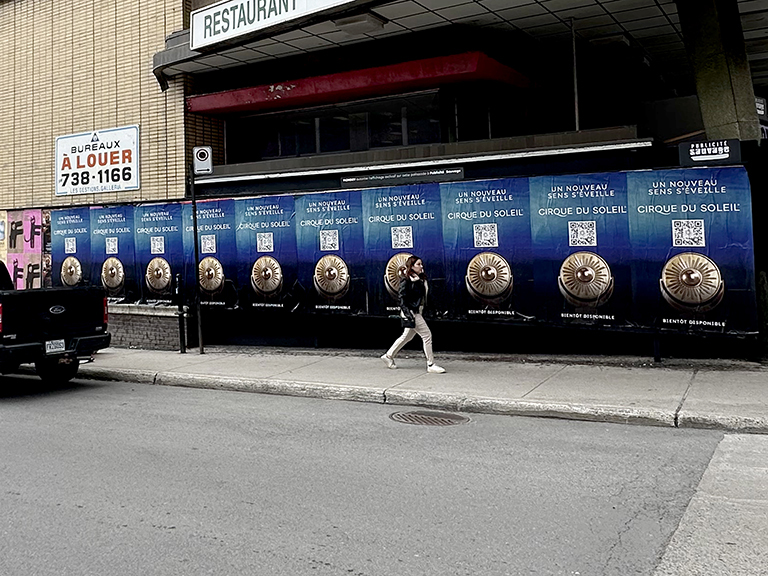
Most brands that come to us for their first international wheatpaste campaign have already run a successful US campaign. They know what good results look like. They have a clear brief, an approved creative, and a launch date. What they don’t know is how much changes when you cross a border.
This isn’t a criticism — it’s just the reality of domestic expertise hitting international execution for the first time. The things that are second nature in the US — file formats, print lead times, what “legal placement” means, how documentation works — are all handled differently in other markets. Brands that run international campaigns without adjusting for these differences end up with delayed launches, low-quality placements, or proof-of-posting gaps that undermine their reporting.
We’ve spent over a decade running campaigns across multiple international markets. American Guerrilla Marketing field operators have firsthand experience with what breaks, what surprises brands, and what they wish they’d known before the campaign started. Here are the eight things most brands don’t know going into their first international poster campaign — and what to do about each one.
1. Format Standards Are Not Universal
In the United States, 24×36 inches is the dominant poster format for wheatpaste campaigns. It’s what printers run efficiently, what operators handle daily, and what walls and surfaces are conditioned for. When a US brand team says “send us the file,” they mean 24×36. When a UK print house says “what format?”, they mean A1 — 594mm x 841mm, or 23.4 x 33.1 inches. These are close but not identical, and the difference matters in production.
The UK uses the ISO A-series paper standard — A0, A1, A2, A3. Printers there are optimized for these formats. Submitting a US 24×36 file to a UK print house requires conversion, and if that conversion isn’t handled correctly, the artwork either gets slightly cropped or printed with unexpected white borders. Neither is acceptable for a brand that has approved tight visual design.
Mexico uses metric-based formats that align more closely with ISO standards than US formats. Japan uses JIS (Japanese Industrial Standards) B-series formats, which are different from both ISO and US standards. When we run campaigns in Tokyo, format conversion is a standard part of the production workflow — it adds roughly one to two days to lead time and requires a press check against the converted file before full print runs.
The fix is straightforward: build market-specific format files before production starts. If your creative team delivers artwork in 24×36, convert to the correct format for each international market before briefing the local printer. Don’t rely on the local print house to handle this — they’ll do their best, but conversion errors made upstream are hard to catch downstream.
2. Print Production Lead Times Vary by Market
New York is one of the fastest print markets in the world. On a standard brief, you can have finished wheatpaste posters in 5–7 days. Rush production — 48 to 72 hours — is genuinely available for campaigns that need it, though at a cost premium.
London runs 7–10 days standard, 5–7 days on a rush. Mexico City runs 7–10 days standard. Paris runs 10–14 days standard, partly because permit processes intersect with print logistics. Tokyo runs 10–14 days standard, partly due to JIS format conversion and partly due to the quality standards Japanese print houses apply to their press checks.
The mistake brands make is applying their US mental model to international markets. They approve artwork on Monday, expect printing to begin Tuesday, and assume the campaign will be on walls by Friday — because that’s what happens in New York. When they discover that London needs a full week just for production after file delivery, and their London street date is nine days away, there’s no good solution. Rush printing is possible but doesn’t compress to New York speeds.
The discipline is to plan production timelines for every market before artwork approval, not after. The longest market timeline sets the pace for the whole campaign. If Tokyo needs 12 days from file delivery to installation, your artwork approval deadline needs to be set 12 days before your Tokyo street date — not 5 days before.
3. Proof-of-Posting Standards Differ Across Markets
In the US, GPS-tagged photography is standard. Every American Guerrilla Marketing placement is documented with location-stamped imagery, timestamps, and a location log that maps every installation address to its photographic record. This is expected, deliverable, and built into every campaign we run.
International operators don’t all work this way. Some deliver photos without location metadata. Some deliver photos in batches without individual location attribution. Some deliver a simple email with attached images and a handwritten list of streets. None of these formats are usable for a brand that needs to produce a multi-market campaign report, verify placement coverage, or account for every unit in a contract.
The solution is to specify your documentation standard in the campaign brief — not assume it. Before any international operator begins work, confirm they can deliver GPS-tagged photography, timestamped to match the installation window, with a location log tied to every photo. If they can’t, or if they haven’t done it before, that’s a signal about the operator relationship, not a negotiation to have after installation is complete.
We require the same documentation standards from every partner we work with internationally as we apply to our own domestic operations. That consistency is what allows us to build a single consolidated proof-of-posting report across a multi-city campaign — not cobble together whatever each market happened to provide.
4. “Legal Placement” Means Different Things in Different Markets
In New York, legal wheatpaste placement means working on permissioned surfaces — walls where we have explicit authorization from the property owner. Our nationwide portfolio of permissioned locations is one of the core assets American Guerrilla Marketing offers. We’ve spent a decade building and maintaining those relationships, and every certified and licensed placement in our system comes with documented permission.
What “legal” means in London is different. The UK has specific regulations around fly-posting, and what counts as a compliant placement depends on borough, surface type, and operator agreements. The Advertising Standards Authority and local councils have different enforcement postures. Brick Lane in Tower Hamlets has a different tolerance than a surface in Westminster. Operators who have been working in London for years know these distinctions in their bones — but they need to be asked about them explicitly, not assumed to apply New York standards.
In Mexico City, permissioned placement in Roma Norte or Condesa means working with building owners and local businesses who have established relationships with wheatpaste operators. The permission structure is less formal in some respects and more relationship-dependent. An operator with strong neighborhood ties can secure placements that an unfamiliar vendor can’t access. The quality of the placement is directly tied to the quality of the operator’s local relationships.
The principle: ask every international operator specifically about their permissioning approach. Request documentation for permissioned surfaces where it’s available. And understand that “permissioned” in each market means the operator has done the local relationship work, not just that they’re confident it’ll be fine.
5. Time Zone Management When Running from New York
London is five hours ahead of New York (four hours during US Daylight Saving Time). Mexico City is either one or two hours behind, depending on when their clocks change. Tokyo is 13–14 hours ahead. Paris is six hours ahead. When you’re coordinating a multi-city campaign from a New York office, these time zone gaps mean your installation windows often happen while your team is asleep.
Brands that try to manage installation day in real time — texting operators, waiting for photo confirmations, approving placements on the fly — hit a wall when London starts installing at 4am local time, which is 11pm the night before in New York. Someone either has to stay up or be comfortable with the installation proceeding without real-time oversight.
The right structure: make all installation-day decisions in advance. The operator brief should contain every decision they need to make during installation — which walls to use, what to do if a primary location is unavailable, how to handle documentation. The operator executes against that brief, and your team reviews documentation the morning after in your time zone.
We handle time zone management as a standard part of international campaign coordination. The brief is tight enough that operators can execute without interruption, and documentation arrives in a consistent format regardless of what time it was in London when the installation happened. This isn’t improvised — it’s a process we’ve built from the firsthand experience of running campaigns across multiple time zones over many years.
6. Creative Localization vs. Direct Translation
Translation is converting words from one language to another. Localization is making the creative work in a specific cultural context. For international poster campaigns, the difference matters.
A tagline that lands in English may convert to a grammatically correct Spanish sentence that has none of the original energy. Idioms are the obvious problem — “drop everything” in English doesn’t land in Spanish the way a native speaker would say it. But it goes beyond idioms. Pacing, humor, directness, formality — all of these read differently across cultures, and a direct translation preserves the words without preserving the effect.
We’ve seen campaigns where a US brand team used machine translation to convert their poster copy into Spanish for Mexico City, approved it because it was grammatically accurate, and placed a campaign that felt imported rather than local. The poster was technically correct. It didn’t feel right on a wall in Roma Norte. The neighborhood noticed the difference, even if no one could articulate exactly why.
The guidance: for any market where the campaign will run in a different language, have the copy reviewed by a native speaker who understands both the brand and the local cultural context. This is not a translation task — it’s a creative judgment. It usually takes one round of feedback to get right, and it’s worth doing before the print run.
7. How to Brief Local Operators from a US Office
Briefing a local operator in Shoreditch or Roma Norte from a New York office requires a different approach than briefing a domestic team you can meet in person, visit the walls with, and check in on during installation.
The most effective international operator briefs are thorough but not controlling. They tell the operator everything they need to know about the campaign intent, the target audience, the visual standards, and the documentation requirements. They don’t tell the operator which specific walls to use — because wall selection is a boots on the ground judgment that can’t be made remotely. They don’t dictate installation timing down to the hour — because local enforcement patterns and weather conditions affect timing in ways the operator knows and a remote team doesn’t.
The brief should answer:
- What is this campaign trying to achieve in this market?
- Who is the target audience, and what neighborhoods do they concentrate in?
- What are the non-negotiable visual standards?
- What documentation is required, in what format?
- What is the decision tree if something changes during installation?
- Who is the single point of contact on the brand side for urgent questions?
What the brief should not include: a list of specific wall addresses derived from a Google Maps session, a mandate on what time exactly to start installing, or instructions about paste formulation. These are things the local operator knows better than anyone briefing them from 5,000 miles away.
8. The Common Mistakes First-Time International Clients Make
We’ve seen the same patterns across enough campaigns to document them clearly. These aren’t criticisms — they’re predictable mistakes that come from applying domestic experience to an international context for the first time.
Applying domestic timelines internationally. A 10-day total production window that works in New York doesn’t work in London or Tokyo. International campaigns need 4–6 weeks of lead time, not 2.
Sending US-format files without conversion. 24×36 files sent to a UK print house without format conversion produce printing errors. Always deliver market-specific files.
Not specifying documentation standards in the brief. If you don’t tell operators what you need for proof-of-posting, you get whatever they usually deliver. Specify GPS-tagged photography, timestamps, and location logs in the brief.
Managing installation in real time across time zones. Trying to maintain real-time oversight of a London installation from a New York office creates decisions made in the middle of the night with incomplete information. Tighten the brief and let operators execute.
Treating translation as localization. Translating copy without reviewing it for cultural fit produces campaigns that feel imported. Have a native speaker review copy for any market where you’re running in a different language.
Selecting walls via satellite imagery. Google Maps views of Shoreditch or Insurgentes look promising from a New York computer. On the ground, those walls may be in poor condition, recently occupied by other campaigns, or in locations that don’t actually reach the target audience. Wall selection has to happen on-the-ground. Always.
Assuming “permissioned” means the same thing everywhere. Ask specifically how each operator defines and documents legal placement in their market. Don’t assume New York standards apply globally.
Skipping the master brief. Running an international campaign without a master brief means each market gets a slightly different version of the campaign. Brief consistency is what makes a multi-city campaign feel like a single campaign — not several local ones running independently.
The US Instinct vs. International Reality
| What Your US Instinct Says |
What International Reality Requires |
| “Print can start when artwork is approved” |
Add format conversion time per market before print begins |
| “10 days is plenty for production” |
London and Mexico City need 7–10 days; Tokyo and Paris need 10–14 |
| “We’ll get photos from the operator after installation” |
Specify GPS-tagged documentation in the brief or you won’t get it |
| “We can review walls on Google Street View” |
Wall selection must happen on-the-ground — no remote substitute |
| “We’ll translate the copy before sending” |
Translation needs cultural review by a native speaker, not just accuracy check |
| “Legal placement works the same way globally” |
Ask each market specifically about their permissioning standards |
| “We can coordinate in real time on installation day” |
Make all installation decisions in the brief — time zones make real-time oversight impractical |
| “The US files will work everywhere” |
Every market needs format-specific production files |
Why Working with AGM Changes the Equation
The reason most of these mistakes happen is that brands are navigating an unfamiliar system without a guide who’s already been through it. The eight things listed above aren’t obscure — they’re the predictable friction points of running an international campaign for the first time. We know them because we’ve encountered every one of them across case studies built over more than a decade of international work.
When a brand works with American Guerrilla Marketing on an international campaign, they get a single New York contact who has already solved these problems. We handle format conversion, operator briefing, documentation standardization, and proof-of-posting consolidation as part of campaign management. We work with certified and licensed operators in each market who understand our standards and deliver to them.
Our nationwide portfolio of domestic media markets gives us the infrastructure and quality benchmarks that we apply to international execution. We don’t lower standards when we cross a border — we build the international brief to match what we hold ourselves to in New York. And we can guarantee that the campaign we deliver will be documented, compliant, and reported to the same standard we apply everywhere else.
For a brand running its first international poster campaign, the question isn’t whether these complications exist. They do. The question is whether you work through them alone — learning from your own first campaign — or work with a team that has the boots on the ground experience to avoid them from the start.
Frequently Asked Questions
What are the standard poster formats used in international wheatpaste campaigns?
The US standard is 24×36 inches. The UK uses A1 (23.4 x 33.1 inches) and the broader ISO A-series. Mexico and most of Latin America use their own metric standard formats. Japan uses JIS B-series formats. These differences are not cosmetic — printing a US-formatted file on UK stock without conversion produces size discrepancies that affect visual quality and placement fit. Every international campaign needs market-specific format files.
What does “legal placement” mean in international wheatpaste markets?
Legal placement means the surface is either owned by the operator’s property partner, covered under a formal permissions agreement, or designated for public posting under local ordinance. What counts as legal placement varies by market — London has different standards than New York, which has different standards than Mexico City. A reputable operator in each market will only work permissioned surfaces, but the brand team should ask specifically about placement legality rather than assuming all operators work the same way.
How do you manage a wheatpaste campaign in London or Mexico City from a New York office?
Time zone management is about establishing clear decision windows rather than matching working hours. Your New York team briefs the campaign completely before production starts. You confirm a single point of contact per market who has authority to make installation-day decisions within agreed parameters. You build your reporting cadence around end-of-installation check-ins, not real-time monitoring. American Guerrilla Marketing handles international coordination from New York — brands work from one contact, not multiple vendor relationships across time zones.
What should proof-of-posting documentation include for an international campaign?
GPS-tagged photography with location metadata intact, timestamps matching the installation window, a location log mapping every address to its photographic record, and video documentation of each placement. For multi-city international campaigns, documentation should be delivered to a shared format so it can be consolidated into a single campaign report. If operators in different markets deliver documentation in different formats, consolidation becomes a multi-day project.
How far in advance should we brief an international wheatpaste operator?
At minimum, brief international operators three weeks before your target street date. This gives time for location scouting, print production with correct format specs, and any permissioning logistics. For markets like Paris where permit processes are involved, six weeks is safer. Briefing an international operator one week out — which is what some US teams try based on domestic experience — usually results in a rushed campaign with compromised coverage.