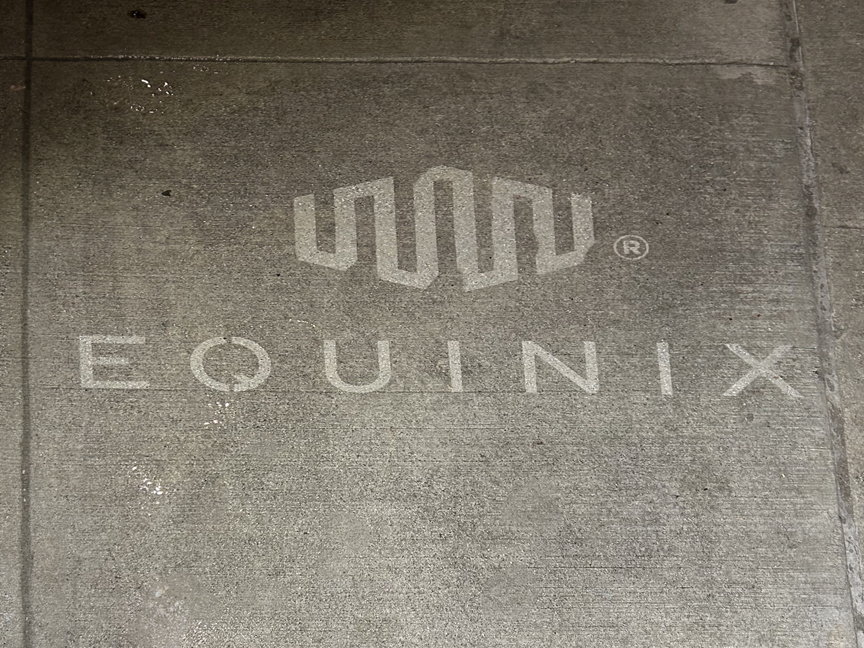
Sidewalk stencils occupy a unique position in street-level marketing. They are not passive like a poster on a wall — they are on the ground, directly in the pedestrian’s travel path, encountered at the moment of forward movement when the eye naturally falls downward to navigate the surface. That placement creates a contact moment unlike any other format: the audience is looking directly at the medium, moving toward it, and cannot avoid it the way they can avoid a billboard or skip a digital ad.
But that positioning also creates specific design constraints. The person looking at a sidewalk stencil is in motion. They are looking for a fraction of a second before they step over or around the design. They are not stopping to read; they are reading while moving. The design must communicate its core message in that fraction of a second, at the correct scale for floor-level viewing, with enough visual contrast to be legible regardless of ambient light conditions or surface variations.
This guide covers the design principles, material specifications, message structure, application methods, and campaign integration that make sidewalk stencils effective advertising tools. Our team at American Guerrilla Marketing deploys sidewalk stencil campaigns across 50+ U.S. markets and has refined the design and execution standards through hundreds of campaigns across every major market condition.
How Sidewalk Stencils Work as a Format
A sidewalk stencil is a reusable template cut from durable sheet material — typically Mylar or heavy polyethylene — through which paint, chalk, or another marking medium is applied to the surface below. The stencil is placed on the target surface, the medium is applied by brush, roller, or spray, the stencil is lifted, and the design is revealed. The process takes 30 to 90 seconds per application depending on design complexity and medium type.
The reusability of the stencil is the format’s production efficiency advantage. A single stencil can produce 50 to 200 applications before replacement, making large-scale deployment across multiple locations cost-efficient once the stencil is produced. The cost structure is front-loaded (stencil production and initial campaign setup) with low incremental cost per additional application location.
Stencil Materials: What the Professionals Use
Mylar (Polyester Film)
Mylar is the standard material for professional stencil production. It is flexible enough to conform to the slight surface irregularities common on urban sidewalks, durable enough to survive 50 to 200+ applications under normal field conditions, and cuts cleanly enough for detailed designs. Standard thickness for sidewalk stencil applications is 10 to 15 mil (0.25 to 0.38mm). Thicker Mylar produces a more durable stencil but is less flexible and harder to transport and store flat.
Polyethylene and Polypropylene
Heavy polyethylene sheet is used for extremely high-volume campaigns where durability is prioritized over design detail. Polypropylene (the same material used for industrial signage) is the most durable option for long-run campaigns but requires specialized cutting equipment for precise detail work. Both materials handle outdoor conditions better than Mylar in extreme heat or cold but sacrifice some flexibility.
Single-Use Adhesive Stencils
For campaigns requiring absolute registration precision or detailed designs that are difficult to hold stable on uneven surfaces, adhesive-backed single-use stencils provide the most consistent results. The adhesive edge conforms to surface texture and prevents paint bleed under the stencil edge. Single-use stencils are more expensive per application than reusable templates but eliminate the paint-bleed quality control issue that affects fine-detail reusable stencils on rough surfaces.
Design Principles for Effective Sidewalk Stencils
Sidewalk stencil design is a constrained medium. The constraints are not limitations — they are the design brief. Working within them produces stencils that communicate effectively. Ignoring them produces stencils that look fine in a design file and fail in the field.
The Reading Speed Constraint
A pedestrian walking at normal pace has approximately 0.5 to 1.5 seconds of contact with a sidewalk stencil before they step past it. In that time, the design must register a primary message. There is no secondary reading — no bullet points, no body copy, no supporting information that gets absorbed on second look. One message. Made instantly legible at walking speed. That is the design constraint.
Test every stencil design by printing it at campaign scale and observing it from 3 to 4 feet above the surface while walking past at normal speed. If the primary message is not immediately clear in that condition, revise the design before producing the stencil.
Message Hierarchy for Sidewalk Stencils
The design should contain: one primary message element (brand name, product name, key phrase, or QR code), one secondary element (a logo or icon), and optionally one tertiary element (a URL, a very short phrase, an offer). Three elements maximum. Most effective stencil campaigns use two: a brand word mark and a QR code, or a product image and a brand name. Adding a fourth element typically reduces legibility of all elements without adding meaningful communication value.
Scale and Legibility
Minimum font height for body copy is 3 inches when read from standing height. For the primary message element, 6 to 12 inches is standard. Logo marks and icons should be sized for recognition at 3 to 4 feet viewing distance. Bold, high-contrast typefaces — condensed sans-serif or block serif — are more legible in the stencil context than script, light weight, or decorative typefaces. Every element that is too fine or too small to hold contrast in the cut stencil should be replaced with a bolder alternative.
Color and Contrast
White or light grey sidewalk surfaces (the most common in major urban markets) work best with dark paint applications — black, navy, dark red. On darker surfaces, white or yellow applications provide the highest contrast. Avoid color combinations with similar value levels (medium grey on light grey, yellow on cream) that lose contrast under variable lighting conditions. The stencil should be legible in full daylight, in overcast conditions, and in evening ambient light.
QR Codes in Stencil Design
A QR code integrated into a sidewalk stencil converts a static visual into a measurable interaction. The pedestrian can scan the code from a standing position using their phone camera, linking the physical sidewalk encounter to a digital action.
QR Code Technical Specifications
A stencil QR code must be cut with sufficient cell size to scan reliably. Minimum cell size for reliable scanning from standing height (approximately 3 to 4 feet above the surface) is 0.6 inches per module. A 21×21 module QR code (the minimum version) at 0.6 inch per module is approximately 12.6 inches square — which is the practical minimum size for a scannable stencil QR code in field conditions.
Laser cutting is the production method of choice for QR code stencils — the precision required for clean module edges is difficult to achieve with manual cutting. Any bridge errors or module bleed in the stencil cut will render the QR code unreadable. Every QR stencil should be test-applied and scanned before full production run.
Application Methods: How Stencils Are Applied
Chalk-Based Applications
Chalk-based paint and liquid chalk markers are used for campaigns requiring temporary application on public surfaces. Chalk applications remove naturally with rain and normal foot traffic — typically lasting 1 to 4 weeks depending on weather. Chalk formulations are available in standard spray and brush-on forms and in most colors. The medium is low-odor, generally low-toxicity, and accepted in many markets where standard paint applications would require permits.
Water-Based Paint Applications
Water-based latex paint provides more durable and vibrant applications than chalk but is regulated as permanent signage on public surfaces in most cities. On permitted private surfaces, water-based paint produces the most visually impactful stencil applications — high color saturation, sharp edges, and 2 to 8 weeks of visibility. Our sidewalk stencil team uses water-based formulations on all private-surface applications.
Placement Strategy: Where to Deploy
Stencil placement follows the same geographic logic as all street-level formats: where the target audience is concentrated in high numbers at a moment of relative receptivity. For sidewalk stencils specifically, the placement logic has an additional dimension — the stencil must be on a pedestrian travel path, not a visual backdrop.
Transit exit sidewalks are the highest-performing stencil location in dense urban markets. The pedestrian exiting a subway is walking, looking down to find their footing, and making directional decisions in the first 10 to 30 steps after the exit. A stencil in that first 30-foot zone after the exit gate creates an unavoidable impression during the highest-attention moment of the commute. Our team maps transit exit foot traffic patterns in every market we operate in to identify the highest-value stencil positions at each location.
Lunch-hour commercial corridors — the sidewalks that office workers traverse on their midday food run — are the second highest-value stencil location. The pedestrian population is predictable (office workers from the surrounding blocks), the timing is consistent (11:30am to 1:30pm weekdays), and the audience is in a relaxed, receptive state relative to the morning commute.
Sidewalk Stencil Campaigns at Scale: Multi-City Deployment
Large-scale sidewalk stencil campaigns that cover multiple cities simultaneously require production and logistics infrastructure that is fundamentally different from a single-market program. The coordination challenges include: maintaining consistent stencil quality across different production runs in different markets, ensuring installation crew quality is consistent across markets with different labor pools, managing permit requirements that vary significantly by city and surface type, and aggregating documentation from distributed crews into a unified proof of posting report.
Centralized Production vs. Local Fabrication
For multi-city campaigns, centralized stencil production in one facility and shipping to each market ensures consistent quality across all installations. Local fabrication in each market is faster to deploy but introduces quality variation that can produce noticeably different results from city to city. When consistent brand presentation is important — which it is for most national campaigns — centralized production is worth the additional shipping logistics. Our team coordinates centralized production for multi-market campaigns and manages the logistics of getting stencils to installation crews in each city within the campaign timeline.
Installation Crew Briefing at Scale
A stencil campaign deploying across five cities in a single week needs a briefing system that ensures every installation crew member in every city understands the placement specification, the application method, the required documentation process, and the quality standards for the brand. Our team uses digital briefing documents with photo references of correct application technique, minimum placement specifications, and quality control checkpoints. The briefing is confirmed with crew leads in each market before installation begins.
Sidewalk Stencil Campaigns for Specific Objectives
Different campaign objectives call for different stencil deployment approaches. Understanding the deployment configuration that serves each objective produces better results than applying the same configuration to every campaign type.
Event Countdown Campaigns
A stencil campaign timed to a specific event — a grand opening, a concert, a product launch — can incorporate countdown elements or teaser messaging that builds anticipation over the weeks before the event. “[Event Name] — [Days Away]” or “Something big is coming to [Neighborhood]” with a QR code for early access creates curiosity among pedestrians who encounter the stencil in the weeks preceding the event. The stencil network becomes a pre-event marketing vehicle that requires no paid media but generates real engagement from the neighborhood’s existing pedestrian population.
Directional Campaigns
For events, venues, or locations where foot traffic navigation is a component of the marketing challenge, stencil campaigns can incorporate directional elements — arrows, distances, street names — that guide pedestrians toward the target destination. A stencil campaign that starts three blocks from a new restaurant and uses a trail of stencils to direct pedestrians toward the entrance creates an experiential discovery that is memorable and shareable in a way that a sign on the door is not.
Production Process: From Design File to Field-Ready Stencil
Understanding the production process from design to deployment helps creative teams make better design decisions and helps marketing teams plan realistic timelines. Each step in the production process has implications for the final stencil’s quality and field performance.
Design File Preparation
Stencil designs must be prepared as vector files (AI, EPS, or SVG) rather than raster files (JPG, PNG) to ensure edge quality at cutting. Raster files have resolution limitations that produce jagged edges when scaled to stencil dimensions and cut — at 24 inches or larger, raster artifacts are visible in the applied design. Vector files are resolution-independent and produce clean edges at any scale. All text should be converted to outlines before submitting to the cutting vendor to prevent font substitution issues.
The design must also be prepared as a “bridge stencil” — with connecting bridges added to any closed or floating elements (the centers of letters like O, A, D, P, and B, and any enclosed design elements). Without bridges, the center of an “O” or the enclosed spaces in a logo mark will fall out when the stencil is cut, leaving those areas unpainted. Experienced stencil designers incorporate bridges as part of the design process; inexperienced teams often discover the bridge requirement only after the first field application.
Cutting Method Comparison
Laser cutting produces the sharpest edges and highest design fidelity of any cutting method. It is appropriate for designs with fine detail, small text, QR codes, and any element requiring precision cut tolerances. Plotter cutting (vinyl cutter) is less expensive and appropriate for bold, simple designs without fine detail. Hand cutting is impractical for campaign-scale production and reserved for bespoke artistic applications. For any campaign requiring QR codes or fine typography, specify laser cutting in the production brief.
Chalk-Based Stencil Programs: The Permitted Alternative
Chalk-based sidewalk stencil programs are increasingly common for brands that want the visual impact of sidewalk messaging without the permitting requirements of permanent paint applications. Water-based biodegradable chalk in spray or brush-on formulations produces bold, visible designs that remove naturally with rain and normal foot traffic — a quality that makes them acceptable on public surfaces in many cities without requiring municipal permits.
Chalk vs. Paint: When to Use Each
Chalk is appropriate when: the campaign is on public sidewalks where permits are difficult to obtain, the brand wants the campaign to naturally fade over the campaign window rather than requiring active removal, or the city’s enforcement posture toward chalk-based installations is known to be permissive. Paint is appropriate when: the campaign is on private surfaces where the property owner has authorized the application, longer visibility duration is required, or the design requires finer detail than chalk spraying can achieve.
Chalk-based programs require more frequent reapplication than paint — expect to reapply every 7 to 14 days in wet climates, every 14 to 21 days in dry climates. Build the reapplication cost into the campaign budget from the start. A chalk program that runs 30 days without reapplication plans ends with designs that have faded below visibility threshold by day 14, wasting half the campaign window.
Integrating Stencils With Other Campaign Formats
Stencils work as a standalone format and as a component of an integrated campaign. Combined with wheatpaste campaigns in the same neighborhood, stencils add a format dimension at the pedestrian’s feet while the posters work at eye and above-eye level. The combination creates brand presence at multiple levels of the pedestrian visual field — the full visual environment of the neighborhood carries the brand rather than a single format in a single position.
Our snipe advertising programs often run alongside stencil campaigns in the same neighborhood — snipes on utility poles and vertical surfaces at eye level, stencils on the sidewalk below. The two formats create vertical saturation of the visual field and reach different moments of the pedestrian’s attention as they move through the space.
Frequently Asked Questions
What is a sidewalk stencil?
A sidewalk stencil is a reusable template cut from durable material used to apply a brand message to a sidewalk or pavement surface using chalk-based or water-based paint. Stencils create bold, repeatable visual elements that communicate a brand message at foot level — directly in the pedestrian’s line of sight.
What materials are used for sidewalk stencils?
Mylar (polyester film) is the most common professional stencil material. It is flexible enough to conform to slightly uneven surfaces, durable enough to survive 50 to 200 applications, and cuts cleanly for detailed designs. Heavy polyethylene and aluminum are used for long-run high-volume production.
How long do sidewalk stencil campaigns last?
Chalk-based applications typically last 1 to 4 weeks depending on weather and foot traffic. Water-based paint applications last 2 to 8 weeks. For most brand campaigns, 2 to 4 weeks of visibility is the target window.
What design principles make a sidewalk stencil effective?
Bold, simple, and readable at walking speed. One primary message: a brand name, a QR code, or a short phrase. High contrast between medium and surface. Minimum font height of 3 inches for body text, 6 inches for the primary message. Three design elements maximum.
Are sidewalk stencils legal?
Chalk-based stencils on public sidewalks are legal in many U.S. cities because the application is impermanent. Standard water-based paint stencils on public sidewalks require permits in most major cities. On private property, stencils require property owner permission. Our team ensures every campaign complies with market-specific regulations.
How do you incorporate a QR code into a sidewalk stencil design?
QR codes require a minimum cell size of approximately 0.6 inches per module to scan reliably from standing height. A typical stencil QR code is 6 to 12 inches square. Laser cutting is the most reliable production method. Test the QR code for scan reliability before full production run.