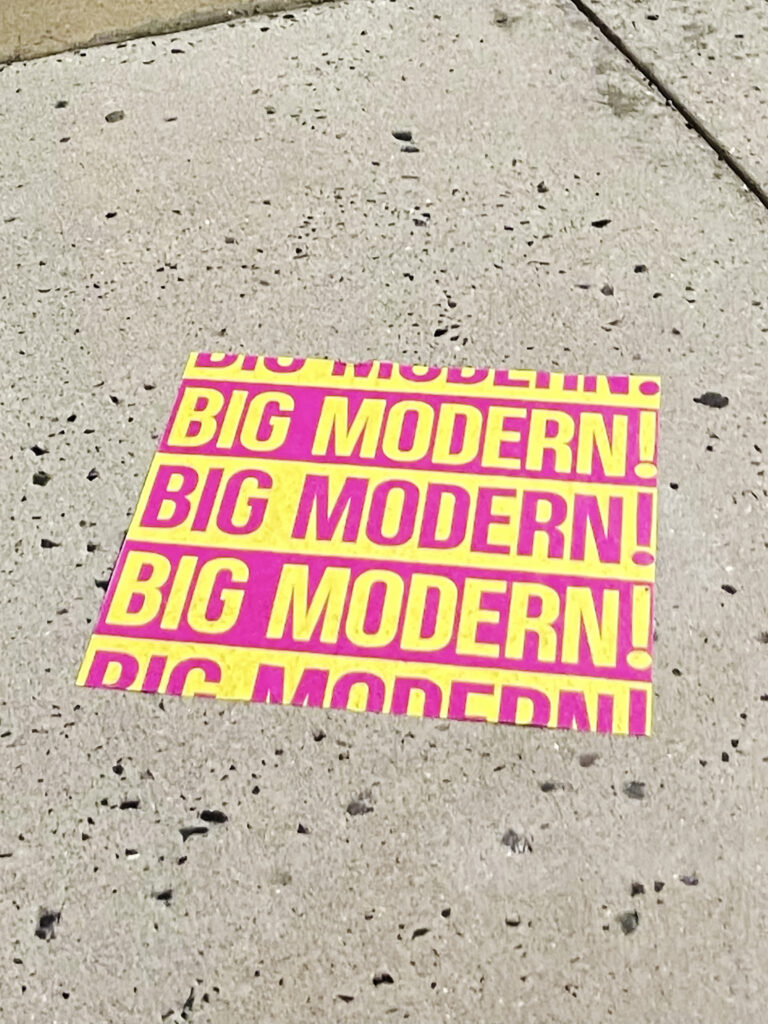
Sidewalk decal advertising puts your brand message directly in the path of pedestrian traffic — on the ground where eyes naturally fall, at street level, in the exact locations where your target audience walks. It is one of the most cost-effective impression formats in guerrilla marketing, and it works particularly well for event marketing, retail foot traffic, product launches, and any campaign where directing people toward a physical location is part of the objective.
What brands most consistently want to know before committing to a campaign: what does it cost? The honest answer is that cost depends on a range of factors — market, volume, material type, permit requirements, and design complexity — and any agency that gives you a flat rate without understanding your specific campaign is guessing. This guide breaks down the actual cost drivers so you can build a realistic budget and evaluate proposals accurately.
American Guerrilla Marketing executes sidewalk stencil and decal campaigns across 50+ U.S. markets. Our team handles location scouting, permit research, material production, crew deployment, and GPS documentation. Here is how we think about cost, and what you should expect to pay at different campaign scales.
Primary Cost Factors for Sidewalk Decal Campaigns
A sidewalk decal campaign is not a single price — it is a set of cost components that add up based on your specific campaign parameters. Understanding each component helps you make intelligent tradeoffs when scoping your program.
Number of Placements
Volume is the most significant cost variable. A campaign with 20 decal placements in one neighborhood costs fundamentally less than a campaign with 200 placements across a city. But there is not a simple linear relationship between placement count and cost — larger campaigns often achieve better economies of scale on production, material per unit, and crew deployment efficiency. When scoping your campaign, consider what placement density is required to achieve the impression frequency your objectives demand, not just the minimum that fits your initial budget.
Market Selection and Labor Cost
Markets vary significantly in crew labor costs, permit fees, and logistical complexity. New York City and Los Angeles have higher deployment costs than secondary markets like Denver, Nashville, or Portland. A 50-placement campaign in Manhattan costs more than the same volume in Austin or Pittsburgh. If your campaign needs to be in a specific high-cost market for audience reasons, that market premium is unavoidable. If you have flexibility on geography, a secondary-market campaign can deliver strong impression volume at significantly lower cost.
Material Type and Decal Format
Sidewalk decal programs use several material types, each with different cost and performance profiles. Liquid chalk formulations are the most common format for temporary advertising — they apply cleanly, resist rain for a defined period, and dissolve naturally over time. Vinyl decals with removable adhesive cost more per unit but last longer and offer higher print quality. Cut-vinyl and stencil-based applications are used for specific creative requirements. Material choice should be driven by campaign duration requirements, surface conditions, and permit constraints in the target market.
Cost Ranges by Campaign Scale
While every campaign is priced individually, these ranges reflect what American Guerrilla Marketing and comparable agencies charge for different program scales in a typical mid-tier market. Adjust upward for NYC, LA, or San Francisco; downward for secondary and tertiary markets.
Small-Scale Programs (20-50 Placements)
Small programs targeted to a single neighborhood or event area typically run from $3,000 to $8,000 all-in for a mid-tier market. This range includes design setup, material production, crew deployment, permit research, and basic documentation. Small programs are common for pop-up event support, product launch teaser campaigns, and local retail foot traffic programs. They are also the right starting point for brands testing the format before committing to a larger program.
Mid-Scale Programs (50-150 Placements)
Mid-scale programs covering multiple neighborhoods in a single market typically range from $8,000 to $18,000 depending on market and material type. This scale delivers meaningful city-wide presence and enough placement density to create the repetition effect that drives brand recognition. Entertainment campaigns, consumer product launches, and event marketing programs frequently operate at this scale. At this volume, sidewalk decals become a cost-per-impression competitor to transit advertising and digital out-of-home formats.
Large-Scale and Multi-Market Programs
Large campaigns covering an entire city, major multi-market programs, or campaigns that combine sidewalk decals with wheatpaste posters or sidewalk stencils scale from $18,000 into six figures for comprehensive national programs. Multi-market coordination through a single agency significantly reduces the management overhead and documentation complexity compared to managing separate vendors in each market. Our team handles multi-city programs as a single project with unified reporting.
Permit Costs and Compliance Requirements
Permit requirements for sidewalk decal advertising vary dramatically by city, and permit costs are a real line item in campaign budgets. Some cities have straightforward processes for temporary chalk applications on public sidewalks. Others require more complex permitting, restrict certain material types, or require applications to be filed by a licensed contractor. Failing to research permit requirements before deployment exposes the campaign to fines that can exceed the cost of the original permit many times over.
Private Property Installations
Many effective sidewalk decal placements happen on private property — building forecourts, retail parking areas, private pedestrian plazas, and event venues. Private property installations typically require written consent from the property owner but do not require municipal permits. This distinction affects both the cost and the timeline. Private property campaigns can often be planned and deployed faster than programs requiring municipal permit approval, and they carry lower regulatory risk.
Special Event Permits
Campaigns timed to coincide with major public events — festivals, marathons, street fairs, sporting events — may be able to operate under the event organizer’s site use permit, simplifying the approval process. Our team coordinates with event organizers where applicable to structure campaign permits efficiently. Experiential marketing programs that integrate sidewalk decals with on-site activations often benefit from this consolidated permitting approach.
Sidewalk Decal Campaign Design: What Converts at Street Level
Campaign cost and placement quality only determine what your audience has an opportunity to see. Whether they actually see it, engage with it, and remember your brand depends on creative decisions that are largely separate from media buy decisions. Here is how to design sidewalk decal creative that performs at street level.
Scale and Legibility
Sidewalk decal creative is viewed from standing height, typically at a downward angle, often while walking. Text should be large enough to read comfortably at five to eight feet of viewing distance with a two-second glance window. Complex messaging that requires more than a few seconds to process will not be absorbed by a walking pedestrian. Focus on one primary message per decal, expressed in the fewest words possible. The most effective sidewalk decal creative uses a bold headline, strong brand visual or logo, and a single call to action.
Directional Creative for Wayfinding Applications
When sidewalk decals serve a wayfinding function — directing foot traffic toward a venue, pop-up, or retail location — directional arrow formats are essential. The arrow needs to be large, clearly directional, and positioned at the exact decision point where a pedestrian would otherwise choose the wrong direction. The text accompanying the arrow should be minimal: the destination name and, if necessary, a distance indicator. Wayfinding decals should not include marketing copy that competes with the directional message for attention.
Color Contrast and Visibility
Sidewalk surfaces in most cities are gray or tan concrete, asphalt, or pavers. Creative that uses high-contrast colors against these neutral backgrounds — bright white, yellow, red, electric blue, orange — stands out clearly at viewing distance. Low-contrast creative that blends with the pavement or is too similar to the surrounding street environment loses visual impact quickly. Brands that have muted or neutral color palettes in their standard creative guidelines sometimes need to adapt those palettes for sidewalk decal applications to maintain visibility. Our team flags contrast issues during creative review.
Weather Durability and Legibility Over Time
Sidewalk decals degrade over time from foot traffic, weather, and UV exposure. The rate of degradation varies by material, surface type, and climate. Creative that looks perfect at deployment needs to still be legible and brand-positive at the midpoint and end of the campaign window. Designs with fine detail, small text, or subtle gradients degrade faster and less gracefully than clean, bold designs with large elements. For longer-duration campaigns, choose creative that maintains its core message even as the peripheral detail degrades.
Markets Where Sidewalk Decal Campaigns Perform Best
Sidewalk decals are a pedestrian-impression format. They perform best in environments where pedestrian density is high, walking speeds are moderate, and the sidewalk environment is a natural part of the audience’s daily experience. Here is how to evaluate market suitability for a sidewalk decal campaign.
High-Performing Urban Markets
New York City, San Francisco, Boston, Chicago, and other dense walking cities are the strongest sidewalk decal markets because pedestrian density creates high daily impression volume from fixed placements. In New York, a well-placed sidewalk decal in a high-foot-traffic corridor can generate thousands of pedestrian impressions per day from a single placement. These markets are more expensive to operate in but deliver impression volumes that justify the premium for most campaign types.
Mid-Tier Markets with Strong Walkability
Austin, Nashville, Denver, Portland, Seattle, and similar mid-tier markets with strong walkable urban cores and high pedestrian activity offer excellent sidewalk decal performance at lower cost per placement than the premium coastal markets. These markets have seen growing interest from brands with national reach objectives who want cost-efficient coverage across multiple cities rather than deep investment in a single premium market.
Event-Activated Markets
Any market hosting a major event — a music festival, a sports championship, a political convention, a major trade show — becomes a temporarily high-performance sidewalk decal market during the event window. The concentrated pedestrian traffic created by the event dramatically increases impression volume for decals placed in the event approach corridors, regardless of the market’s baseline walkability. Event-activated sidewalk decal campaigns can deliver extraordinary ROI precisely because the impression volume during the event window is much higher than a steady-state campaign in the same geography.
Comparing Sidewalk Decal Costs to Other Street Media
Sidewalk decals compete on cost-per-impression against transit advertising, digital out-of-home, and other street-level formats. Understanding how the cost comparison works helps you allocate budget across a media mix more intelligently.
Sidewalk Decals vs. Transit Advertising
Transit advertising in major markets — subway car cards, bus tail displays, station posters — typically costs $15,000 to $60,000+ per market for a four-week program at meaningful scale. A sidewalk decal campaign at comparable impression volume in the same market costs significantly less, with the added advantage of targeting specific neighborhoods rather than the entire transit network. For campaigns that need neighborhood-level targeting, sidewalk decals often deliver better value.
Sidewalk Decals vs. Digital Out-of-Home
Digital out-of-home (DOOH) screens offer impression precision and creative flexibility but at cost structures that favor large-scale campaigns. For mid-scale programs in secondary markets, sidewalk decals at $5,000-$12,000 often achieve comparable pedestrian impression volume to DOOH placements at two to three times the cost. The physical, tactile quality of a sidewalk decal also creates a different audience experience than a screen — one that brands in certain categories, particularly events and entertainment, find more effective.
Long-Term Cost Efficiency: Building Campaign Infrastructure
Brands that run sidewalk decal campaigns repeatedly in the same markets build cost efficiency over time through campaign infrastructure that amortizes across multiple programs. Here is how the economics of repeat campaigns differ from one-off programs.
Location scouting costs are largely eliminated in repeat markets. The research required to identify high-value placement locations, confirm permit requirements, and establish property owner relationships in a new market adds meaningful cost and timeline to the first campaign. In repeat markets, this infrastructure already exists. Our team maintains active location maps and property owner relationships in every market where we operate regularly, which means repeat clients in those markets receive faster planning timelines and lower location research overhead than first-time clients.
Surface relationships reduce access costs over time. Property owners and operators who have worked with our team on successful previous campaigns are more willing to offer preferred pricing and reserved access windows to repeat campaign programs. This pricing advantage accumulates over multiple campaigns and can reduce access costs by 15-25% compared to first-campaign rates in markets where established relationships exist. Clients who commit to multi-campaign programs rather than one-off executions typically access these relationship benefits faster than those who re-engage on an ad hoc basis.
Production economies of scale apply across campaigns. Brands that run multiple campaigns per year in the same format can consolidate print production runs across campaigns, reducing per-unit print costs and eliminating setup charges that apply to each separate print run. Our team identifies production consolidation opportunities when planning campaign calendars for multi-campaign annual programs and builds these savings into program budgets rather than passing them through at full rate.
Cost Reduction Strategies Without Compromising Quality
Clients with limited budgets for sidewalk decal campaigns often ask how to reduce costs without undermining campaign effectiveness. Here are the strategies our team recommends for squeezing more value from a constrained decal campaign budget.
Market selection is the highest-leverage cost variable. A campaign that shifts from a primary market like New York or San Francisco to a mid-tier market like Nashville, Denver, or Portland can achieve comparable impression volume at 40-60% lower cost per placement. For brands with geographic flexibility in their target audience definition, market selection based on cost efficiency can significantly improve total campaign ROI without reducing objective achievement.
Placement volume is negotiable when concentrated strategically. Twenty well-placed decals at the highest-traffic pedestrian decision points in a target neighborhood often outperform fifty poorly placed decals spread too thin across the same geography. Concentrating the placement budget on the highest-value surfaces rather than chasing total placement count delivers better impression quality at lower total cost. Our team identifies the specific decision points in every market that deliver disproportionate impression volume relative to their cost — these are the placements to prioritize when budget requires selectivity.
Material selection also affects cost. Liquid chalk formulations for short-duration campaigns cost significantly less than vinyl decals per placement. For campaigns with duration requirements under two weeks, chalk materials often deliver comparable visibility at lower material cost. The tradeoff is durability: chalk degrades faster in wet or high-foot-traffic conditions, which can be acceptable for a short-burst campaign but creates problems for programs that need to maintain visibility over three or four weeks.
What the Campaign Budget Includes
When American Guerrilla Marketing quotes a sidewalk decal campaign, the budget covers all campaign elements from planning through documentation. Here is what is included in a standard campaign budget.
Campaign Planning and Location Scouting
Our team scouts target locations before deployment, identifying specific placement points that maximize foot traffic and audience alignment. This includes permit research in every target municipality, surface condition assessment, and coordination with property owners for private property placements. Clients receive a confirmed placement plan before production begins.
Production and Logistics
Material production, packaging, and shipping to field teams are included in the campaign budget. We coordinate with print vendors to ensure specifications match surface requirements and campaign duration needs. Material quality control happens before shipping — our field teams receive production-ready materials, not off-spec prints that require field adjustments.
Field Deployment and Documentation
Field crew deployment, placement, and GPS-tagged photography are included. Every placement is documented with location metadata and timestamped photography. Clients receive a full deployment report within 48 hours of campaign completion. Our guerrilla marketing services operate to a documentation standard that lets clients validate every claimed placement independently.
Frequently Asked Questions
How much does a sidewalk decal advertising campaign cost?
Sidewalk decal campaign costs typically range from $3,000 to $25,000+ depending on market, number of placements, decal size, material type, and campaign duration. Single-city programs start around $3,000-$6,000. Multi-market campaigns scale from there.
What factors affect sidewalk decal advertising cost?
Key cost factors include number of placements, market (NYC and LA cost more than secondary markets), decal size and complexity, material type (chalk vs. vinyl vs. liquid chalk), permit requirements, and campaign duration.
Are sidewalk decals removable?
Yes. Professional sidewalk decals are designed for clean removal. Chalk-based materials dissolve naturally with rain. Vinyl decals with removable adhesive are removed by crews at campaign end. Permanent installations require different permitting and are used less frequently in advertising contexts.
Do sidewalk decal campaigns require permits?
Permit requirements vary by city and surface location. Some municipalities require permits for any decal application on public sidewalks. Private property installations may require property owner consent but not municipal permits. American Guerrilla Marketing researches permit requirements in every market as part of campaign planning.
How long do sidewalk decals last?
Chalk-based decals typically last one to three weeks depending on weather and foot traffic. Vinyl decals can last four to eight weeks or longer with proper surface preparation. Campaign duration is factored into the material selection and cost calculation.