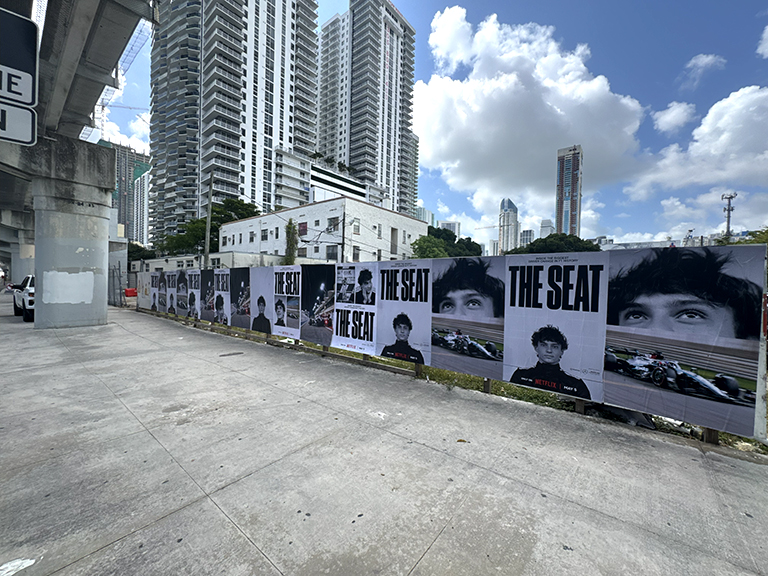
New York City is the most demanding and most rewarding market for wheatpaste poster campaigns. The density is unmatched: Manhattan alone has more foot traffic per block than most other American cities have in a district. The competition for posting surfaces in high-value neighborhoods is fierce. And the visual culture of the city sets expectations for what a credible poster campaign looks like. A badly scouted wheatpaste campaign in New York will underperform everywhere else. A well-scouted one will outperform almost anything.
We execute wheatpaste and poster campaigns in New York from our base in Industry City, Brooklyn, NY. We know this city’s posting geography from hundreds of campaigns across every borough. What follows is how we actually scout: the specific questions we are answering, the borough-by-borough targeting logic, the surface evaluation criteria, and the practical reality of what makes a location valuable versus what makes it waste. Call (646) 776-2770 to discuss a New York campaign.
The Borough-by-Borough Targeting Logic
New York City is five boroughs with dramatically different demographic profiles, neighborhood cultures, and physical posting environments. A campaign that targets them uniformly is a campaign that targets nobody well. The geographic brief has to specify which boroughs and which neighborhoods before scouting begins.
Brooklyn
Brooklyn is the highest-priority borough for most brand campaigns targeting millennial and Gen Z audiences because of the neighborhood density of the relevant demographics. Within Brooklyn, the targeting splits further:
Williamsburg and Greenpoint: The core of Brooklyn’s creative, music, food, and fashion audience. Posting competition is extremely high on the prime surfaces, but the audience quality and density justify the effort. Our wheatpaste campaigns in Williamsburg use a combination of legal posting surfaces and owner-permitted building sides to maintain visibility in a competitive environment.
Bushwick: The art and culture quarter. Mural culture dominates visually, which actually creates more legible posting surfaces for printed campaigns because the visual noise is organized rather than chaotic. The audience skews creative and subcultural, which responds strongly to design-forward campaigns.
Crown Heights and Bed-Stuy: Community-rooted, culturally rich neighborhoods with strong foot traffic and less posting competition than North Brooklyn. For brands that want authentic presence in Black cultural neighborhoods rather than the gentrified zones further north, Crown Heights and Bed-Stuy are the right geography.
Sunset Park (where Industry City is located): Our home turf. Industrial character, strong Latino community, and growing creative presence. Right for campaigns that want to reach that specific demographic intersection.
Manhattan
Manhattan’s best wheatpaste posting environments are concentrated in a relatively small number of areas. The Lower East Side and adjacent areas of Chinatown have the strongest posting culture and the highest density of legal posting surfaces. SoHo and Nolita have premium visual real estate but higher enforcement visibility. The East Village has a strong tradition of political and cultural posting that brand campaigns can access thoughtfully.
Midtown Manhattan is generally hostile to wheatpaste campaigns. The commercial density, the enforcement presence, and the rapid removal environment make it a poor investment. Campaign budgets allocated to Midtown wheatpaste are almost always better spent in neighborhoods with established posting cultures.
Queens
Astoria and Long Island City are the strongest Queens targets for campaigns reaching young professional and international audiences. The 7-train corridor from Flushing to Jackson Heights reaches the most ethnically diverse catchment in New York for campaigns targeting South Asian, East Asian, or Latino demographics.
The Bronx
The South Bronx along 149th Street and Grand Concourse has strong foot traffic and genuine community presence for campaigns targeting that specific geography. The Grand Concourse’s residential density creates a captive posting audience for campaigns with community focus.
What We Evaluate in a Candidate Posting Surface
Not every wall in a good neighborhood is a good posting surface. The evaluation has several dimensions that have to be assessed on foot, not from a map.
Legal and Ownership Status
Our first assessment is whether the surface is a known legal posting location (construction site hoardings with posting permissions, permitted posting boards), a de facto posting surface where the property owner has never objected and where posting has existed continuously, or a surface that is clearly not appropriate (occupied retail frontages, residential buildings, historic properties).
The de facto category requires contextual judgment. A surface that has hosted posters for years without removal is a signal that the posting environment is tolerant. A surface that is frequently cleaned or where competing posters are removed quickly is a signal that the environment is hostile regardless of what it looks like at the moment of the scout walk.
Visibility and Foot Traffic
The best posting surfaces are on the pedestrian path of the target audience’s daily movement, not on side streets that only receive foot traffic incidentally. A wall on the walking route from the subway to the primary retail corridor is more valuable than a wall that is physically prominent but off the daily movement path.
We assess visibility at the times when the target audience is actually present. A morning commute crowd and an evening social crowd use the same streets differently. A surface that is visible to morning commuters walking east may be invisible to the same people walking west in the evening. Time-of-day foot traffic analysis is part of the scout.
Surface Condition and Poster Adhesion
Wheatpaste adheres best to porous surfaces with some texture. Smooth concrete, glass, and metal are poor adhesion surfaces. Rough brick, painted wood, and rough concrete are good. The condition of the existing posting layer on a well-used surface matters as well: a thick, dry, rough accumulation of old posters is actually an excellent adhesion surface for new wheatpaste. A recently cleaned, bare wall may need a wet wheatpaste base coat before the poster layer goes up.
Competition and Posting Velocity
In high-competition areas like the Lower East Side, posting surfaces can turn over in 48-72 hours. A fresh poster is covered within days. For campaigns that require a minimum exposure window, high-competition surfaces need to be restocked more frequently, which affects the budget and logistics calculations. We assess posting velocity on each surface during the scout and build restocking schedules accordingly.
Building the Location List
After the scout, candidate locations are documented with GPS coordinates, photographs from multiple angles, the surface assessment, the ownership/legal status assessment, the estimated daily foot traffic, and the posting velocity estimate. This information goes into a ranked location list that prioritizes locations based on the campaign objectives.
A campaign focused on maximum impressions prioritizes high-traffic surfaces with long visibility even if posting velocity means more frequent restocking. A campaign focused on cultural positioning prioritizes locations in the specific neighborhoods and on the specific block faces that reach the target audience most precisely, even if the raw impression count is lower.
The final location list is presented to the client with enough context to understand why each location was selected and what the trade-offs are. Location decisions are strategic decisions. They should be made with the same information and rigor as any other campaign element.
Campaign Execution: From Scout to Street
The scout produces the approved location list. Execution then follows a defined sequence: poster print production, wheatpaste preparation, street team scheduling against the location list, posting execution with GPS documentation, and initial monitoring to assess early turnover rates.
We photograph every location immediately after posting with GPS-tagged images that confirm placement, poster condition, and the specific surface. This documentation is the baseline against which monitoring is measured. If a poster is covered or removed within 24 hours of posting, that surface goes back on the restocking priority list.
Monitoring runs throughout the campaign window. Surfaces with high turnover get restocked on an accelerated schedule. Surfaces where posters are lasting well get less frequent service. The monitoring data at the end of the campaign becomes the basis for location list refinement on subsequent campaigns in the same market.
Connecting the Poster Campaign to Other NYC Street Formats
A wheatpaste campaign in New York performs best when it is one element of a coordinated street presence rather than the only visible tactic. Sidewalk stencils on the approach routes to key posting locations create a ground-level trail that leads to the poster surfaces. A mobile LED billboard running through Williamsburg and the Lower East Side creates a high-visibility above-street presence that reinforces the poster campaign at a different scale and height.
Our brand ambassador teams in the same neighborhoods as the wheatpaste campaign create the human element. A street team working at the foot of a wheatpaste saturation zone, handing out the same messaging at street level, connects the environmental campaign to a direct interaction. The combination creates multiple touchpoints in a small geographic area that compounds into strong brand recall.
For brands running their first New York campaign, our guerrilla marketing services team builds the full program: scouting, production, execution, monitoring, and documentation. The result is a campaign with a verifiable, GPS-documented location network that demonstrates exactly where the brand appeared and for how long.
Frequently Asked Questions
How do you scout wheatpaste locations in New York City?
NYC wheatpaste scouting starts with a neighborhood brief that defines the target audience geography. Scouts walk the area on foot during peak hours to assess foot traffic and surface availability. Candidate surfaces are photographed, GPS-tagged, and evaluated for legal status, visibility, surface condition, and typical longevity before being added to the campaign location list.
What are the best NYC neighborhoods for wheatpaste campaigns?
The strongest wheatpaste neighborhoods in NYC include Williamsburg and Bushwick in Brooklyn for creative and music audiences; Lower East Side and SoHo in Manhattan for fashion and culture; Astoria and Long Island City in Queens for a mix of young professional and immigrant audiences; and Crown Heights and Bed-Stuy in Brooklyn for community-rooted brand presence.
Is wheatpasting legal in New York City?
Wheatpasting on surfaces without property owner consent is technically a violation of NYC Administrative Code related to posting bills. On surfaces where the property owner has given consent or where the surface is an established legal posting location, it is permissible. Many buildings with established posting histories are accepted de facto posting surfaces in their neighborhoods.
How long do wheatpaste posters last in NYC?
Wheatpaste poster longevity in New York City ranges from a few days in high-competition areas like the Lower East Side where poster turnover is rapid, to 2-4 weeks in lower-competition neighborhoods. Higher walls, recessed surfaces, and locations with less direct foot traffic tend to last longer.
How many locations does a typical NYC wheatpaste campaign cover?
A neighborhood-focused campaign might cover 50-100 surfaces. A borough-wide campaign runs 200-500 locations. A full NYC multi-borough program can cover 500-1,500 locations depending on budget and desired frequency.
What is the difference between a wheatpaste scout and a street team?
A scout identifies, evaluates, and pre-approves locations before the campaign runs. A street team executes the actual posting on the approved location list. These are distinct functions that sometimes involve the same person in small campaigns but are better separated in larger programs to ensure that location quality decisions are made without the time pressure of execution day.