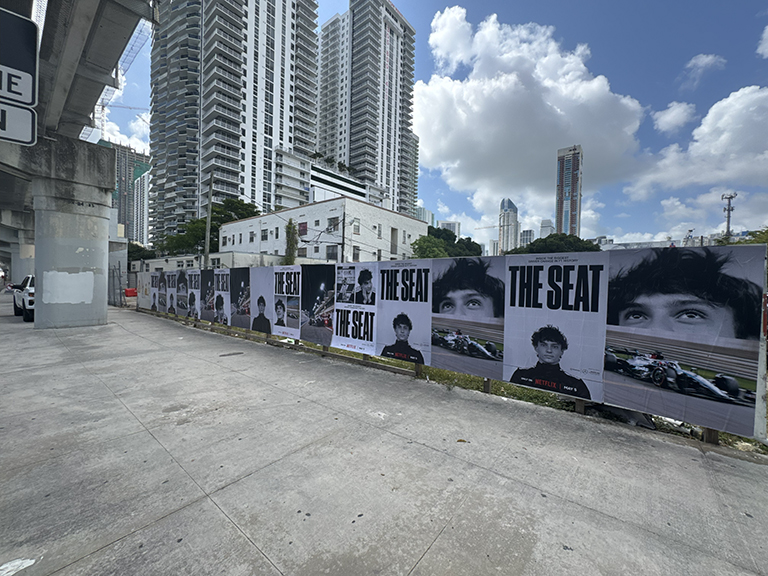
The last paste crew has checked in. The final wall is documented. The installation is complete. For a lot of brands, that’s where the mental model ends — the posters are up, the city takeover is done. That assumption costs campaigns more than most brands realize.
Managing a city takeover wheatpaste campaign in real time is the discipline that determines whether a 72-hour installation holds its visual impact for 14 days or degrades into a patchwork of torn edges and half-removed sheets by day five. It’s the operational layer that separates a campaign with strong documentation from one that can’t prove what it actually ran. And it’s the part of the business that American Guerrilla Marketing field operators have been building and refining over a decade of on-the-ground execution across every major US media market.
This is the full picture of what happens after the posters go up.
The First 24 Hours: Documentation Review and Initial Condition Assessment
The clock starts the moment installation wraps. Within the first 24 hours, the focus is on two parallel tracks: documentation processing and initial condition assessment.
Documentation processing is the unglamorous part of the work that clients often underestimate. Every wall generates a set of GPS-tagged, timestamped photos taken by the field crew during installation. Those images need to be reviewed, sorted by location, matched against the agreed wall list, and assembled into a delivery-ready proof-of-posting package. On a large city takeover — 150 walls across six neighborhoods — that review process can take several hours even when the documentation workflow was executed perfectly in the field. When there are gaps, re-shoots are flagged and assigned to field operators still in the area.
The initial condition assessment runs parallel. AGM field operators who are on the ground in the installation zone during the morning hours after an overnight install walk key corridors to evaluate how the campaign looks in real-world daylight conditions. We’re looking at three things: adhesion quality (did the paste cure properly given overnight temperature and humidity?), visual presentation (do the prints look as intended at street level and from distance?), and any immediate removal activity (is a building owner already pulling posters that went up hours ago?).
In a decade of city takeover campaigns across New York, Los Angeles, Chicago, and other major US markets, American Guerrilla Marketing field operators have found that 60-70% of any removal activity in a given campaign typically occurs within the first 48 hours of installation. Getting eyes on key walls early is the single most effective monitoring action available.
Most removal in the first 24 hours is proactive — a building owner or superintendent who noticed the installation and acted immediately. That’s distinct from the slower, incremental weathering and competing-layering that degrades campaigns later in the run. Understanding which walls were hit early and why informs the maintenance planning that follows.
Monitoring for Poster Removal: The Ongoing Field Responsibility
Monitoring doesn’t stop after day one. Permissioned walls — walls where American Guerrilla Marketing has existing relationships and documented agreements — have a significantly lower removal rate than non-permissioned placements. Our nationwide portfolio of permissioned walls is a direct operational asset for clients, reducing the risk of immediate removal and extending average campaign lifespan. But even on permissioned walls, conditions change. Building ownership changes. New management comes in. Weather events happen.
Our field operators conduct structured condition checks at defined intervals during a campaign. The standard protocol is:
- Day 1 post-installation: Initial walkthrough of high-priority corridors, documentation of any immediate removal
- Day 3: Full condition assessment of all primary walls, photograph any degradation, flag maintenance candidates
- Day 7: Mid-campaign check, assess overall campaign visual integrity, confirm maintenance decisions
- Day 14 (or campaign end): Final documentation, closeout photography, removal of any client-owned materials if required
The day-3 check is the most operationally significant. By day three, any removal that’s going to happen on a given wall has usually happened. Walls that survived day three tend to run the full campaign duration. Walls that are blank on day three represent decisions: is there a backup wall available, does the location warrant a maintenance top-up, does the client need to be informed?
What Triggers a Maintenance Run
Three conditions trigger a maintenance recommendation from our team:
1. Removal by building owners or property management. When a wall that was placed goes dark — the poster has been removed, painted over, or covered — that location is flagged for a potential replacement. Whether we actually go back depends on the replacement wall availability, the remaining campaign duration, and whether a comparable location exists within the neighborhood zone.
2. Weather damage that materially degrades print quality. Heavy rain within 12-24 hours of installation can lift paste bonds and cause peeling. Direct sun exposure on certain paper stocks causes rapid fading. These conditions are factored into installation planning, but they can’t be fully eliminated. When a wall degrades to a point where it no longer reads clearly from standard viewing distance, it’s a candidate for a top-up.
3. Competing campaign layering. In dense markets like Williamsburg or the Lower East Side in New York, other operators work the same corridors. A competitor’s paste crew can overlay your campaign within days of installation. We monitor for this, and for campaigns where client brand protection is a stated priority, we prioritize scheduling installations after any known competing activity in the zone.
Maintenance runs are not automatic. On most campaigns, the decision to run maintenance is a joint call between AGM and the client, informed by the day-3 condition report. We bring the data; the client brings the business context. Sometimes maintaining a degraded wall makes sense for a campaign in its final days. Often it doesn’t.
The Documentation Delivery Window
Proof-of-posting documentation is the deliverable clients paid for. How and when it’s delivered matters as much as its content.
American Guerrilla Marketing’s standard documentation delivery window is 24-48 hours after installation completion. For large city takeover campaigns — 100+ walls in a single market — the 48-hour window is standard. For smaller activations or single-neighborhood campaigns, we typically deliver same-day or within 24 hours.
What the documentation package contains:
- GPS-tagged photograph for every installed wall, including latitude/longitude metadata
- Timestamp for each installation (date and time)
- Address or location description for each wall
- Format and quantity notation (e.g., 24×36 single, or 4-sheet format)
- Any field notes relevant to the location (access notes, condition observations)
The format of delivery depends on the client’s workflow. Marketing teams often want a Google Drive folder with organized JPEG files. Agency media accounting teams want a spreadsheet with GPS coordinates and timestamps alongside the images. We align on format in the brief, not after installation.
We’ve delivered proof-of-posting documentation to brand teams who used it the same day for an internal deck, to agency media buyers who needed it for audit purposes, and to social media managers who pulled street photography directly from our documentation set for organic posts. The documentation is the proof. It needs to be good.
How Brands Use Post-Installation Documentation
The three most common uses we see from brands receiving city takeover campaign documentation:
1. Internal Marketing Team Reporting
Campaign documentation often goes straight into an internal presentation or results deck. Marketing teams brief executives, agency partners, and internal stakeholders on campaign performance. GPS-tagged installation photography of a city takeover in Wicker Park in Chicago or Silver Lake in Los Angeles is visual evidence that the campaign ran at scale. The quality of documentation directly affects the quality of the reporting.
2. Agency Media Accounting
Agencies managing out-of-home budgets on behalf of brand clients need to reconcile spend against delivery. A city takeover campaign that ran 200 walls needs documentation that confirms 200 walls were installed, where they were, and when. Our GPS-tagged proof-of-posting satisfies this audit requirement. We’ve worked with media teams at major agencies who treat our documentation package as a compliance document — it needs to be complete, accurate, and delivered on time.
3. Organic Social Content Sourcing
This is the use case that has grown most significantly over the past several years. Brand social media teams have discovered that street photography — a real poster on a real wall in a real neighborhood — performs strongly as organic content. It doesn’t look like advertising. It looks like proof that something is happening in the culture. Our field crews are briefed to capture documentation-quality photos that also work as social content: clean angle, good light, context of the surrounding environment visible. The same image that satisfies media accounting can drive Instagram engagement.
Social Media Monitoring: The Organic Amplification Window
One of the most underutilized elements of a city takeover campaign is the organic social media activity it generates in the 24-72 hours after installation. People walk past your campaign in Williamsburg or Shoreditch, take photos, and post them. If the campaign is visually arresting and well-placed, that amplification is free reach into audiences you’d never buy through paid channels.
On major campaigns, American Guerrilla Marketing field operators and our monitoring team actively track location-tagged posts, brand-adjacent hashtags, and artist/brand name mentions in the installation zones during the first 48-72 hours. What we’re looking for: high-quality organic photos, strong engagement on posts, accounts with meaningful reach. When we find standout content, we forward it to the client for potential reposting, licensing, or engagement.
This isn’t a guaranteed outcome — not every campaign generates strong organic social activity. Dense, visually strong campaigns in high foot-traffic zones with a relevant audience are most likely to generate organic posts. A city takeover in the Lower East Side during a music release week, when the target audience is actively present in the area, will generate organic activity that a lighter campaign in a lower-traffic zone won’t.
We advise clients to have their social media team in a responsive posture during the first 72 hours after a city takeover installation. The organic window is short. A post from an influencer who walked past your campaign in Silver Lake and tagged the brand on day one is most valuable the day it goes up, not a week later when the post has been buried in the feed.
On city takeover campaigns for music releases in dense urban markets, American Guerrilla Marketing has documented organic social amplification generating thousands of impressions from a single high-reach post within hours of installation. This earned media component isn’t guaranteed, but it’s a real and increasingly significant part of the campaign value equation.
Client Communication in the 24 Hours After Installation
From AGM’s perspective, the 24 hours after a city takeover installation involve a structured communication sequence with the client:
Installation completion confirmation — sent when the final crew checks in. This is a simple notification: all walls are up, documentation is being processed, delivery is on schedule. Clients appreciate knowing that the installation completed as planned, particularly when it was an overnight or early-morning operation.
Preliminary documentation (when requested) — some clients, particularly those with time-sensitive social media strategies, want a first look at installation photography before the full package is assembled. We can send a selection of high-quality field photos within hours of installation for clients who need to move fast on organic content.
Any flags or exceptions — if a wall was unable to be installed for any reason (access denied, surface condition change, competing obstruction), we communicate that proactively and propose solutions. We don’t wait for the client to ask. If we said we’d run 200 walls and we ran 197, we tell you about the three before you find out on your own.
Full documentation delivery — within the agreed window, the complete proof-of-posting package is delivered with a cover summary noting total installation count, any exceptions, and the condition check schedule going forward.
The Campaign Lifecycle: Days 1, 3, 7, and 14
Here’s what a standard 14-day city takeover campaign looks like from an operational management standpoint:
| Day |
AGM Activity |
Client Deliverable |
| Day 1 (Installation) |
Full installation, field documentation, crew check-in |
Installation completion confirmation |
| Day 1-2 |
Documentation processing, organic social monitoring begins |
Full proof-of-posting package |
| Day 3 |
Condition check on all primary walls, removal/damage assessment |
Day-3 condition report, maintenance recommendation if applicable |
| Day 5-7 |
Maintenance run if authorized, mid-campaign check |
Maintenance documentation (if run), mid-campaign update |
| Day 7 |
Second condition assessment, organic social wrap |
Mid-campaign summary, any organic social highlights |
| Day 14 |
Final condition check, closeout photography, campaign wrap |
Campaign closeout report |
This cadence applies to the standard 14-day campaign. Shorter campaigns (7 days) compress the check points to days 1, 3, and 7. Longer campaigns (21-30 days) add additional mid-campaign touchpoints and typically involve at least one scheduled maintenance run.
The Maintenance Decision at Day 5-7
If the day-3 condition report identifies meaningful removal or degradation, the question of whether to run a maintenance top-up comes to a head around day 5-7. The logic is straightforward: a maintenance run is worth doing when the remaining campaign duration is long enough to justify the operational cost, and when replacement walls are available.
For a 14-day campaign, a maintenance run on day 5 or 6 makes sense. You have 8-9 days of remaining campaign life, and restoring 15-20 walls in key corridors can meaningfully extend the campaign’s visual presence. For a 14-day campaign on day 11, a maintenance run almost never makes sense — you’d be topping up walls with 3 days left.
When we run maintenance, the documentation protocol is the same as the original installation: GPS-tagged, timestamped photos for every wall refreshed. That documentation is included in the final closeout report.
What the Campaign Closeout Report Contains
The campaign closeout report is the final deliverable and the document brands most often reference when briefing their next campaign. A well-constructed closeout report includes:
- Executive summary: Campaign overview, total installation count, markets covered, campaign dates, maintenance runs completed
- Wall-by-wall installation documentation: The complete GPS-tagged proof-of-posting set, organized by neighborhood
- Condition documentation: Photos from day-3 and day-7 checks showing campaign condition at key intervals
- Maintenance log: If a top-up run was completed, a separate documentation set showing refreshed walls
- Organic social highlights: Screenshots or links to standout organic content identified during monitoring
- Field notes and context: On-the-ground observations from operators — what neighborhoods generated the most foot traffic response, which wall formats drew the most attention, any relevant contextual information about the market during the campaign window
- Recommendations for next campaign: Based on firsthand observations, our team’s notes on what to do differently or double down on for the follow-up
The field notes section is the part of the closeout report that most brands find underutilized by their vendors but most valuable when they get it. We’ve been on the ground in these neighborhoods for a decade. When our operators walk past your campaign six times over 14 days, they see things that a GPS-tagged photo doesn’t capture: which walls stopped pedestrians, which formats worked better in that specific corridor, which competing campaigns were running in the same zone. That contextual intelligence belongs in the closeout report.
How Brands Use Post-Campaign Data to Brief the Next Campaign
The best city takeover campaigns we’ve seen aren’t one-offs. They’re part of a recurring rhythm — a brand that runs a major market two or three times a year, refining the approach each time. The post-campaign data is what makes that refinement possible.
Specifically, the data points that most directly inform the next brief:
Wall Performance by Location
The closeout report identifies which walls held for the full campaign duration and which were removed early. Over multiple campaigns in the same market, that data builds into a picture of which walls are reliable long-hold locations and which are higher-risk. Reliable walls get prioritized on the next campaign. Higher-risk walls get dropped from the primary list or moved to backup status.
Format Performance
Different paste formats perform differently in different contexts. A 24×36 single-sheet is highly portable and easy to paste on almost any surface; it also has a shorter average hold time in competitive paste zones because it’s easier for competing crews to overlay. A four-sheet or larger format is harder to cover and makes more visual impact per wall. If the closeout report shows that larger formats in Wicker Park or Williamsburg held significantly longer than standard formats, that informs the format recommendation for the next campaign.
Neighborhood Organic Social Activity
If organic social content spiked from one specific neighborhood during monitoring — if LES installations drove 10x more tagged posts than equally dense coverage in a different zone — that signal matters. It tells you something about where your audience is active and where they’re more likely to interact with the campaign in public. That insight should drive neighborhood priority on the next campaign brief.
Timing and Contextual Factors
Field notes about what else was happening in the market during the campaign window are valuable context. A campaign that ran during a major music festival week in Austin generated different organic activity than the same campaign running during a quiet week in the same city. That context helps brands plan timing for subsequent campaigns to maximize organic amplification.
The brands that get the most out of their city takeover investment over time are the ones that treat each closeout report as a briefing document for the next campaign. Data from a Williamsburg activation in Q1 directly informs the wall list, format mix, and neighborhood priority for the Q3 follow-up. That iterative intelligence is a real competitive advantage.
The Operational Reality Most Brands Don’t See
There’s a version of a city takeover campaign that looks clean from the client side: brief submitted, campaign confirmed, documentation delivered, invoice paid. What happens in between — the field coordination, the monitoring, the maintenance decisions, the documentation quality control — is invisible to the client because it was handled.
American Guerrilla Marketing operators have been handling that invisible layer for over a decade. Our certified field crews operate across a nationwide portfolio of permissioned walls. Our documentation protocol has been built to meet the requirements of major brand marketing teams, agency media buyers, and internal compliance teams. When something goes wrong on an installation — a wall that wasn’t available, a crew that had an issue, weather that moved in unexpectedly — we communicate and resolve it. We don’t leave brands discovering problems at closeout.
The campaign doesn’t end when the last poster goes up. It ends when the closeout report lands and the brief for the next campaign is better than the one before it. That’s the standard we hold ourselves to, and it’s the standard we’d encourage any brand planning a city takeover to expect from their operator.
Frequently Asked Questions
How quickly does AGM deliver proof-of-posting documentation after installation?
Our standard delivery window is 24-48 hours after installation completes. Each image is GPS-tagged and timestamped. For same-day campaigns or time-sensitive launches, we can turn around a preliminary documentation set within hours of installation for clients who need to move fast on organic social content.
What triggers a maintenance run on a city takeover campaign?
Three main triggers: removal by a property owner or building management, weather damage that degrades print quality below readable standard, or competing campaign layering over your posters. Our field operators check key walls on day 3 and flag any locations that fall below standard for a maintenance top-up recommendation.
How do brands use post-installation documentation beyond internal reporting?
Brands use GPS-tagged installation photos for internal media accounting, agency reporting, and increasingly as organic social content. The unfiltered street photography often performs better on brand channels than polished studio assets — the context of a real wall in a real neighborhood adds credibility that paid placements can’t manufacture.
Does AGM track social media after a city takeover installation?
Yes. On major campaigns, our team monitors location-tagged posts and brand-adjacent hashtags in the installation zones during the first 48-72 hours. Standout organic content — strong photos, high engagement, notable accounts — gets flagged and forwarded to the client for potential reposting or engagement.
What does a campaign closeout report contain?
A full closeout report includes: final installation count by location, GPS-tagged proof-of-posting for every wall, condition documentation from day-3 and day-7 checks, a summary of any maintenance runs completed, organic social media highlights, field notes with on-the-ground context, and recommendations to inform the next campaign brief.