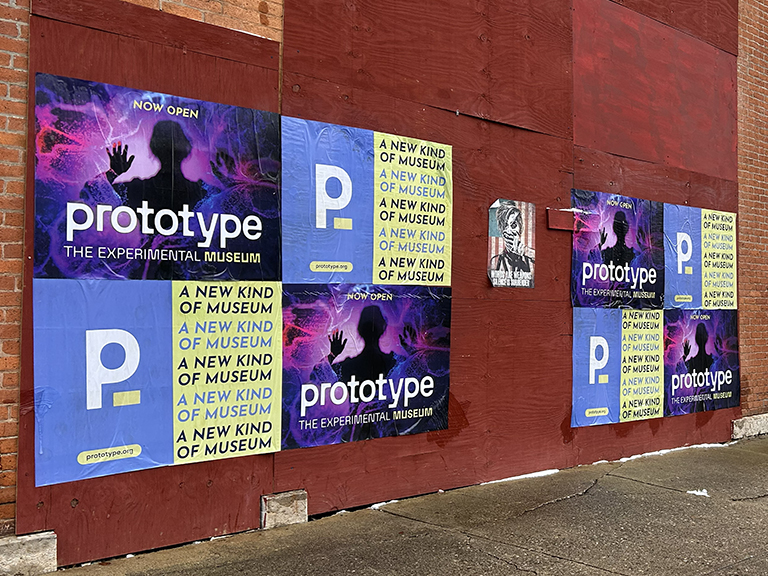
Short answer: Use the published AGM rates where they exist: 100 standard wheatpaste posters are $4,500, 200 are $5,500, 400 standard snipes are $4,500 standalone, 400 jumbo snipes are $6,500, five sidewalk stencils are $2,855, and five sidewalk decals are $2,904. If the campaign needs multiple formats, multiple neighborhoods, or multiple markets, AGM scopes the work and quotes it directly.
The Short Budget Answer
Most buyers asking about guerrilla marketing cost aren’t really asking for a single number. They are asking how much it takes to create a campaign that feels intentional instead of random. That is the right question. Guerrilla marketing can be cheap in the worst possible way or efficient in a way that punches above its weight.
The cleanest way to talk about cost is to separate published package pricing from custom builds. AGM publishes hard numbers for wheatpaste, snipes, sidewalk stencils, and sidewalk decals. Once a campaign starts combining formats, custom fabrication, staffing, or multiple markets, the job needs a scoped quote because the logistics change fast.
| Format |
Official AGM Price |
What Is Included |
| 24×36 wheatpaste, 100 posters |
$4,500 |
Targeting, scouting, printing, installation, reporting, and refreshers for a 2-week cycle |
| 24×36 wheatpaste, 200 posters |
$5,500 |
Same package with broader poster count and route density |
| 48×72 wheatpaste, 100 posters |
$10,500 |
Large-format presence across 5+ locations for a 2-week cycle |
| 48×72 wheatpaste, 200 posters |
$13,500 |
Broader large-format rollout with the same included services |
| 9×12 snipes, 400 |
$4,500 standalone |
Small-format wildposting without bundle discounts |
| 11×14 jumbo snipes, 400 |
$6,500 |
Jumbo small-format wildposting for heavier visual presence |
| Sidewalk stencils, 5 |
$2,855 |
Paint, chalk, or water-pressure stencil package |
| Sidewalk decals, 5 |
$2,904 |
Vinyl foot-traffic decal package |
What Actually Changes the Budget
The biggest cost drivers are geography, production complexity, and repetition. Geography matters because a compact nightlife district behaves differently from a car-heavy metro where crews need to travel long distances between touchpoints. Production matters because simple posters, custom vinyl, live brand ambassadors, and rolling digital inventory don’t share the same cost structure.
Repetition is the piece buyers often underestimate. One great placement rarely changes a market on its own. The campaigns that work usually create multiple encounters in the same week or even on the same walk. That means the budget should be built around route density and sequence, not just around a tally of pieces.
Planning rule: buy guerrilla marketing like a route and behavior problem, not like a stack of isolated assets.
Real Budget Scenarios
A lean local activation usually lives in one zone with one message and one response path. Think a restaurant opening, a concert route, or a DTC sampling push around a target neighborhood. In that case the budget can stay compact because the campaign wins through timing and density, not through sheer scale.
A serious launch usually stops being a package-pricing conversation and becomes a scoping conversation. Once the plan includes multiple formats, custom staffing, documentation, or several neighborhoods or markets, the honest answer is to build the route, format mix, and campaign window first, then quote the work from there.
When Guerrilla Marketing Pays Off
Guerrilla marketing pays off when the audience is physically concentrated, the creative is easy to understand quickly, and the brand has a reason to be present right now. Music releases, festivals, product launches, nightlife pushes, conventions, and hyperlocal retail openings all fit that pattern well.
It underperforms when the goal is too vague, when the campaign is geographically thin, or when the brand expects passive street impressions to do the job of a complete conversion funnel. Street media works best when it hands people into something measurable such as a QR code, a geo-specific landing page, a sample, a ticket page, or a store visit.
How to Scope the Right Campaign
Start with the business event first. What is happening that justifies physical urgency: a launch, a release, a grand opening, a conference, or a seasonal push? Once that window is clear, map the audience to actual blocks, not abstract personas. Then choose the format that suits the environment: posters for repeated visual presence, ambassadors for interaction, sidewalk units for route capture, LED for moving visibility, or a blend when the moment needs more than one kind of contact.
If the campaign needs help with pricing or channel mix, a good agency will build the budget around outcomes rather than padding it with novelty. That is the difference between paying for attention and paying for theater.
Field Notes That Actually Help Planning
Related AGM resources
These live internal links connect the post to AGM service pages and adjacent campaign formats that a reader would naturally want next.
How to define the campaign objective clearly
A cleaner version of How Much Does Guerrilla Marketing Cost in 2026? starts with one business objective that can be described in a sentence. That objective might be walk-ins, event attendance, trial, signups, retail support, or launch awareness, but it needs to be specific enough that the rest of the campaign can organize itself around it. When the objective is vague, the route plan gets fuzzy, the creative tries to do too many jobs at once, and the post-campaign review turns into guesswork.
Once the objective is specific, the rest of the planning process becomes easier to evaluate. The team can judge whether the market is concentrated enough, whether the format is doing the right kind of work, and whether the response path is realistic for the audience being targeted. That discipline usually creates better performance than simply making the campaign louder.
Why market selection changes the outcome
Street-level campaigns perform differently depending on density, route flow, timing, and neighborhood behavior. A tactic that works beautifully in a high-footfall district can feel wasted in a market where the audience is too dispersed or where the timing window is poorly matched to the campaign. That is why market selection should be treated like a strategic choice, not just a backdrop for the creative.
Good planning usually narrows the map before it widens the budget. By choosing the strongest routes, pinch points, venue zones, or commuter corridors first, the team gives the campaign a better chance to create repetition and recall. That kind of focus often matters more than adding extra territory that the media cannot realistically dominate.
How route logic improves performance
A campaign route is not just a list of placements. It is the sequence in which the audience encounters the message and the environment around each encounter. Strong route logic accounts for where people start, where they pause, what else competes for their attention, and whether the creative has enough time to register. When those factors line up, the audience experiences the campaign as a coordinated presence rather than a random scattering of media.
That same route logic also helps with reporting. Instead of treating the campaign as one vague visibility effort, the brand can compare how different segments of the route performed. That makes it easier to adjust geography, timing, staffing, and media mix the next time the campaign goes live.
What creative has to do in public space
Creative for street campaigns has to communicate faster than most digital creative because the audience is often moving. The message needs to read quickly, the hierarchy needs to be obvious, and the visual needs to hold up against the clutter of the surrounding environment. Campaigns that work in a mockup but ignore those realities usually lose their edge once they are out in the real world.
That does not mean public-space creative has to be boring. It means the concept has to respect the way people actually encounter it. Cleaner copy, stronger contrast, and one clear next step usually outperform crowded layouts that ask too much from a passerby in two seconds.
How the response path should be built
A strong campaign gives the audience a next move that matches the objective. If the goal is attendance, the response path should help people register or show up. If the goal is store traffic, the message should support that behavior directly. If the goal is lead capture, the handoff needs to be light enough that a person can complete it while standing, walking, or deciding quickly in a noisy environment.
The response path also makes the campaign easier to measure. QR codes, short URLs, market-specific offers, event prompts, and other simple mechanics can create usable signals without overcomplicating the creative. The key is choosing one path that belongs to the campaign instead of adding several competing asks.
Why operational planning matters so much
Execution quality can change the result even when the concept is solid. Production timing, field coordination, installation logic, documentation, maintenance expectations, and removal planning all shape whether the campaign feels intentional or sloppy. A good strategy can still underperform if the operation behind it is rushed or loosely managed.
That is why operational planning should happen alongside the creative, not after it. When the build, route, and documentation plans are aligned early, the team can avoid unnecessary surprises and protect the parts of the campaign that actually create value in market.
How to measure results without forcing the wrong model
Not every street campaign should be judged by the same scoreboard. Some are built for traffic, some for trial, some for visibility, and some for awareness that supports a larger launch. The useful question is not whether every campaign creates the same metric, but whether the campaign created the metric that was appropriate for its job.
That perspective gives the brand a much better post-campaign review. It becomes possible to compare response behavior, route strength, timing windows, and creative performance instead of flattening everything into one simplistic success measure. Better measurement usually leads to better planning on the next round.
What documentation should capture
Documentation is more than proof that the work went live. It is the record that lets the team learn from the campaign after the field work is over. Good documentation captures route coverage, timestamps, placement condition, local context, response behavior, and any surprises that changed the execution once the work met the street.
That kind of record is especially useful when the campaign needs to be repeated or expanded. It helps future planners see which decisions were strong, which ones need to be revised, and which parts of the market created the best return relative to effort and spend.
How a stronger brief prevents weak execution
The best campaigns usually begin with a brief that is narrow enough to force decisions. It should define the audience, market, timing, objective, response path, and the practical limits of the tactic. When those basics are clear, the campaign team is less likely to waste money on the wrong placements, the wrong message length, or a response mechanic that does not fit the setting.
A better brief also improves collaboration. Designers, field teams, project managers, and clients are working from the same plan instead of separate assumptions. That alignment often matters more than one extra production flourish because it keeps the whole campaign pointed at the same outcome.
Why disciplined scope usually beats forced scale
Many campaigns weaken themselves by trying to cover too much ground too quickly. A scattered rollout can look ambitious, but it often leaves the audience with only a brief impression instead of the repeated contact that makes street media effective. Stronger planning usually chooses focus over sprawl and repetition over thin coverage.
That does not mean thinking small. It means concentrating enough visibility in the right places that the campaign has a chance to feel dominant for the audience that matters most. Once that works, expansion decisions become smarter because they are built on evidence rather than optimism.
How to turn one campaign into a repeatable playbook
The value of a campaign should not end when the photos are delivered. A good launch should leave the brand knowing more about which routes converted, which visuals held attention, which timing windows mattered, and what type of public interaction actually moved people to act. Those lessons are what make the next campaign better than the first one.
When a post helps readers think in those terms, it becomes more useful than a simple list of ideas. It becomes a planning asset that can guide budget allocation, field execution, creative revisions, and future market choices with much more confidence.
How internal linking supports the topic cluster
From a site structure standpoint, the article becomes more useful when it is connected to the service pages and adjacent campaign formats that explain the tactics in more operational detail. That gives readers a clear next step and helps search engines understand that the post belongs inside a broader cluster of related campaign knowledge.
A clean internal linking structure also reduces the chance that the draft becomes an orphan after publication. When each article points to live service hubs and related format pages, the site builds a stronger topical network and gives both users and crawlers a more coherent path through the content.
How to pressure-test the plan before launch
Before a campaign goes live, it helps to pressure-test the plan against simple questions: is the market concentrated enough, is the message readable at speed, is the route realistic, is the handoff obvious, and will the documentation be good enough to learn from afterward? Those questions sound basic, but they usually surface the weak points that are easiest to fix before spend is committed.
That last round of pressure-testing also helps separate a campaign that merely sounds exciting from one that is actually prepared for the market it is entering. In practice, that discipline is what keeps creative energy tied to a workable execution plan.
How to connect the article to broader planning decisions
A useful article should help a reader make a better decision after the reading is over, not just leave them with more examples in their head. In practice that means clarifying which market conditions make sense, which route assumptions need to be tested, and what kind of campaign objective should govern the tactic before any budget is locked in. The clearer those planning questions become, the more useful the article becomes to a real team.
That broader planning value also helps the post earn its place inside the site. When a draft gives readers a realistic framework for choosing tactics, geography, timing, and response mechanics, it naturally supports the surrounding service pages instead of floating as an isolated content asset.
How to tighten the campaign before it reaches production
Most preventable campaign mistakes appear before fabrication or fieldwork ever start. They show up in overlong copy, muddy objectives, weak route concentration, or a response path that does not match what the audience can realistically do in the moment. Tightening those decisions early usually improves results more than adding another visual flourish late in the process.
That is why stronger planners spend time simplifying before launch. They cut what is not helping, strengthen what must be noticed immediately, and make sure the public-facing message fits the environment it is entering. Cleaner execution almost always feels more premium than busier execution.
Why the post should guide real budget decisions
Readers often use articles like this when they are deciding whether a tactic deserves time and money at all. That means the content should help them think about scope, route density, production requirements, staffing, and what kind of measurable outcome would justify the spend. If those questions stay fuzzy, the article may sound informed without actually being helpful.
A better version gives the reader enough practical structure to compare options. It clarifies where the tactic fits, what conditions tend to improve performance, what mistakes make the spend inefficient, and what signs suggest the campaign should be narrowed before launch rather than expanded too quickly.
Frequently Asked Questions
How much does guerrilla marketing cost?
AGM publishes several official starting points: 100 standard wheatpaste posters are $4,500, 200 are $5,500, 400 standard snipes are $4,500 standalone, 400 jumbo snipes are $6,500, five sidewalk stencils are $2,855, and five sidewalk decals are $2,904. If the plan needs a custom mix of formats or markets, AGM scopes it and quotes it directly.
Is guerrilla marketing cheaper than traditional advertising?
Often yes on entry price, but the more useful comparison is cost per meaningful impression. Guerrilla marketing can outperform larger media buys when the campaign reaches the right audience in a high-context environment.
What wastes money in a guerrilla marketing budget?
Scattered placement, vague goals, weak creative, and poor documentation are the fastest ways to waste money. The budget works harder when the idea, location, and response path are tightly connected.
Can small brands afford guerrilla marketing?
Yes, but smaller brands need concentrated routes and one clear objective. A tightly focused activation in one district usually performs better than a thin citywide effort that nobody sees often enough to remember.
How should a brand decide whether this topic fits its campaign?
The strongest way to decide is to start with the business moment, the audience behavior, and the geography. If the format, tactic, or strategy fits where people actually move and what the campaign needs to accomplish, it usually has a real role. If it only sounds interesting in theory, it usually needs to be narrowed or replaced before money gets spent.