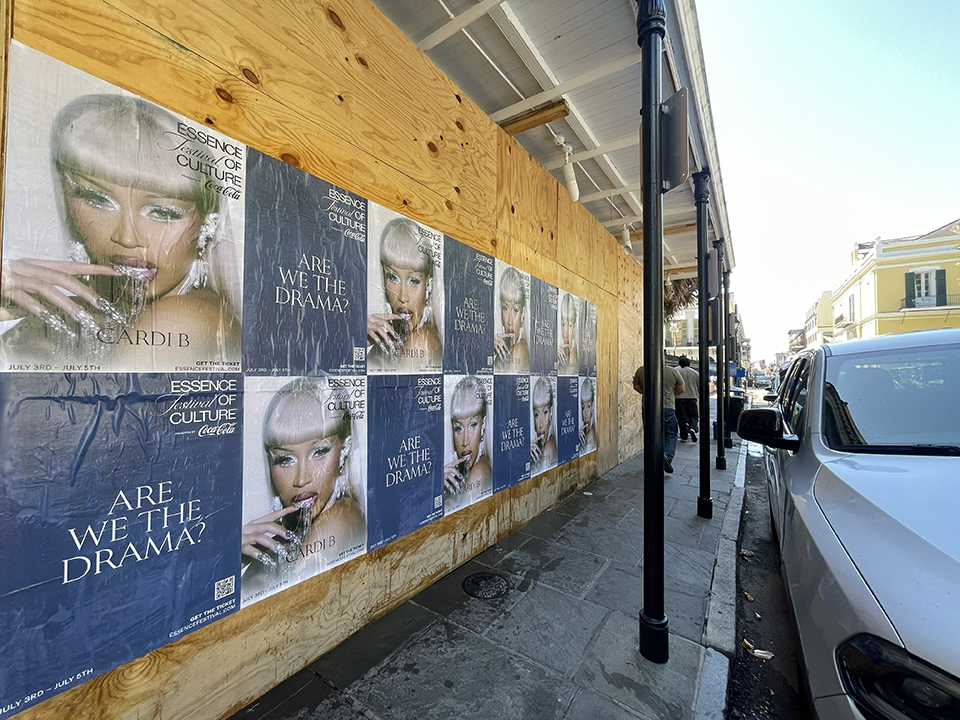
Street marketing and music have been intertwined since before the term “guerrilla marketing” existed. Long before social media algorithms decided who heard what, record labels were sending crews out at night to paste oversized posters on construction hoardings, stuff flyers into racks at record stores, and cover bathroom walls in clubs with stickers. The format wasn’t invented for tech launches or consumer brands. It was invented for music.
That origin matters because it tells you something about why street campaigns work so well for artists: music is a local, physical, social experience before it becomes a streaming number. People go to shows. They find out about artists from what they see on the street, what their friends are talking about, what’s on the wall outside the coffee shop they walk past every morning. Street marketing taps that reality directly.
This guide covers how artists, managers, and music labels plan and execute street campaigns, from early pre-release presence through album drop day to tour marketing across multiple cities.
Why Street Marketing Fits Music
The music industry built street marketing as a discipline. In the 1970s and 1980s, hip-hop culture spread through New York largely because of physical presence: tags, posters, word of mouth at block parties. Record labels employed street teams, crews of paid or semi-paid reps who blanketed neighborhoods with materials for upcoming releases. By the 1990s, major labels had formalized street team programs for every major release cycle.
What those teams understood intuitively is that music discovery is social and spatial. People don’t find out about new music in a vacuum. They find out because their neighbor blasts it from an open window, because they see a poster on the walk home, because a flyer falls out of a bag at a party. Street campaigns accelerate that organic spread by putting visual cues in the right places.
Digital marketing has made some of this work easier, but it has also made organic discovery harder. Spotify algorithmic playlists, TikTok virality, Instagram ads, they all work, but they’re crowded channels where millions of artists compete. Street presence is a channel most artists abandon, which is exactly why it works better now. A well-executed wheatpaste campaign in the right neighborhood generates attention because it’s rare, physical, and clearly intentional.
Street campaigns create physical proof of momentum. A poster on a wall says “someone invested in this.” That social signal carries weight that a digital ad doesn’t.
There’s also a practical overlap between street marketing and music culture. Fans of hip-hop, alternative, punk, electronic, and indie music are exactly the people who pay attention to what’s on walls. Mural culture, street art, and music fandom overlap in most major cities. A well-designed wheatpaste in the right neighborhood doesn’t feel like advertising to that audience. It feels like news.
Building Pre-Release Street Presence
The most effective music street campaigns start weeks before the release date. The goal in the pre-release phase isn’t to explain everything. It’s to create presence and build curiosity.
A smart pre-release street strategy works in phases:
Phase 1: Mystery Presence (4-6 Weeks Out)
Put something on walls that doesn’t fully explain itself. A release date with no artist name. A color swatch. An image from the album art. A cryptic phrase. This phase is about creating a visual footprint before the announcement. When the announcement comes, people who walk past those walls every day will connect the dots, and that moment of recognition is far more engaging than just seeing an ad.
Frank Ocean’s team did exactly this before Blonde dropped: wheatpaste posters in major cities with just color swatches. No name, no date. When the album arrived, fans who had seen those posters felt like they were in on something. That feeling drives conversation.
Phase 2: Announcement (2-4 Weeks Out)
The announcement phase puts artist name, release date, and album title on the street. This is your primary wheatpaste moment. Large-format 24×36 or 48×72 posters in high-traffic areas, snipes on construction walls and boarded storefronts, stickers in key locations. The goal is saturation in your target markets so that anyone in your core neighborhoods sees your name multiple times before release day.
Phase 3: Release Week Push
A final hit in the week of release, often with materials that drive action: a streaming link QR code, an album cover, a show announcement. This phase can be lighter than phase 2 since the base presence is already established. You’re reminding people who’ve already seen your name that the moment is now.
Album Drop Campaigns: Wheatpaste and Snipes
The two primary street formats for music campaigns are wheatpaste posters and snipes. Each has a distinct role.
Wheatpaste Posters
Wheatpaste is the format for hero presence. Large posters, typically 24×36 or 48×72 inches, pasted with wheat starch adhesive to walls, construction boards, and approved surfaces. The format has physical gravity. A 48×72 poster has the presence of a small billboard, especially when clustered with others on the same wall.
For music campaigns, wheatpaste works best for:
- Album artwork that needs space to breathe visually
- Artist portrait campaigns that build name recognition
- Tour announcements with multiple dates
- Promotional images that translate well to large format
American Guerrilla Marketing’s wheatpaste pricing:
| Format |
Quantity |
Campaign Cost |
| 24×36 inch |
100 posters |
$4,500 (2-week campaign) |
| 24×36 inch |
200 posters |
$5,500 (2-week campaign) |
| 48×72 inch |
100 posters |
$10,500 (2-week campaign) |
| 48×72 inch |
200 posters |
$13,500 (2-week campaign) |
Snipes
Snipes are smaller format: typically 9×12 or 11×14 inches, placed at eye level in high-density pedestrian areas. Street posts, construction fencing, signage clusters. The name comes from the practice of “sniping” locations quickly.
For music campaigns, snipes are the high-frequency format. Where wheatpaste creates a few dominant impressions, snipes create many. A 400-snipe campaign in a single neighborhood means the same person walking around sees your name 10-15 times in a day. That repetition drives recall in a way that a single large poster doesn’t.
Snipes work especially well for:
- Show announcements in the venue’s surrounding neighborhood
- QR codes linking to streaming or pre-save links
- Saturating specific blocks around key music venues
- High-turnover content like weekly show announcements
Using QR Codes on Street Campaigns
Adding a QR code to snipes or wheatpaste posters turns a passive impression into a trackable action. Someone walking past a poster with a QR code linking to a pre-save page or a streaming profile can go from physical impression to digital engagement in under 10 seconds. That bridge between street and streaming is one of the more practical innovations in music street marketing over the past few years.
The QR code works best when the creative context earns the scan. If the poster is visually strong enough to make someone stop and look, they’ll scan. If it’s generic, they won’t. Design the creative first. The QR code is the conversion mechanism, not the hook.
For pre-release campaigns, a QR code linking to a pre-save or pre-add on Spotify and Apple Music is directly measurable. You can compare pre-save velocity in markets where you ran street campaigns versus markets where you didn’t. For artists running campaigns in multiple cities, this creates actual data on where street marketing is driving the strongest engagement, which informs targeting decisions for the next campaign cycle.
American Guerrilla Marketing’s snipe pricing:
| Format |
Quantity |
Cost |
| 9×12 inch |
400 snipes |
$4,500 |
| 9×12 inch |
800 snipes |
$5,500 |
| 11×14 inch Jumbo |
400 snipes |
$6,500 |
| 11×14 inch Jumbo |
800 snipes |
$7,500 |
Combining Formats
A full album drop campaign in a single market typically combines both: 100-200 wheatpaste posters for visual impact in key locations, plus 400+ snipes for neighborhood saturation. The wheatpaste posters serve as anchors. The snipes create frequency. Together they build the impression that the release is everywhere.
Tour Marketing: City-by-City Street Campaigns
For touring artists, street marketing is the most direct way to drive ticket sales and walk-up traffic. Digital advertising for show announcements is expensive in competitive markets and reaches people who may not be local. Street campaigns target the specific neighborhoods around your venues, reaching people who can actually come to the show.
The Touring Street Campaign Model
The standard approach for tour marketing is to run coordinated campaigns in each tour city, timed to land 2-3 weeks before each show date. Each city gets materials localized with the venue name and specific show date, placed in neighborhoods where your target audience lives and moves.
For a 10-city tour, this means:
- Artwork designed with date-specific variations for each city
- Coordinated deployment schedules so materials go up in each city at the right time
- Targeting that differs by city based on local music audience geography
- Documentation photos from each market for reporting and social content
Working with a single agency that has crews in multiple cities is far more efficient than trying to manage local vendors in each market independently. American Guerrilla Marketing operates nationally, which means a single brief covers the full tour rather than eight separate vendor relationships.
Pre-Tour vs. Rolling Deployment
Two models exist for tour street campaigns. In pre-tour deployment, all materials go up across all markets simultaneously, building national presence before the tour starts. In rolling deployment, materials go up in each city a few weeks before that city’s show date, keeping content fresh and timing the local push precisely. Rolling deployment typically performs better for ticket sales because it concentrates local attention when the show is near.
Targeting Music Audiences by Neighborhood
Generic citywide placement is wasteful. The value of street marketing comes from precise placement in locations where your specific audience actually is. For music campaigns, that means identifying the right neighborhoods in each target city.
Music Districts
Every major city has identifiable music corridors, areas dense with music venues, rehearsal studios, record stores, and music-adjacent retail. These are where your target audience clusters:
- New York: Williamsburg (Bedford Ave corridor), Bushwick (Wyckoff/Myrtle venue cluster), Lower East Side, Harlem
- Los Angeles: Silver Lake (Sunset Blvd corridor), Fairfax/Melrose, Echo Park, Highland Park
- Chicago: Wicker Park (Milwaukee/Damen corridor), Logan Square, Pilsen, Bridgeport
- Atlanta: Little Five Points, East Atlanta Village, Old Fourth Ward
- Austin: Red River Cultural District, East 6th Street, South Congress, The Drag
- Nashville: Lower Broadway, The Gulch, East Nashville, 8th Ave South
Venue Corridors
For show-specific campaigns, targeting the blocks immediately surrounding your venue is the highest-ROI placement. People who live within 6 blocks of a music venue are your highest-probability ticket buyers. They already go to shows there. A well-placed campaign in that radius can have a measurable impact on walk-up sales and advance ticket velocity.
College Neighborhoods
For artists targeting 18-25 audiences, college neighborhoods are among the most efficient placements in any city. High foot traffic, dense population, high concert-going rates, and relatively low ad saturation compared to downtown commercial districts. The residential streets around major universities, the pedestrian corridors near campus, and the blocks between campus and local music venues are key targeting zones.
Record Store and Independent Retail Corridors
Surviving independent record stores are a strong signal of music audience density. The neighborhoods that support independent record retail are neighborhoods where music fans are concentrated. Placement near these stores, in the blocks where people who care about music live and shop, tends to outperform generic high-traffic placement.
Nashville: Broadway and The Gulch
Nashville’s live music economy runs on two distinct circuits, and they serve different strategic purposes for marketing campaigns.
Lower Broadway, from 1st Avenue to about 5th Avenue, is the city’s most trafficked tourist-facing music strip. Honky-tonks along this stretch run from early afternoon to 3 AM, drawing several million visitors per year and packing the sidewalks with music-engaged foot traffic. The walls around Bridgestone Arena on Broadway and the alley corridors behind the strip are high-volume placements. If raw impression count is the goal, this corridor delivers it.
The Gulch, just west of downtown along 11th Avenue South and the surrounding residential and retail blocks, is where Nashville’s working music industry lives. The neighborhood has the highest concentration of music professionals, younger Nashville residents, and touring industry ecosystem workers in the city. A campaign targeting the walls and poles in The Gulch reaches the people who influence Nashville’s music community rather than the visitors passing through Broadway. For an artist building credibility in Nashville specifically, The Gulch is the higher-value placement. For an artist building awareness among the general music-going public, Broadway is the volume play.
Austin: Red River Cultural District and East 6th
Austin’s Red River Cultural District, running along Red River Street between 7th and 11th Streets, is the tightest concentration of live music venues in the city. Stubb’s Amphitheater, Emo’s, Mohawk, and Antone’s are all within a few blocks of each other on this corridor. For any artist playing Austin, a snipe campaign on the walls and poles along Red River and the surrounding blocks of 6th Street reaches the audience that is there specifically to see live music. It’s the highest-relevance geographic placement in Austin for music campaigns.
East 6th Street, particularly from Congress Avenue east to Chicon Street, has shifted from generic bar strip to genuine creative and music community hub. The blocks east of I-35 carry a density of independent venues, bars, and music-adjacent businesses that draw the Austin music consumer rather than the visitor crowd. A coordinated campaign running Red River District plus East 6th creates layered coverage across both the tourist-facing and community-facing music geography of the city. If you’re choosing one, Red River is where you spend first.
Brooklyn: Williamsburg and Bushwick
Williamsburg and Bushwick operate as connected neighborhoods but serve different purposes for music marketing. Bedford Avenue through North Williamsburg is the main pedestrian spine, with sustained foot traffic from residents, music fans, and industry people who have relocated from Manhattan. Brooklyn Steel on Morgan Avenue in East Williamsburg and the surrounding venue cluster in the industrial blocks between Williamsburg and Bushwick are high-value placements for show-specific campaigns. People who live within six blocks of Brooklyn Steel already have the concert-going habit. A snipe campaign in that radius before a show date reaches the most likely ticket buyers.
Bushwick, particularly the blocks around the Jefferson L stop and the warehouse venue corridor on Wyckoff Avenue and Myrtle Avenue, is the placement zone for electronic music, DIY, and underground genre campaigns. The audience there skews younger, more embedded in subculture, and tends to be opinion-forming within specific music communities. A precisely targeted snipe run in Bushwick can create disproportionate word-of-mouth because the people it reaches talk to others who are already paying attention to what’s new.
Los Angeles: Fairfax and Silver Lake
Fairfax has a music audience embedded within its streetwear consumer base. The blocks around Fairfax and Melrose carry young, culturally engaged people who attend shows at the Roxy, the Troubadour in West Hollywood, and the cluster of Sunset Strip venues nearby. Wheatpaste along Fairfax between Santa Monica Blvd and Melrose puts a music campaign in front of people who fit the audience profile for hip-hop, R&B, and pop artist campaigns targeting the 18 to 30 demographic. This audience is active on social platforms and photographs what they see on the street at a higher rate than most LA neighborhoods.
Silver Lake is the neighborhood for independent, alternative, and indie music campaigns in LA. The Sunset Blvd corridor from Micheltorena to Fountain Avenue, and the blocks around the Echo and Echoplex on Sunset near Glendale Blvd, are the placement zones that reach the Silver Lake music community directly. The audience there is engaged, opinionated, and specifically local, which makes street placements more effective per impression than they’d be in a more tourist-facing environment. For genres where tastemaker credibility matters, Silver Lake is the neighborhood.
Campaign Timeline: From Artwork to Streets
A well-run music street campaign operates on a specific timeline. Rushing it leads to quality problems. Planning it properly means everything hits at the right moment.
| Timeline |
Task |
| 6+ weeks out |
Confirm campaign markets, define neighborhoods, begin artwork development |
| 4-5 weeks out |
Finalize artwork, submit print files, confirm phase 1 placements |
| 3-4 weeks out |
Phase 1 mystery deployment (if using cryptic pre-release approach) |
| 2-3 weeks out |
Primary wheatpaste and snipe deployment, announcement materials go live |
| 1 week out |
Refresh campaign, add release week materials, check placement condition |
| Release day |
Document final street presence, pull documentation photos for social content |
| Week after release |
Campaign completion report, impression counts, placement documentation |
For expedited campaigns, some agencies can compress this to 48-72 hours from artwork to live placement. That speed typically costs more and limits some targeting options, but it’s available when a release timeline changes or a campaign brief arrives late.
Budget Guide: Independent Artists vs. Label Campaigns
The right budget depends on your release tier and the markets you’re targeting. Here’s how to think about it across different campaign scales.
Independent Artist: Single-City Launch ($4,500 – $10,000)
For an independent artist releasing an album or EP in their home market, a focused single-city campaign is the right entry point. A 400-800 snipe campaign in 2-3 neighborhoods ($4,500-$7,500) creates strong saturation in the areas that matter. Adding 100 wheatpaste posters in key locations ($4,500) brings the total to the $9,000-$12,000 range for a solid single-market launch.
Budget prioritization for independent artists:
- Spend on snipes first. High frequency, lower cost per impression, maximum neighborhood saturation.
- Add wheatpaste for hero moments: album art, key venue walls, high-visibility corridors.
- Target 2-3 neighborhoods deeply rather than spreading thin across a whole city.
Mid-Level Artist: 3-5 City Campaign ($25,000 – $60,000)
An artist on a label deal or with significant indie label support can run coordinated campaigns across 3-5 markets. Each market gets a focused deployment: 200 wheatpaste posters plus 400-800 snipes. In high-priority markets like New York and Los Angeles, larger format 48×72 posters create dominant presence. Secondary markets get 24×36 with high-density snipe campaigns.
Major Label: National Campaign ($100,000 – $300,000+)
Full-scale major label releases run campaigns in 10-20+ markets simultaneously. National campaigns combine wheatpaste saturation in all major markets with coordinated snipe campaigns targeting music audience neighborhoods, supplemented by LED truck activations in key markets for release day, and possibly projection campaigns for single launch nights in New York or Los Angeles.
For guerrilla projections on buildings, AGM’s pricing is $6,500 per night in NYC and $7,500 per night in other markets. A single-night projection event for a major album launch in Manhattan is a high-impact activation that generates social content and press coverage.
| Campaign Scale |
Markets |
Formats |
Estimated Range |
| Independent single-city |
1 |
Snipes + wheatpaste |
$4,500 – $15,000 |
| Mid-level multi-city |
3-5 |
Wheatpaste + snipes |
$25,000 – $60,000 |
| Label national |
10-20+ |
Full format mix |
$100,000+ |
Music Campaigns That Used Street Marketing Well
Frank Ocean: Blonde (2016)
Before Blonde dropped, Ocean’s team placed wheatpaste posters in major cities with just color swatches and no identifying information. The campaign created street-level mystery that paired perfectly with the album’s oblique, withholding rollout strategy. By the time the release was announced, people across multiple cities had already been seeing the visual language for weeks.
Kendrick Lamar: DAMN. (2017)
The DAMN. rollout included dense street poster campaigns in Compton and Los Angeles, establishing the album as rooted in a specific place before anyone heard a note. The street presence amplified the album’s thematic focus on Black American identity and geography, giving the campaign cultural weight that digital-only advertising couldn’t have achieved.
Beyoncé: Renaissance Tour (2023)
The Renaissance tour marketing combined large-format outdoor with street wheatpaste in tour cities to reinforce the messaging. The street layer was a complement to the full outdoor campaign, creating presence at the pedestrian level that billboards don’t reach.
Independent Hip-Hop Artists
Street marketing often does more for independent hip-hop artists than for major label acts, because the format signals authenticity. An independent artist who covers the right blocks in Brooklyn, Harlem, or Compton with well-designed materials is communicating that they’re a real part of the culture, not just another streaming release. For artists building local and regional audiences, that signal matters enormously.
Electronic and Rave Promotion
The electronic music world has used street marketing continuously since the early warehouse party era. Promoters and artists use snipes and flyers to target specific venue corridors, record stores, and nightlife districts. The format is so embedded in the culture that well-designed street materials are themselves a form of credibility signal.
Frequently Asked Questions
How far in advance should a music artist plan a street campaign?
For a standard album release campaign, 4-6 weeks is ideal. That timeline allows for artwork finalization, print production, and a phased deployment that builds from pre-release mystery through release day saturation. Rush campaigns can be executed in 48-72 hours for priority clients, but you get fewer targeting options and no pre-release phase.
Can independent artists afford street marketing campaigns?
Yes. A 400-snipe campaign in a single city starts at $4,500, which is within budget for many independent artists who are already spending on digital advertising. For independent artists in their home market, a focused street campaign in 2-3 key neighborhoods often outperforms the same spend on digital ads because physical presence in the right locations reaches the exact audience you want without competing in a pay-to-play algorithm.
What formats work best for a first street campaign?
Snipes are the best entry point for a first campaign. They’re lower cost, high frequency, and don’t require the same visual quality threshold that large-format wheatpaste does. Once you know which neighborhoods respond, you can invest in larger format for subsequent campaigns.
How does street marketing complement digital marketing for a music release?
The two formats reinforce each other. Physical street presence drives search behavior: people see a poster, pull out their phone, and search the artist name or scan a QR code. Campaigns that include QR codes linking to streaming or pre-save pages can measure this lift directly. Street marketing also generates organic social content when fans photograph and post campaign materials, extending the campaign’s reach without additional spend.
How do you target the right neighborhoods for a music campaign?
Target neighborhoods based on where your specific audience already exists: music districts, venue corridors, college neighborhoods, and areas dense with music-adjacent retail. A good street marketing partner helps you map audience geography in each city rather than just placing materials in generic high-traffic locations. The difference between targeted placement and generic placement is significant in terms of relevance and recall.
What documentation do street marketing agencies provide?
Reputable agencies provide photo documentation from each placement location, showing the posters or snipes in place. This documentation serves multiple purposes: it’s your proof of execution, it’s content for social media, and it’s useful for reporting campaign reach to label stakeholders or investors. AGM provides geo-tagged photo reports for all campaigns.