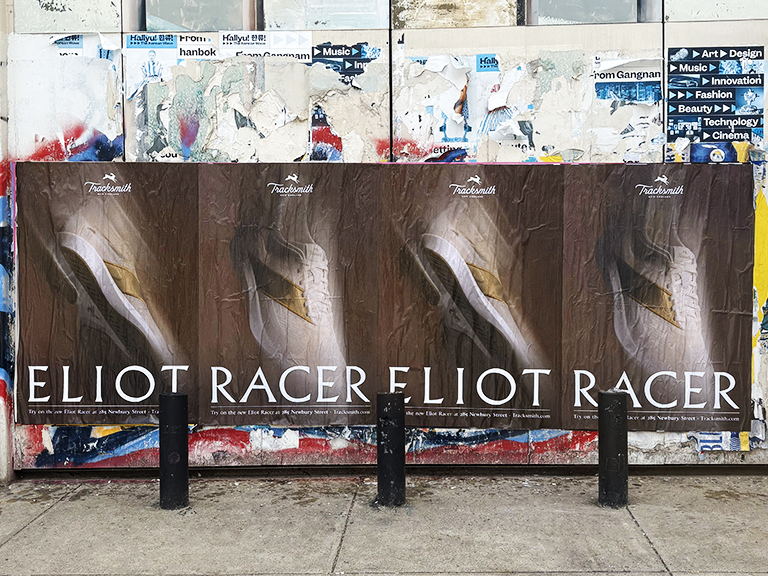
London’s flyposting market is not one market. It is a collection of distinct neighborhood markets, each with its own audience demographic, surface availability profile, competitive landscape, and property owner dynamics. Brands that succeed with London flyposting campaigns understand those differences and use them to match their campaign geography to their target audience with precision rather than defaulting to the neighborhood they have heard about most.
Our team at American Guerrilla Marketing supports wheat paste poster campaigns and flyposting activations in London’s major posting markets. This guide covers the neighborhoods that matter for professional flyposting in London, how each one serves different campaign objectives, and how to think about building a multi-neighborhood campaign strategy that achieves the right combination of audience reach and geographic coverage.
Shoreditch: The Core East London Flyposting Market
Shoreditch is the most active and most competitive flyposting neighborhood in London. The creative industry concentration in East London, anchored by Shoreditch and extending through Hoxton, Whitechapel, and Bethnal Green, creates the highest density of professional poster campaigns of any London neighborhood. The best walls in Brick Lane, Old Street, and the Shoreditch High Street corridor are occupied consistently and are held by operators with established property owner agreements.
Audience Profile
Shoreditch delivers creative industry professionals, young adults in technology, media, and design roles, and international visitors engaged with London’s creative culture. The demographic skews 25 to 40, with high income and high brand engagement in fashion, technology, music, and lifestyle categories. It is the default target for brands targeting the UK’s cultural early adopter demographic.
Surface Availability and Operator Dynamics
Premium Shoreditch surfaces are not available to all comers. The best walls in the neighborhood are held by established operators under long-term property agreements. Accessing those surfaces requires working with an operator who has those specific relationships. Generic posting approaches that attempt to reach Shoreditch surfaces without operator relationships will find the best locations already occupied and will be limited to lower-visibility alternatives.
Competitive Landscape
Shoreditch has the highest competitive clutter of any London posting neighborhood. A standard format campaign in Shoreditch enters an environment where multiple other campaigns are already running simultaneously. Standing out in this environment requires either premium surface access, large format executions that create scale differentiation, or a creative approach designed for the specific visual character of the Shoreditch street environment.
Brixton: South London’s Cultural Hub
Brixton is South London’s primary flyposting market and one of the most distinctive neighborhood advertising environments in the city. The neighborhood’s cultural richness, anchored by Brixton Market, Atlantic Road, and Coldharbour Lane, draws a diverse, culturally engaged audience with strong disposable income and high engagement with music, food, and lifestyle brands.
Audience Profile
Brixton’s pedestrian population reflects South London’s diverse cultural community, with strong representation across age groups and a demographic profile that is broadly more diverse than the predominantly young, predominantly white creative industry audience of Shoreditch. For brands targeting multicultural audiences, entertainment products with broad cultural resonance, or food and lifestyle campaigns with strong South London cultural associations, Brixton is often the most effective single posting neighborhood in London.
Surface Availability
Brixton’s surface market is generally less competitive than Shoreditch. Property owners along the Coldharbour Lane and Atlantic Road corridor are accessible to professional operators who approach them with a clear, professional proposition. The neighborhood offers good wall availability for campaigns that are willing to invest the time in property owner outreach rather than relying on pre-existing operator networks.
Camden: Music, Subculture, and Youth
Camden is London’s music and subculture neighborhood, with a long history as the center of the city’s alternative music scene and a current profile that combines that legacy with heavy tourist traffic and a vibrant independent retail and food environment. The high street and the market areas adjacent to Camden Lock generate significant foot traffic from a distinctly youth-oriented demographic.
When Camden Is the Right Choice
Camden is the right choice for campaigns targeting music audiences, youth culture demographics, and brands with strong alternative or subculture positioning. Entertainment campaigns for music releases, festival promotion, and live event advertising perform strongly in Camden’s foot traffic environment. Consumer brands with youth culture appeal and streetwear or music lifestyle associations also find a receptive audience here.
Peckham: The Emerging Creative South London Market
Peckham has emerged over the past decade as one of London’s most interesting emerging creative neighborhoods. The area around Rye Lane, Peckham Levels, and the independent arts and food scene that has developed around them draws a young, creative, diverse audience that overlaps meaningfully with the Brixton demographic but with a stronger East London cultural influence.
Peckham’s surface market is more accessible and less competitive than both Shoreditch and Brixton, which creates strong share-of-voice potential for campaigns entering the neighborhood. Brands targeting emerging creative audiences who have not yet been over-marketed to in the flyposting environment should consider Peckham as either a primary or secondary neighborhood target.
Dalston and Hackney: East London’s Secondary Creative Markets
Dalston and the broader Hackney neighborhood extend the East London creative demographic into a less premium, less competitive environment than Shoreditch while maintaining much of the same audience profile. For campaigns where Shoreditch’s competitive costs or limited surface availability create a budget or access constraint, Dalston and Hackney provide alternative access to a demographically similar audience.
Building a Multi-Neighborhood Campaign Strategy
Most effective London flyposting campaigns cover two to four neighborhoods. Single-neighborhood campaigns achieve strong saturation but limited geographic reach. Campaigns covering five or more neighborhoods may spread resources too thin to achieve meaningful density in any individual neighborhood.
The most common campaign configurations pair Shoreditch with either Brixton or Camden depending on whether the broader South London or North London audience extension is more valuable for the specific campaign. Campaigns targeting maximum east-south coverage combine Shoreditch with Brixton and Peckham. Campaigns targeting maximum cultural reach combine Shoreditch, Brixton, and Camden.
Frequently Asked Questions
Which London neighborhood is best for flyposting campaigns?
The best London neighborhood depends on the target audience. Shoreditch is strongest for creative industry professionals. Brixton delivers a diverse South London cultural audience. Camden reaches music and subculture audiences. Peckham and Dalston attract younger creative demographics with lower competition. Most campaigns cover two to four neighborhoods.
Is Shoreditch the most active flyposting neighborhood in London?
Yes. Shoreditch has the highest density of active flyposting campaigns and the most established operator network. Premium walls in Brick Lane, Old Street, and Shoreditch High Street are consistently occupied by operators with long-term property relationships. Accessing these surfaces requires working with an operator who has those established agreements.
How is flyposting in Brixton different from Shoreditch?
Brixton delivers a different audience and a different surface market. The Brixton audience is rooted in South London’s diverse cultural community. The surface market is generally less competitive, with better wall availability and lower competition for operators who approach property owners directly and professionally.
Is Camden still a strong flyposting market?
Yes. Camden remains strong for campaigns targeting music and youth culture audiences. Its concentration of music venues, market areas, and youth-focused retail creates a dense, culturally engaged pedestrian population responsive to music, entertainment, and lifestyle campaign creative.
What are the emerging flyposting neighborhoods in London?
Peckham, Dalston, Hackney Wick, and Bethnal Green are among the most active emerging flyposting neighborhoods in London. Each offers rising creative industry concentration, growing foot traffic, and a surface market that is less competitive than established Shoreditch and Brixton markets.
How many London neighborhoods should a campaign cover?
Most professional London flyposting campaigns cover two to four neighborhoods. Two neighborhoods achieve strong saturation in a specific market. Three to four neighborhoods achieve wider coverage but lower density per neighborhood. The right choice depends on whether geographic breadth or neighborhood dominance is the priority.
How do you decide which neighborhoods to prioritize for a London campaign?
Neighborhood prioritization for a London campaign starts with audience mapping: which neighborhoods have the highest concentration of the specific demographic the campaign needs to reach? Secondary considerations include surface availability and competition level in each neighborhood, campaign budget distribution across neighborhoods, and whether the campaign objective favors depth in a single area or breadth across the broader market.