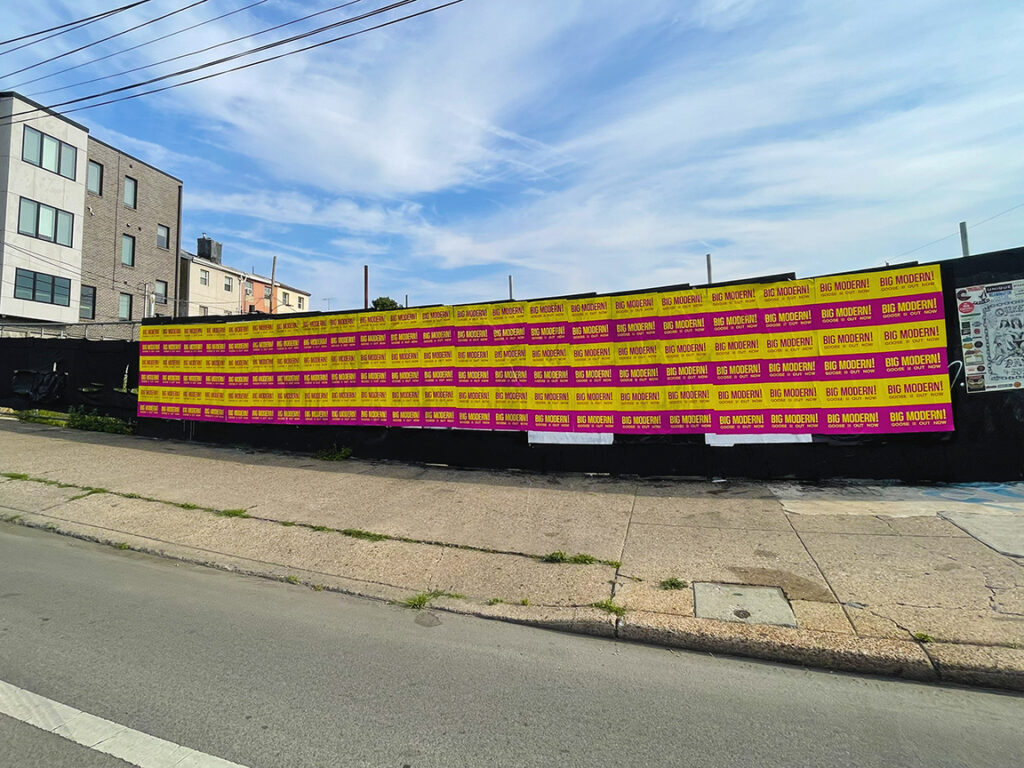
A week before the drop, the city starts talking. Not because of an Instagram post — because the walls in Williamsburg and the Fairfax District are covered in the campaign. That’s the effect a properly executed city takeover wheatpaste campaign has for a fashion brand. It makes the street feel like it’s already aware of what’s coming. It creates ambient anticipation that no paid digital campaign can manufacture.
Fashion is one of the verticals where city takeover wheatpaste campaigns perform best, and it’s not hard to understand why. The consumers fashion brands are fighting for — the style-forward, culturally plugged-in 18-35 crowd in major markets — are exactly the people who walk the neighborhoods where wheatpaste campaigns land. They go to the coffee shops on Bedford Avenue. They walk to the vintage stores on Melrose. They cut through the Pilsen murals on the way to Saturday brunch. They see the walls. They photograph the walls. They post the walls.
American Guerrilla Marketing has run city takeover campaigns for fashion brands ranging from emerging streetwear labels to established luxury houses. Over the past decade, we’ve developed a clear picture of what makes these campaigns work — and what makes them fail. This guide lays out the strategy, neighborhood by neighborhood and step by step.
Why Fashion Brands Are Built for This Format
Most product categories benefit from city takeover wheatpaste campaigns. Fashion brands benefit more than most for a specific set of reasons:
Cultural geography alignment. The neighborhoods that matter for fashion — Williamsburg, SoHo, Fairfax, Silver Lake, Wicker Park — are exactly the neighborhoods that support the highest-quality permissioned wheatpaste surfaces. These are the same areas where independent boutiques, concept stores, and creative agencies cluster. The brand’s target consumer is already there. The placement opportunity is already there. The fit is natural.
High photo-worthiness. Fashion campaigns are designed to be visually striking. A well-art-directed fashion campaign translates into excellent street art. When something looks good enough to photograph, people photograph it. When people photograph it, it becomes organic content. The visual quality standards that fashion brands apply to their campaigns make them inherently more likely to generate the UGC spillover that amplifies city takeover reach.
Cultural credibility transfer. Being on the street in the right neighborhoods signals something that a billboard or a bus shelter ad never can — that the brand belongs in the culture, not just the media buy. Fashion consumers are unusually sensitive to authenticity signals. A campaign on the walls of LES or Echo Park reads differently than a campaign on a billboard over the BQE, even if the same number of people see it.
Drop timing integration. Fashion operates in drops. Collection launches, collab announcements, seasonal transitions — these are all natural moments for a city takeover wheatpaste campaign that goes up 24-48 hours before the drop and saturates the street with anticipation. The wheatpaste becomes part of the launch ritual.
The Neighborhoods That Move the Needle for Fashion
Not every neighborhood works for every fashion brand. Here’s how we think about neighborhood selection for fashion-specific city takeover campaigns:
New York
Williamsburg, Brooklyn — The anchor of any New York fashion city takeover. Bedford Avenue from North 7th to Grand Street is the most photographed commercial corridor in Brooklyn, and the density of fashion-forward consumers walking it daily is as high as anywhere in the city. Grand Street toward the river carries a slightly younger, more art-school demographic. The L train at Bedford and at Lorimer/Metropolitan makes this a transit-accessible market that draws from all over the city on weekends.
Lower East Side (LES) — Rivington, Stanton, Orchard, and Ludlow form the core of a neighborhood that has been a fashion incubator for decades. The mix of boutiques, bars, and galleries makes this a multi-hour pedestrian destination rather than a pass-through. Consumers here are genuinely engaged with what’s on the street — the culture of looking at walls is embedded in the neighborhood’s identity.
SoHo — Higher cost, higher competition, higher foot traffic. Broadway and Spring/Prince form the core luxury retail corridor. For fashion brands that are trying to signal upmarket positioning, SoHo presence matters. For emerging brands trying to build credibility, the contrast of wheatpaste in SoHo is actually a strength — it feels subversive against the luxury backdrop.
Bushwick — The arts district. Jefferson and Wyckoff corridors carry a heavily creative, art-world-adjacent demographic. For fashion brands with a strong design or art angle, Bushwick adds credibility that Williamsburg doesn’t carry in the same way. The mural culture means the walls are already in the discourse.
Greenpoint — Quieter than Williamsburg, increasingly fashion-forward. Manhattan Avenue and the surrounding blocks carry a demographic that’s slightly older and more design-literate than the Williamsburg weekend crowd.
Los Angeles
Fairfax District — This is the center of streetwear culture in LA. The blocks around Supreme, Kith, and the surrounding retail ecosystem carry a highly concentrated fashion-aware consumer base. Drop culture is embedded here — the consumers who camp overnight for releases are walking these blocks. For any streetwear or sneaker-adjacent fashion brand, Fairfax is non-negotiable.
Silver Lake — More fashion-editorial than streetwear. The Sunset Boulevard corridor carries a creative professional demographic that’s genuinely style-forward. Designer boutiques, concept stores, and independent retailers make this a neighborhood where fashion presence lands with the right audience.
Echo Park — The lake area carries heavy weekend foot traffic. Less retail-focused than Fairfax or Silver Lake, but culturally resonant for brands with a lifestyle or outdoor-adjacent angle.
Los Feliz — Vermont Avenue and the surrounding blocks carry an arts and film-industry-adjacent demographic. Good for fashion brands with a California-casual or directional editorial positioning.
Venice — Abbot Kinney is one of the most expensive foot traffic corridors in LA, which means high-density, high-income, highly photographed foot traffic. For fashion brands that can afford the placement competition, Venice is strong.
Chicago
Wicker Park / Bucktown — The Milwaukee Avenue corridor from Division to North Avenue is the spine of Chicago’s fashion-forward consumer geography. Independent boutiques, concept cafes, and a dense young professional demographic make this the highest-value Chicago market for most fashion brands.
Logan Square — The Milwaukee extension into Logan Square carries a slightly different creative-class demographic — designers, artists, young professionals. Strong for fashion brands with a heritage or craft angle.
River North — Gallery district with strong weekend foot traffic and a demographic mix that includes both aspirational shoppers and design-industry professionals.
Timing the Campaign to the Fashion Calendar
Fashion operates on a specific calendar, and the best city takeover wheatpaste campaigns are timed to moments that already have cultural momentum:
Drop Launches
The most common use case. Campaign goes up 24-48 hours before the drop. The poster creates physical street presence in the neighborhoods where consumers will be lining up or refreshing the app. We’ve seen brands run city takeovers where the posters went up the night before a drop and by 7am the next morning their target consumers were already photographing the walls on the way to line up. The campaign became part of the drop day narrative.
New York Fashion Week
NYFW creates a week when fashion media, buyers, and consumers are all unusually focused and walking specific Manhattan and Brooklyn neighborhoods. A city takeover that goes up the day before NYFW starts lands in the visual field of the most fashion-literate pedestrian traffic the city sees all year. For brands showing, it amplifies the show. For brands not showing, it can be a way to generate street presence at a moment when fashion media attention is concentrated.
Seasonal Transitions
The weeks when collections shift — early September and early February in the traditional fashion calendar — are natural moments for city takeover campaigns that announce new product. Consumers are already in a seasonal mindset; the campaign matches that energy.
Collab Announcements
Collaboration drops generate their own cultural moment. A city takeover timed to a collab announcement creates physical street excitement around the announcement. We’ve placed campaigns where the poster design was the first public announcement of the collab — the street saw it before social media did. That sequencing generates a specific kind of cultural energy that’s hard to manufacture any other way.
From our case studies: a fashion brand’s collab drop campaign — 38 placements across Williamsburg, LES, and Bushwick, launched overnight 36 hours before the drop went live — generated 180+ organic Instagram posts in the first 48 hours, including several posts from accounts with 50,000+ followers. The campaign’s organic social reach exceeded 300,000 before any paid social spend was deployed.
Design Considerations for Fashion City Takeover Campaigns
Fashion brands typically have the strongest in-house creative capabilities of any category we work with. That’s a strength. A few considerations specific to wheatpaste city takeover execution:
Size and Format
Larger formats create more dominance. A 24×36″ poster is visible; a 48×72″ panel is unmissable. For corridor saturation, a mix of sizes — larger panels at key corner locations, standard sizes filling the rest of the corridor — creates visual hierarchy that reads as intentional rather than random. We’ve placed campaigns at up to 60″x84″ on premium surfaces, and at that scale the impact is dramatic.
Black and White vs. Color
Both work. Black and white fashion photography has a classic street-art relationship — it’s what early Kate Moss campaigns looked like plastered on walls in the 90s, and that visual language still reads as culturally fluent. Full-color campaigns can be more attention-grabbing in visually cluttered corridors. The decision depends on the brand’s creative language and the specific visual environment of the target neighborhoods.
Text Density
On the street, less text is almost always better. A strong image with a brand name and a date or URL captures attention and communicates quickly. Dense copy gets walked past. If you want people to stop and read, the image has to stop them first.
QR Codes
We’ve seen QR code integration work well when it’s positioned as an invitation rather than an instruction. “Scan for early access” or “Scan for the full look” creates curiosity. “Scan to buy” on a street poster rarely converts. If you’re using QR codes, make the scan proposition compelling.
What “Owning the Market for a Week” Actually Looks Like
The phrase “owning a market” gets used a lot in marketing. In the context of a city takeover wheatpaste campaign, it has a specific, concrete meaning. When you own a market for a week, it means:
Your target consumer — the one walking Williamsburg on Saturday morning, getting coffee on Bedford Avenue, heading to a boutique on North 6th — sees your campaign on the way in and on the way out. They see it on the way to brunch and on the way home from the bar. They photograph it and post it. Their friends see it on Instagram. Someone sends it to a friend in another city. The campaign is in the visual and social fabric of that neighborhood for that week in a way that feels organic and persistent rather than intrusive.
That’s not a billboard. That’s not a digital ad. That’s not a brand ambassador with a flyer. It’s the city itself reflecting your brand back to the people you care about. It’s a firsthand experience for the consumer, not a mediated one.
We’ve run these campaigns and had clients report walking through Williamsburg on a Saturday and overhearing strangers talking about the posters. That’s the level of cultural penetration that a properly executed city takeover wheatpaste campaign can achieve. It doesn’t happen every time — it requires the right creative, the right neighborhoods, the right density, and the right timing. But when all of those align, the effect is real and it’s measurable in the organic social coverage, in the brand search spikes, and in the conversations happening on the street.
Multi-City Fashion Campaigns
Many fashion brands run city takeover campaigns across multiple markets simultaneously — New York, LA, and Chicago in the same week. This simultaneous multi-market presence creates a national narrative around the campaign. When a streetwear brand’s city takeover hits Fairfax and Williamsburg in the same overnight window, the social media effect compounds — posts from LA reach followers in New York and vice versa. The campaign feels bigger than any single market.
Managing this across multiple media markets requires a centralized campaign coordinator and local execution teams who know their neighborhoods. AGM functions as that single point of contact for multi-city fashion campaigns. Our nationwide portfolio of certified and licensed operators in each market means we can guarantee consistent quality and documentation across all simultaneous city takeovers. The brand sends one brief, works with one team, and gets one unified post-campaign report.
This is particularly valuable for fashion brands because the alternative — sourcing and managing local paste operators in three or four cities simultaneously — is a logistical nightmare that gets in the way of the creative and strategic work. We’ve had clients come to us after trying to self-manage multi-city campaigns and the stories are consistently the same: inconsistent execution quality, unreliable documentation, surfaces that weren’t permissioned, and post-campaign reports that were basically nothing. The infrastructure investment in working with an experienced operator pays for itself the first time.
Frequently Asked Questions
Why do fashion brands use city takeover wheatpaste campaigns?
Fashion brands use city takeover wheatpaste campaigns because street presence builds cultural credibility that digital ads can’t replicate. A campaign that physically dominates the neighborhoods where the brand’s target consumer lives and shops creates ambient brand association that feels earned rather than bought. It also generates the kind of organic social media content that paid campaigns struggle to produce — genuine UGC from real consumers who photographed something they actually found visually interesting on the street.
Which neighborhoods work best for fashion brand city takeover wheatpaste campaigns?
The highest-performing neighborhoods for fashion brand city takeover campaigns are cultural hubs with strong pedestrian traffic and active social media usage. In New York, Williamsburg, SoHo, and LES are the core markets. In LA, Fairfax District and Silver Lake are the primary targets. In Chicago, Wicker Park and Bucktown carry the right demographic concentration. The best neighborhoods combine high foot traffic with a visual culture where people are already photographing and sharing what they see on the street.
How far in advance should a fashion brand plan a city takeover wheatpaste campaign?
Ideally 4-6 weeks in advance. This allows time for pre-scouting, surface permissioning, print production, and crew scheduling. For campaigns tied to Fashion Week dates or specific drop launches, 6-8 weeks lead time is better to avoid scheduling conflicts and ensure priority surfaces are available. Last-minute campaigns can be executed in 2-3 weeks but surface selection may be more limited.
Can a city takeover wheatpaste campaign be timed to a specific drop or launch date?
Yes, and this is one of the most common and effective uses. Campaigns go up 24-48 hours before the launch to create street buzz ahead of the drop. The poster acts as physical pre-announcement, building anticipation among the exact consumers walking the neighborhoods where the product will sell. The timing creates a “the city already knows” effect that feeds into launch day cultural momentum.
What makes a wheatpaste city takeover different from standard OOH for a fashion brand?
Standard OOH — billboards, bus shelters, subway cards — reaches a broad audience but lacks the cultural intimacy of a street-level campaign. A wheatpaste city takeover places the brand in the specific visual ecosystem where its target consumer already lives. The proximity to independent retail, coffee shops, bars, and galleries that characterize fashion-forward neighborhoods gives the campaign a different kind of authenticity. The format itself — posted directly on walls, at eye level, in the same visual language as street art and independent culture — reads as belonging there in a way that a billboard never does.