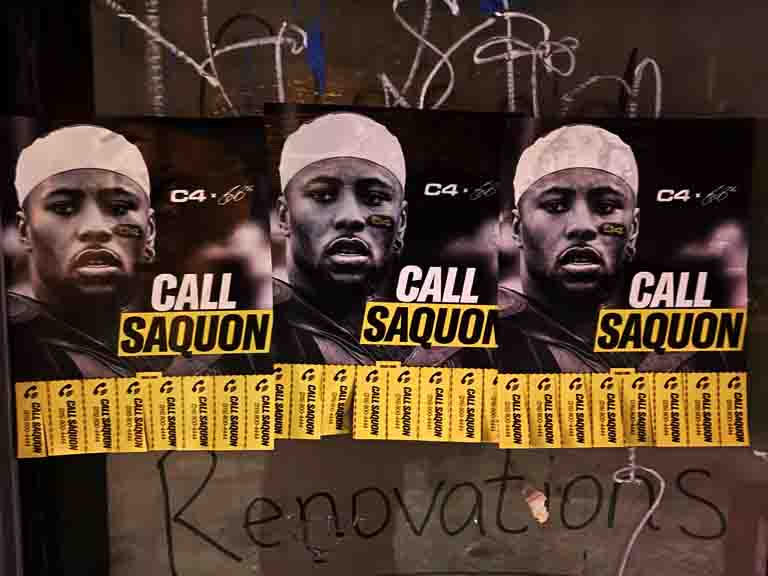
Take-one advertising places your printed materials inside branded dispensers or holders at carefully selected locations. Anyone who wants one picks it up. That single mechanical fact changes almost everything about how this format performs compared to every other street-level media buy.
There is no list to buy, no door to knock, no handout that gets stuffed into a pocket and forgotten. The person who takes a piece from a take-one box has already raised their hand. They saw it, decided it was relevant, and acted. That voluntary engagement is the self-selection mechanism — and it is the reason take-one advertising consistently produces response rates well above passive out-of-home formats.
This guide is written for marketing directors and brand managers evaluating take-one as a program. It covers how a placement network is built, how a campaign is structured from brief to takedown, what the numbers look like, and how to measure results. We run take-one programs as a standalone format and as part of integrated guerrilla marketing campaigns across 50+ U.S. markets.
What Take-One Advertising Actually Is
A take-one program places a branded box, rack, or holder at a location where your target customer spends time. The box holds 50 to 200 pieces of your printed material — a card, a brochure, a coupon booklet, a flyer — and is replenished on a schedule that prevents it from running empty. The host location (the business or venue where the box sits) typically receives a small monthly placement fee in exchange for counter or wall space.
The format predates digital marketing by decades. Real estate agents used take-one boxes on yard signs for generations. Event promoters built networks of boxes in venues long before social media existed. The format persists because the core behavior — a person choosing to pick up a piece of information — is durable and the response rates it generates are measurable.
Take-One vs. Flyer Distribution
Flyer distribution pushes material into people’s hands whether they want it or not. The conversion rate on passive handouts is low because the audience has not expressed any interest — they are a captive, often annoyed, recipient. Take-one advertising is pull-based. The person who takes a piece has already expressed interest by reaching for it. That difference in intent produces significantly higher downstream conversion rates even when raw pickup volume is lower than handout volume.
Take-One vs. Direct Mail
Direct mail reaches a defined list at a known address. Take-one reaches a behaviorally defined audience at a location — the selection criterion is where people are, not who they are on paper. For businesses where the geographic proximity to the placement is the most important audience qualifier (a restaurant, a gym, a service business), take-one targeting by location is often more precise than demographic list targeting.
Building a Take-One Placement Network
The quality of a take-one campaign depends entirely on the quality of the placement network. A box in a barbershop that only sees ten customers per week produces a fraction of the return of a box in a busy laundromat or a coffee shop with high daily foot traffic. Location selection is the most critical creative and strategic decision in the entire program.
Location Categories That Perform
Gyms and fitness studios have captive, health-conscious, action-oriented audiences who read materials while waiting. Salons and barbershops have long dwell times — clients sitting for 30 to 90 minutes actively look for something to engage with. Laundromats combine long dwell time with a community that skews local and neighborhood-specific. Coffee shops attract professionals and students who read. Co-working spaces concentrate a specific professional demographic in one physical location.
Transit-adjacent locations — coffee shops, delis, and convenience stores near subway entrances or bus stops — capture commuters at a moment when they have a card or flyer in hand and a screen-free minute to read it. Hotel lobbies, community centers, and libraries add reach into specific demographic pockets that other formats miss.
Vetting Individual Locations
Our team evaluates each location against foot traffic estimates (from pedestrian data and storefront observation), average dwell time, the audience’s demographic alignment with the campaign brief, and the physical placement options within the space. A box on a counter at eye level in a high-traffic location outperforms a box tucked near a back wall in a quieter space by a factor of 4 to 8 times in pickup rate.
Campaign Structure: From Brief to Completion
A well-run take-one campaign has a defined structure. Here is how our team executes it.
The Brief
The brief defines the target audience, the geographic footprint, the campaign message, and the offer or call to action. For take-one specifically, the brief should also define the measurement mechanism — what URL, QR code, phone number, or promo code will be on the piece so that pickups can be tracked to conversions.
Location Selection and Contracting
Our team identifies candidate locations in the target geography, confirms foot traffic and audience quality, and negotiates placement agreements with host businesses. Placement fees range from $50 to $200 per month per location depending on market and venue type. High-profile locations in premium neighborhoods command higher fees and are worth paying for when the demographic match is strong.
Print Production
The physical piece needs to be designed for the take-one context. Cards perform better than folded brochures in most take-one applications — they are easier to pocket and carry a clear, scannable message. The offer should be immediately clear. The QR code or tracking element should be prominent. We recommend a minimum print run of 5,000 pieces for a 25-location network over 30 days, with restocking inventory ready.
Installation and Initial Stocking
Boxes are placed at confirmed locations with an initial stock load. Our team photographs each placement — box in position, location exterior, and neighborhood context — for the documentation package. GPS coordinates are logged for each placement.
Monitoring and Restocking
Boxes that run out of material stop generating pickups. Our restocking protocol checks each location on a defined schedule — typically every 2 to 3 weeks — and replenishes before depletion. High-performing locations may require weekly restocking. We track depletion rates by location so the data tells you which placements are pulling the most material.
Takedown and Reporting
At end of campaign, boxes are removed and remaining inventory collected. The final report includes: photos of each placement, depletion data by location, QR scan data or tracking URL performance, and recommendations for which locations to prioritize in future campaigns.
What a Take-One Piece Should Look Like
The design of the physical piece is as important as the placement network. A poorly designed piece in the best location produces low pickup and low conversion. A well-designed piece in a good location produces consistently strong results.
Card Format Specifications
4×6 inch cards are the sweet spot for most take-one applications. They are large enough to communicate a clear message with a headline, image, and CTA, and small enough to fit in a pocket or wallet without folding. 14-point stock with UV coating on the front looks professional and durable. Business card size works for referral cards and introductory offers. Brochures add complexity — use them only when the product or service genuinely requires more than a card can communicate.
Copy That Works in a Take-One Context
The headline should answer “why would I take this” in three to five words. The offer should be immediately clear — a discount, a free trial, a specific invitation. The call to action should be singular: one website, one QR code, one phone number. Every additional element competes for attention and reduces conversion. Print is scarce space. Use it with discipline.
Take-One Advertising Costs: The Real Numbers
A take-one campaign covering 25 to 50 locations for 30 days runs $3,000 to $12,000 all-in for placement fees, installation, monitoring, restocking, and removal. Print production is separate — budget $500 to $2,500 for a run of 5,000 to 15,000 pieces depending on size, stock, and finish. Larger campaigns covering 100+ locations scale proportionally, with per-location costs declining as network size increases.
The cost comparison that matters: a 50-location take-one network at $6,000 per month reaches an estimated 20,000 to 50,000 individuals monthly, with a subset of those self-selecting to engage. That reach at that cost is difficult to replicate with paid digital advertising targeted to the same geographic and demographic profile in major metros where digital CPMs are high and competition for attention is intense.
Measuring Take-One Campaign Results
Take-one advertising is more measurable than most street formats. The self-selection mechanism creates a population of people who chose to engage — tracking what they do next is straightforward with the right attribution setup.
QR Codes as the Primary Tracking Tool
Every take-one piece should carry a unique QR code linked to a campaign-specific landing page. The QR code scan creates a measurable action — you know the scan happened, when, and from which device. When the landing page is properly set up with conversion tracking, you can trace from QR scan through to purchase, signup, or appointment. Use a unique QR code per location if you want location-level performance data.
Vanity URLs and Promo Codes
A vanity URL (example: americanguerrillamarketing.com/promo) that redirects to a campaign landing page is easy to type and easy to track. Promo codes work particularly well for retail and restaurant programs where the redemption happens at point of sale — a code used at checkout proves the take-one piece drove a transaction.
Industries That Get the Best Results From Take-One Advertising
Take-one advertising produces strong results for a specific set of industries and use cases. Understanding which verticals benefit most from the format — and why — helps marketing teams evaluate fit before committing budget.
Real estate agencies use take-one cards in coffee shops, laundromats, and co-working spaces to reach renters and buyers who are actively looking for local expertise. The geographic specificity of the format aligns naturally with the local nature of real estate transactions. A take-one card in a coffee shop on the same block as a listing creates a contextually appropriate brand encounter for anyone who notices the card and lives in the neighborhood.
Dental practices, medical offices, and wellness businesses use take-one programs to reach new residents who are establishing local service provider relationships. New residents are the highest-intent audience for local service businesses because they need to make provider selections they have not yet made. Take-one placements in laundromats, gyms, and coffee shops in target residential neighborhoods reach this audience at the moment of highest receptivity.
Event promoters use take-one programs to distribute event listings in the venues and neighborhoods where the target audience for each event is concentrated. A music event promoter can place take-one listings in record stores, independent coffee shops, and bars that serve the demographic for each show, reaching a self-selected audience of people who already frequent the venues that match the event’s cultural profile.
Restaurants use take-one programs to recruit first-time visitors from the surrounding neighborhood. A restaurant’s take-one card in a nearby laundromat reaches the neighborhood residents who pass the restaurant regularly but have not yet had a specific reason to try it. A compelling offer — a free dessert with first visit, a happy hour special — provides that reason in a format the potential customer can carry home and act on when it is relevant.
The Take-One Box: Hardware, Display, and Dispenser Options
The physical dispenser is the campaign’s first impression at the location. A cheap plastic box that looks like a generic brochure holder sends a brand signal that competes with the brand message inside it. A well-designed, branded dispenser elevates the perceived value of the materials inside and communicates that the brand has invested in the presentation. For brands where quality perception is a key purchase driver, dispenser design is worth the investment.
Standard Dispenser Options
Clear acrylic counter-top dispensers are the most common format. They are inexpensive, available in standard sizes for business cards (3.5×2), postcards (4×6), and rack cards (4×9), and they display the front face of the material visibly without requiring the passerby to pick it up first. The front face of the card is visible through the acrylic — which means the front design needs to work as a lure, not just as a piece the person reads after picking up.
Custom branded dispensers — fabricated in the brand’s colors with the brand’s logo — create a more intentional display presence and are appropriate for programs running 90 days or longer where the dispenser investment amortizes over a longer campaign window. For short-run programs, standard acrylic dispensers with a branded label applied are a cost-effective middle ground.
Wall-Mount vs. Counter-Top Placement
Wall-mounted dispensers are appropriate in locations where counter space is limited or where the property owner prefers a less intrusive footprint. Counter-top dispensers perform better in most contexts because they are more visible to the casual passerby — the counter is an active visual zone in retail and service environments, and a display on the counter is more likely to be noticed than one mounted at the height of a wall near the entrance.
Managing Host Location Relationships
The quality of the relationship with each host location determines the quality of the placement long-term. A property manager who is engaged with the program will ensure the dispenser stays properly positioned and will alert the campaign team if the material runs low. A property manager who is indifferent will tolerate the dispenser being moved to a less visible location, covered by other materials, or neglected when it runs empty.
Setting Clear Expectations at Placement
At installation, our team leaves the host location contact with: the agency contact information for any issues, a brief explanation of the restocking schedule, and a request to contact us if the dispenser is moved or if they run out of material ahead of schedule. That communication creates the relationship context that makes the ongoing placement management more reliable. Hosts who feel informed and considered are more cooperative partners than hosts who only hear from the agency when something goes wrong.
When to Replace a Location
A host location should be replaced when: pickup rate is consistently lower than 20 units per month over two restocking cycles, the dispenser is consistently found in a non-optimal position despite intervention, or the host business has changed character in a way that reduces audience alignment. Our network of placement partners in each market provides ongoing alternatives so that underperforming locations can be replaced within a week rather than leaving the network with a gap.
Integrating Take-One Into a Broader Street Campaign
Take-one programs work best as part of a coordinated street-level presence. A campaign that combines take-one boxes with poster campaigns in the same neighborhood creates visual consistency — the pedestrian who sees a wheatpaste poster and then finds a take-one card in the coffee shop they walk into has encountered the brand twice through two different mechanisms. That layered exposure drives higher recall and higher conversion than either format alone.
Our team regularly combines take-one with brand ambassador programs where street teams in target neighborhoods are briefed to direct people to take-one locations. The ambassador drives awareness; the take-one box provides something tangible for the interested person to take home. That sequence — encounter, engagement, physical takeaway — mimics the sales funnel in a street-level format.
For brands running neighborhood-level campaigns in multiple cities simultaneously, take-one networks can be deployed across markets using local placement partners, with centralized reporting aggregated by our production team. We coordinate multi-market programs as standard practice for clients running national outdoor advertising campaigns.
Frequently Asked Questions
What is take-one advertising?
Take-one advertising places printed materials — cards, brochures, flyers, or coupons — inside branded dispensers or holders positioned at high-traffic locations. Anyone interested picks one up voluntarily, which creates a self-selected audience that has already demonstrated intent.
How much does a take-one advertising campaign cost?
A typical take-one campaign covering 25 to 50 locations for 30 days runs $3,000 to $12,000 all-in, including box placement fees, restocking, and removal. Print production is separate — budget $500 to $2,500 for a run of 5,000 to 15,000 pieces. Larger campaigns covering 100+ locations scale proportionally, with per-location costs declining as network size increases.
Where are take-one boxes typically placed?
High-performance locations include gyms, salons, coffee shops, laundromats, transit waiting areas, hotel lobbies, co-working spaces, libraries, and community centers. The best placements combine foot traffic volume with demographic alignment — you want the people picking up your material to actually be your target customer.
How do you measure take-one advertising results?
The most reliable tracking methods are unique QR codes linking to a campaign-specific landing page, unique phone numbers, dedicated promo codes, and URL slugs that appear only on the take-one piece. Redemption rates of 2-8% are common for well-targeted campaigns. Secondary metrics include direct traffic spikes and call volume during the campaign window.
What type of businesses benefit most from take-one advertising?
Local service businesses, event promoters, political campaigns, nonprofits, and brands launching in a new neighborhood all perform well. The format works best when the offer is specific, the placement is geographically relevant, and the piece itself gives a clear reason to act.
How long does a take-one campaign run?
Most campaigns run 30 to 90 days. Longer campaigns require periodic restocking as materials are taken. Our team manages restocking schedules and tracks depletion rates at each location so you know which placements are performing and which to replace or relocate.