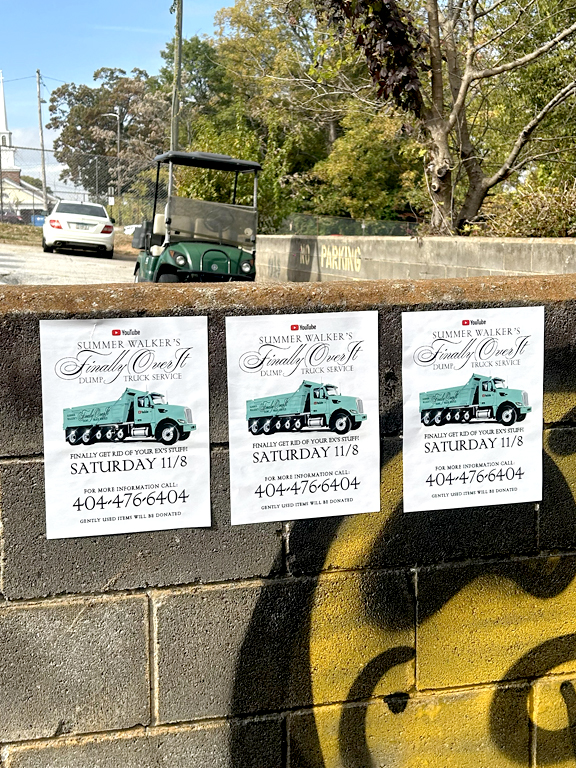
Turn on any major streaming platform in the weeks before a significant original series premiere and you will see the same pattern in the streets of New York and Los Angeles: city blocks covered with character art, a show’s title treatment on walls that were blank the week before, an aesthetic or color palette from an unknown series suddenly occupying building sides in Williamsburg and Silver Lake. That is not accidental. It is one of the most deliberate and well-documented pre-launch tactics in the streaming marketing playbook.
City takeover wheatpaste campaigns have become standard operating procedure for streaming platform original series launches because they solve a specific problem that digital advertising cannot: how do you make a new show feel like an event before anyone has watched a single episode? You put it on the street. You put it in the neighborhoods where the people who shape cultural conversation live and work. You make them feel like the show is already part of their world before the premiere date arrives.
American Guerrilla Marketing field operators have executed streaming platform campaigns across New York, Los Angeles, Chicago, and other major markets. This article documents how these campaigns are structured, why the tactics work, what the creative brief looks like, and how the metrics get reported back to marketing coordinators who need to show ROI.
The Pattern: 7-14 Days Before Premiere
The timing window for streaming platform wheatpaste campaigns is tighter than it is for music releases. Music campaigns typically run 10-14 days before the drop date; streaming campaigns more commonly run 7-14 days before premiere, with some major titles going up as early as three weeks out.
The logic behind the 7-14 day window is tied to how streaming platforms build anticipation cycles. The campaign press release, the trailer drop, the social teasers — these typically happen in the 2-4 week window before premiere. The wheatpaste campaign is designed to hit the streets when the trailer is already in circulation, not before. The street campaign amplifies an existing awareness, it does not build awareness from zero. Someone walking through Bushwick who has already seen the trailer on their phone and then encounters the show’s key art on a wall they pass every day has a fundamentally different experience than someone encountering the campaign cold.
Seven days before premiere is the minimum effective window for a campaign to generate meaningful social amplification before the show drops. Less than that and the campaign barely has time to settle before it is competing with premiere-night coverage. The sweet spot for most series is 10-12 days — enough runway for multiple rounds of organic social content before the premiere weekend.
Some campaigns for very high-profile series go up even earlier. Major prestige titles with significant awards buzz or large existing fan bases (returning series, IP adaptations) have gone up three to four weeks out as part of a sustained street presence that functions as an ambient campaign — the show is just part of the city’s visual fabric for the entire pre-premiere period.
Why Wheatpaste Works for Streaming When Digital Doesn’t
Streaming platforms spend massively on digital advertising. They have sophisticated targeting capabilities, massive audience data sets, and the ability to reach precisely defined audience segments with laser precision. So why do they keep coming back to a medium that is as old as putting paper on a wall?
The answer is what wheatpaste does that digital cannot replicate: it creates public presence. When a streaming show appears on someone’s phone feed as a sponsored post, that experience is private and ephemeral. It appears, is scrolled past, disappears. There is no physical residue. There is no moment where someone points it out to a friend they are walking with. There is no photograph worth taking.
Wheatpaste on a Williamsburg building side or a Brixton hoarding is public in a way that changes how people experience it. It is part of the shared visual environment. Someone sees it and mentions it to a colleague. Someone photographs it and posts it. A street photographer includes it in their documentation of the neighborhood. The show is no longer just a title in a catalog — it is something that is actually happening, something that has taken up physical space in the real world.
That public presence generates earned media in a way that a digital ad buy never will. When a show’s key art covers a building side in Silver Lake, entertainment journalists, culture writers, and street photographers all document it. Those documents circulate as stories about the campaign, not just about the show. “Netflix is covering Silver Lake with posters for their new series” is itself a news item — the marketing becomes content. That is a qualitatively different return than a digital impression.
In streaming campaigns run by American Guerrilla Marketing field operators, organic social posts generated by street photography — not from the platform’s own accounts — consistently reach audiences that the platform’s owned-media channels do not. The street campaign reaches the friends of the fans, not just the fans themselves.
The cultural credibility argument is harder to quantify but equally real. A streaming service that puts up a city takeover in Williamsburg, Shoreditch, or Roma Norte is making a statement: this show is important enough to take up space in the real world, not just the digital one. That signal reads differently to the tastemakers, early adopters, and culturally influential people who live in those neighborhoods. It says this is an event, not just a release.
How Physical Presence Generates Social Media Content
The relationship between wheatpaste campaigns and social media is one that American Guerrilla Marketing has observed and documented across hundreds of entertainment campaigns over the past decade. The mechanism is consistent enough to plan around.
In a neighborhood like Williamsburg or Silver Lake, there is a community of people who are active social media users, interested in culture and entertainment, and in the habit of photographing and sharing interesting things they encounter on the street. When a streaming platform covers that neighborhood with a visually striking city takeover, several things happen simultaneously:
Fans of the show who recognize the IP photograph it because they are excited. Those posts carry strong emotional resonance — “I live three blocks from this wall and they put my favorite show on it” — and reach the fan community with high engagement.
Non-fan residents of the neighborhood photograph it because it is visually interesting or because they are curious. Those posts carry a different but complementary value — they reach people who did not already know about the show, introducing the title and visual identity to a new audience through a trusted social connection rather than a targeted ad.
Street photographers document it as part of their regular coverage of the neighborhood’s visual fabric. Depending on the photographer’s following, these posts can reach audiences numbering in the tens or hundreds of thousands.
Local accounts that cover neighborhood culture, street art, and urban life share it because it fits their content focus. These accounts often have highly engaged local followings that are exactly the demographic the streaming platform is trying to reach.
All of these posts circulate simultaneously, creating a cross-cutting wave of earned media that no digital ad campaign can engineer. The compound effect is what makes city takeover wheatpaste worth the investment for a streaming platform — it is not one campaign delivering impressions, it is dozens of independent social campaigns all delivering overlapping impressions to the same audience.
The Creative Brief for Streaming Platform Campaigns
Streaming platform wheatpaste campaigns are among the most creative-brief-specific work that American Guerrilla Marketing executes. Unlike a retail campaign where the goal is clear brand recall, a streaming campaign brief is built around the specific visual and emotional positioning the show’s marketing team has developed. Getting the brief right is the difference between a campaign that feels authentic to the show and one that feels generic.
The three primary creative approaches for streaming platform wheatpaste campaigns:
Character-Forward Creative
The strongest visual asset most original series have is their cast. Character-forward creative leads with a striking portrait, ensemble, or character-defining moment that conveys the world of the show visually without requiring text to explain it. A compelling face with an ambiguous expression, a striking costume in an unexpected context, an ensemble arrangement that signals relationship dynamics — these images create curiosity and invite the viewer to find out who these people are.
Character-forward campaigns work best for new original series that do not have an existing audience. The intrigue drives discovery. Someone who does not know the show sees the poster and wants to understand it. That curiosity converts to searches, clicks, and eventually streams.
The execution requirement for character-forward creative is strong art direction and high-resolution original photography. Campaign-quality character stills cannot be sourced from production screenshots — they need to be created specifically for the marketing campaign by a photographer who understands how the image will read at 24×36 or 27×40 on a brick wall rather than on a phone screen.
Title-Forward Creative
Title-forward campaigns lead with the show name, often combined with the premiere date and a minimal visual treatment. This approach is most appropriate for returning series with an established audience — seasons two, three, and beyond where the brand recognition is already built. “The show is back” is the message, and the title carries enough weight to communicate it.
Title-forward creative is also used for campaigns where the show’s aesthetic is so strong that the title treatment itself — the typography, color palette, and visual language of the brand — functions as a visual story. A show with a distinctive visual identity can communicate its world through the title design alone, without needing character imagery to carry the emotional weight.
Aesthetic-Driven Creative
The most ambitious streaming campaigns use the city takeover as an opportunity to express the show’s world through pure visual language — color, texture, abstract imagery, or a scene fragment that creates atmosphere without explaining itself. These campaigns function more like street art installations than traditional advertising, which is exactly why they generate the most social photography coverage.
Aesthetic-driven campaigns are more common for prestige drama, art house streaming, and genre content with devoted communities who appreciate the artistic treatment. They require a marketing team with enough confidence in their creative to resist the urge to explain the show. The less text, the more intrigue.
NYC and LA Dominate — But Why London and Mexico City Are in More Briefs
For most of the streaming era, city takeover wheatpaste campaigns for series launches were primarily a New York and Los Angeles conversation. Those two cities offered the highest concentration of media, entertainment industry, and culturally influential people — and they were the easiest markets for US-based streaming platforms to coordinate operationally.
Over the past several years, the brief has changed. London and Mexico City now appear in the standard market list for a significant and growing percentage of major original series launches. São Paulo has appeared in campaigns for Portuguese-language content. Paris has been included for European prestige titles.
The expansion reflects where streaming viewership has grown and where streaming platforms are investing in original content. A streaming service that is producing local-language originals in Mexico, Spain, Brazil, and South Korea needs to build street-level credibility in those markets the same way it does in the US. The wheatpaste playbook translates — different neighborhoods, same logic.
In London, Shoreditch and Brixton are the Williamsburg equivalents — creative communities with high social media activity, street art culture, and the kind of resident profile that generates organic earned media from an interesting campaign. The visual character of London walls is different from New York brick, but the social amplification mechanism is identical.
Roma Norte in Mexico City has emerged as the primary target neighborhood for streaming platform campaigns in that market. It has the density of cafes, co-working spaces, cultural venues, and young creative professionals that generates the social photography a city takeover depends on. American Guerrilla Marketing has built relationships with certified and licensed field operators in these international markets, enabling the same GPS-tagged, same-day documentation standard we deliver in the US.
London and Mexico City now appear in the first-tier market list for approximately one in three major streaming platform campaigns that AGM sees. That proportion has grown significantly over the past five years as streaming platforms have shifted from US-centric to global-first launch strategies.
How AGM Has Run Streaming Campaigns
American Guerrilla Marketing has executed wheatpaste campaigns for streaming platform clients across major US markets. The process reflects the specific operational demands that entertainment and media company clients bring: creative precision, documentation quality, and timeline reliability.
The standard streaming platform campaign begins with the same brief intake that any AGM campaign uses — markets, neighborhoods, poster format, quantity, installation window, documentation requirements. What is different with streaming clients is the level of creative specificity in the brief. The poster has been developed by an internal creative team or a major entertainment marketing agency. The artwork reflects specific brand standards. The wall placement reflects neighborhood targeting that has been through several rounds of internal approval. Our job is execution — putting the right poster on the right wall in the right neighborhood at the right time, and documenting it precisely.
For streaming clients, same-day proof of posting is not a nice-to-have — it is a requirement. Marketing coordinators are managing launch campaigns across multiple channels simultaneously, and the street component needs to be confirmed and documented so that it can be incorporated into social posting and press outreach the same day it goes up. American Guerrilla Marketing field operators deliver GPS-tagged, timestamp-verified documentation within hours of installation.
The condition check protocol is also more stringent for streaming clients. A poster going up 10 days before a premiere needs to still be intact on premiere night. Our field operators schedule condition checks at 48-hour and 5-day intervals for premium placements, and maintain backup wall options in case a primary location needs to be refreshed.
The Metrics: Organic Social Impressions and Earned Media
Measuring the return on a city takeover wheatpaste campaign is not as straightforward as measuring a digital ad buy, but it is not unmeasurable either. American Guerrilla Marketing works with entertainment clients to track two primary categories of performance data for streaming campaigns.
Organic social impressions per placement: By monitoring hashtags, location tags, and mentions associated with the campaign in the days following installation, we can capture a representative sample of the social posts generated by the campaign. Each post has an estimated reach based on the account’s follower count and engagement rate. The aggregate of these estimated reaches gives a social impression number per installation zone. In high-social neighborhoods like Williamsburg and Silver Lake, a well-executed city takeover regularly generates organic social impressions that compare favorably to what the same spend would produce in paid digital placements — with the added credibility that comes from peer-to-peer sharing versus brand-to-consumer advertising.
Earned media coverage: Street campaigns that reach the threshold of a genuine city takeover — enough saturation that the campaign itself becomes a story — generate press coverage. Entertainment media, local culture publications, and street photography blogs cover notable campaigns as news items. This coverage is tracked and documented as earned media, with estimated reach calculated from publication traffic and social shares. The earned media multiplier for a well-executed streaming platform city takeover can be significant — the campaign generates coverage that reaches audiences who are not social media active and would not have encountered organic posts.
Neither of these metrics captures the full value of the campaign. The ambient impression — the experience of repeatedly encountering the campaign on your daily commute for 10 days before a premiere — does not show up in social post counts or earned media tallies. But it is perhaps the most valuable element of all: it creates a sense of inevitability about the show, a feeling that it is impossible to avoid and therefore important to watch.
Briefing a Streaming Campaign as a Marketing Coordinator
Marketing coordinators at streaming platforms who are running wheatpaste campaigns as part of a larger series launch are typically working within a multi-channel campaign structure. The street campaign is one element among digital, OOH, PR, and social activations. Getting the brief right for the street component requires understanding what is unique about the street channel and what it needs that other channels do not.
The information a marketing coordinator needs to include in a wheatpaste brief for a streaming series launch:
- Premiere date and time zone — this anchors every timing decision for the campaign.
- Target markets — US cities and any international markets, with priority order.
- Target neighborhoods within each market — or a description of the audience demographic if neighborhood guidance has not been specified internally.
- Approved artwork files — print-ready, correct file format, correct size, with bleeds. A brief that arrives with non-print-ready artwork loses days.
- Quantity per market — how many posters per city.
- Documentation requirements — GPS tags, timestamps, delivery format, who receives the report.
- Campaign confidentiality requirements — some streaming campaigns require that field operators sign NDAs before receiving creative assets, particularly for high-profile shows where the marketing is part of the launch surprise.
- Brand standards restrictions — proximity to competitor outdoor advertising, surface type restrictions, any locations that are pre-approved or pre-excluded.
The most common error in streaming platform wheatpaste briefs is late artwork delivery. The campaign brief arrives with clear market guidance and a precise timeline, but the approved artwork does not arrive until two days before the installation date. Print production cannot be compressed below a certain floor without sacrificing quality. Coordinators who want reliable execution need to build an artwork delivery deadline into the campaign timeline — typically five to seven business days before installation to allow for production and any quality checks.
A streaming platform city takeover wheatpaste campaign is not just advertising — it is a signal to the cultural community that the show deserves to exist in physical space. The neighborhoods where these campaigns run are the neighborhoods that set the cultural tone for the rest of the country. What happens on a Williamsburg wall on a Tuesday morning is on Instagram by noon and referenced in a Substack newsletter by Thursday.
What Makes a Streaming Campaign Succeed or Fall Flat
After running streaming platform campaigns across major US markets and coordinating with licensed operators internationally, American Guerrilla Marketing has a clear picture of what separates the campaigns that generate genuine cultural heat from those that just add to the visual noise.
The campaigns that generate heat have a clear visual identity that stands out on the wall. Not because it is louder or more colorful than everything around it, but because it has a specific point of view. A strong face. An intriguing composition. A color palette that does not look like every other thing on the wall. The creative team has made real decisions about what the show is and what the campaign should feel like, and those decisions are visible in the poster.
The campaigns that fall flat are usually the ones where the poster looks like a compromise between too many stakeholders. The image is crowded with copy. The character art is lifted from a production still rather than created for the campaign. The title treatment is legible but not memorable. These posters go up on the same walls as the strong campaigns, but they do not generate the same social photography because they do not give people a reason to stop and look.
Neighborhood selection is the other differentiator. A strong poster in the wrong neighborhood underperforms. A mediocre poster in the right neighborhood still generates some earned media. But a strong poster in the right neighborhood — Williamsburg, Silver Lake, Wicker Park, Shoreditch — is the combination that produces the results streaming marketing coordinators are looking for.
American Guerrilla Marketing’s decade-long, boots-on-the-ground presence in these neighborhoods means we know which walls in which locations generate the most social photography. We have a nationwide portfolio of pre-vetted placement locations mapped against audience profile and social amplification history. That inventory is the product of years of firsthand observation — not satellite imagery or foot traffic data, but our field operators walking the streets and watching where people stop, photograph, and talk.
Frequently Asked Questions
Why do streaming platforms use wheatpaste for series launches instead of just running digital ads?
Digital advertising reaches people in a targeted but private context — they see an ad on their feed and it disappears. Wheatpaste creates a public presence that people encounter in the real world and then discuss and photograph. That physical presence generates earned media through social posts, street photography coverage, and word-of-mouth in a way that a targeted pre-roll ad never will. Streaming platforms use wheatpaste to manufacture the kind of cultural credibility that signals a show is an event, not just another title in a catalog.
How many cities do streaming platforms typically include in a series launch wheatpaste campaign?
For a major original series, three to five US cities are the standard scope for a launch campaign — New York and Los Angeles as the anchor markets, with two or three additional cities chosen based on the show’s subject matter, genre, or where the creative team is from. International launches increasingly add London, Mexico City, and São Paulo as the global streaming market has grown. Smaller or more niche series may focus exclusively on New York and Los Angeles.
What is the difference between a character-forward and a title-forward streaming wheatpaste campaign?
A character-forward campaign leads with a striking visual of one or more characters from the show — faces, costumes, expressions that convey the world of the series without requiring any text. It creates intrigue and generates social posts from people who want to know what the image is. A title-forward campaign leads with the show name and premiere date, prioritizing direct recall over intrigue. Which approach is right depends on how well-known the IP is — returning seasons often lead with title, while new original series often benefit from character-forward creative that generates curiosity.
How does AGM document streaming platform wheatpaste campaigns?
American Guerrilla Marketing delivers GPS-tagged, timestamp-verified photo documentation for every installation. For streaming platform clients, documentation is typically compiled into a same-day report showing each wall location, the installed poster, the GPS coordinates, and the timestamp. Some clients also request a pre and post comparison for key locations, and ongoing condition checks to confirm the campaign remains intact through the premiere date window.
What neighborhoods do streaming platforms target for series launch wheatpaste campaigns?
Williamsburg and Bushwick in Brooklyn for culturally active young audiences who generate high social media content. Silver Lake and Echo Park in Los Angeles for the creative and entertainment industry community. In Chicago, Wicker Park and Logan Square. Internationally, Shoreditch and Brixton in London, and Roma Norte in Mexico City are the primary targets for streaming platform campaigns that include those markets.