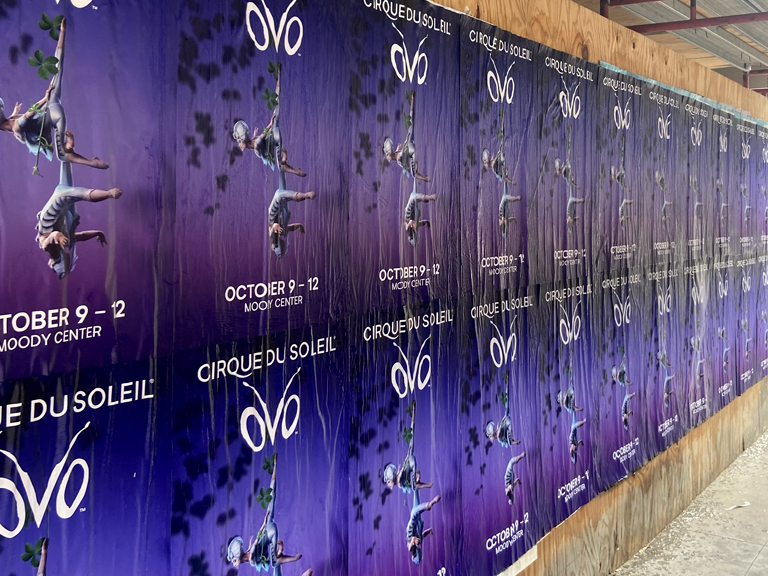
The most effective flyposting campaigns don’t just appear — they appear overnight. By morning, every targeted wall in the campaign zone shows the same image. To pedestrians and commuters, it looks like the brand materialized everywhere simultaneously. That effect — saturation without a visible process — is exactly what makes overnight flyposting campaigns such a powerful launch tool.
Flyposting night campaigns are the standard execution model for entertainment launches, brand activations, album drops, film premieres, and any campaign where the goal is creating an instant sense of ubiquity. American Guerrilla Marketing runs overnight crews in 50+ U.S. markets, with GPS-tagged documentation of every placement so clients have proof of performance by the time their city wakes up.
This guide covers why night campaigns work, how they’re executed, what makes them legal vs. reckless, and how to build a campaign that achieves the overnight saturation effect that generates morning-commute attention and social media documentation.
Why Flyposting Campaigns Run at Night
Night installation is not just tradition — it’s operationally and strategically correct for several specific reasons.
Wall Access
High-value posting locations are contested surfaces. Legal posting walls in desirable neighborhoods get filled quickly during business hours. Overnight installation allows our crews to secure prime placement before competing content occupies the same surfaces. A campaign installed at 2 AM is visible at the top of the wall for the morning rush. A campaign installed at noon competes with whatever went up that morning.
Minimal Interference
Pedestrian-heavy environments make large-scale installation difficult during the day. Paste buckets, ladders, and large-format poster rolls require room to operate. Night installation on empty sidewalks is faster, cleaner, and produces a better-quality result than rushed daytime work. Quality of installation directly affects how long the posters hold and how well they read from a distance.
Morning Commute Timing
The morning commute is the highest-volume foot traffic window in most urban neighborhoods. Pedestrians moving through familiar routes notice changes — a wall that was bare yesterday and is now covered with a striking image gets documented, discussed, and shared. Overnight installation ensures the campaign is complete and fresh precisely when the largest audience will encounter it.
Social Media Impact
The “appearing overnight” quality of a well-executed night campaign contributes to its social media shareability. When multiple people encounter the same campaign in different neighborhoods simultaneously and post about it within the same morning window, the posts amplify each other. The organic hashtag convergence that results can generate earned reach far exceeding what any individual placement produces in isolation.
The Anatomy of an Overnight Flyposting Campaign
An overnight campaign is not simply a matter of showing up with posters and paste at midnight. Successful execution requires precise advance planning, multi-crew coordination, and a logistical framework that gets everything installed, documented, and wrapped before business hours begin.
Pre-Campaign: Location Scouting
Our team scouts target markets 24 to 72 hours before an overnight campaign. Scouting maps the optimal posting sequence — the order in which locations get hit to minimize crew travel time and maximize coverage within the overnight window. We document each location’s current condition, note competing postings that may need layering over, and confirm access conditions.
For complex multi-neighborhood campaigns, we use split-crew models: two or more crews working different zones simultaneously, each operating its own route while reporting completion by location to a central coordinator. This approach doubles or triples overnight coverage capacity.
Materials: Print Specs for Night Campaigns
Night campaign materials need to be produced for efficient field application. Posters are typically pre-folded or pre-rolled in installation order. Wheat paste is mixed to a consistency that adheres immediately without requiring extended smoothing time — fast application per sheet is the difference between hitting 40 locations and hitting 80 in the same overnight window.
Standard formats for overnight flyposting campaigns:
- 24×36 single-sheet — fastest to apply, highest location-per-hour rate
- 27×40 entertainment industry standard — slightly slower but more visual impact per placement
- Multi-panel snipe configurations — assembled on-wall from multiple sheets, used for high-impact anchor placements at major intersections
Our print partners produce flyposting-ready materials that apply cleanly in outdoor conditions, hold through weather, and read clearly at distance even under streetlight illumination.
Crew Deployment
Typical overnight crew size is two to four people per coverage zone: one person applying paste, one managing the poster roll and smoothing, one navigating the route and documenting. Larger crews enable faster individual placement times and allow for larger-format installations that require more hands.
Our crews operate with defined start and end times calibrated to the market. In New York City, for example, the optimal window opens around midnight and closes before 6 AM to complete installation before the first commute wave. Other markets have different windows based on local traffic patterns and city-specific considerations.
Documentation During Installation
Every placement is photographed and GPS-tagged at the time of installation, not reconstructed afterward. Our crews use field documentation protocols that capture the poster, the wall address, and the timestamp in a single structured data package. By the time the overnight is complete, clients have a complete record of every placement with coordinates, images, and timestamps ready for reporting.
Selecting the Right Locations for Night Campaigns
Location selection determines whether an overnight campaign generates the saturation effect or just a scattered set of placements. Our team applies several criteria to every market we work in:
Foot Traffic Density
The morning-after impact of an overnight campaign depends on how many people pass each placement during the morning commute window. High foot traffic corridors — subway entrances, transit corridors, commercial blocks with morning coffee and commute activity — generate significantly more exposure per placement than equivalent locations in lower-traffic zones.
Photography Viability
Locations where the placement can be photographed cleanly — clear sightlines, natural light in the morning, no obstructions at eye level — generate more organic social media documentation. We factor photography viability into location selection, particularly for campaigns where client-defined KPIs include organic social amplification.
Legal Status
Every location in our network is either owner-permitted or operates within explicitly legal posting frameworks for the market in question. We do not execute on locations that create liability for clients or expose property owners to disputes. Legal posting locations are widely available in every major U.S. city — running legal campaigns is not a competitive disadvantage; it’s how we protect everyone involved and keep our network operational.
Neighborhood Relevance to Campaign Audience
The right locations are in the right neighborhoods for the campaign’s target demographic. A campaign for a prestige streaming series targets the neighborhoods where media-engaged young professionals concentrate. A campaign for a music festival targets areas near music venues, record stores, and cultural hubs. A campaign for a fitness brand targets locations near gyms, running paths, and health-oriented retail. We map audience geography before building location sequences.
Multi-City Overnight Coordination
For brands that need to appear everywhere at once — entertainment launches, national brand activations, touring campaigns — we coordinate simultaneous overnight operations across multiple markets. Each city runs its own crew on the same overnight timeline, with all documentation consolidated into a single campaign report.
Multi-city coordination requires centralized logistics management: unified print production to ensure visual consistency across markets, standardized documentation protocols so the report format is consistent regardless of market, and coordinated crew briefing so every team is operating to the same creative and installation standards.
Our network covers 50+ U.S. markets with established crew relationships in each. A brand launching in New York, Los Angeles, Chicago, and Austin simultaneously can execute all four markets in a single overnight window without managing four separate vendor relationships.
Creative Strategy for Night Campaigns
The creative brief for a flyposting night campaign needs to account for how the placements will be encountered — not just how they look in a design file. Pedestrians moving through their morning commute are in a different cognitive state than someone sitting at a computer viewing an ad. They’re moving at four miles per hour, their attention is split between phone, navigation, and conversation, and they’ve trained themselves to filter most advertising they see.
Effective night campaign creative breaks through that filter by doing one of three things: surprising the viewer with an image or copy line they weren’t expecting, creating genuine visual appeal that makes them stop and look, or making an emotional connection so immediate that it registers before the viewer’s advertising filter has time to engage.
Typography-Led Creative
Typography-led campaigns that lead with a single strong headline or phrase consistently outperform image-led campaigns in night flyposting contexts. The reason is legibility at distance and in motion. A poster that communicates its core message through a single large-type statement can be processed from across the street in under a second. An image-led campaign that relies on visual storytelling requires the viewer to pause and engage — a behavioral ask that most commuters won’t fulfill.
The best night campaign headlines are specific, not generic. “Every contract reviewed before 5 PM” outperforms “We help your business succeed.” “The show that made Paris stop” outperforms “Now streaming.” Specificity creates curiosity and communicates credibility simultaneously — the viewer’s brain processes specific claims differently than general marketing language.
Color and Contrast for Night Visibility
Night campaigns that are designed with nighttime visibility in mind — high contrast, bold color fields, white or bright elements on dark backgrounds — generate better overnight installation photography and read more effectively in the early morning hours before full daylight. Campaigns using subtle color palettes that work beautifully in a design presentation may read as washed out on a wall in pre-dawn light.
We review creative for night visibility before confirming installation plans and advise on adjustments when design choices will reduce overnight impact. For brands with established visual identities that preclude design adjustments, we compensate through placement selection — finding well-lit surfaces and high-daylight exposure locations that give the creative the best possible conditions.
Format Selection for Night Campaigns
Format selection affects both the visual impact of individual placements and the number of locations a crew can cover in a single overnight window. These two goals trade off against each other — larger formats take more time per installation, reducing the location count achievable overnight. Campaign planning needs to balance impact and coverage based on the specific campaign objectives.
Single-Sheet Volume Campaigns
For campaigns where coverage breadth is the priority — maximum neighborhood saturation across multiple zones — single-sheet 24×36 or 27×40 formats are the right choice. Installation time per location is minimized, allowing crews to cover the highest number of distinct locations in the available overnight window. Volume creates the saturation effect even without the visual drama of larger-format anchor installations.
Mixed Format Campaigns
Most professionally executed night campaigns use a mixed format approach: the majority of placements in standard single-sheet formats for coverage, with a smaller number of anchor placements at the best walls in each neighborhood in larger multi-panel configurations. The anchor placements provide the visual drama and social photography generation that drives earned media; the volume placements provide the saturation that makes the campaign feel ubiquitous.
For a campaign covering three neighborhoods in a single overnight, a typical mixed format allocation might be: 80 standard-format placements across 60 locations for saturation coverage, plus 6 to 10 multi-panel anchor placements at the highest-value walls in each zone. This distribution optimizes both impression count and earned media potential within the available installation window.
Planning Timeline for Night Campaigns
A standard overnight flyposting campaign follows a planning timeline of five to ten business days from campaign brief to installation. The key phases:
- Brief to location plan: 1 to 2 days. We build the location plan and installation sequence based on the campaign objectives, target neighborhoods, and available inventory.
- Creative review and print approval: 1 day. We review creative for night visibility, format compatibility, and poster specifications.
- Print production: 2 to 3 days for standard formats, up to 5 days for large-format snipe configurations. Rush print partners can compress this to 24 to 48 hours with rush fees.
- Scouting: 24 to 72 hours before installation to confirm location status and optimize the installation sequence.
- Installation: Overnight. Report delivered by end of the following business day.
Rush campaigns can compress this timeline to as few as two to three days for clients with urgent launch requirements and pre-approved creative. Contact our team to discuss rush availability and lead times for your specific market and campaign scope.
Night Campaign Integration with Broader Street-Level Strategy
Overnight flyposting generates the highest impact when integrated with adjacent tactics that extend the campaign beyond static poster placements:
- Street team activations the following morning at key posting locations turn passive poster impressions into active brand conversations
- Sidewalk stencil campaigns in the same neighborhoods add a horizontal dimension to the vertical poster saturation
- Mobile LED billboard trucks routing through posting zones on the morning after installation amplify the overnight launch with moving visual media
- Coordinated guerrilla activations connected to the campaign’s theme create experiential moments at the highest-traffic poster locations
- Press outreach timed to the overnight installation, with campaign photography ready for immediate editorial use, converts physical placement into earned media coverage
Working with AGM on Overnight Flyposting
Our team executes overnight flyposting campaigns in 50+ U.S. markets with a consistent operational model that delivers professional installation quality and GPS-tagged documentation regardless of which market the campaign runs in. Here is what the working relationship looks like from the client side:
Campaign briefs can be submitted up to a week in advance for standard timelines, or on a rush basis when launch dates are fixed and tight. We review every brief for creative compatibility with flyposting specifications, advise on format selection based on the campaign’s objectives and target neighborhoods, and provide a location plan for client review before installation is confirmed. The approval process is transparent and collaborative rather than a black box.
Installation night communication includes crew deployment confirmation and mid-night check-ins for large multi-city campaigns. Documentation is delivered the following business day. Campaign questions after delivery receive responses within one business day. For ongoing campaigns or multi-phase launches, we maintain campaign files and location history so repeat clients build institutional knowledge with each campaign cycle rather than starting fresh every time.
What Makes a Night Campaign Successful
The campaigns that generate the strongest results share consistent characteristics: clear creative with high visual impact at distance, precise location selection weighted to the campaign’s target audience geography, high enough placement volume within each neighborhood to create genuine saturation rather than isolated spots, and integration with morning-after tactics that extend the impact beyond the overnight installation window.
Creative quality matters enormously in overnight flyposting. A striking image that reads clearly under streetlights and generates an instinctive photograph reaction will outperform a complex layout that requires close inspection. The best flyposting creative is designed to be looked at from across the street in a fraction of a second.
Coverage volume matters equally. A campaign with 15 posters spread across a city generates a different effect than a campaign with 15 posters concentrated in three key blocks of a single neighborhood. The latter creates genuine saturation; the former creates scattered placements. We help clients allocate their budget to maximize density in the locations that matter most for their campaign objectives.
Frequently Asked Questions
Why do flyposting campaigns install at night?
Night installation minimizes pedestrian interference, maximizes wall access, and ensures the campaign appears fresh and fully intact for morning commute traffic — the highest-volume viewing window of the day.
Is overnight flyposting legal?
AGM only installs on permitted legal locations. We maintain active agreements with property owners and location networks in every market we operate. Legal overnight flyposting is widely available across major U.S. cities.
How many locations can you cover in a single overnight campaign?
Depending on city geography and crew size, a single overnight can cover 20 to 100+ locations within one market. Multi-crew deployments can saturate a city’s key neighborhoods within a single night window.
What documentation do I receive for a night campaign?
GPS-tagged photographs of every placement, time-stamped with installation date and location address. You receive a complete post-campaign report organized by neighborhood or market.
How long do flyposted materials last?
Properly applied wheat paste installations typically hold for two to four weeks on outdoor surfaces. Longevity depends on weather, traffic, and competing postings. For shorter campaign windows, a single night installation is usually sufficient.
Can I coordinate overnight flyposting in multiple cities on the same night?
Yes. AGM manages simultaneous multi-city overnight installations through our network in 50+ U.S. markets. All crews operate on the same timeline for launches that need to appear everywhere at once.