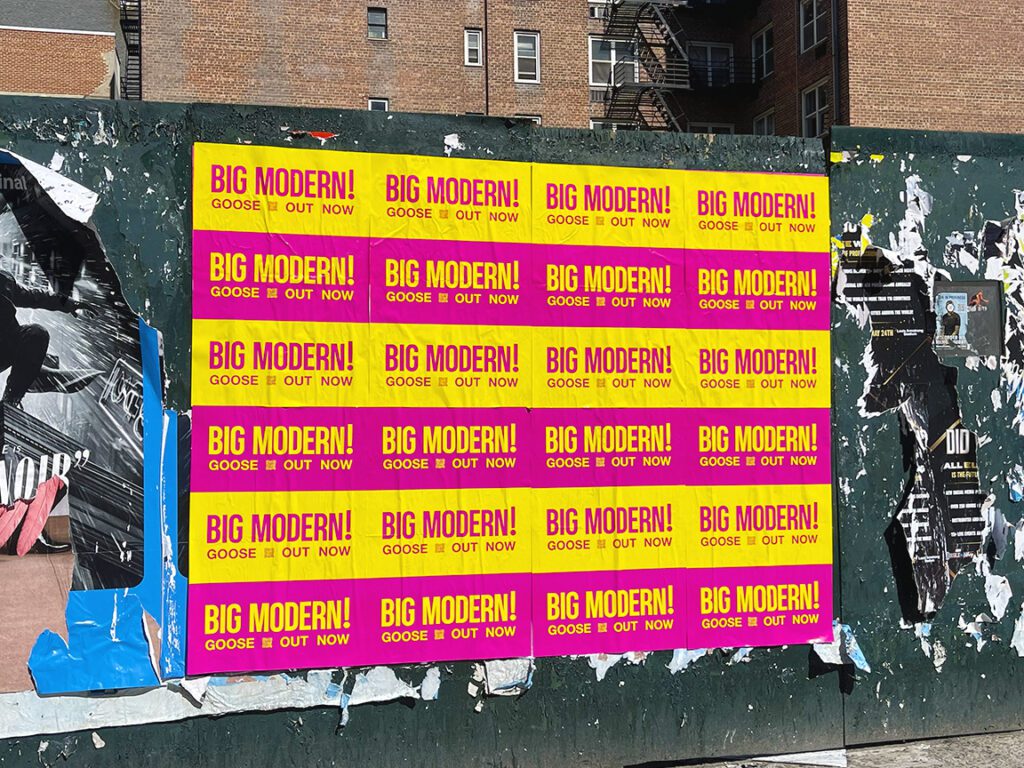
Every major label and most serious independent labels still budget for street poster campaigns on significant releases. In an industry that has moved almost entirely to digital distribution and social media promotion, the continued investment in physical flyposting is not nostalgia. It is strategy. Street posters in the right neighborhoods reach music audiences where they actually live their lives, generate organic content that social media picks up and amplifies, and create the kind of cultural presence that streaming algorithms reward.
American Guerrilla Marketing has run flyposting campaigns for record labels, streaming platforms, and independent artists for years. Our team understands how music marketing works in the physical environment: which neighborhoods move the needle for which genres, what poster density creates the saturation effect that gets noticed, and how to time a deployment against a release schedule to maximize pre-release anticipation and release-week impact.
This guide covers everything relevant to planning a flyposting campaign for a music release: why the format still works, how to use streaming data to target the right markets, what campaign elements drive the best results, and how to integrate street posters with the rest of a release campaign.
Why Street Posters Still Work for Music Marketing
The music industry’s relationship with street posters goes back decades. Before digital, posting was a primary promotional tool for concerts, album releases, and underground scene building. The shift to streaming did not eliminate the value of physical presence — it changed what that presence accomplishes.
Physical Presence in Music Culture Spaces
Music audiences do not only exist online. They go to venues, record shops, coffee shops in music neighborhoods, streetwear stores, and neighborhoods that define genre culture. A poster for a hip-hop release in Harlem, a country release in Nashville’s Lower Broadway corridor, or an indie release in East Austin reaches audiences in the physical spaces where that music is part of daily life. Those placements carry a cultural legitimacy that a paid social impression cannot manufacture.
Organic Content Generation
Street posters generate organic social content at a rate that makes their cost-per-impression calculation look very different from the raw media spend. When audiences in culturally active neighborhoods photograph and share street posters — tagging the artist, the label, or the neighborhood — those organic posts reach highly relevant audiences through trusted social channels. This amplification effect is real, measurable in social listening data, and valuable enough that labels specifically brief campaigns to create “photo-worthy” poster environments.
Streaming Platform Signal Building
Physical presence in a neighborhood creates word-of-mouth that feeds into streaming behavior. A listener who sees a poster for an upcoming release is more likely to pre-save, add to a playlist, and stream on release day. Streaming platforms reward strong release-day performance with algorithmic playlist placement and editorial consideration. A well-executed street campaign that drives pre-save behavior and social conversation contributes to the performance signals that get editorial attention.
Targeting Markets Using Streaming Data
One of the most significant improvements in music release campaign planning over the past decade is the availability of streaming data for geographic targeting. Platforms provide market-level listening data that tells labels exactly where an artist’s fanbase is concentrated. Using this data to drive flyposting market selection is a straightforward way to improve campaign efficiency.
Reading Streaming Geography
If an artist has 60% of their streams concentrated in New York, Los Angeles, Atlanta, and Chicago, those should be the primary flyposting markets. If their streaming is distributed differently — strong in secondary markets like Nashville, Portland, or Denver — the campaign geography should reflect that. Spending the bulk of a flyposting budget in New York for an artist whose fans are concentrated in the South or Midwest is a targeting error that streaming data makes easy to avoid.
Genre and Neighborhood Mapping
Within markets, genre culture maps to specific neighborhoods. Hip-hop and R&B audiences are concentrated in different geographic zones than indie rock or EDM audiences. Our team at American Guerrilla Marketing maps genre audiences to specific neighborhoods in each market, drawing on both streaming data and operational experience to select posting locations that match the campaign’s target listener profile. A rap release hitting Bed-Stuy and Harlem in Brooklyn is making a different statement than the same release hitting Williamsburg — and both are deliberate.
Poster Creative for Music Releases
Music release posters work differently than product advertising posters. The creative conventions of music marketing — tour poster aesthetics, album artwork integration, artist photography — carry specific expectations in the music market that influence how posters are received on the street. Getting the creative right matters as much as getting the placements right.
Album Art Integration
Street posters for music releases typically use the album or single artwork as the primary visual, often at large scale with minimal text. The goal is brand recognition: a listener who has already seen the artwork in streaming apps or social media immediately recognizes the street poster as the same campaign. This recognition effect reinforces impressions and builds the cumulative awareness that drives release-day behavior.
Tour Poster Aesthetics
For artists with tour history, posters in the tour-poster format — artist name, release date, clean typography on a bold background — carry associations of live music and cultural credibility. This format works particularly well for artists with established live followings in specific markets, where the tour poster aesthetic signals genuine cultural presence rather than manufactured awareness.
Cryptic or Teaser Creative
Some of the most effective music release campaigns use teaser creative: posters with the artist name and release date but no album art, or imagery that creates mystery about what is coming. This approach is most effective when the artist has an existing audience in the market that will recognize the name and respond to the anticipation the teaser creates. For new artists, teaser creative without strong name recognition can misfire.
Campaign Timing: Pre-Release, Release Week, and Post-Release
The timing of a flyposting campaign relative to the release date is one of the most important tactical decisions in music release marketing. Our team has executed campaigns at every stage of the release cycle and can speak specifically to what each timing window accomplishes.
Pre-Release: Building Anticipation (Two to Four Weeks Out)
Pre-release posting is most effective when audiences in the target markets already know the artist. Posters featuring the album artwork and release date build anticipation among existing fans, drive pre-save behavior, and create the visual environment that makes the release feel culturally significant. In neighborhoods where the artist has strong fanbase density, a pre-release campaign creates conversation and expectation before the algorithmic promotion even begins.
Release Week: Saturation at the Moment of Launch
Many campaigns time their peak poster density to coincide exactly with release date. This means posters hitting the street in the 48 hours before or on the day of release, saturating key neighborhoods at the moment when streaming behavior and social conversation are at their highest. The visual presence of the poster campaign in the physical environment reinforces digital messaging and creates a sense of ubiquity that makes the release feel like a cultural moment, not just a streaming drop.
Tour Support: City-by-City Deployment
For artists on tour, our wheatpaste poster campaigns can be coordinated city by city, with deployment timed to the week before each tour date. This format builds local awareness ahead of shows, drives ticket sales, and creates visual documentation of the tour’s physical footprint. Street team programs can supplement poster campaigns with flyer distribution outside venues, at music retail locations, and in college neighborhoods near the show markets.
Genre-Specific Flyposting Strategy
Different music genres have different geographic and demographic concentration patterns, which means the optimal flyposting strategy for a hip-hop release is structurally different from the right approach for a country release, an EDM campaign, or an indie folk album. Here is how our team differentiates genre strategy for music flyposting campaigns.
Hip-Hop and R&B
Hip-hop and R&B campaigns build their poster networks in the neighborhoods where the culture is centered. In New York, this means Harlem, Bed-Stuy, Flatbush, Crown Heights, and the Bronx — not just the gentrified Brooklyn neighborhoods where other genres concentrate. In Los Angeles, it means Compton, Inglewood, South Central, and the Crenshaw corridor. In Atlanta, it means College Park, East Point, and the Old Fourth Ward. Getting the geography right signals that the campaign understands the culture rather than marketing to it from the outside. Our team maps genre audiences to specific neighborhoods in each market using streaming data and direct market knowledge.
Country Music Campaigns
Country campaigns have a unique geography that most street marketing agencies are not equipped to serve. Nashville is the center, but country music audiences are distributed across small cities, college towns, and regional markets in the South and Midwest that see little professional street marketing activity. Our team deploys in Nashville, Knoxville, Charlotte, Lexington, and dozens of secondary markets where country music audiences are concentrated. For country campaigns, market selection is often more important than neighborhood selection within a single market.
EDM and Electronic Music
Electronic music campaigns target the neighborhoods adjacent to club and festival culture: in New York, the Lower East Side and Williamsburg; in Los Angeles, Silverlake and Hollywood; in Miami, the Wynwood Arts District and the nightlife corridors of South Beach. These campaigns often benefit from integration with event marketing — posters deployed in the week before a major festival or club night create awareness that drives ticket sales and builds artist profile in the specific audience segment attending the event.
Indie and Alternative
Indie campaigns work in the arts-district neighborhoods that host independent venues, record shops, and the cultural infrastructure of independent music: East Austin, Portland’s Alberta Arts District, Seattle’s Capitol Hill, Denver’s RiNo, Brooklyn’s Ridgewood. These campaigns often use smaller poster formats and more location-specific placement to signal neighborhood authenticity rather than broad commercial reach. The indie audience responds to presence that feels embedded in the neighborhood rather than imposed on it.
Working with Record Labels: How We Support Label Teams
American Guerrilla Marketing works with major label marketing departments, independent label teams, and artist management companies. Here is how we integrate with different label organizational structures to deliver campaigns efficiently.
Major Label Campaign Integration
Major label releases typically involve large marketing teams managing multiple campaign elements simultaneously — digital, radio, press, physical, and street-level. Our team integrates into this workflow as the dedicated street marketing vendor, taking direction from the campaign lead and coordinating street deployment to align with the broader campaign timeline. We have experience working within the approval workflows, budget tracking systems, and reporting requirements of major label marketing operations.
Independent Label and DIY Artist Support
Independent labels and self-managed artists often have smaller teams and tighter budgets. Our team works with indie clients to design campaigns that deliver meaningful impact at realistic budget levels. A focused single-market campaign with strong placement in the artist’s home market often delivers more relevant results for an independent release than a diluted multi-market program that spreads the budget too thin. We help indie clients prioritize markets based on existing fan data and streaming performance.
Multi-City Coordination for Major Releases
Large label releases and streaming platform campaigns often require simultaneous deployment across 10, 20, or more U.S. markets. American Guerrilla Marketing specializes in coordinating these multi-market programs through a single project manager, with standardized documentation across all markets and a unified campaign report.
Synchronized Deployment
Synchronizing deployment across multiple cities ensures that the release feels like a national moment rather than a rolling regional campaign. Our operations team coordinates crew scheduling, material shipping timelines, and deployment windows to achieve simultaneous coverage in all target markets within a 48-hour window. GPS documentation from each market feeds into a single client report.
Market-Specific Customization
Multi-market campaigns can use consistent national creative or include market-specific versions. Some labels produce poster variants for specific cities — a version with the New York skyline backdrop for NYC placements, or a city-specific tagline for markets with strong local scene associations. Our production team coordinates artwork variants and ensures the right creative reaches the right market crews.
Poster Campaign Documentation as Marketing Asset
GPS-documented photography from a well-executed music release flyposting campaign is itself a marketing asset that has value beyond proving that the placements happened. Here is how label marketing teams and artist management companies use campaign documentation in ways that extend the value of the street marketing investment.
High-quality photographs of artist posters in culturally significant neighborhood settings — a Williamsburg building wall, a Lower East Side construction hoarding with the Manhattan skyline visible, a Chicago alley in the Wicker Park corridor — provide editorial-quality imagery that music press, blogs, and promotional accounts use to illustrate coverage of the release. These images say something visually about the artist’s market presence and cultural position that album artwork alone cannot communicate. Sharing campaign documentation photography with the artist’s PR team immediately after deployment gives them visual assets that can accompany release coverage in ways that generic promotional photos cannot.
Artist social accounts regularly post street-level documentation of their poster campaigns because the content resonates with fans. A photo of your poster in the streets of New York, Los Angeles, or a city where the artist has a strong following communicates to that fanbase that the release is real, that the campaign is happening in the physical world, and that other fans in those cities are seeing the same campaign they are. This social content performs well precisely because it is not a polished marketing asset — it is documentation of something that actually happened in the world that fans inhabit.
Building the Case for Street Posters Internally
Many label marketing teams understand the value of street poster campaigns intuitively, but they periodically need to build the case for physical marketing spend internally against digital-only or digital-heavy allocation advocates. Here is the framework our team uses when we help label clients justify street poster investment to stakeholders who are skeptical of physical media.
The core argument is not that street posters are more efficient than digital on a cost-per-impression basis in isolation — in many cases they are not. The argument is that street posters deliver something that digital cannot: physical presence in the cultural spaces where the music audience lives, organic content generation that reaches the audience’s social networks without paid media cost, and the cultural legitimacy signal that comes from having the campaign exist in the physical world that the audience inhabits. These contributions to total campaign effectiveness are not captured in impression-count comparisons between formats.
The clearest internal case is built around specific examples of street poster campaigns that generated documented organic social content. A photo of your artist’s poster in Williamsburg or the Lower East Side, shared by a local influencer with 50,000 followers in the target demographic, carries more credibility and reach than a similar media buy in paid social. It is earned rather than purchased, which means the audience discounts it less. When clients can show stakeholders specific examples of organic amplification generated by street poster campaigns — and quantify the equivalent paid media value of that earned reach — the case for physical marketing spend becomes much more concrete than a philosophical argument about cultural presence.
Integrating Flyposting with the Full Release Campaign
Street poster campaigns work best as part of an integrated release strategy that includes digital, social, and physical elements in a coordinated sequence. Here is how our team thinks about integration for music release campaigns.
Coordinating with DSP Marketing
Streaming platform marketing — playlist pitching, sponsored placements, editorial outreach — operates on its own timeline. Physical flyposting campaigns should be timed to create market awareness that supports DSP performance signals. Pre-save campaigns driven by social media work better in neighborhoods where street posters have already created physical awareness of the release. The physical environment primes the audience for the digital push.
PR and Media Coordination
Street poster imagery makes excellent editorial photography for music media outlets, blogs, and social accounts. High-quality documentation photography from our GPS-tagged deployment reports can be shared with the label’s PR team for placement in music press coverage. A photo of well-placed street posters in Williamsburg or the Lower East Side reads as cultural legitimacy to music journalists and bloggers.
Frequently Asked Questions
Why do record labels still use flyposting for music releases?
Flyposting creates physical presence that digital advertising cannot replicate. Street posters in the right neighborhoods build cultural credibility, generate organic social photography, and reach audiences in the physical spaces where music culture lives — venues, record shops, coffee shops, transit corridors.
What is the best timing for a music release flyposting campaign?
Most effective campaigns run one to two weeks before release date, maintaining saturation through release week. This timeline builds anticipation, ensures audiences encounter the campaign multiple times before release, and creates the visual environment that makes release-day social posts land in a saturated context.
Which cities should a music release flyposting campaign target?
New York, Los Angeles, and Chicago are the primary markets for major label releases. Indie and genre-specific campaigns should target markets where the artist has existing fans, tour history, or strong playlist traction based on streaming data.
How many posters does a music release campaign typically use?
Campaigns vary from 50 to 500+ placements per city depending on budget and campaign intensity. A standard single-market music release campaign might target 100-200 placements in key neighborhoods over a two-week window.
Can American Guerrilla Marketing run music release campaigns in multiple cities simultaneously?
Yes. We coordinate multi-market campaigns across 50+ U.S. cities with synchronized deployment, standardized documentation, and a single project manager. Contact us at (646) 776-2770 to discuss your release campaign.