California has more restaurants per capita than almost any other state in the country, and its major cities consistently rank among the most competitive dining markets in the world. Los Angeles has tens of thousands of licensed food service establishments. San Francisco’s restaurant-to-resident ratio is one of the highest in the United States. San Diego’s Gaslamp Quarter, North Park, and Pacific Beach neighborhoods are saturated with dining options competing for the same customer base. In markets this competitive, the brands that win are the ones that get physically seen before someone opens an app to look for a place to eat or drink.
That’s the core argument for guerrilla marketing in California’s bar and restaurant sector. Digital advertising puts you in front of consumers who are already searching. Guerrilla marketing puts you in front of consumers before they know they’re looking, when they’re walking through your neighborhood, passing your block, sitting at a bar around the corner. That moment of physical encounter, the sidewalk stencil, the poster on the construction wall, the coaster under their first drink, creates an awareness that search advertising can’t replicate and can’t replace.
Our team at American Guerrilla Marketing executes bar and restaurant advertising campaigns throughout California’s major markets. We’ve deployed sidewalk stencils in Silver Lake, wheatpaste campaigns in San Francisco’s Mission District, coaster distribution through San Diego’s Gaslamp Quarter, and brand ambassador activations at California festivals and food events. Every campaign is GPS-tracked, fully documented, and built around the specific geographic and demographic realities of the target market.
Why California’s Bar and Restaurant Market Demands Street-Level Presence
Digital saturation is the defining problem of California hospitality marketing in 2025. Every bar and restaurant in Los Angeles is running targeted Instagram and Facebook campaigns. Every San Francisco brunch spot is optimizing its Google Business Profile. The result is an advertising environment where digital channels are so crowded that the cost per meaningful impression has risen dramatically while attention from consumers has declined.
California consumers, particularly in the 25-45 demographic that drives restaurant spending, are mobile, urban, and physically active. They walk through their neighborhoods. They use public transit. They attend street fairs, farmers markets, food festivals, and outdoor events. They are physically present in the environments where guerrilla marketing operates. A sidewalk stencil outside a coffee shop in Silver Lake is encountered by the same person who would never click the social media ad that same brand is running.
Los Angeles: A Multi-Market Campaign Environment
Los Angeles is not one market. It’s a constellation of distinct neighborhood markets with different demographic profiles, different consumer behaviors, and different advertising environments. Silver Lake and Echo Park skew toward the young creative class. West Hollywood serves a premium nightlife and entertainment dining audience. Downtown LA draws the office worker lunch crowd and the upscale dinner-and-show crowd in the evening. Venice and Abbot Kinney attract a health-conscious, high-income demographic. East LA and Koreatown serve culturally specific consumer communities.
Our guerrilla marketing services in Los Angeles are built around neighborhood-specific targeting. A campaign for a new Silver Lake cocktail bar is planned and executed differently than a campaign for a new Downtown LA power lunch destination. The placement zones, the formats, the timing, and even the creative tone are calibrated to the specific neighborhood market.
San Francisco: Dense, Walkable, and Highly Receptive
San Francisco’s walkable density makes it one of the most effective guerrilla marketing environments in the United States. The Mission District, SOMA, the Castro, Hayes Valley, and North Beach are all neighborhoods where consistent foot traffic on known corridors makes sidewalk and vertical surface advertising highly efficient. San Francisco’s culture also tends toward appreciation for creative street-level marketing. A well-executed wheatpaste campaign in the Mission or a sidewalk stencil installation in Hayes Valley will be noticed, photographed, and shared organically in a way that the same tactic in a less engaged market might not be.
San Diego: Gaslamp, North Park, and Pacific Beach
San Diego’s hospitality market is geographically concentrated in a way that suits guerrilla marketing execution well. The Gaslamp Quarter is a 16-block walkable entertainment district that generates high foot traffic from convention center attendees, tourists, and San Diego residents Thursday through Sunday. North Park’s independent dining and craft beer scene draws a younger, local-focused consumer. Pacific Beach serves the beach community’s bar and casual dining crowd. These are well-defined, walkable zones that can be comprehensively covered with a focused campaign deployment.
Beer Coaster Advertising in California’s Bar Markets
California’s bar scene, from LA rooftops to San Francisco craft beer bars to San Diego’s bustling Gaslamp corridor, presents a premium deployment environment for beer coaster advertising. When a patron orders a drink at any of these venues, they’re in a leisure mindset, socially engaged, and physically present for an extended period. A branded coaster directly beneath their glass provides uninterrupted brand exposure for the duration of their visit.
Coaster Campaigns in the LA Bar Market
Los Angeles has one of the most robust and diverse bar scenes in the country. West Hollywood’s nightlife corridor, Silver Lake’s cocktail bar cluster, Downtown’s rooftop bar circuit, and the Venice Beach bar strip each represent distinct deployment environments with different consumer demographics. We establish venue partnerships for coaster distribution before the campaign launches, ensuring placements go to the bars where your target customer actually drinks, not just to whoever accepts them. Our brand ambassador team can supplement coaster distribution with in-venue presence during peak hours to create additional brand touchpoints.
Coasters in San Francisco’s Craft Beer and Cocktail Scene
San Francisco’s Mission District, SOMA, and North Beach bar environments are well-suited to premium coaster campaigns. The city’s bar culture skews toward craft-conscious, brand-aware consumers who notice quality marketing materials. Custom coasters with well-designed graphics and a clear brand story perform well in this environment. For food and beverage brands targeting the SF market, coaster campaigns represent a cost-effective way to achieve deep penetration in the venues where your target consumer spends discretionary time and money.
Sidewalk Stencil Campaigns in California Entertainment Districts
Sidewalk stencil campaigns in California entertainment districts place your brand message on the walking surface of the streets your target customers traverse every day. In Silver Lake, that’s Sunset Boulevard between Sanborn and Descanso. In San Francisco, it’s Valencia Street through the Mission. In San Diego’s North Park, it’s 30th Street’s restaurant corridor. These high-repetition walkable zones create the brand familiarity that converts foot traffic into seated covers.
California stencil campaigns require compliance research specific to each municipality. Los Angeles, San Francisco, San Diego, and other California cities have different regulations for temporary sidewalk markings. Our team handles all compliance research and, where required, the permitting or notification process before any placements are deployed. You never have to navigate California’s municipal code. We do that work.
Wheatpaste Poster Campaigns for California Hospitality Brands
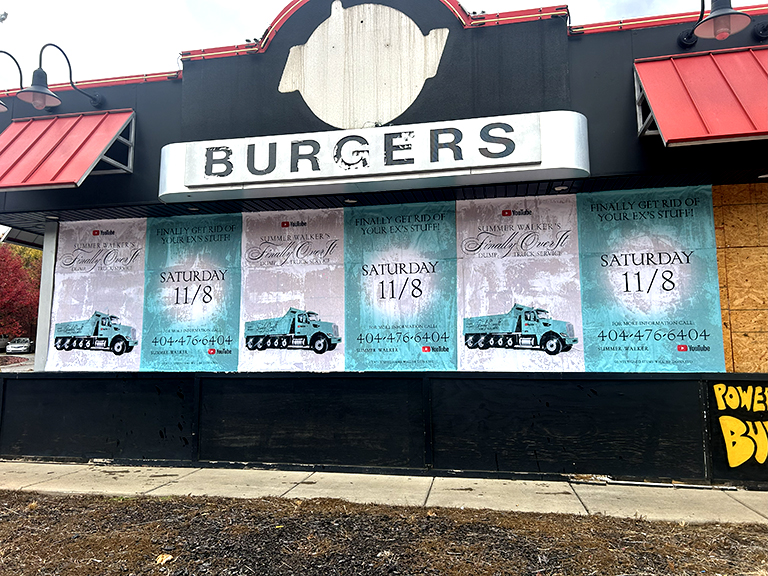
Wheatpaste poster campaigns in California’s entertainment districts create high-visibility vertical brand presence in the spaces between storefronts, on permitted posting surfaces, and on construction barriers around active development sites. The format’s large size creates impact that smaller advertising formats can’t match. A full-color 24×36 poster on a Mission District construction wall reaches every pedestrian who passes that block.
California’s construction boom, particularly in LA and SF, has created extensive legal posting surfaces on construction barriers throughout the most valuable entertainment districts. These surfaces are in the highest-traffic zones of the most commercially active neighborhoods. We identify and secure the best available surfaces before campaign launch, ensuring your brand gets the premium placements rather than the leftover inventory.
LED Billboard Trucks for California Bar and Restaurant Launches
For major bar or restaurant launches in California’s large metro markets, LED billboard trucks provide the kind of event-scale visibility that ground-level tactics alone can’t deliver. A truck circuit through LA’s West Hollywood, Silver Lake, and Downtown corridors on a launch night, combined with social media content capture of the truck in front of the new venue, creates a media moment that extends the campaign’s reach into earned media and organic social sharing.
We route LED trucks through California markets with specific attention to dwell time at high-traffic locations. Sitting a truck outside a competitor-heavy entertainment corridor during peak evening hours in San Diego’s Gaslamp Quarter or San Francisco’s SOMA creates targeted brand impressions in the exact environment where you want consumers to remember your name when they’re choosing where to go next.
Street Team Activations at California Food and Beverage Events
California’s festival calendar is one of the richest in the country. Coachella and Stagecoach in the Inland Empire, Outside Lands in San Francisco, LA Food Bowl events across Los Angeles, San Diego’s Comic-Con and Craft Beer Week, the Napa Valley wine harvest season, and dozens of neighborhood street fairs and food festivals create year-round opportunities for brand ambassador activations in front of large, concentrated, entertainment-minded consumer audiences.
For bar and restaurant brands, event street teams accomplish two things simultaneously: direct brand experience through sampling or promotional interaction, and awareness generation through branded presence in a high-traffic environment. A street team at Outside Lands wearing branded gear and sampling a new cocktail mixer reaches the SF food and beverage consumer in their most receptive mindset. The brand impression made in that environment is more durable than any digital ad impression the same person will encounter that week.
Measuring Guerrilla Marketing Results for California Hospitality Brands
California’s data-driven business culture means that bar and restaurant operators in LA, SF, and San Diego expect measurable results from every marketing investment. Guerrilla marketing campaigns are no exception. Here’s how performance is measured across the formats we deploy in California hospitality markets.
Reservation and Cover Count Analysis
For restaurant campaigns, comparing reservation volume and cover counts during the campaign window against comparable prior-period data provides a direct performance signal. An LA restaurant that runs a two-week Silver Lake sidewalk stencil campaign combined with coaster distribution at five neighborhood bars can assess whether reservation activity or walk-in covers changed during that period relative to the prior two weeks. This comparison is most meaningful when the campaign window is isolated from major seasonal events that would independently affect traffic.
QR Code and Digital Response Tracking
Campaigns built with a trackable digital response element generate attributable performance data. A San Francisco bar running a coaster campaign with a QR code linking to a reservation page or a special offer can directly attribute QR scan traffic and offer redemptions to the coaster campaign. Sidewalk stencil campaigns with a directional component pointing to a trackable URL provide similar attribution data. We recommend building at least one measurable response element into every California campaign to provide a floor performance metric even if the primary campaign objective is brand awareness.
Social Media and Earned Media Monitoring
California’s social media engagement culture means that well-executed guerrilla marketing campaigns in LA, SF, and San Diego frequently generate organic sharing. A striking 3D chalk art installation in Wynwood or a particularly creative poster campaign in the Mission District will be photographed and shared by pedestrians who encounter it. Monitoring brand mentions, location tags, and organic social reach during the campaign window captures this earned media value that other campaign measurement approaches miss.
California Compliance: What Every Brand Needs to Know
California municipalities are among the most regulatory-active in the country when it comes to outdoor advertising and public space use. Los Angeles, San Francisco, San Diego, Oakland, and Sacramento each have distinct sign codes, public space ordinances, and enforcement cultures that require careful compliance management for every guerrilla marketing campaign.
The general principle across California cities is that water-soluble, temporary applications on public sidewalk surfaces fall outside the scope of commercial signage permits. However, that classification is not universal, and the specific zones within each city where commercial promotions require notification or permitting vary significantly. Private property placements always require written landowner permission.
Our team at American Guerrilla Marketing handles compliance research for every California market and every campaign we execute in the state. We’ve operated extensively in Los Angeles, San Francisco, and San Diego, and we maintain current knowledge of each city’s regulatory environment. You don’t need to hire a California land use attorney to run a sidewalk stencil campaign in Silverlake. We handle the compliance work as a standard part of every campaign engagement.
California’s competitive hospitality market rewards brands that move decisively and execute cleanly. Our combination of strategic planning, compliant execution, and rigorous documentation provides California bars and restaurants with the street-level marketing capability they need to compete effectively against both established incumbents and well-funded new entrants.
Working With American Guerrilla Marketing in California
California’s regulatory environment, creative culture, and geographic scale demand a marketing partner with genuine California market experience rather than a national template applied without local knowledge. Our team at American Guerrilla Marketing has operated extensively in Los Angeles, San Francisco, and San Diego, accumulating the market-specific compliance knowledge, venue relationships, and operational infrastructure that California campaigns require.
Our base at Industry City in Brooklyn, New York gives us the project management infrastructure to coordinate California campaigns as part of larger national deployments. A brand that wants simultaneous California and New York City campaigns gets unified creative direction, unified reporting, and a single point of accountability rather than a vendor coordination challenge. For brands operating at national scale, this integration capacity is the difference between a coherent national guerrilla marketing strategy and a collection of uncoordinated local executions.
California campaign timelines typically run two to three weeks from initial briefing to first placement. For event-aligned campaigns with fixed activation dates, such as a Los Angeles festival, a San Francisco product launch, or a San Diego Comic-Con activation window, we work backward from the event date to ensure all compliance, creative, and logistics work is completed before the deployment window opens. California’s permit environments in certain zones require lead time, and we account for that in every timeline we commit to.
Frequently Asked Questions: Bar and Restaurant Advertising in California
What guerrilla marketing tactics work best for bars and restaurants in California?
Beer coaster advertising, sidewalk stencils in high-traffic entertainment corridors, wheatpaste poster campaigns in permitted zones, LED billboard trucks for event-driven launches, and brand ambassador street teams are among the most effective tactics for California hospitality brands. The right combination depends on your target market, whether that’s Los Angeles, San Francisco, San Diego, or another California city.
Which California cities are best for bar and restaurant guerrilla marketing?
Los Angeles offers the broadest campaign scale across neighborhoods including Silver Lake, Venice, Downtown LA, and West Hollywood. San Francisco’s Mission District, SOMA, and Castro generate high-density pedestrian environments. San Diego’s Gaslamp Quarter, North Park, and Pacific Beach are strong hospitality advertising markets. Oakland, Santa Monica, and Long Beach are effective secondary targets depending on brand positioning.
How does guerrilla marketing help a new restaurant stand out in California’s competitive market?
California’s restaurant market is among the most competitive in the world. Guerrilla marketing creates physical neighborhood presence that digital advertising cannot replicate. A new restaurant with two weeks of sidewalk stencils, poster placements, and street team activity in the surrounding area arrives feeling established. That physical familiarity converts first-time visitors who might otherwise choose an established competitor.
What does a bar and restaurant guerrilla marketing campaign cost in California?
Campaign costs reflect the higher production and logistics costs in major California cities. A sidewalk stencil campaign with 100 placements in a single LA or SF neighborhood typically runs in the mid-to-high four-figure range. Multi-tactic campaigns scale accordingly. Contact our team for a quote specific to your target market.
Can you run campaigns across multiple California cities simultaneously?
Yes. We execute multi-city California campaigns with coordinated deployment across LA, SF, San Diego, and other markets in the same campaign window. Each city deployment has its own compliance research and crew logistics, unified under a single creative direction and campaign report.
Do you document and report on California campaigns?
Yes. Every campaign includes GPS-tagged placement photos, timestamped deployment logs, and a comprehensive post-campaign report. For coaster campaigns, we document venues and quantities distributed. All documentation is delivered within five business days of campaign completion.
Frequently Asked Questions
What is bar restaurant advertising california?
American Guerrilla Marketing provides bar restaurant advertising california services across 50+ U.S. markets. Every campaign is planned, scouted, executed, and GPS-documented by our field teams. We work with regional brands and Fortune 500 companies on campaigns that require real street-level execution and documented proof of performance.
How does AGM approach advertising california?
Our process starts with a market consultation to understand your goals, target audience, and budget. We then scout locations, handle any required permissions or permits, coordinate production and installation with our local crews, and provide a full GPS-tagged photo report after the campaign runs.
What markets does American Guerrilla Marketing cover for advertising california?
We operate in 50+ U.S. markets including New York, Los Angeles, Chicago, Miami, Houston, Atlanta, Seattle, Denver, Boston, and dozens of secondary markets. Contact us to confirm availability and pricing for your specific market.
How much does a advertising california campaign cost?
Campaign pricing depends on market, format, quantity, and duration. We work with budgets ranging from targeted single-market runs to national rollouts across multiple cities. Use our RFP Builder or contact us directly for a custom quote based on your specific campaign requirements.
How do I get started with advertising california through AGM?
The fastest way to get started is to submit your campaign details through our RFP Builder at americanguerrillamarketing.com, or contact us directly at [email protected] or (646) 776-2770. Our team typically responds within one business day with availability and initial pricing.